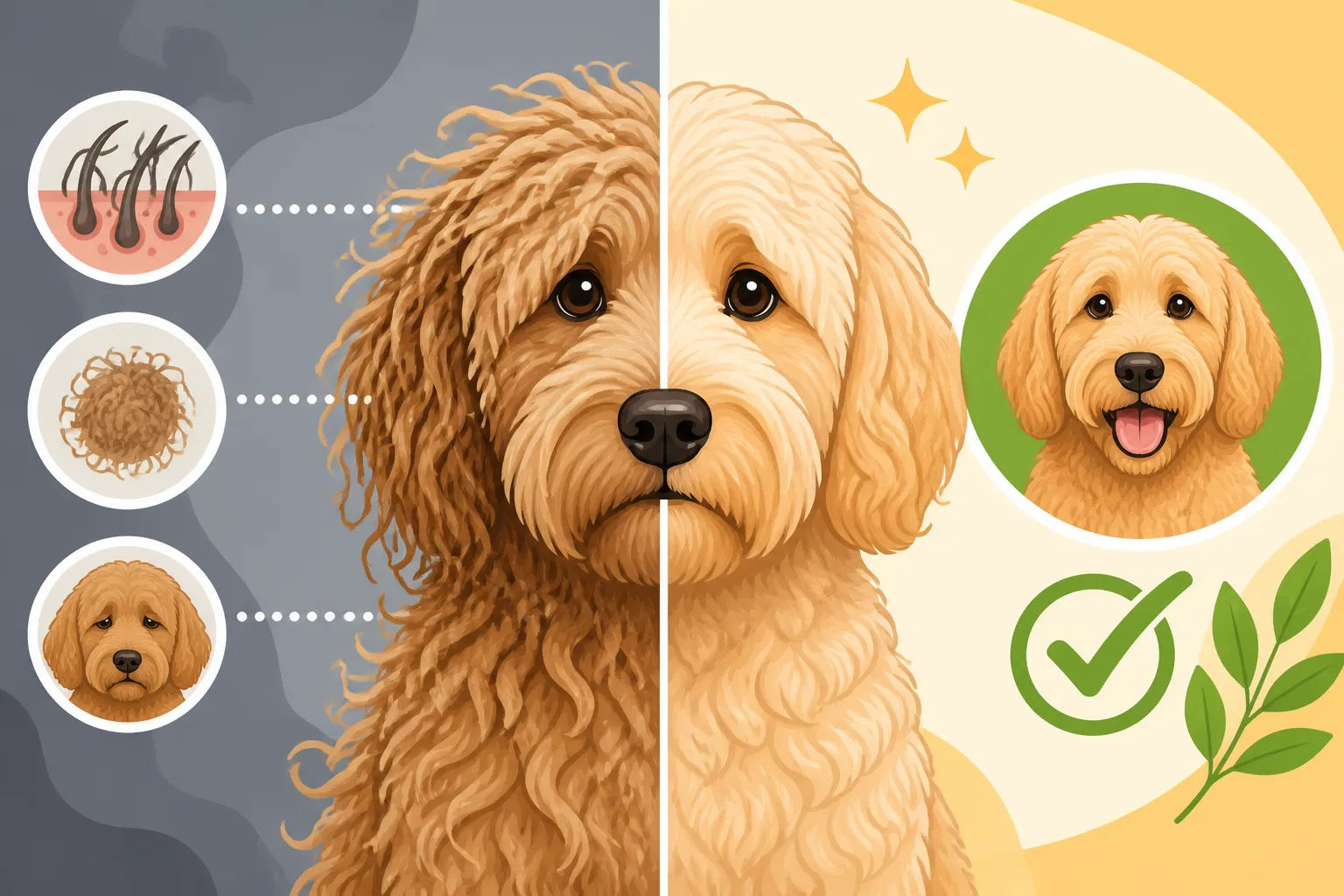
What an Improper Coat Means on a Labradoodle
It’s a common scenario: you’ve fallen in love with the Labradoodle, dreaming of that gorgeous, curly or wavy coat that promises less shedding and maybe even some relief for allergy sufferers in the family. You imagine your furry friend with that adorable teddy bear face, complete with a charming beard and eyebrows. But then, sometimes, a puppy grows up, and its coat doesn't quite match the dream. Instead, you end up with a coat that’s shorter, flatter, and sheds a lot more than you ever anticipated. This is what we call an "improper coat" in a Labradoodle, and it can be a real head-scratcher and a source of confusion for many new owners. This guide is here to unravel the mystery of the improper coat, explain why it happens, and what it means for you and your Labradoodle.
Understanding the Labradoodle's Coat Ideal
When most people picture a Labradoodle, they envision a dog with a distinctive, often shaggy or curly, non-shedding coat. This is the hallmark that breeders strive for, largely because it's the trait that makes the Labradoodle so appealing to families looking for a low-allergen or low-maintenance pet. These desirable coats, typically described as fleece or wool, are what set Labradoodles apart from their Labrador Retriever parent, which is known for its dense, shedding double coat. The entire purpose behind the Labradoodle's creation was to combine the Labrador's wonderful temperament with the Poodle's hypoallergenic coat, and the furnishings are key to that equation.
The Furnishings Gene and Its Role
The secret to that classic Labradoodle look – the adorable beard, mustache, and eyebrows – lies in a specific genetic trait known as "furnishings." This is controlled by a gene, often referred to as the R-spondin 2 (RSPO2) gene, where the dominant 'F' allele (for furnishings) dictates the presence of longer hair on the face. A dog needs at least one copy of this dominant 'F' gene to have furnishings. If a Labradoodle inherits two copies of the dominant furnishings gene (F/F), it will definitely have these facial characteristics and the desired coat type.
However, there's another side to this genetic coin. Some dogs carry a recessive gene for a lack of furnishings, often referred to as 'ic' for "improper coat" (though sometimes seen as 'f' for "flat coat"). If a Labradoodle inherits two copies of this recessive gene (ic/ic or f/f depending on the nomenclature), it will have what we call an "improper coat." Even if a puppy has one copy of the dominant 'F' gene and one recessive 'ic' gene (F/ic), it will still have furnishings and a proper coat, but it will be a "carrier" and could pass the recessive gene on to its offspring. This is why genetic testing is so crucial for responsible breeders to ensure they are producing puppies with the desired coat types. The Furnishings Gene Behind a Labradoodle's Beard explains this in more detail.
The Expected Labradoodle Coat Types
The ideal Labradoodle coats are generally categorized into two main types: fleece and wool. Both are considered "proper" coats because they possess the furnishings that lead to reduced shedding and potential allergy-friendliness.
Fleece coats are incredibly soft, with a texture similar to angora or cashmere. They can be wavy or spiraling, giving the dog a relaxed, flowing look. This coat type is highly sought after because it's often the easiest to maintain among the proper coats, yet still offers that low-shedding quality. It typically feels light and airy to the touch, and when properly cared for with regular brushing, it resists matting fairly well, though it's far from maintenance-free.
Wool coats are denser and curlier, resembling a Poodle's coat, but often with a slightly looser spiral. This texture is more robust and tends to be even more non-shedding, making it an excellent choice for individuals with severe allergies. However, the trade-off is higher grooming demands. A wool coat can mat very quickly and needs consistent, thorough brushing and professional grooming appointments to stay healthy and tangle-free. The Three Labradoodle Coats: Hair, Fleece and Wool delves deeper into these different textures and their characteristics.
What Exactly is an "Improper Coat" on a Labradoodle?
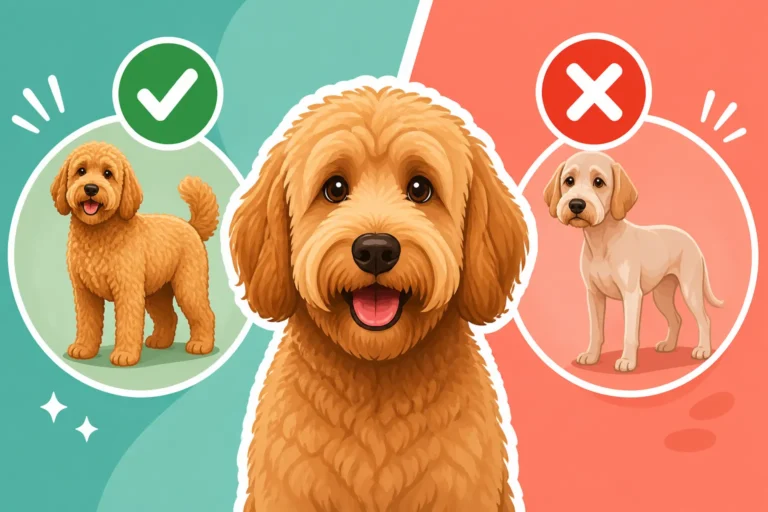
An "improper coat" on a Labradoodle is essentially a coat that lacks the distinctive furnishings – the beard, mustache, and eyebrows – that are characteristic of the breed's Poodle influence. Instead, a Labradoodle with an improper coat will have a face that looks very much like a Labrador Retriever's, with shorter hair around the muzzle and eyes. It's often referred to as a "flat coat" or "hair coat," and it's a clear deviation from the breed ideal. This isn't just about aesthetics; it has significant implications for shedding and allergy potential, which are often the primary reasons families choose a Labradoodle in the first place.
Many prospective owners might not even realize this is a possibility, especially when breeders focus heavily on promoting the "hypoallergenic" and "non-shedding" aspects of the Labradoodle. The disappointment can be significant when a puppy that was expected to be low-shedding grows into a dog that sheds as much, or sometimes even more, than a Labrador. It underscores the importance of understanding the genetics behind coat types and asking the right questions before bringing a puppy home.
The Genetic Blueprint of an Improper Coat
As we touched upon, an improper coat is not a random occurrence; it’s a direct result of genetics. Specifically, it happens when a Labradoodle inherits two copies of the recessive gene for a lack of furnishings (ic/ic, or f/f). Both parent dogs must carry this recessive gene, even if they themselves have proper, furnished coats. If a parent has a proper coat (F/ic), it means they carry one dominant gene for furnishings and one recessive gene for improper coat. They appear to have furnishings, but they are carriers. When two such carriers are bred together, there's a 25% chance in each litter that a puppy will inherit two copies of the recessive 'ic' gene and therefore have an improper coat.
This is a classic example of Mendelian inheritance, and it's why responsible breeders utilize genetic testing to avoid these pairings. If a breeder breeds a furnished dog (F/F) with an improper coated dog (ic/ic), all puppies will be carriers (F/ic) and will have furnished coats. But if they breed two carriers (F/ic x F/ic), that's when you can get a mix of coat types, including the undesirable improper coat. This genetic reality means that even a reputable breeder, if they aren't diligent with genetic testing, could unintentionally produce puppies with improper coats. Whether a Labradoodle Sheds at All touches on why understanding these coat genetics is so vital for future owners.
Visual Characteristics of an Improper Coat
The most defining visual characteristic of an improper coat is the absence of furnishings. Instead of a shaggy, bearded face, a Labradoodle with an improper coat will have a clean-faced look, much like a Labrador. The hair on their muzzle will be short, and they won't have those signature eyebrows that give many Labradoodles their expressive, almost human-like appearance.
Beyond the face, the body coat itself tends to be straighter and often slicker in texture. While some improper coats might have a very slight wave, they lack the distinct curl or spiral of fleece and wool coats. The overall impression is one of a more traditional retriever-type coat, rather than the fluffy, teddy bear look many associate with the Labradoodle. The hair might also feel coarser to the touch compared to the soft fleece or springy wool. These dogs often have a lighter undercoat and shed it, along with their outer coat, in a way that is very similar to a purebred Labrador Retriever. This difference in appearance can be quite striking, especially when an improper coated Labradoodle is placed alongside its furnished littermates.
Implications of an Improper Coat for Owners
Discovering your Labradoodle has an improper coat can be a significant surprise, especially if you had specific expectations about its grooming needs or its potential for allergy-friendliness. It fundamentally changes the ownership experience from what many anticipate, primarily impacting shedding levels and, consequently, the suitability for allergic households. While an improper coat certainly doesn't diminish a dog's loving nature or intelligence, it does shift the practical realities of living with a Labradoodle.
The biggest implication is that the primary reason many people choose a Labradoodle—the low-shedding or hypoallergenic coat—is effectively nullified. This can lead to disappointment and sometimes even difficult decisions if severe allergies are present in the home. It's crucial for owners to understand these differences upfront to avoid heartache down the line.
Shedding and Allergy Concerns
Let's not mince words: a Labradoodle with an improper coat will shed. Often, they shed as much as, or even more than, a Labrador Retriever. This means you'll find dog hair on your furniture, clothes, and floors, requiring regular cleaning and vacuuming. For families specifically seeking a Labradoodle to mitigate allergies, this can be a devastating realization. The lack of furnishings means the coat traps fewer allergens and sheds dander and hair freely into the environment.
Therefore, an improper coat Labradoodle is generally not suitable for individuals with dog allergies. While no dog is 100% hypoallergenic, the fleece and wool coats significantly reduce the amount of dander and hair released. An improper coat offers no such advantage. This is a crucial point that can sometimes be missed if the focus is solely on the "Labradoodle" label rather than the specific coat characteristics. If you or a family member suffer from allergies, it's vital to ensure your potential puppy has proper furnishings, and ideally, to spend time with the specific puppy and its parents to observe any reactions. Whether a Labradoodle Is Truly Hypoallergenic and Whether an Allergic Family Should Meet a Labradoodle First offer more context on this sensitive topic.
Grooming Needs of an Improper Coat
Ironically, while an improper coat Labradoodle sheds more, its grooming requirements are typically less demanding in terms of professional clipping and intricate brushing compared to its furnished counterparts. Because the hair is shorter and straighter, it doesn't tend to mat and tangle in the same way that fleece or wool coats do. You won't be dealing with those frustrating mats behind the ears, in the armpits, or around the tail that are common with proper Labradoodle coats.
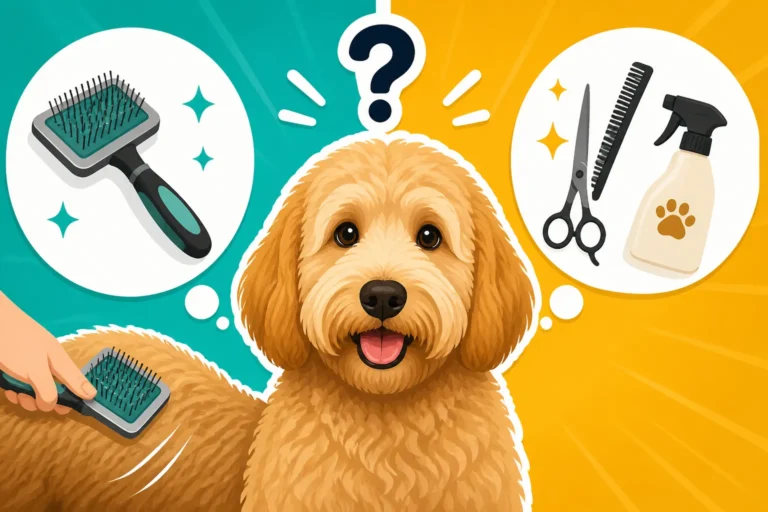
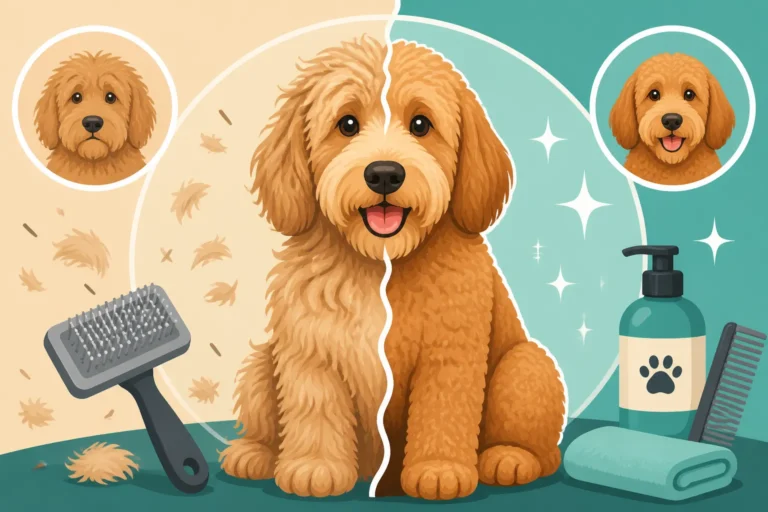
Regular brushing, perhaps a few times a week, will still be necessary to remove loose hair and keep the coat healthy and shiny, much like grooming a Labrador. A simple slicker brush or even a deshedding tool can be very effective. Occasional baths are also important to keep their skin and coat clean. However, you likely won't need expensive professional grooming every 6-8 weeks for intricate clips, saving you a considerable amount of time and money. Products from brands like Chewy or Amazon can provide all the basic grooming tools you'd need, from deshedding brushes to dog-specific shampoos. While the initial expectation of a low-shedding dog might be dashed, the upside is a simpler grooming routine. How Long Brushing a Labradoodle Takes Each Week details the typical commitment for dogs with proper coats, which will be much more involved than for an improper coat.
How to Avoid an Improper Coat and What to Do If You Have One
The best way to avoid ending up with a Labradoodle that has an improper coat is to be an informed and diligent puppy buyer. This means doing your homework, asking the right questions, and understanding the role of genetic testing in predicting coat types. For those who already have an improper coat Labradoodle, the key is acceptance and adapting your care routine to meet their specific needs, recognizing that their loving personality shines through regardless of their fur.
It's a testament to the growth of knowledge in canine genetics that we can now predict these traits with high accuracy, empowering both breeders and prospective owners to make the best decisions. Don't let the surprise of an improper coat overshadow the joy your Labradoodle can bring.
Choosing a Breeder and Genetic Testing
The most critical step in avoiding an improper coat is to choose a responsible breeder who performs genetic testing on their breeding stock. Ask to see the genetic test results for both parent dogs, specifically looking for tests that confirm the presence of the furnishings gene (F/F) or at least ensure that only one parent is a carrier (F/ic) if the other is F/F. A responsible breeder will be transparent about these results and happy to explain what they mean. They will be using these tests to ensure that they are not breeding two carrier dogs (F/ic x F/ic) together, which is the pairing that risks producing improper coats.
Many breeders use comprehensive DNA panels from companies that test for a range of genetic health conditions and coat traits. These panels will clearly indicate if a dog carries the improper coat gene. For example, some labs will label the furnishings gene locus as "FGF5" or "RSPO2," and the result will show if the dog is F/F (two copies of furnishings), F/ic (one copy of furnishings, one improper coat allele, a carrier), or ic/ic (two copies of improper coat, an improper coated dog). If a breeder cannot provide these tests or seems hesitant, it's a major red flag. What a Labradoodle Coat DNA Panel Tells You and Whether a Breeder's DNA Panel Covers Health Too offer deeper insights into the value of genetic testing.
Living with an Improper Coat Labradoodle
If you find yourself with an improper coat Labradoodle, the first and most important thing to remember is that you have a wonderful dog whose personality, intelligence, and loving nature are entirely independent of their coat type. The surprise or disappointment might be real, but your dog is still a cherished family member.
Managing shedding will be your primary focus. Regular brushing with a good deshedding tool can help reduce the amount of loose hair around your home. Consider investing in a quality vacuum cleaner designed for pet hair, and keep lint rollers handy. For allergy sufferers, stricter cleaning routines, air purifiers, and perhaps even designated "dog-free" zones in the house might be necessary. Some owners find that incorporating specific dietary supplements, like omega-3 fatty acids, can help maintain a healthy coat and reduce excessive shedding, and brands like Ollie offer fresh food options that prioritize coat health.
Ultimately, your Labradoodle's value comes from the joy and companionship they bring into your life. Embrace their unique look and focus on providing them with a happy, healthy home. Whether an F1 Labradoodle Is Less Likely to Get Addison's or Whether an F1 Labradoodle's Coat Is a Gamble highlight the genetic lottery that can sometimes happen with first-generation crosses, and coat type is one such variable.
| Feature | Proper Coat Labradoodle (Fleece/Wool) | Improper Coat Labradoodle (Hair/Flat Coat) |
|---|---|---|
| Furnishings | Present (beard, mustache, eyebrows) | Absent (clean face, like a Labrador) |
| Shedding Level | Low to non-shedding | Moderate to heavy shedding |
| Allergy Impact | Potentially suitable for mild allergy sufferers | Generally not suitable for allergy sufferers |
| Texture | Soft, wavy, spiraling (fleece) or dense, curly (wool) | Straighter, smoother, often coarser, single-layered |
| Grooming Needs | High: regular brushing to prevent mats, professional clipping | Moderate: regular brushing for shedding, minimal clipping |
| Genetic Basis | At least one dominant 'F' allele (F/F or F/ic) | Two recessive 'ic' alleles (ic/ic) |
Disclaimer
This article is for general informational purposes only and does not constitute professional advice. Laws, prices and regulations vary by location and change over time. Consult a qualified professional for guidance on your specific situation.