What a Guardian Family Gives Up on a Labradoodle
Guardian home programs often present a tempting opportunity: a beautiful Labradoodle puppy, seemingly at a reduced cost, with the added benefit of contributing to a reputable breeding program. However, many prospective guardian families don't fully grasp the significant sacrifices and limitations that come with the arrangement. This guide will walk you through the often-overlooked aspects of what a guardian family truly gives up, helping you understand the real commitment involved beyond the initial appeal.
Giving Up Full Ownership Control and Autonomy
When you enter into a guardian home agreement, you are essentially sharing ownership, but the breeder retains significant control over the dog's life, especially concerning its role as a breeding animal. This can be a huge adjustment for families used to making all decisions for their pets.
Limited Veterinary Care Decisions
One of the most immediate "give-ups" is the freedom to choose your dog's veterinary care. While you are responsible for the routine care, the breeder typically dictates which veterinarian your Labradoodle sees for breeding-related health checks, genetic testing, and even emergency situations that could impact future litters. This means you might find yourself traveling long distances to a specialist the breeder prefers, rather than using your trusted local vet. You might also have less say in treatment options if the condition affects the dog's breeding future, even if your preferred vet has a different recommendation for the dog's personal comfort. This can feel disempowering, as your primary concern is your dog's well-being, but the breeder's might be the genetic line.
Restricted Grooming and Lifestyle Choices
Imagine having a beautiful Labradoodle and being told you can't give it a summer shave or a particular haircut you love. Guardian contracts often include strict clauses about grooming, coat length, and even acceptable types of collars or harnesses to prevent coat damage that could interfere with breeding or simply make the dog appear less desirable to potential puppy buyers. You might also find lifestyle choices limited; perhaps the breeder specifies certain types of exercise or exposure to other dogs to minimize injury or disease risk, which can feel restrictive if you envision a very active or social life for your dog. For instance, if your Labradoodle has a lovely fleece coat, the breeder will likely require specific brushing regimens and prohibit shaving to maintain its integrity, ensuring it's always photo-ready for their website. For those who aren't prepared for the extensive grooming a Labradoodle often requires, this can be a particular frustration, especially during The Coat Change That Hits a Labradoodle at Nine Months when matting can become a constant battle.
Sacrificing Personal Time and Schedule Flexibility
Being a guardian family requires a significant investment of your time, and often, it's time that isn't entirely on your schedule. The needs of a breeding program can be unpredictable and demand immediate attention.
Frequent Trips for Breeding Purposes
A major commitment is the time your Labradoodle will spend away from your home for breeding. This includes periods for health testing, stud services (if male), and extended stays for whelping and raising puppies (if female). For a female Labradoodle, this can mean being away for several weeks or even months at a time, multiple times over a few years. You’ll need to coordinate drop-offs and pick-ups, which can be challenging if the breeder lives a considerable distance away or if your work schedule is inflexible. These absences mean you miss out on daily interactions, training consistency, and simply having your beloved pet by your side. It's not just about the physical absence; it's the emotional void left when your family member is away.
Availability for Breeder Visits and Inspections
Breeders often require regular visits to your home to check on the dog, assess its condition, and ensure the living environment meets their standards. These aren't always quick, informal drop-ins. They might involve specific times and preparation on your part to ensure the home and dog are presented impeccably. This means you need to be available, sometimes on short notice, to accommodate these inspections, essentially giving up some of your privacy and spontaneity at home. You're not just a pet owner; you're a caretaker whose home is part of the breeder's operation, and that comes with expectations.
Giving Up Privacy and Financial Autonomy
Beyond the immediate care of the dog, the guardian program impacts your financial planning and personal privacy in ways traditional pet ownership doesn't.
Shared Financial Responsibility and Unexpected Costs
While the breeder typically covers breeding-related expenses, routine vet care, food, and general upkeep often fall to the guardian family. This means you're still responsible for a significant portion of the dog's lifetime costs, including everything from annual check-ups and vaccinations to treats and toys from places like Chewy. Moreover, some contracts are vague about what constitutes a "breeding expense" versus a "routine expense." What if your Labradoodle develops a common issue like Ear Infections Built Into a Labradoodle's Drop Ear or Allergies Behind a Labradoodle's Itching? Whose responsibility is the treatment if it's not directly related to pregnancy but could affect the dog's overall health and thus, indirectly, its breeding capabilities? You might also find yourself footing the bill for damage the dog causes, just like any other pet owner, without the full autonomy of ownership.
Adhering to Contractual Obligations and Breeder's Rules
The guardian agreement is a legal contract, and you're bound by its terms, which can dictate various aspects of your life with the dog. This could mean specific dietary requirements, approved trainers, or even restrictions on where the dog can travel or socialize. Imagine a breeder requiring a premium food like Ollie for optimal health, which becomes a non-negotiable part of your monthly budget. Ignoring these clauses can lead to breach of contract, potentially resulting in the breeder reclaiming the dog. This constant need to consult or adhere to someone else's rules about your family pet can feel intrusive and erode your sense of independent decision-making.
Here's a comparison of typical pet ownership versus guardian family responsibilities to highlight some key differences:
| Aspect | Typical Pet Ownership | Guardian Family Responsibilities |
|---|---|---|
| Ownership Status | Full, sole owner | Shared ownership, breeder retains breeding rights |
| Decision Making | Full autonomy over all aspects of care and lifestyle | Breeder has ultimate say on breeding-related decisions, often on vet care, grooming, and diet |
| Dog's Location | Dog lives permanently with owner | Dog spends significant time away at breeder's for testing, breeding, whelping, and puppy raising |
| Vet Expenses | All vet expenses are owner's responsibility | Breeding-related expenses usually covered by breeder; routine care often guardian's responsibility |
| Grooming/Appearance | Owner's choice | Often dictated by breeder to maintain breeding appearance or coat quality |
| Time Commitment | Flexible, based on owner's schedule | Requires flexibility for breeder visits, drop-offs, and pick-ups; unpredictable at times |
| Privacy | Full privacy | Breeder may require home visits and inspections |
| Breeding Involvement | None | Directly involved in facilitating the breeding program through the dog |
| Selling/Rehoming | Owner's decision | Not permitted without breeder's consent and usually requires returning the dog to the breeder |
Insurance and Long-Term Care Planning
Securing pet insurance is a smart move for any dog owner, but for guardian families, it can get complicated. While you might opt for a general policy from a provider like Healthy Paws to cover accidents and illnesses, hereditary conditions that impact Labradoodles, like Addison's Disease a Labradoodle Inherits From the Poodle or Hips and Elbows in a Sixty Pound Labradoodle, might have specific clauses depending on whether they're considered pre-existing or breeding-related. Understanding Whether a Labradoodle Policy Covers Hereditary Conditions is critical. You give up the simplicity of a straightforward insurance claim when the dog's breeding status is intertwined. Furthermore, decisions about spaying or neutering, which is often done after the dog has completed its breeding career, are not yours to make until the contract is fulfilled. This means you might care for an intact dog for several years, which comes with its own set of management considerations and potential risks.
The Emotional Toll of Shared Attachment
Perhaps the biggest and most challenging "give-up" is the emotional one. You pour your heart and soul into raising and loving this dog, but it's never truly "just yours" in the same way a conventionally adopted pet is.
Handling Separations During Breeding Cycles
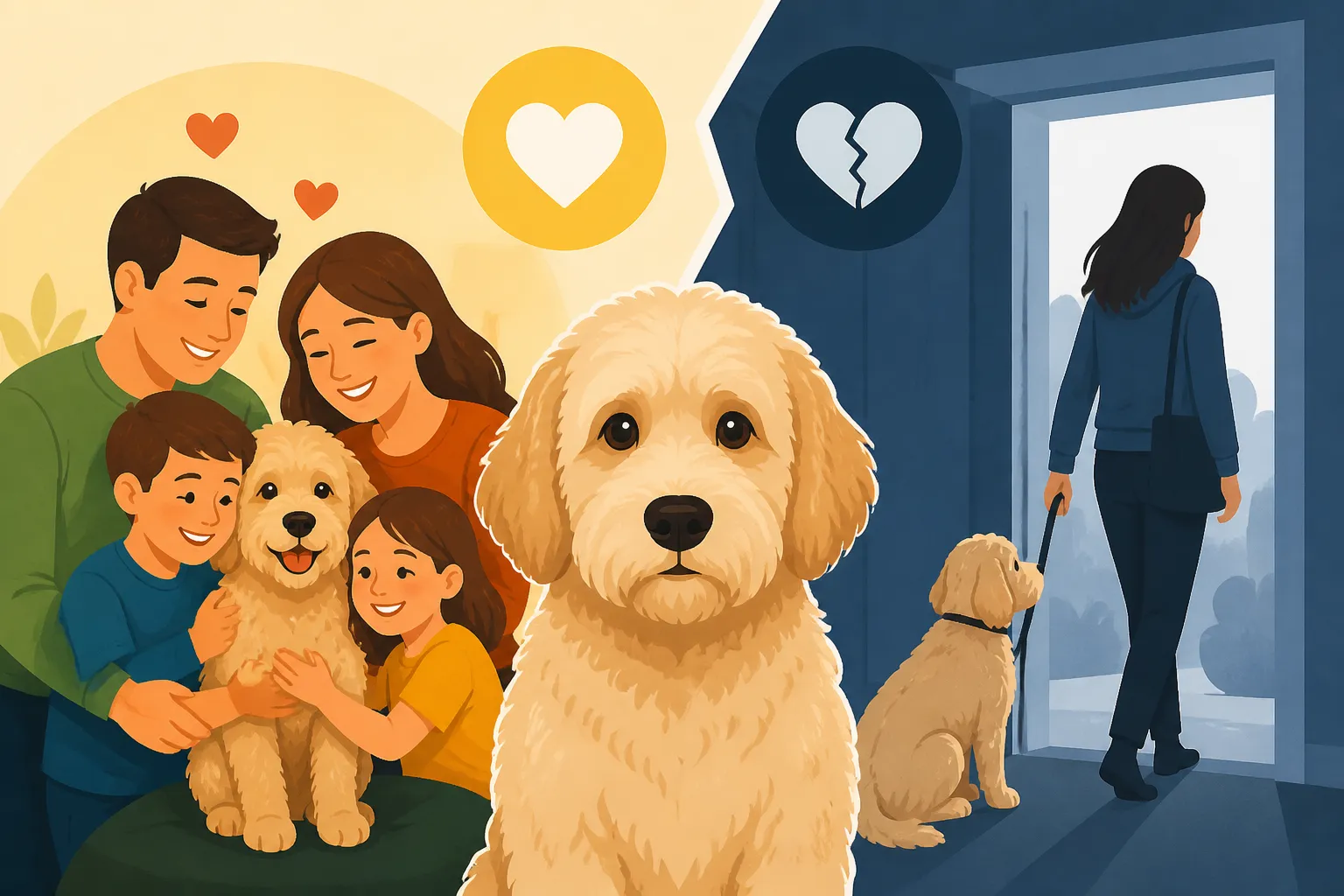
Every time your female Labradoodle goes to the breeder's for breeding, whelping, and nursing her litter, it's a separation. These can last for weeks, sometimes even two or three months, depending on the stage. For a male, it might be shorter stays for stud service. During these periods, you're not there to comfort them, maintain their routine, or simply snuggle up at night. For families with children, explaining why their beloved dog is "away at camp" for so long, repeatedly, can be heartbreaking. The dog also experiences these disruptions, though a good breeder strives to make it a positive experience. You give up that continuous, unbroken bond that typical pet ownership fosters.
Detachment from the Puppies (for Female Guardians)
For female guardian families, watching your Labradoodle go through pregnancy and then give birth to a litter of puppies that you will only have limited interaction with can be incredibly bittersweet. You will likely meet the puppies, but they are not your puppies to choose from or raise beyond the initial few weeks, if at all. This can create a profound emotional conflict: pride in your dog's contribution to healthy puppies, mixed with the sadness of knowing you won't get to keep any. It's a unique form of loss that most pet owners never experience, and it requires a strong emotional resilience to navigate.
Long-Term Implications and the Final Handover
The journey as a guardian family eventually comes to an end, and even that conclusion involves significant emotional and practical adjustments.
The Return of the Dog After Breeding
Once your Labradoodle has completed its breeding career, the breeder will typically arrange for it to be spayed or neutered and then officially transferred into your full ownership. While this sounds like a relief, it can still come with an adjustment period. Your dog might be older, possibly 4-6 years old, and its routine has included regular separations and different environments. If the dog has had multiple litters, it might have aged faster than you expected. You'll need to re-establish a consistent routine and reinforce any training that may have lapsed. This is when The Birthday a Labradoodle Counts as Senior might start creeping into your mind, even if your dog isn't quite there yet. You give up the expectation of a single, continuous trajectory for your dog's life and must be prepared for these transitions.
Potential for Early Retirement or Rehoming
While guardian contracts aim for the dog to remain with its guardian family after its breeding career, circumstances can change. A dog might be retired early from breeding due to health issues, or a breeder might decide a dog is no longer suitable for their program for various reasons. In such cases, the contract dictates the next steps, which could involve the dog being rehomed by the breeder, or in some instances, transferring full ownership to you earlier than expected. You give up the absolute certainty that this dog will be your dog for its entire natural lifespan, from puppyhood to its senior years, without potential interference from the breeder's program needs. It's a risk that's often overshadowed by the initial excitement of getting a puppy. Understanding What a Guardian Home Labradoodle Contract Says is absolutely vital to prepare for these eventualities.
Ultimately, becoming a guardian family is a deeply personal choice. It's a chance to be involved in the creation of future generations of beautiful Labradoodles, but it demands a readiness to give up a considerable amount of control, personal time, and emotional independence that typically comes with pet ownership. Before committing, it's crucial to have open, honest conversations with the breeder, meticulously review the contract, and be entirely realistic about the sacrifices you are willing and able to make.
Disclaimer
This article is for general informational purposes only and does not constitute professional advice. Laws, prices and regulations vary by location and change over time. Consult a qualified professional for guidance on your specific situation.