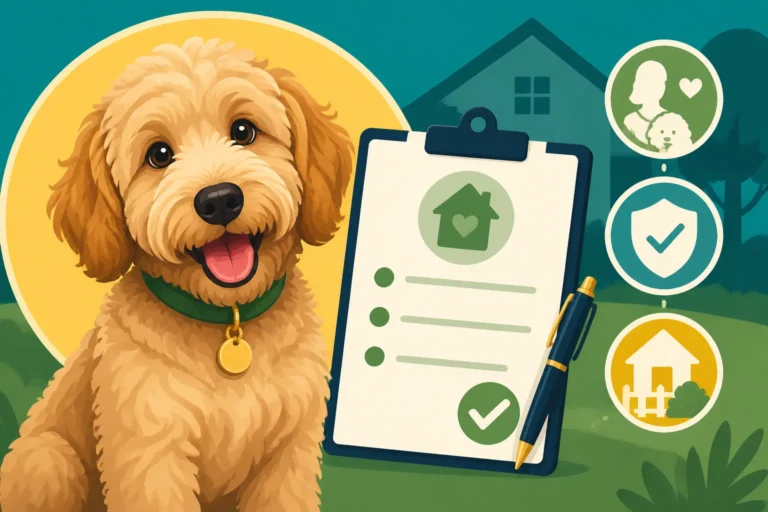
How Many Litters a Guardian Labradoodle Owes
Entering into a guardian home program for a Labradoodle can feel like an exciting opportunity to welcome a wonderful dog into your family with a lower initial investment, but it also comes with a significant commitment and a lot of questions, especially around the dog's breeding obligations. It's completely normal to feel a bit overwhelmed by the details of these agreements. This guide is here to walk you through the typical expectations for how many litters a guardian Labradoodle owes, shedding light on the factors that influence a dog's breeding career and what you can expect as a guardian family.
Understanding the Guardian Home Program Model
The guardian home program is a unique arrangement that benefits both responsible breeders and loving families. It's designed to ensure that breeding dogs live fulfilling lives as cherished family pets, rather than being housed in kennels. For many Labradoodle enthusiasts, the idea of a guardian home sounds almost too good to be true: you get a quality puppy, often at a reduced or no upfront cost, with the agreement that the breeder retains breeding rights for a set period. But what does that really mean in practice?
What is a Guardian Home, Really?
At its heart, a guardian home is a partnership. The breeder places a specially selected puppy or young adult dog, usually a future breeding prospect, with a family. This family becomes the "guardian," providing all the love, care, training, and day-to-day expenses that any pet owner would. The dog lives as a beloved member of their household, enjoying a normal family life, which is absolutely vital for a breed like the Labradoodle that thrives on companionship and integration.
For the breeder, this model allows them to expand their breeding program without needing extensive kennel facilities. It ensures their breeding dogs receive individual attention, excellent socialization, and are truly pets first. This is a huge advantage for the dog's overall temperament and well-being, which ultimately translates into better puppies. It’s a win-win when done ethically and transparently. However, it's crucial for prospective guardian families to understand that while the dog lives with them, its reproductive future is still primarily guided by the breeder's program. If you're looking into this, it's worth reading The Guardian Home Program That Gets You a Labradoodle Cheap to get a full picture of the financial aspect.
The Core Agreement: Ownership Versus Breeding Rights
This is where things can sometimes get a little fuzzy if not clearly defined from the outset. In a guardian home agreement, the physical dog lives with you and you provide its care, but the breeding rights remain with the breeder. This means the breeder makes all decisions regarding when and if the dog will be bred, which studs (for females) or females (for males) it will be paired with, and all aspects of the breeding process, from health testing to whelping.
A well-crafted, clear contract is absolutely non-negotiable in this arrangement. It should explicitly detail what is expected of the guardian family, what the breeder is responsible for, the financial agreements (who pays for vet care, breeding-related expenses, etc.), and critically, the number of litters expected. Without a solid, written agreement, misunderstandings are almost guaranteed. This document outlines the roadmap for your partnership. Make sure you understand every clause, especially when it comes to who pays for what, and the timelines involved. This partnership is built on trust and a shared commitment to the dog's welfare, but those foundations must be cemented in a comprehensive What a Guardian Home Labradoodle Contract Says.
Typical Expectations for Litter Contribution
One of the most pressing questions for any guardian family is precisely how many times their beloved Labradoodle will be asked to breed. It's a valid concern, as you're not just taking on a pet; you're agreeing to be a vital part of a breeding program. Responsible breeders have ethical limits on how many litters a dog will produce, focusing on the health and longevity of their animals.
The Standard Range of Litters for Females
For female Labradoodles in a guardian home program, the typical expectation for litter contribution usually falls within a range of three to five litters. This number isn't arbitrary; it's generally considered the ethical limit for a female dog to have a healthy breeding career while still maintaining her well-being and giving her a long, healthy life as a pet afterward. Exceeding this number could put undue stress on her body, diminish the quality of future litters, and potentially shorten her overall lifespan.
Breeders will also have an age limit for their breeding females. Most commonly, female Labradoodles are retired from breeding programs by around five or six years of age, regardless of how many litters they've produced. This ensures they have plenty of time to enjoy retirement as a spayed family pet. During her breeding years, the female will typically come to the breeder's home for breeding and then return closer to her due date to whelp and raise her puppies. This period can last for several weeks, which is one of the aspects of What a Guardian Family Gives Up on a Labradoodle. It's a significant commitment, requiring flexibility and trust on the part of the guardian family.
The Role of Male Guardian Dogs (Studs)
Male Labradoodles in guardian homes, often referred to as "stud dogs," have a distinctly different role and, consequently, different expectations regarding their "litter count." A male dog does not carry or whelp puppies, so his physical involvement in the breeding process is minimal. When needed, he will visit the breeder's facility for breeding purposes and then return home. This means that a stud dog can potentially contribute to many more litters over his career than a female, without the same physical toll.
However, responsible breeders still manage the use of their stud dogs to avoid overuse and maintain genetic diversity. They will track the number of breedings and ensure the male remains in peak physical condition. Male Labradoodles typically stay in a guardian program longer than females, sometimes up to eight or nine years of age, as the physical demands on them are so much less. Even though a male might be used more frequently, the guardian family’s daily routine with him remains largely uninterrupted, aside from occasional short trips to the breeder.
Factors Influencing a Labradoodle's Breeding Career
While contracts outline expectations, a dog's breeding career is not simply a matter of hitting a specific number. Many factors can influence how long a Labradoodle remains in a guardian program and how many litters they actually produce. Life, as we know, can be unpredictable, and responsible breeders prioritize the health and well-being of their dogs above all else.
Health and Genetic Clearances
This is perhaps the most critical factor. A Labradoodle's breeding career is entirely dependent on its continued excellent health and clear genetic status. Before a dog even enters a breeding program, it undergoes extensive health testing for conditions common to Labradors and Poodles, such as hip and elbow dysplasia, eye diseases, and genetic conditions like Addison's disease or Exercise Induced Collapse. You'll often hear breeders talk about The Health Tests a Labradoodle Breeder Should Show for this very reason.
However, health is an ongoing journey. Even with initial clearances, a dog might develop an unforeseen health issue or fail a subsequent health screening. For example, if a female Labradoodle develops issues related to Hips and Elbows in a Sixty Pound Labradoodle or is diagnosed with Addison's Disease a Labradoodle Inherits From the Poodle later on, a responsible breeder will immediately pull her from the program, even if she hasn't produced the contractual number of litters. The same applies to male studs. The dog's well-being always takes precedence over breeding goals. This is also why choosing a breeder who emphasizes Whether Health Tested Parents Add Years to a Labradoodle is so important.
Successful Pregnancies and Puppy Health
Not every breeding attempt results in a successful pregnancy, and not every pregnancy yields a large, healthy litter. Sometimes a female may not conceive, or she might have very small litters. The health and vigor of the puppies themselves are paramount. If a female consistently struggles with conception, experiences difficult whelping, or produces puppies with unforeseen health issues, a responsible breeder will make the tough decision to retire her early.
The stress of repeated pregnancies and whelping can also take a toll on a female, and a breeder might opt to retire her earlier than planned if they observe signs of strain or reduced vitality. It's a delicate balance of genetics, physiology, and individual temperament. This commitment ensures that the breed standard is upheld and that puppies entering new homes are as healthy as possible.
Breeder's Program Needs and Contract Specifics
The specific goals and needs of the breeder's program also play a significant role. A breeder might have a strong need for a particular genetic line or specific traits, which could mean a dog is bred more or less frequently within its ethical limits. For instance, if a dog produces offspring with highly desirable traits that are difficult to find, they might be utilized for the full five-litter allowance. Conversely, if a breeder's program evolves or they find they have enough progeny from a particular line, a dog might be retired earlier.
This highlights why the contract is so critical. While it provides a general framework, it should also include clauses about potential early retirement due to unforeseen circumstances or the breeder's discretion. Open communication with your breeder about their program's direction and your dog's individual progress is key. Knowing What an ALAA Labradoodle Breeder Must Prove might give you an idea of the standards some breeders adhere to.
Life After the Program: The Retired Guardian Labradoodle
The end of a Labradoodle's breeding career isn't an ending at all; it's a new beginning! For guardian families, this transition is often the culmination of years of partnership and commitment, where their beloved pet officially becomes theirs in every sense of the word.
Transition to Full Ownership
Once a guardian Labradoodle has fulfilled its contractual breeding obligations, or if it is retired early due to age or health reasons, full ownership of the dog is officially transferred to the guardian family. This is typically outlined in the initial How a Guardian Home Labradoodle Arrangement Works contract, making it a clear and expected part of the process. For many guardian families, this transfer of ownership is a moment of celebration, as they've cared for and loved this dog as their own for years, and now it truly belongs to them, without any further breeding commitments.
At this point, the breeder will usually arrange for the dog to be spayed or neutered at their expense. This marks the definitive end of its breeding career and ensures its long-term health and well-being as a companion animal. The dog can then fully settle into its role as a permanent, non-breeding family pet, enjoying all the benefits of a carefree retirement. Knowing Whether a Retired Guardian Labradoodle Stays With the Family is often a huge relief for guardian families, as the bond they've formed is unbreakable.
The Long-Term Commitment
Even though the breeding phase of a guardian Labradoodle's life is finite, the commitment from the guardian family extends for the dog's entire lifespan. Labradoodles generally live for The Twelve to Fifteen Years a Labradoodle Lives, meaning you're signing up for a long-term relationship, regardless of breeding activity. This includes ongoing daily care, training, socialization, and, of course, financial responsibility.
Throughout its life, your Labradoodle will require quality food (whether traditional kibble from a supplier like Chewy or fresh food options like Ollie), regular veterinary check-ups, grooming, and potentially unexpected medical expenses as it ages. It's wise to consider pet insurance from providers like Healthy Paws early on to help mitigate the costs of unforeseen illnesses or accidents. The overall cost of ownership over a dog's lifetime can be significant, so it's essential to be prepared for What Fourteen Years With a Labradoodle Comes To. The guardian program provides a fantastic start, but the lion's share of the journey is still yours to embrace.
Here's a quick overview of what you can typically expect regarding litter obligations in a guardian home program:
| Feature | Female Guardian Labradoodle | Male Guardian Labradoodle (Stud) |
|---|---|---|
| Typical Litter Count | 3-5 litters | Potentially many (but managed) |
| Age of Retirement | 5-6 years old | 8-9 years old |
| Physical Demands | High (pregnancy, whelping, nursing) | Low (brief breeding visits) |
| Time Away from Home | Weeks (for breeding, whelping, puppy raising) | Hours/Days (for breeding visits) |
| Health Considerations | Prone to pregnancy/whelping complications | Less direct breeding-related health risks |
| Key Influencing Factors | Health, successful litters, breeder's needs | Health, genetic demand, breeder's needs |
| Post-Program | Spayed, full ownership transferred to guardian family | Neutered, full ownership transferred to guardian family |
Remember, this table provides a general guideline. Your specific contract with your breeder will contain the exact terms and conditions of your arrangement.
Disclaimer
This article is for general informational purposes only and does not constitute professional advice. Laws, prices and regulations vary by location and change over time. Consult a qualified professional for guidance on your specific situation.