Whether a Labradoodle’s Adult Coat Mats More
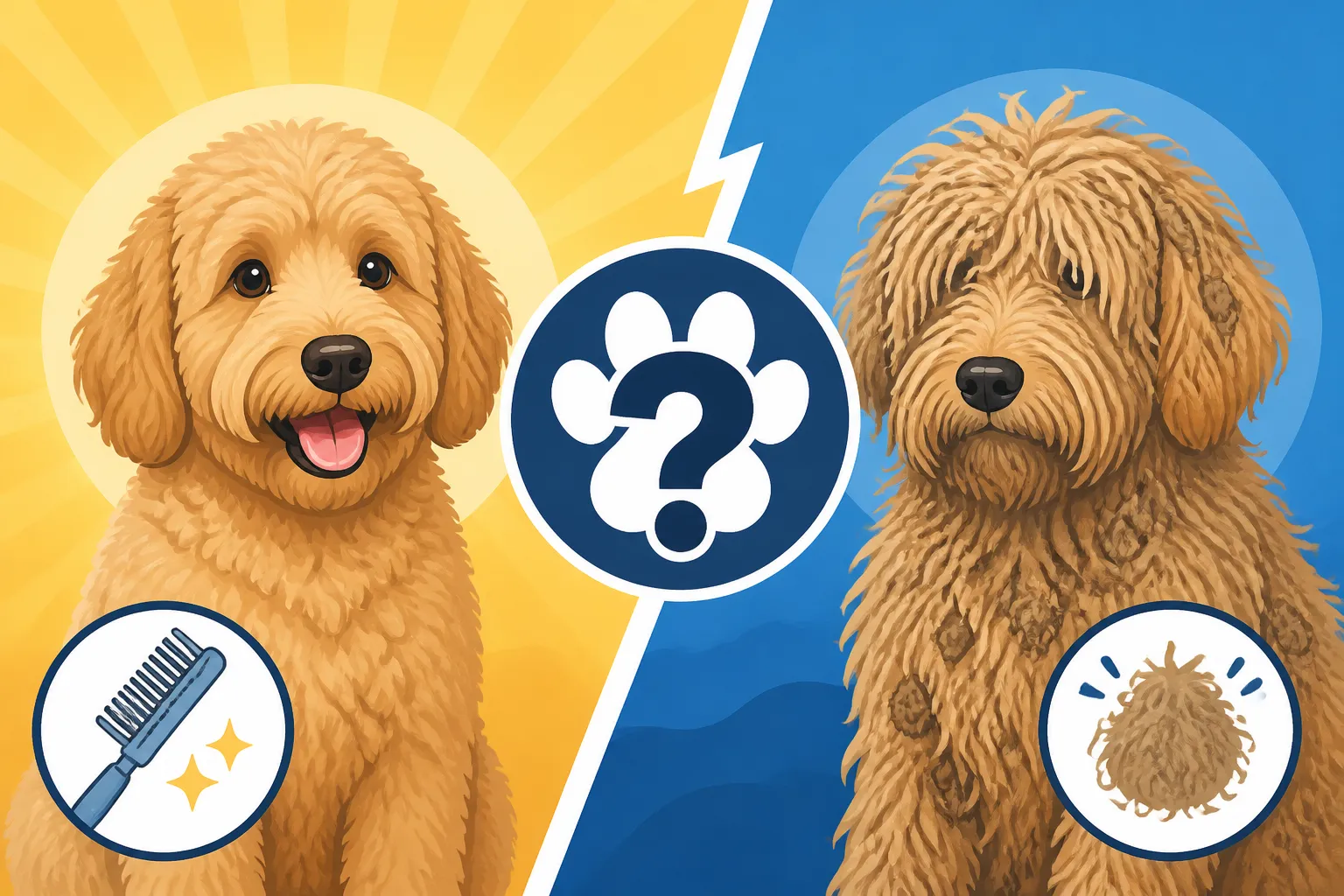
Oh, that glorious puppy fluff! It’s so soft, so manageable, so utterly misleading about what’s to come. Many of us fall head over heels for our Labradoodle puppies, blissfully unaware of the hairy saga that often begins around their first birthday. You might find yourself wondering if it's just you, or if your Labradoodle's adult coat truly does seem to develop mats at the speed of light, turning from sleek to tangled almost overnight. This guide is here to shed some light on the reality of the Labradoodle's coat transition and give you the tools to tackle those persistent mats.
Understanding the Labradoodle Coat Evolution
The journey from a soft, wispy puppy coat to a dense, mature adult coat is a significant one for any Labradoodle owner. It's often where the real work of owning a Doodle begins, and it catches many new owners by surprise. Understanding what's happening beneath the surface is the first step to staying ahead of the tangles.
Puppy Coat vs. Adult Coat Texture
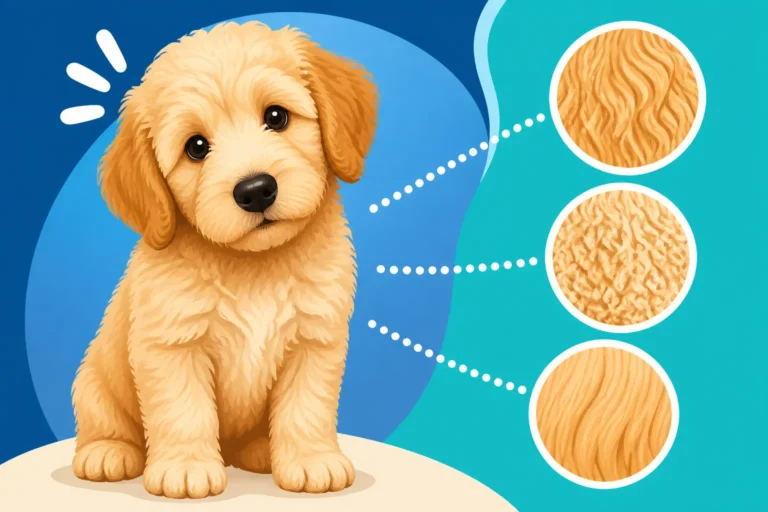
Your Labradoodle's puppy coat is typically a single layer of fine, soft hair, much like a baby's hair. It's often quite easy to brush through and doesn't usually form tight mats, even with infrequent grooming. This is the coat that everyone adores, often sparking the misconception that Labradoodles are "low maintenance" when it comes to grooming. The reality is, this phase is temporary, and it’s preparing you for a much different grooming routine. The texture is light, and the individual strands are not yet developed enough to interlock deeply and form stubborn tangles.
As your Labradoodle matures, usually between 6 and 18 months, their adult coat begins to grow in. This new coat is denser, often thicker, and can have a more varied texture depending on whether your dog has a hair, fleece, or wool coat. You might notice the texture changing, becoming coarser, curlier, or wavier. This change isn't just aesthetic; it fundamentally alters how the hair behaves and, crucially, how prone it is to matting. The individual hairs develop more texture and strength, which, while beautiful, also makes them more prone to knotting together. Owners often describe the adult coat as having more "substance" or "body" to it.
The Role of Coat Type in Matting Tendency
The specific type of adult coat your Labradoodle develops plays a huge role in how much it will mat. There are generally three coat types: hair, fleece, and wool, though many variations exist in between. A hair coat is typically straighter and sheds more, somewhat similar to a Labrador's coat, and generally mats less than the other two types. However, even hair coats can develop tangles if not brushed, especially in longer lengths. Many people are attracted to Labradoodles because of the idea that Whether a Labradoodle Is Truly Hypoallergenic, which is more often associated with the fleece and wool coats.
Fleece coats are wavy or spiraling, soft to the touch, and are often the most desired due to their low-shedding qualities and appealing texture. However, this soft, wavy texture is a double-edged sword: it's incredibly prone to matting. The waves and curls interlock easily, forming mats close to the skin. Wool coats, which are denser and curlier, much like a Poodle's coat, are also highly prone to matting. The tight curls act like Velcro, catching shed hairs and debris, quickly forming felt-like mats if not meticulously groomed. Each of these textures creates a different challenge, with fleece and wool types requiring far more diligent care to prevent matting.
| Feature | Puppy Coat | Adult Coat (Fleece/Wool) |
|---|---|---|
| Texture | Fine, soft, wispy, often straight/wavy | Denser, thicker, wavy, spiraling, or curly |
| Shedding | Minimal to moderate | Minimal (often trapped within curls) |
| Matting Tendency | Low, easy to brush | High, tangles quickly, prone to felting |
| Grooming Needs | Moderate, surface brushing often sufficient | High, daily line brushing to the skin crucial |
| Density | Single layer, lighter | Denser, often appears multi-layered |
The Infamous "Coat Change" Period
If you're a Labradoodle owner, you've likely heard whispers of "the coat change." This isn't just a myth; it's a very real and often frustrating period in your dog's first year of life where their coat seems to go from zero to tangled in seconds.
When the Coat Change Happens
The coat change typically begins around 8 to 12 months of age, though it can start as early as 6 months or as late as 18 months, depending on the individual dog and its genetics. This is the period when your Labradoodle’s soft puppy coat is actively being replaced by their denser, coarser adult coat. Imagine all that fine puppy hair trying to shed out, but instead of falling to the floor, it gets trapped within the emerging, more textured adult hair. It’s like a massive tangled mess forming right on your dog.
This transition period can last anywhere from a few weeks to several months, and it's notoriously challenging. During this time, the matting potential skyrockets because you have two different textures of hair — the shedding puppy coat and the growing adult coat — intertwining. It’s a perfect storm for knots and tangles, and many owners are caught off guard by the intensity of the matting. Without proper, diligent intervention, the coat can quickly become severely matted, leading to discomfort for your dog and potentially expensive professional grooming sessions. This is a critical time when you really need to step up your grooming game.
Why Matting Becomes Extreme During This Time
During the coat change, the old puppy hair becomes dead and detaches from the follicles, but instead of simply falling out, it gets caught in the developing adult coat. The new, stronger, more textured adult hairs act like tiny hooks, snagging the finer puppy hairs. This creates a dense underlayer of trapped, dead hair that quickly forms mats, especially in high-friction areas. It’s similar to how human hair extensions might get tangled if not brushed properly, but on a much larger scale and all over your dog's body.
The problem is compounded by the fact that many Labradoodles are low-shedding, meaning this dead hair doesn't easily release on its own. It needs to be brushed out methodically and thoroughly. If left unchecked, these mats can quickly grow larger, tightening closer to the skin and becoming painful. Think of it as a snowball effect: a small tangle quickly becomes a larger, more compact mat when new hair gets caught in it. This is why daily, thorough brushing, often called "line brushing," is absolutely essential during this transitional phase to help separate the shedding puppy coat from the incoming adult coat. Neglecting grooming during this period almost guarantees significant matting issues. You'll definitely want to read up on The Coat Change That Hits a Labradoodle at Nine Months for more detailed information.
Why Adult Coats Seem to Mat More (or Do They?)
It’s not just your imagination; adult Labradoodle coats truly do have a higher propensity for matting compared to their puppy counterparts. This isn't a defect, but rather a characteristic of their unique coat structure.
The Mechanics of Matting
At its core, matting occurs when individual strands of hair become intertwined and knotted together, forming dense clumps. In Labradoodles, especially those with fleece or wool coats, the curly or wavy texture of the adult hair naturally encourages this intertwining. Each curl acts like a tiny spring, trapping loose hairs, dirt, and debris within its coils. This process is exacerbated by friction, moisture, and static electricity. When dead hairs are not brushed out, they create an additional layer of material for the live hairs to tangle around, making the mats larger and tighter.
Think of it like knitting: each strand gets caught on another, and if you don't untangle them regularly, they weave into a solid fabric. The unique structure of the Labradoodle's low-shedding coat means that instead of shedding dead hair onto your furniture, it gets trapped within the coat itself. This trapped dead hair is the primary ingredient for mats, as it has nothing to hold it in place and easily binds with the live hair. Regular, consistent brushing is the only way to manually remove these dead hairs before they become permanently matted.
How Different Adult Coat Textures Contribute
While all Labradoodles need regular grooming, the type of adult coat dictates the intensity and frequency of that grooming.
Fleece Coats: These coats are soft and wavy, often described as feeling like angora. The soft, fine texture combined with the waves makes them highly susceptible to matting. The hairs easily interlock, and the softness means they can compact quickly into dense mats if neglected. Owners often say a fleece coat feels like a cloud, but that cloud can turn into a brick of felt very fast.
Wool Coats: These are dense and curly, similar to a Poodle's coat. The tight curls are incredibly efficient at trapping loose hairs and debris. While sometimes perceived as easier because the curls might hold their shape, they can mat just as severely as fleece coats, often forming very tight, rope-like mats close to the skin. These mats are often harder to spot until they've become quite significant because they are so close to the body and hidden by the outer curls.
Hair Coats: These are generally straighter and coarser, shedding more than fleece or wool. While still requiring brushing, they typically mat less due to their straighter texture, which doesn't intertwine as readily. However, don't be fooled into thinking they are mat-proof; long hair coats can still develop tangles, especially behind the ears, under the legs, and on the tail. Understanding these differences helps you tailor your grooming routine to your specific dog's needs. For more on this, you can check out our guide on The Three Labradoodle Coats: Hair, Fleece and Wool.
Factors That Exacerbate Matting in Adult Coats
Beyond the natural characteristics of the adult coat, several external and behavioral factors can significantly worsen matting, turning a manageable tangle into a full-blown grooming emergency.
Moisture, Friction, and Static
Moisture: This is a huge culprit. A wet Labradoodle coat, especially a fleece or wool one, will mat faster than you can say "doodle." When the hair gets wet and then dries, the individual strands shrink and intertwine more tightly. This is particularly true if the coat isn't thoroughly brushed before and after bathing or swimming. Imagine wet spaghetti drying in a clump – that's what happens to your dog's hair. Even dampness from rain or humidity can trigger matting, especially in the denser parts of the coat. Drying your Labradoodle thoroughly after any exposure to water is paramount.
Friction: Any area on your dog's body that experiences constant rubbing or movement is a mat magnet. This includes behind the ears (where they shake their heads), in the armpits and groin (where legs rub against the body), under collars and harnesses, and around the tail base (from sitting and wagging). These high-friction zones are often the first places to develop tight, painful mats. A harness that isn't properly fitted or is left on for extended periods can also create significant matting across the chest and shoulders.
Static Electricity: In dry climates or during winter months, static electricity can make the hair stand up and attract more loose strands, creating a tangled mess. This is why many groomers recommend using a good quality conditioning spray, especially during drier seasons. Static not only makes the hair harder to brush but also causes it to cling together, accelerating the matting process. It’s a subtle but powerful contributor to coat chaos.
Neglecting Regular Grooming
This is perhaps the biggest factor. The truth is, many people underestimate the grooming needs of an adult Labradoodle. What worked for a puppy coat simply won't cut it for a mature one. Skipping brushing sessions, or only doing a superficial brush-over, is a surefire way to invite mats. A quick run-through with a brush that doesn't reach the skin will smooth the top layer of hair, giving the illusion of a brushed dog, while tight mats are forming underneath, close to the skin. This is a common mistake and one that leads to the most severe matting.
An adult Labradoodle with a fleece or wool coat needs consistent, thorough grooming, often daily or at least every other day. This means line brushing all the way down to the skin, section by section. Failing to do so allows dead undercoat to accumulate and combine with live hair, creating impenetrable mats that are painful for your dog and difficult (and expensive) for a professional groomer to remove. It's not about the dog "matting more," but about the owner not adapting their grooming routine to the realities of the adult coat. Consistent grooming isn't just about aesthetics; it's vital for your Labradoodle's comfort and skin health. We have a great resource on How Many Times a Week a Labradoodle Needs Brushing that can help guide you.
Environmental Factors and Lifestyle
Your Labradoodle's daily life and environment can also play a big role in how prone their coat is to matting. Dogs that spend a lot of time outdoors, especially in brushy or muddy areas, will naturally pick up more burrs, twigs, and dirt that can quickly become embedded in their coats and lead to mats. A Labradoodle that loves to swim, especially if not dried and brushed properly afterward, will also experience increased matting. The act of rolling on the carpet or playing rough with other dogs can also contribute to friction and tangles.
Even indoor environments can be a factor. Carpeting, blankets, and dog beds can create friction that causes matting in areas like the belly, chest, and flanks. Consider the quality of their bedding; some fabrics can be worse than others for creating static or tangles. Furthermore, dogs with sensitive skin or allergies that scratch or lick frequently can also inadvertently create mats in those irritated areas. It’s a combination of their inherent coat characteristics and the daily interactions their fur has with the world around them that truly determines matting potential.
Preventing and Managing Matting in Your Adult Labradoodle
The good news is that while adult Labradoodle coats are prone to matting, it's largely preventable with the right approach and tools. It requires commitment, but it’s an investment in your dog’s comfort and health.
Essential Grooming Tools and Techniques
To effectively combat matting, you need the right arsenal of tools. A high-quality slicker brush is non-negotiable for getting through the bulk of the coat. Look for one with firm, long pins that can reach down to the skin. A metal greyhound comb with both wide and narrow teeth is also crucial for line brushing and checking for hidden mats. You might also want a good detangling spray (often available from pet retailers like Chewy or Amazon) to help loosen tangles and reduce static, making brushing less painful and more effective. Some owners also find a mat rake or a small de-matting tool useful for carefully breaking up small, isolated mats before they become serious.
The technique is just as important as the tools. "Line brushing" is the golden rule for Labradoodles. This involves systematically brushing your dog by parting the hair in small sections and brushing from the skin outwards. You start at the bottom (say, a leg or belly) and work your way up, ensuring your brush touches the skin with every stroke. Once a section is brushed, you move the next layer of hair down and repeat. This ensures you're not just brushing the surface hair but actually getting down to where mats form. After brushing with a slicker, follow up with your metal comb to "comb check" each section. If the comb glides through from root to tip, you've done a good job. If it snags, you need to go back and brush that spot again.
Establishing a Regular Grooming Schedule
Consistency is key. For most adult Labradoodles with fleece or wool coats, daily or every-other-day brushing is ideal. Even 15-20 minutes of thorough line brushing several times a week can make a huge difference. Don't wait until you see mats to start brushing; prevention is much easier than correction. Establish a routine and stick to it. This regular contact also gives you a chance to check your dog's skin for any issues, like hot spots or bumps, that might be hidden by their dense coat. If your Labradoodle is frequently swimming or gets dirty, increase the brushing frequency accordingly.
Professional grooming is also a vital part of the schedule. Most Labradoodles need a professional groom every 6-8 weeks, depending on their coat type and desired length. A professional groomer has specialized tools and expertise to ensure the coat is thoroughly cleaned, trimmed, and dematted if necessary. Discuss with your groomer the best length for your dog’s lifestyle and your ability to maintain their coat at home. Be honest about your home grooming efforts; they can help guide you on realistic expectations for coat length and maintenance. You might find our article on What a Full Groom Costs on a Wool Coated Labradoodle helpful in planning your budget.
Diet, Supplements, and Healthy Skin
A healthy coat starts from within. A balanced, high-quality diet provides the essential nutrients for strong, healthy hair follicles and skin. Look for dog foods that list real meat as the first ingredient and contain healthy fats like omega-3 and omega-6 fatty acids, which are vital for skin and coat health. Some owners opt for fresh food delivery services like Ollie, which can contribute to overall vitality and coat luster.
Sometimes, a dietary supplement can also help. Fish oil supplements, rich in omega fatty acids, can improve coat shine, reduce dryness, and even help with skin issues that might lead to scratching and subsequent matting. Always consult your veterinarian before adding any supplements to your dog's diet to ensure they are appropriate for your specific dog's needs and won't interfere with any other medications or conditions. Hydration is also important; ensure your Labradoodle always has access to fresh, clean water, as dehydration can affect skin elasticity and coat quality.
Dealing with Existing Mats Safely and Effectively
Even with the best intentions, mats can happen. The key is to address them quickly and safely to prevent them from becoming worse and causing pain or skin issues.
Small, Isolated Mats vs. Extensive Matting
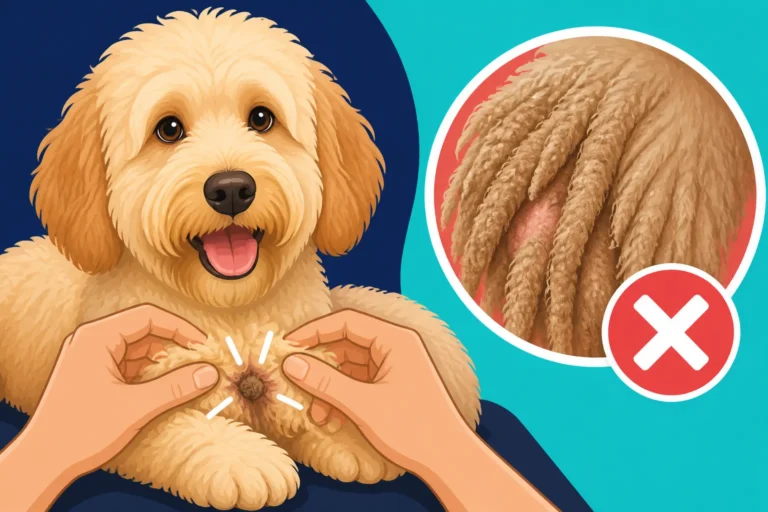
When you find a small, isolated mat, often behind an ear or in an armpit, you can often tackle it at home. First, spray it with a detangling spray to loosen the hair. Then, use your fingers to gently pull the mat apart, working from the outside edges inwards. Once it's somewhat loosened, you can carefully use the end tooth of your metal comb or a mat splitter to work through it, always pointing away from the skin. Be patient and take frequent breaks. Never try to brush through a dry, matted lump, as this will only pull on the skin and cause pain.
However, if your Labradoodle has extensive matting, meaning mats cover large areas of their body or are very tight against the skin, this is beyond home grooming. Trying to remove severe mats yourself can be incredibly painful for your dog, cause skin irritation or cuts, and damage their coat. In these situations, it's always best to seek professional help from a reputable groomer. They have the expertise, specialized tools, and often a very sharp pair of clippers to safely remove severe matting, which may involve shaving the affected areas or even the entire dog. They will prioritize your dog's comfort and safety. If the mats are too severe, a groomer might even refuse to work on the dog without veterinary sedation, as discussed in Whether a Groomer Refuses a Matted Labradoodle.
When to Seek Professional Help
Don't hesitate to call a professional groomer if:
- You find mats that are tight against the skin and don't easily loosen with detangling spray and finger work.
- Your dog shows signs of pain or discomfort when you try to brush out a mat.
- The mats are extensive, covering large sections of their body, or are "sheet" mats (where the entire coat is matted together).
- You simply feel overwhelmed or don't have the time and patience to tackle the matting yourself.
A professional groomer can assess the situation and recommend the best course of action. In severe cases, they may need to shave your dog down completely, giving the coat a fresh start. While this can be a shock visually, it's often the kindest and most humane option for a severely matted dog. It alleviates pain and allows the skin to breathe and heal. After a shave-down, you'll have a clean slate to implement a consistent grooming routine to prevent future matting. Don't feel guilty; sometimes a fresh start is exactly what your Labradoodle needs to be comfortable again.
Disclaimer
This article is for general informational purposes only and does not constitute professional advice. Laws, prices and regulations vary by location and change over time. Consult a qualified professional for guidance on your specific situation.