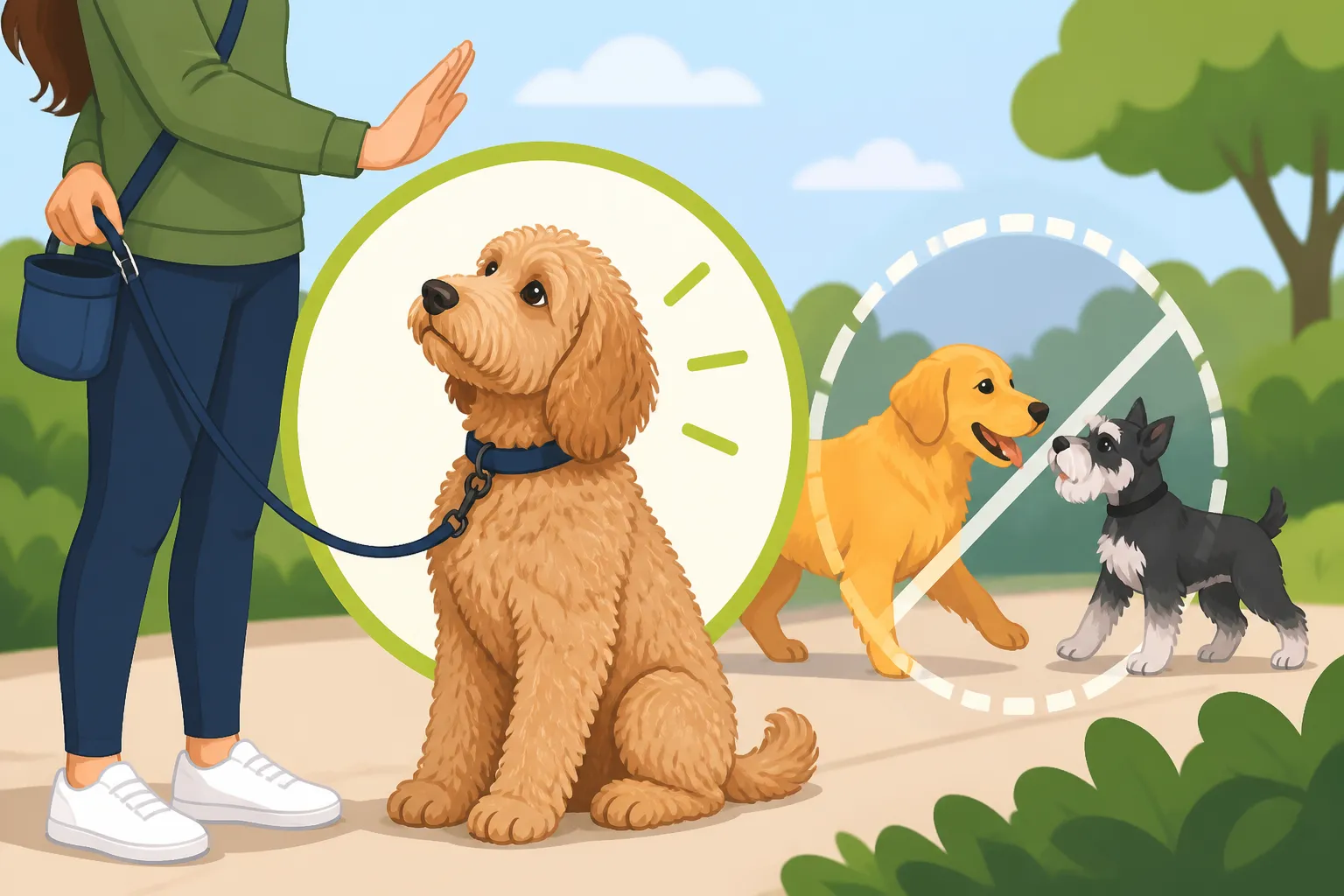
Teaching a Labradoodle to Ignore Other Dogs in Public
It's incredibly frustrating, isn't it? You envision peaceful strolls with your wonderful Labradoodle, happily trotting by your side, only to have every walk turn into a wrestling match when another dog appears. The lunging, barking, and general over-excitement can be embarrassing, stressful, and downright exhausting. This guide is here to walk you through practical strategies and training techniques to help your Labradoodle learn to calmly observe other dogs in public, making your walks enjoyable again.
Understanding Why Your Labradoodle Reacts to Other Dogs
Before we dive into solutions, it's really helpful to understand why your Labradoodle might be reacting the way they are. It's rarely about them being "bad" dogs; more often, it's a mix of their natural instincts, their individual personality, and past experiences. Labradoodles often inherit a wonderful blend of traits from their Labrador Retriever and Poodle parents, but sometimes those traits can manifest in ways that lead to challenges in public.
The Roots of Reactivity: Excitement, Frustration, or Fear
Your Labradoodle's enthusiastic greetings or sudden outbursts aren't always aggressive. In many cases, it's simply a massive wave of excitement! Labradors are famously friendly, and Poodles can be quite social, so when these two combine, you often get a dog that absolutely adores other dogs. When they're on a leash and can't get to another dog to say hello, that intense desire can quickly turn into frustrated barking and lunging. Think of it like a child in a candy store with their hands tied – they want it so badly, and they can't have it, so they might scream.
On the other hand, some Labradoodles might be reacting out of fear or insecurity. Perhaps they had a negative encounter as a puppy, or maybe they just aren't sure how to read other dogs' signals. The barking and lunging become a way to say, "Stay away!" They might be trying to create distance because they feel threatened or overwhelmed by the approaching dog. It's a self-preservation tactic, even if it looks intimidating to others. Understanding which emotion is driving your dog's reaction is the first critical step, because the training approach might shift slightly.
Breed Traits That Contribute
Labradoodles often have a delightful, bouncy energy that makes them fantastic companions. However, this same energy, coupled with the inherent friendliness of the Labrador and the often keen alertness of the Poodle, can be a recipe for over-arousal in stimulating environments. The retrieving drive from the Labrador side can make them incredibly focused on things moving, including other dogs, and the Poodle's intelligence means they learn patterns quickly – including the pattern that "dog appears = I react = owner gets flustered."
Moreover, Labradoodles are known for their "Velcro dog" tendencies, forming very strong bonds with their human families. While this is endearing at home, in public, it can mean they are very attuned to your stress or discomfort. If you're tightening the leash or getting anxious when another dog approaches, your Labradoodle will pick up on that, and it can heighten their own anxiety or excitement, creating a vicious cycle. The Velcro Labradoodle That Cannot Be Left touches on this strong attachment.
Foundation Training for Focus and Calmness
You can't expect your Labradoodle to ignore other dogs in a bustling park if they haven't mastered basic manners in a quiet living room. Building a strong foundation of communication and obedience before you tackle the big distractions is absolutely crucial. This isn't about quick fixes; it's about systematically teaching your dog new ways to respond.
Building a Reliable "Watch Me" Command
One of the most powerful tools in your training arsenal will be a solid "watch me" or "look at me" command. This teaches your Labradoodle to disengage from distractions and focus their attention entirely on you. Start practicing this in a quiet, low-distraction environment. Hold a high-value treat right at your nose, say "Watch me!" and when your dog makes eye contact, immediately mark the behavior (with a clicker or a verbal "yes!") and reward them. Repeat this many, many times until they offer eye contact instantly.
Gradually increase the distractions. Maybe practice in your backyard, then on your quiet street. The key is to always set your dog up for success. If they fail to make eye contact, you've moved too fast or the distraction is too great. Go back to an easier step. A reliable "watch me" gives you a lifeline when another dog suddenly appears. Resources like BAXTER & Bella often offer structured online courses that build up these foundational skills step-by-step, making it easier for new owners to navigate the process.
Mastering Loose Leash Walking Without Distractions
A Labradoodle that pulls on the leash at all times is already operating from a heightened state of arousal. Teaching them to walk nicely on a loose leash is foundational for public calmness. This means no pulling, even when there isn't a distraction. Practice changing directions frequently, stopping, and starting. Every time your Labradoodle's leash goes slack, mark and reward. If they pull, simply stop moving until the leash loosens, then resume walking. This teaches them that pulling gets them nowhere, but a loose leash keeps the walk moving.
This exercise requires immense patience and consistency. Remember, you're competing with a world full of interesting smells, sounds, and sights. Make yourself the most exciting thing on the walk, especially when starting out. High-value treats and enthusiastic praise can work wonders. This kind of foundational work is where you really start to build that vital connection with your dog, teaching them that focusing on you is more rewarding than anything else. You might find some helpful tips in Teaching a Sixty Pound Labradoodle Not to Pull.
The Importance of Consistent Positive Reinforcement
Labradoodles are intelligent and eager to please, making them excellent candidates for positive reinforcement training. This means rewarding the behaviors you want to see, rather than punishing the ones you don't. When your Labradoodle is reacting to another dog, scolding them or yanking the leash might temporarily stop the behavior, but it doesn't teach them what to do instead. It can also create negative associations with other dogs and with you, making them more anxious in the future.
Instead, focus on rewarding calm, focused behavior. When you're practicing your "watch me" or loose-leash walking, use treats that your Labradoodle absolutely adores – think tiny pieces of cooked chicken, cheese, or hot dogs. These aren't everyday kibble; these are the "jackpot" rewards that make focusing on you irresistible, especially when distractions are present. Consistency is key here. Everyone in the household needs to be on the same page with commands and rewards.
Strategies for On-Leash Encounters
Now that your Labradoodle has a solid foundation, it's time to apply those skills in increasingly challenging real-world scenarios. The goal isn't to make your dog ignore every dog, but to teach them to observe calmly and offer you their attention.
Managing Distance and Identifying Thresholds
The absolute most important concept in managing reactivity is distance. Your Labradoodle has a "threshold" – a distance at which they can observe another dog without reacting. Too close, and they'll lunge and bark. Too far, and they might not even notice. Your job is to find that sweet spot where they see the other dog but are still able to respond to you. Start training at this threshold distance. If your Labradoodle spots another dog and starts to stiffen or get excited, you're too close. Turn around and create more space.
Think of it like this: if a fire alarm is blaring right next to you, it's impossible to focus on a quiet conversation. But if it's faint in the distance, you might still be able to talk. We need to keep the "other dog alarm" faint enough for your Labradoodle to hear you. This might mean crossing the street, ducking behind a car, or even turning and walking the other way. It feels counterintuitive at first, like you're avoiding the problem, but you're actually creating successful learning opportunities for your dog.
Redirection and Counter-Conditioning Techniques
Once you've found that optimal distance, you can start the magic of counter-conditioning. This means changing your Labradoodle's emotional response to seeing another dog from "OMG, excitement/fear!" to "Oh, another dog! That means good things happen from my human!" The moment your dog spots another dog, and before they react, start feeding them those high-value treats rapidly. Treat, treat, treat, treat, treat, until the other dog is out of sight. The goal is to create a positive association: other dog = yummy treats.
You can combine this with your "watch me" command. As the other dog approaches at a safe distance, say "Watch me!" and when your Labradoodle looks at you, reward them lavishly. This isn't about distracting them from the other dog completely; it's about teaching them that looking at you in the presence of another dog earns them big rewards. Over time, you can gradually decrease the distance as your Labradoodle's tolerance grows. Online training resources, such as those from BAXTER & Bella, often break down these counter-conditioning exercises into manageable steps.
Utilizing the Right Tools
The right equipment can make a world of difference when working with a reactive Labradoodle. A sturdy, well-fitting harness can help prevent injuries to your dog's neck if they lunge, and can give you more control without causing pain. Front-clip harnesses are often recommended as they redirect your dog's pulling power towards their side, making it harder for them to lunge forward with full force. Many excellent options can be found on Amazon, and it's worth investing in one that fits comfortably and securely.
Avoid retractable leashes, as they offer little control and can actually encourage pulling and lunging. A standard 4-6 foot leash is ideal. For practicing in open, safe spaces, a long line (15-30 feet) can give your Labradoodle the feeling of freedom while you still maintain control and practice recall around minor distractions. Remember, tools are there to help manage the situation and keep everyone safe while you're training the underlying behavior.
Maintaining Progress and Long-Term Success
Training a reactive Labradoodle is a marathon, not a sprint. There will be good days and bad days, and that's perfectly normal. The key is consistency, patience, and celebrating every small victory.
Gradual Exposure and Practice in Varied Environments
Once your Labradoodle is reliably calm around other dogs at a certain distance in one location, slowly begin to introduce them to new environments. Start with similar, quiet places, then gradually move to slightly busier areas. The park on a weekday morning might be a good next step, for instance, before attempting the dog park on a busy Saturday. Each new environment will present new challenges and will likely require you to increase your distance from other dogs again initially.
The important thing is to keep it positive. Never push your Labradoodle past their threshold, especially in a new place. If they start to react, you've gone too far, too fast. Retreat to a comfortable distance and end the session on a positive note. Remember, every successful, calm encounter reinforces the desired behavior. Consider enrolling in an obedience class focusing on public manners, as the structured environment and expert guidance can be incredibly valuable. Whether a Labradoodle Needs a Trainer or a Class could offer more insights here.
Consistency and Dealing with Setbacks
Consistency from everyone who walks the dog is absolutely non-negotiable. If one person allows your Labradoodle to pull and react, it undermines all the hard work everyone else is putting in. Ensure everyone uses the same commands, the same rewards, and the same management techniques. This unified front prevents confusion for your Labradoodle and reinforces the training.
Setbacks will happen. A sudden unexpected dog, a reactive dog on the other side of the fence, or a day when your Labradoodle is just not feeling it. Don't get discouraged! A setback is not a failure; it's an opportunity to learn what your dog's current limits are and adjust your approach. Simply go back to an easier step, remind yourself of your progress, and recommit to the training. It's perfectly okay to have days where you just walk your dog in a known quiet area to build confidence.
Advocating for Your Labradoodle
Sometimes, the biggest challenge isn't your Labradoodle, but other people. Everyone means well, but an off-leash dog bounding up to your leashed Labradoodle, or a well-meaning person letting their dog approach without asking, can quickly derail your training. It's okay, and indeed necessary, to advocate for your dog. Don't be afraid to clearly state, "Please give us space, we're training!" or "My dog isn't friendly with other dogs on leash" (even if they are, it creates the necessary boundary).
You might also consider a yellow leash or vest that signals to others that your dog needs space. These can be found on sites like Amazon. Your Labradoodle relies on you to manage their environment and protect them from overwhelming situations. This means being proactive and setting clear boundaries with other dog owners. Remember, keeping your Labradoodle happy and calm is the priority.
| Reactive Behavior | Calm Behavior | Training Goal |
|---|---|---|
| Straining on leash | Loose leash | Redirect focus to handler |
| Barking, growling | Quiet observation | Build positive associations |
| Lunging, pulling | Four paws on floor | Maintain distance, reward stillness |
| Intense stare | Glance, then look away | Teach "look at me" |
| Whining, high-pitched vocalizing | Neutral, relaxed body language | Reduce arousal levels |
Continued Mental and Physical Exercise
A tired Labradoodle is generally a well-behaved Labradoodle! These dogs are intelligent and energetic, and they need both physical and mental stimulation to thrive. Ensure your Labradoodle is getting adequate exercise, whether it's brisk walks, fetch in the yard, or playtime. But don't forget mental exercise! Puzzle toys, scent work games (like Whether a Labradoodle Has the Nose for Scent Work), or even short, engaging training sessions can burn just as much energy as a long walk. The Exercise a Labradoodle Needs Before It Behaves emphasizes this point.
A dog that is under-exercised or bored is much more likely to be over-aroused and reactive in public. Providing outlets for their natural drives and intelligence can significantly reduce their overall stress and make them more receptive to training when you're out and about. It's about a holistic approach to their well-being, not just focusing on the reactive behavior itself.
Disclaimer
This article is for general informational purposes only and does not constitute professional advice. Laws, prices and regulations vary by location and change over time. Consult a qualified professional for guidance on your specific situation.