Introducing a Labradoodle to Water
It's a common misconception that because your Labradoodle has "Labrador" in their name, they'll instinctively dive into any body of water with unbridled joy. The reality, as many Labradoodle owners quickly discover, can be quite different. Sometimes, these wonderful dogs need a gentle, patient introduction to the joys of swimming, and knowing how to approach it safely and positively can make all the difference between a water-loving companion and one who views the hosepipe with suspicion. This guide will walk you through building a positive association with water for your Labradoodle, helping them become confident and happy swimmers.
Understanding Your Labradoodle's Water Instincts
Before you even think about getting your Labradoodle wet, it's really helpful to understand the mix of instincts they're working with. Remember, a Labradoodle is a blend of two distinct breeds: the Labrador Retriever and the Poodle. Both have historical connections to water, but their approaches and enthusiasm can vary wildly, and your specific dog might lean more towards one side than the other.
The Labrador's Natural Affinity vs. the Poodle's Reserved Approach
The Labrador Retriever is renowned globally for its love of water. Bred as a working dog to retrieve nets and fish from cold waters, they often possess an innate drive to jump in, splash around, and retrieve objects from the depths. Many Labradors see a lake or a pool and immediately think, "Party time!" Their dense, water-resistant double coat and otter-like tail are perfectly adapted for swimming, and their retrieving drive makes them natural water-fetchers. The Retrieving Drive a Labradoodle Gets From the Labrador is a strong trait you might see.
However, the Poodle, while also historically a water retriever, often approaches water with a bit more decorum. While Poodles are excellent swimmers, thanks to their strong legs and smart brains, they aren't always quite as boisterous or immediately enthusiastic as a Labrador. A Poodle might prefer a gradual introduction, testing the waters (literally!) before fully committing. Their single coat, while not as dense as a Labrador's, is also adapted for water, and they were often clipped to allow for better movement in the water, leaving tufts on joints for warmth. Your Labradoodle could inherit either or a blend of these personalities. Some Labradoodles will take to water like a duck, splashing from day one, while others will be more hesitant, approaching cautiously, perhaps only dipping their paws at first. It's crucial not to force the issue and to respect their individual personality, rather than expecting them to be an instant water dog simply because of their lineage.
Early Experiences and Socialization with Water
Just like with any new experience, your Labradoodle's early exposure to water plays a huge role in how they perceive it later in life. A puppy who had a bad experience, perhaps falling into a pool or being forced into water, might develop a lifelong fear. Conversely, positive, gentle introductions can build confidence and curiosity. If your Labradoodle came from a breeder who introduced puppies to a shallow kiddie pool or even just played with water hoses in a controlled way, they might already have a head start.
For those who haven't had such early experiences, or perhaps adopted an older Labradoodle, it's never too late to start. Think about all the other aspects of Raising a Labradoodle Through Its First Year – socialization is key. Just as you introduce them to new people, places, and sounds, you need to introduce them to water in a way that feels safe and fun. This means no sudden pushes, no throwing them into the deep end, and absolutely no negative associations. We want water to be a source of joy and exercise, not anxiety. A well-socialized Labradoodle, generally confident in new situations, will likely adapt better to new environments like a lake or a beach than one who is more timid.
Preparing for Your Labradoodle's First Swim
Once you understand your Labradoodle's potential inclinations, the next step is to get everything ready for a successful and safe first water adventure. Preparation isn't just about bringing a towel; it's about creating the right environment and having the right tools.
Essential Gear for Water Safety
Safety should always be your top priority when introducing your Labradoodle to water. Even strong swimmers can encounter unexpected currents, cold temperatures, or simply get tired. A dog life vest is hands-down the most important piece of equipment you can invest in, especially for initial introductions.
- Dog Life Vest: Look for a vest with good buoyancy, bright colors for visibility, and a sturdy handle on the back. This handle is invaluable for guiding your dog in the water, lifting them out if they get tired, or providing assistance if they struggle. A quality life vest, easily found on platforms like Amazon, will help them stay afloat effortlessly, reducing fatigue and building confidence without the struggle of keeping their head above water. It also helps reinforce proper swimming posture.
- Long Leash: A long training leash (15-30 feet) can be helpful in open water if your dog is prone to wandering or if you need to guide them back to shore. Just ensure it's not a retractable leash, as those can be dangerous around water.
- Waterproof Toys: Floating toys, like rubber balls or retrieving dummies, can be fantastic motivators. If your Labradoodle has that Labrador retrieving drive, a fun floating toy can make the water irresistible. Choose toys that are bright, easy to see in water, and durable.
- Fresh Water and Bowl: Your Labradoodle will get thirsty, and they might try to drink the lake, ocean, or pool water, which isn't good for them. Always have fresh drinking water available to prevent them from ingesting potentially harmful water.
- Towels: Lots of them! Labradoodle coats, especially fleece or wool, can hold a lot of water. Drying a Labradoodle After It Swims thoroughly is important to prevent skin issues and matting.
- Ear Cleaner: Labradoodles are prone to ear infections due to their drop ears and the hair that grows in their ear canals. Water can get trapped, creating a perfect breeding ground for bacteria or yeast. Cleaning a Labradoodle's Ears After Swimming immediately with a vet-approved cleaner is a must.
| Item | Purpose | Key Features |
|---|---|---|
| Dog Life Vest | Safety, buoyancy, confidence building | Bright color, sturdy handle, good fit, adjustable |
| Long Leash | Control, guidance, safety in open water | 15-30 ft non-retractable, durable, visible |
| Floating Toys | Motivation, fun, encourages retrieving | Bright, durable, non-toxic, floats well |
| Fresh Water & Bowl | Hydration, prevents ingestion of unsafe water | Portable bowl, ample fresh water |
| Towels | Drying coat, comfort | Absorbent, multiple for thorough drying |
| Ear Cleaner | Prevents ear infections | Vet-approved, gentle, dries ear canal |
| Treats | Positive reinforcement, rewards | High-value, waterproof pouch |
Choosing the Right Location for Introduction
The environment where you introduce your Labradoodle to water is just as important as the gear. You want a safe, calm, and positive setting that minimizes stress and maximizes fun.
- Shallow, Calm Water: Start with a location where the water is very shallow and still. A kiddie pool in your backyard is ideal for a first introduction. It's contained, you control the water level, and it's a familiar environment. Another great option is a calm lake or pond with a very gradual, sandy entry point, allowing your dog to walk in at their own pace. Avoid steep banks or sudden drop-offs initially.
- Warm Water: Cold water can be a shock and deter your dog from enjoying the experience. Aim for days when the water temperature is comfortable.
- Avoid Strong Currents or Waves: Rivers with strong currents, open ocean with large waves, or even busy public beaches can be overwhelming and dangerous for a beginner swimmer. Stick to calm, sheltered areas.
- Familiarity and Few Distractions: Choose a location where your dog feels generally comfortable and there aren't too many distractions from other dogs, people, or wildlife. A quiet corner of a dog park with a wading area, or a friend's fenced pool, can work.
- Pools: If you have access to a pool, ensure it has easy entry and exit points for your dog, such as steps or a ramp. Always supervise closely. Chlorine can irritate skin and eyes, so a thorough rinse after is important.
- Safety Check: Before letting your Labradoodle in, always check the water for hazards like sharp rocks, broken glass, strong algae blooms, or dangerous wildlife.
Remember, the goal is to make the first few experiences stress-free and enjoyable. A positive first impression will lay the groundwork for a lifetime of water adventures.
The Gentle Art of Water Introduction
This is where the rubber meets the road—or rather, where the paws meet the water! Patience, positive reinforcement, and a step-by-step approach are your best friends here. Don't rush it; every small victory is a win.
Starting Small: Puddles, Sprinklers, and Kiddie Pools
Before tackling a large body of water, let's make water a part of everyday fun. Think of it as water play therapy!
- Puddles and Sprinklers: On a warm day, let your Labradoodle investigate puddles on a walk. Don't pull them away; let them sniff, step in, and splash. A gentle sprinkler or a low-pressure hose can also be a fun, non-threatening way to introduce water. Many dogs love to "catch" the water from a hose. Keep it playful and light, rewarding any curiosity or interaction with praise and treats. This builds a foundation that water can be fun and doesn't always involve a scary plunge.
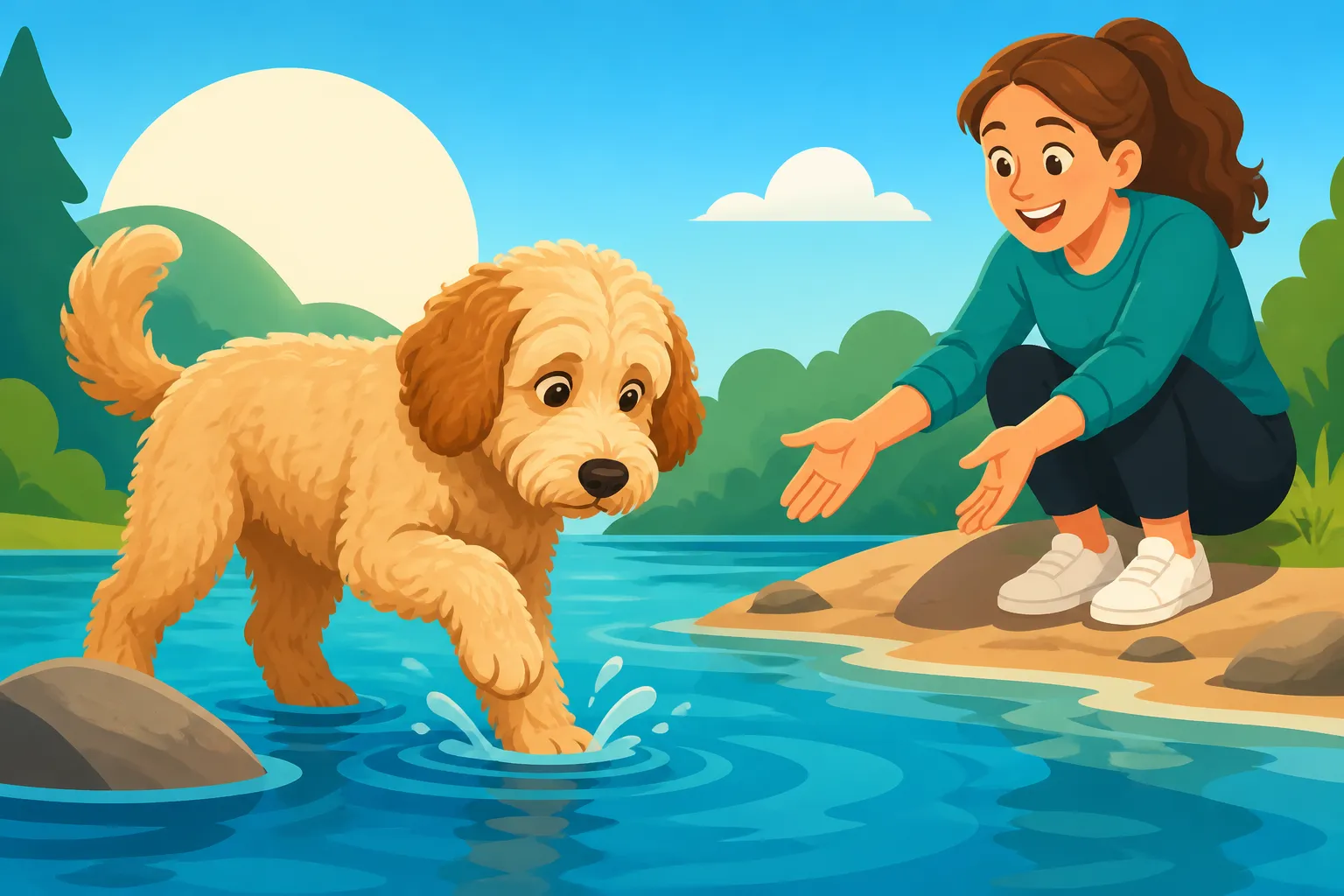
- Kiddie Pools: The Ultimate Starter Pack: A shallow plastic kiddie pool in your yard is, hands down, the best way to begin. Fill it with just a few inches of warm water—enough to cover their paws. Toss some of those floating toys or some treats into the pool. Encourage your Labradoodle to step in, but don't force it. You can sit beside the pool, dabble your own hands in the water, and entice them with toys or praise. If you have another confident, water-loving dog, they can be a great role model!
- Making it a Game: The key is to make it a game, not a chore. If your Labradoodle seems hesitant, try getting in the pool yourself (if it's big enough) and splashing gently. Bring out their favorite waterproof toy. Reward them generously with high-value treats and enthusiastic praise for even dipping a paw in. If they only stand by the edge and look, that's okay. Try again another day. The BAXTER & Bella online puppy school emphasizes building positive associations through play, and this principle applies perfectly here. They'll teach you how to motivate your dog without pressure.
Gradually Moving to Deeper Water
Once your Labradoodle is happily splashing in the kiddie pool, you can start to think about slightly larger, but still safe, bodies of water.
- Increasing Depth: If using a kiddie pool, you can gradually increase the water level over several sessions, still keeping it well within their comfort zone where their paws can touch the bottom. This builds their confidence in feeling water around their chest and belly.
- Choosing a Gentle Entry Point: When you move to a lake or beach, find a spot with a very gradual slope. This allows your Labradoodle to walk into the water at their own pace, feeling the depth change slowly. Put their life vest on before you even get close to the water, so they associate it with fun, not fear or an emergency.
- Lead by Example (or with a Confident Friend): If you're comfortable, wade into the shallow water yourself. Call your dog to you, offering treats and praise. Many dogs feel more secure if their human is with them. If you have a friend with a calm, water-loving dog, a supervised playdate at the water's edge can work wonders. Dogs often learn from watching others.
- Retrieving in Shallows: Toss their favorite floating toy just a few feet into the water, where they can easily walk to retrieve it. Gradually increase the distance, always staying within their comfort zone where they can stand. Once they're confidently walking into chest-deep water, you might see them naturally start to paddle as their feet leave the ground. This is usually where the life vest really shines, making the transition to swimming feel effortless.
Making it a Positive, Playful Experience
The entire introduction process should be drenched in positivity. Any hint of fear or force can set you back significantly.
- Praise and Rewards, Always: Every single interaction with water, no matter how small, should be met with enthusiastic praise, happy voices, and high-value treats. Did they dip a paw? Good job! Did they walk in a little deeper? Amazing! Did they paddle for a second? Best dog ever! Positive reinforcement is paramount.
- Keep it Short and Sweet: Especially in the beginning, keep water sessions brief. End on a high note before your dog gets tired, cold, or bored. You want them to always be excited for the next water adventure, not dreading it. Five to ten minutes of happy splashing is far better than a forced half-hour session.
- Never Force It: This is perhaps the most critical rule. Never push, throw, or drag your Labradoodle into the water. If they resist, back off and try a different approach or a different day. Forcing them will only create fear and a negative association that is very hard to undo.
- Read Their Body Language: Pay close attention to your Labradoodle's signals. Are they relaxed, tail wagging, ears up? Or are they tucked, panting, trying to get away? Respect their comfort levels. Signs of stress include lip licking, yawning, excessive panting, tail tucked, ears back, and trying to pull away. If you see these, it's time to take a break.
- Play and Fun: Turn it into a game. Splash gently with your hands, run in and out of the shallow water, play fetch with a floating toy. The more fun and low-pressure it is, the more likely your Labradoodle is to embrace it. For some dogs, this might take many sessions over several weeks or even months. Patience truly is a virtue here.
Addressing Common Challenges and Fears
Even with the gentlest introduction, some Labradoodles might still exhibit hesitation or fear around water. It's important to recognize these challenges and address them with empathy and practical strategies.
Overcoming Hesitation and Anxiety
It’s completely normal for a dog, even a Labradoodle with a water-loving lineage, to be cautious of new or unfamiliar environments like a large body of water. The vastness, the unfamiliar texture, the sounds, and the cold can all be a bit overwhelming.
- Identify the Source of Fear: Try to pinpoint what specifically makes your Labradoodle anxious. Is it the deepness? The current? The sound of waves? The cold? Or perhaps a previous negative experience? Understanding the root can help you tailor your approach. For instance, if they're nervous about depth, stick to ultra-shallow water for much longer.
- Desensitization and Counter-Conditioning: This is a classic training technique. Start in a totally non-threatening way (e.g., a damp towel, a very shallow bowl of water) and pair it with high-value treats. Gradually increase the "intensity" of the water exposure while continuously rewarding positive, calm behavior. For example, if your dog is scared of the hose, start by letting them sniff the off hose, reward, then the hose running very lightly far away, reward, and slowly bring it closer, rewarding all the way. BAXTER & Bella training often uses these principles for fear reduction.
- Use a Confident Dog Role Model: If you have a friend with a calm, well-adjusted dog who loves water, seeing that dog happily playing in the water can often be a powerful motivator for a hesitant Labradoodle. Dogs are social learners, and a good role model can show them there's nothing to fear. Ensure both dogs are supervised and the play remains positive.
- No Pressure, No Punishment: Reinforce that water is a choice, not a command. Never scold or punish your Labradoodle for being scared. This will only worsen the anxiety and create a strong negative association. If they're clearly distressed, it's better to end the session and try again another day with a simpler approach. Sometimes, just sitting by the water's edge and playing with a toy or giving treats can be a positive step forward, without them even getting wet.
- Consider a Trainer: If the fear is profound and persistent, a professional positive-reinforcement dog trainer or behaviorist can offer tailored strategies and hands-on guidance to help your Labradoodle overcome their apprehension. They can help you read your dog's subtle cues and implement effective desensitization protocols.
Dealing with Strong Currents or Cold Water
Once your Labradoodle is comfortable in calm, shallow water, you might be tempted to try new locations. However, certain conditions require extra caution.
- Strong Currents: Moving water, like rivers or ocean tides, can be disorienting and dangerous for any dog, especially a beginner. Even a strong swimmer can be swept away or struggle against a current. Always choose still, calm water for swimming. If you must be near moving water, keep your Labradoodle on a leash and avoid letting them enter. If you frequently visit areas with currents, consider specialized training or professional guidance before allowing them off-leash near such environments.
- Cold Water: Just like humans, dogs can suffer from hypothermia in cold water. Labradoodles, particularly those with wool or fleece coats, might seem insulated, but they can still get dangerously cold. Whether a Wool Coat Weighs a Labradoodle Down in Water is a valid concern, as a sodden coat can pull heat from their body. Always test the water yourself first. If it's too cold for you, it's too cold for your dog. Keep sessions very short in cooler water, and have plenty of warm towels ready for immediate drying.
- Sudden Temperature Changes: Be mindful of hot days followed by cold water. A sudden plunge can be a shock to their system. Gradual entry is always best.
- Algae and Water Quality: Always check for harmful algae blooms (often blue-green in color) in lakes and ponds. These can be highly toxic if ingested. Similarly, be aware of pollution warnings in rivers or beaches. When in doubt, keep your dog out of the water. Rinsing Lake Water Out of a Labradoodle's Coat is a good practice even if the water looks clean, to remove any potential irritants or bacteria.
- Post-Swim Care in Cold Weather: After a swim in cooler temperatures, make sure to dry your Labradoodle thoroughly and keep them warm. Don't let them air-dry in cold conditions, as this can chill them. A warm car ride home with the heater on low can also help.
Safety First: Keeping Your Labradoodle Safe in Water
Even when your Labradoodle becomes a confident swimmer, vigilance is always necessary. Water, while fun, can still pose risks. Being proactive about safety measures ensures continued enjoyment.
Recognizing Signs of Fatigue or Distress
A tired dog in water can quickly become a drowning risk. It's crucial for every Labradoodle owner to be able to spot the signs that their dog is struggling or simply needs a break.
- Excessive Panting or Gasping: While some panting is normal during exercise, excessive, labored panting or gasping for air is a red flag. It indicates they are overexerting themselves.
- Slowing Pace or Inefficient Movement: If your Labradoodle's paddle strokes become less coordinated, slower, or they start to sink lower in the water, they're likely getting tired. Their head might dip lower, or they might paddle more frantically without much forward momentum.
- Eyes Glazed Over or Anxious Expression: A tired or distressed dog might have a faraway look in their eyes, or their usual happy swimming expression might turn anxious or worried.
- Trying to Climb on You: If your Labradoodle tries to scramble onto you or another person, it's a clear sign they want out of the water and need help. Their instincts are telling them they need to get to solid ground.
- Shivering or Chattering Teeth: This indicates they are getting cold. Even on a warm day, extended time in water can lower body temperature.
- Losing Interest in Toys: If your normally toy-driven Labradoodle suddenly ignores a favorite floating toy, they might be too tired to engage.
- Gagging or Coughing: This could mean they've ingested too much water, which can lead to water intoxication in severe cases, or they've inhaled some water, which could result in aspiration pneumonia.
At the first sign of any of these, calmly guide your Labradoodle out of the water. Make sure they have a comfortable place to rest and warm up if needed. It's always better to end a session too early than too late. Building up endurance takes time and consistency, just like any other form of exercise.
Post-Swim Care and Health Considerations
The fun doesn't end when your Labradoodle gets out of the water; proper post-swim care is vital for their health and well-being, especially for a breed like the Labradoodle with its unique coat and ear structure.
- Thorough Rinsing: Whether your Labradoodle swam in a lake, ocean, or chlorinated pool, a thorough rinse with fresh water is essential. This helps remove chlorine, salt, bacteria, algae, or any other irritants that can lead to skin issues. Pay special attention to their paws, belly, and anywhere else debris might cling. Rinsing Lake Water Out of a Labradoodle's Coat is a non-negotiable step to prevent skin irritation or matting.
- Drying, Drying, Drying: Labradoodle coats, particularly the fleece and wool types, can hold a tremendous amount of water and take ages to air dry. This creates a perfect damp, warm environment for yeast and bacteria to thrive, leading to skin infections, hot spots, and painful matting. Use multiple absorbent towels to blot as much water as possible. For wool or fleece coats, a high-velocity dog dryer can be a godsend. Make sure to dry right down to the skin, not just the surface. Drying a Labradoodle After It Swims quickly and completely is vital.
- Ear Cleaning: This is arguably the most critical post-swim step for a Labradoodle. Their drop ears, combined with the hair that often grows deep within their ear canals, create an environment where moisture gets trapped. This can quickly lead to painful and recurring ear infections. Use a vet-approved ear cleaner to flush and dry their ear canals immediately after any swim. Whether Swimming Sets Off a Labradoodle's Ears is a definite concern, and proactive cleaning can prevent a lot of discomfort and vet visits. You can read more about The Hair That Grows Where a Labradoodle's Ear Should Drain and how it contributes to ear problems.
- Check Paws and Coat: After drying, give your Labradoodle a quick once-over. Check their paw pads for any cuts or abrasions from rough surfaces. Look for any debris, burrs, or small twigs that might have gotten tangled in their coat, especially between their toes or in their "furnishings" (beard, eyebrows). Brush their coat if it's prone to matting, focusing on areas like behind the ears, armpits, and groin. A quick brush can prevent knots from forming as the coat dries fully. What a Groomer Charges to Strip a Matted Labradoodle can be a costly lesson if you skip proper drying and brushing.
- Monitor Water Intake: Keep an eye on how much water your Labradoodle might have ingested during their swim. While a little is generally harmless, excessive ingestion of lake or ocean water can lead to gastrointestinal upset, or in rare but serious cases with fresh water, water intoxication (hyponatremia). Offer fresh water immediately after their swim to quench their thirst and hopefully deter them from drinking more questionable water.
By following these safety precautions and post-swim care routines, you can help your Labradoodle enjoy many happy, healthy years of splashing fun, whether they eventually become a dock diving champion or just enjoy a leisurely paddle!
Disclaimer
This article is for general informational purposes only and does not constitute professional advice. Laws, prices and regulations vary by location and change over time. Consult a qualified professional for guidance on your specific situation.