Signs a Young Labradoodle’s Hips Are Failing
It’s a heart-wrenching moment for any Labradoodle parent when you see your playful, bouncy companion start to slow down, or worse, show signs of discomfort. You brought them home envisioning years of joyful romps, and suddenly, you're faced with worries about their joints, even when they're still just a puppy. This guide is here to help you understand and recognize the subtle, and not-so-subtle, signs that your young Labradoodle's hips might be struggling.
Understanding Hip Dysplasia in Young Labradoodles
Hip dysplasia is one of those scary terms that no dog owner wants to hear, especially when their Labradoodle is still full of youthful energy. But understanding what it is and why it affects our beloved Doodles is the first step toward getting them the help they need.
What is Hip Dysplasia and Why Does it Matter?
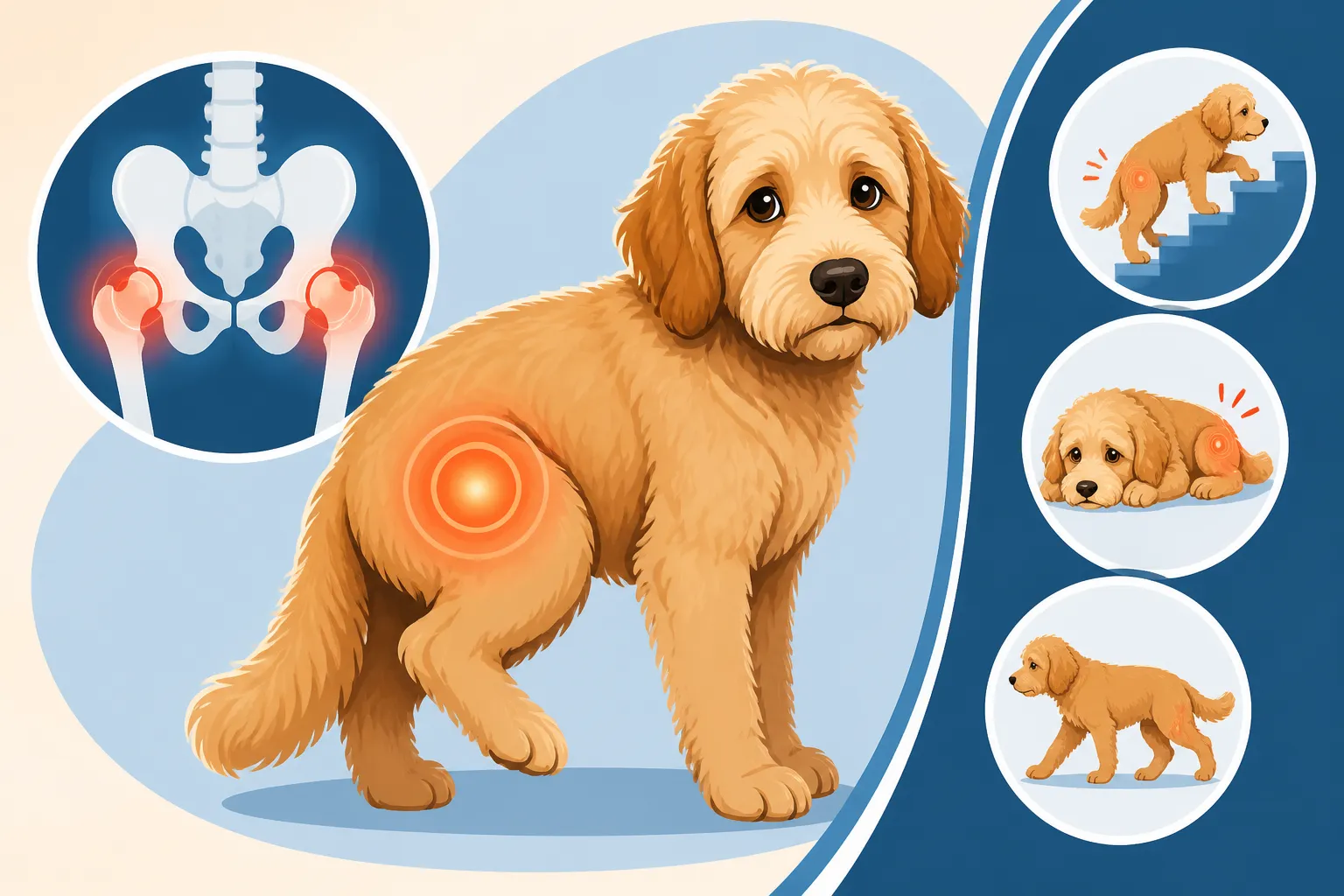
At its core, hip dysplasia is a condition where the hip joint doesn't form correctly. Think of it like a ball-and-socket joint where the "ball" (the head of the femur, or thigh bone) doesn't fit snugly into the "socket" (the acetabulum in the pelvis). Instead of a smooth, gliding motion, you get a loose, grinding action as the dog moves. Over time, this abnormal movement causes wear and tear, leading to pain, inflammation, and eventually, degenerative joint disease or osteoarthritis. It's a progressive condition, meaning it often gets worse over time if not managed.
This isn't just an "old dog" ailment. While the arthritis from hip dysplasia typically manifests in later years, the underlying structural problem is present from a young age, often as early as puppyhood. Recognizing it early can make a world of difference in managing the condition and preserving your Labradoodle's quality of life. Both the Labrador Retriever and Poodle, the parent breeds of our Labradoodles, can be prone to hip dysplasia, which means our Doodles carry a genetic predisposition. For a deeper dive into the overall joint health of this breed, check out our article on Hips and Elbows in a Sixty Pound Labradoodle.
The Labradoodle's Unique Predisposition
Because Labradoodles are a crossbreed, they inherit genetic traits from both the Labrador Retriever and the Standard Poodle. Both of these breeds are known to carry genes for hip dysplasia. While the idea of "hybrid vigor" often suggests a healthier dog, it doesn't always magically eliminate genetic predispositions, especially when both parent breeds share a common vulnerability. Some believe that combining two breeds with similar genetic predispositions might even concentrate the problem in some lines if breeders aren't diligent with health testing.
This is precisely why responsible breeding practices are so incredibly important. Breeders who health test their breeding stock rigorously are trying to stack the deck in favor of healthy puppies. They screen their parent dogs for hip dysplasia using methods like OFA (Orthopedic Foundation for Animals) or PennHIP evaluations. While testing doesn't guarantee a puppy will never develop hip dysplasia, it significantly reduces the risk. If you're considering a puppy, understanding Whether Both Labradoodle Parents Need OFA Hips is crucial.
Early Warning Signs You Can Spot at Home
It can be incredibly distressing to suspect something is wrong with your lively Labradoodle, but catching hip problems early is key. Many signs can be subtle, easily mistaken for normal puppy clumsiness or just a lazy day. But as their parent, you are often the first to notice these small shifts in behavior and movement.
Subtle Changes in Movement and Gait
One of the most classic signs of hip dysplasia in a young dog is what's often referred to as "bunny hopping." Instead of extending their hind legs independently when they run, they might move both back legs together, almost like a rabbit. This is their body's way of trying to stabilize a painful or unstable hip joint. It might look cute or quirky at first, but it's a red flag.
You might also notice a general reluctance or difficulty with activities they used to love. Perhaps they hesitate before jumping into the car or onto the couch (if allowed). They might struggle with stairs, taking them one step at a time or even refusing them entirely. Running might seem less enthusiastic, or they might tire more quickly than usual during play. Sometimes, their gait might just look a little "off" – a slight limp, an uneven stride, or a sway in their hindquarters. Pay close attention to how your Labradoodle moves after a long rest; stiffness, particularly in the morning or after a nap, can indicate joint discomfort. Be mindful of their exercise limits, especially when they are growing, as our guide on The Exercise Limit for a Growing Labradoodle explains.
Behavioral and Postural Indicators
Beyond how they move, your Labradoodle's overall behavior and the way they hold their body can offer clues. A dog in hip pain might show a decreased desire to play or exercise, even if they were previously very active. This isn't just about slowing down; it's about actively avoiding activities that cause them discomfort. They might also react with pain, yelp, or shy away if you touch or palpate their hip area or lower back.
Observe how your Labradoodle sits or lies down. A dog with uncomfortable hips might avoid lying squarely on their side with their legs extended, opting instead for a "frog-leg" position where their back legs are splayed out behind them, or they might sit awkwardly to one side. Getting up from a lying position might become a slow, effortful process, sometimes accompanied by grunts or groans. Another visual cue, though often subtle and progressing over time, is a loss of muscle mass in their hindquarters. Because they're not using those muscles effectively due to pain, they can start to atrophy. If you notice these changes, it's wise to consult your vet. Unexpected vet bills for conditions like hip dysplasia are precisely why many owners choose to invest in pet insurance. Companies like Healthy Paws can provide much-needed financial support during these challenging times.
When to Seek Veterinary Attention and Diagnosis
Spotting these signs at home is the crucial first step, but the next – and most important – step is to get your Labradoodle to the vet. An early, accurate diagnosis can significantly impact the long-term management and prognosis of hip dysplasia.
Your Vet Visit: What to Expect
When you bring your young Labradoodle in with concerns about their hips, your veterinarian will start with a thorough physical examination. They'll observe your dog's gait and posture, checking for any visible lameness or stiffness. They'll also perform what's called a palpation and manipulation exam. This involves feeling the hip joints and gently moving the legs through their full range of motion. They'll be looking for signs of pain, laxity (looseness) in the joint, or crepitus (a grinding sound or feeling). While these manual tests can give your vet a strong indication, they can't confirm the diagnosis definitively.
The gold standard for diagnosing hip dysplasia is radiography, or X-rays. To get the clearest, most diagnostic images, your dog will likely need to be sedated. This ensures they are perfectly still and positioned correctly, which is vital for accurate assessment of the hip joints. Your vet will take X-rays from various angles, allowing them to visualize the "ball" and "socket" relationship, assess joint congruity, and look for any signs of bone remodeling or early arthritis.
Diagnostic Tools and Understanding the Results
Once the X-rays are taken, your vet will analyze them. They may also send the images to a board-certified veterinary radiologist for an expert opinion or submit them to organizations like the Orthopedic Foundation for Animals (OFA) or PennHIP. Both OFA and PennHIP are systems used to evaluate hip conformation and screen for dysplasia, though they use slightly different methodologies and scoring. Understanding What OFA Grades Mean on a Labradoodle can help you interpret the results your vet receives.
A diagnosis of hip dysplasia in a young dog can be overwhelming, but it's important to understand what it means. It confirms the physical abnormality in the hip joint. The severity can vary, from mild laxity that may progress slowly to severe malformation that causes significant pain. An early diagnosis allows for prompt intervention, whether through conservative management or, in some cases, early surgical options that are only viable for very young puppies. This early intervention can slow the progression of arthritis and improve your Labradoodle's comfort. If you’re curious about which evaluation method might be better for your pup, our article Whether PennHIP or OFA Suits a Labradoodle Better provides more information. Navigating these diagnostic tests and subsequent treatments can be expensive, which is where pet insurance providers like Healthy Paws truly shine, covering a significant portion of these costs and giving you peace of mind.
Managing Hip Dysplasia in Young Labradoodles
Receiving a diagnosis of hip dysplasia in your young Labradoodle is tough, but it's not a death sentence. There are numerous ways to manage the condition, focusing on pain relief, improving joint function, and slowing the progression of arthritis. The approach will depend on the severity of the dysplasia, your dog's age, and your lifestyle.
Non-Surgical Management Options
For many young Labradoodles with hip dysplasia, especially milder cases, conservative management can be highly effective. One of the most critical aspects of managing any joint condition is weight management. Every extra pound puts additional strain on already compromised joints, exacerbating pain and accelerating damage. Keeping your Labradoodle lean is paramount. This can be challenging, especially with a breed often known for its love of food, so understanding The Weight a Labradoodle Puts On Without Anyone Noticing is vital for proactive care.
Controlled exercise is also key. While you don't want to overdo it, regular, low-impact exercise helps maintain muscle mass, which supports the joints. Swimming is often recommended as it builds muscle without impact. Short, leash-led walks are better than long, intense runs or highly agile activities that involve jumping and twisting. Physical therapy, massage, and hydrotherapy (under veterinary guidance) can do wonders. These therapies improve range of motion, strengthen supporting muscles, and reduce pain.
Many vets also recommend joint supplements containing ingredients like glucosamine, chondroitin, and omega-3 fatty acids. While not a cure, these can help support cartilage health and reduce inflammation. Our article Whether Glucosamine Helps a Labradoodle's Joints offers more details on this. For pain management, your vet might prescribe non-steroidal anti-inflammatory drugs (NSAIDs) during flare-ups or for long-term comfort, always with careful monitoring for side effects.
Surgical Interventions and Their Considerations
In more severe cases, or when conservative management isn't enough, surgical intervention might be the best path forward for your young Labradoodle. The type of surgery depends heavily on your dog's age, the severity of the dysplasia, and other individual factors.
For very young puppies (typically under 4-5 months of age) with specific types of hip laxity, a procedure called Juvenile Pubic Symphysiodesis (JPS) can be performed. This minimally invasive surgery alters the growth of the pelvis, encouraging the hip sockets to rotate and deepen as the puppy grows, improving hip stability. Another option for young dogs (usually under 10-12 months) with moderate dysplasia and minimal existing arthritis is a Triple Pelvic Osteotomy (TPO) or a Double Pelvic Osteotomy (DPO). These complex surgeries involve cutting and rotating parts of the pelvis to create a better fit for the femoral head.
If the dysplasia is advanced, or if other surgeries aren't suitable, a Femoral Head Ostectomy (FHO) might be considered. In this procedure, the head and neck of the femur are removed, and the muscles around the hip form a "false joint." While it doesn't restore a normal joint, it can alleviate pain, especially for smaller or less active dogs. You can learn more about its suitability in our article Whether an FHO Suits a Miniature Labradoodle. The gold standard for complete pain relief and return to normal function in severe cases is a Total Hip Replacement (THR). This involves replacing the diseased joint with artificial components, similar to human hip replacements. It's a highly successful surgery but is also the most expensive and involves a significant recovery period. Understanding What Total Hip Replacement Runs on a Labradoodle can help prepare you for the financial commitment.
Regardless of the surgical route, post-operative care and rehabilitation are crucial for a successful outcome. This often involves strict rest, pain medication, and a tailored physical therapy program to regain strength and mobility. These extensive procedures and ongoing care highlight the value of pet insurance from reliable providers like Healthy Paws, who can offer substantial financial support, allowing you to prioritize your Labradoodle's health without added financial stress.
Comparing Hip Dysplasia Management Approaches
Navigating the options for your Labradoodle's hip dysplasia can feel like a lot. Here's a table to help clarify the main approaches:
| Management Approach | Ideal Candidate | Pros | Cons |
|---|---|---|---|
| Conservative (Non-Surgical) | Mild to moderate cases, older dogs, or those with other health issues precluding surgery. | Less invasive, lower initial cost, avoids surgical risks. | Requires consistent effort (diet, exercise, supplements), may not fully resolve pain, progression of arthritis possible. |
| Juvenile Pubic Symphysiodesis (JPS) | Very young puppies (under 5 months) with hip laxity. | Minimally invasive, prevents progression if done early, good success rate. | Only effective at a very young age, not suitable for all cases. |
| Triple/Double Pelvic Osteotomy (TPO/DPO) | Young dogs (under 12 months) with moderate dysplasia and minimal existing arthritis. | Corrects joint mechanics, good long-term function if successful. | Major surgery, expensive, long recovery, specific age/condition requirements. |
| Femoral Head Ostectomy (FHO) | Smaller dogs, less active dogs, or where THR is not feasible. | Relieves pain, lower cost than THR, removes painful joint. | Does not restore normal hip mechanics, some residual lameness possible, muscle strength is key. |
| Total Hip Replacement (THR) | Severe cases, any age (once fully grown), seeking excellent long-term function. | Provides excellent pain relief and return to function. | Most expensive, complex surgery, long recovery, potential complications (though rare), requires specialist surgeon. |
Disclaimer
This article is for general informational purposes only and does not constitute professional advice. Laws, prices and regulations vary by location and change over time. Consult a qualified professional for guidance on your specific situation.