Whether Generation Affects a Labradoodle’s Temperament
When you're welcoming a Labradoodle into your family, it's natural to try and predict what kind of dog you'll get. Many prospective owners get really hung up on the idea of "generation" – F1, F1B, Multigen – hoping that a specific cross will guarantee a certain temperament. It's a common frustration, feeling like you need a secret code to understand what your future furry friend will be like. This guide is here to shed light on whether a Labradoodle's generation truly dictates its personality, and what factors really play a role in shaping your dog's disposition.
Understanding Labradoodle Generations: A Quick Refresher
Before we dive into how temperament might (or might not) be affected, let's just make sure we're all on the same page about what these "generations" actually mean. It's a common point of confusion, and frankly, some breeders use the terms without truly explaining the genetics behind them. Knowing the basic breakdown can help you understand the potential genetic influences on any given pup.
The F1 Labradoodle: The Original Cross
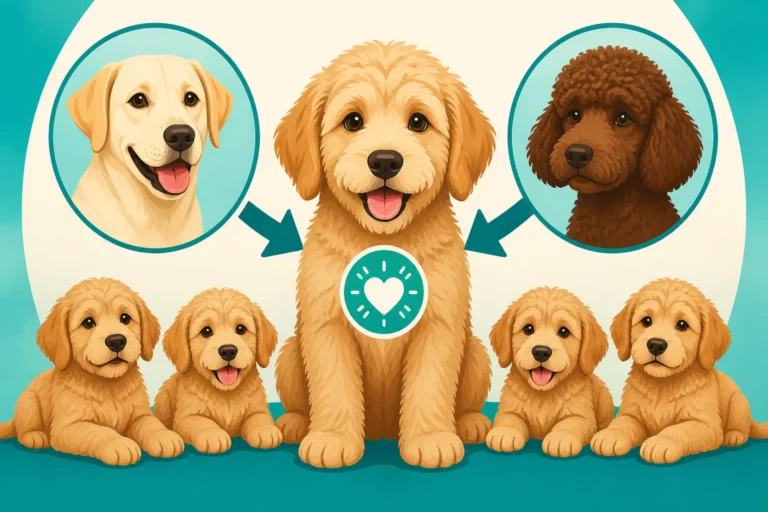
The "F1" in Labradoodle speak simply means "First Generation." This is the original cross, the one that started it all, famously pioneered by Wally Conron in Australia. An F1 Labradoodle is a direct product of breeding a purebred Labrador Retriever with a purebred Poodle. Think of it as a 50/50 genetic split. This is where the concept of "hybrid vigor" often comes into play, as you're mixing two distinct gene pools. While this cross was originally done with a specific purpose in mind – to create an allergy-friendly guide dog – the reality of genetics means there's a wider spectrum of traits you might see in an F1 litter. Some pups might lean more heavily on their Labrador side, both in looks and personality, while others might present more Poodle-like characteristics. It's a delightful genetic lottery in many ways! If you're curious about the beginnings, you might enjoy reading about The 1989 Cross That Made the First Labradoodle.
F1B and Beyond: Increasing Poodle Influence
Once you move beyond the F1 generation, things get a little more specific in their genetic targeting. An "F1B" Labradoodle is created by breeding an F1 Labradoodle back to one of its parent breeds, almost always a Poodle. The 'B' stands for backcross. So, an F1B is typically 75% Poodle and 25% Labrador. Why do breeders do this? Often, it's to enhance the non-shedding, more hypoallergenic coat qualities of the Poodle. But naturally, increasing the percentage of Poodle genetics also means a higher likelihood of Poodle temperament traits coming through.
Then you have F2, F2B, and so on. An F2 is when you breed two F1 Labradoodles together. An F2B is an F2 Labradoodle bred back to a Poodle. Each step can further dilute or concentrate specific traits, but it also introduces more variability if not carefully managed. It can get quite complex, and it's easy to get lost in the details, so remember the core idea: each generation attempts to refine certain characteristics, but it's never an exact science when it comes to living creatures. Understanding What F1 Means on a Labradoodle and What F1b Means on a Labradoodle can really help clarify these distinctions.
Multigenerational Labradoodles: Aiming for Consistency
"Multigen" or "Multi-generational" Labradoodles are the result of breeding two Labradoodles from the F3 generation or beyond. In essence, it means you've got several generations of Labradoodle-to-Labradoodle breeding behind them. The goal here is generally to produce more consistent litters in terms of coat type, size, and, ideally, temperament. Breeders working with multigens are often trying to solidify the "Labradoodle look" and "Labradoodle personality" they've been aiming for, moving away from the wider variations you might see in earlier crosses. They're trying to create a dog that reliably embodies the best traits of the blend, reducing the surprise factor. Many people consider this to be the pinnacle of Labradoodle breeding, where the breed starts to "breed true," so to speak. If you want to dive deeper into this, check out What Multigen Means on a Labradoodle.
The Temperament Tug-of-War: Poodle vs. Labrador Traits
When we talk about a Labradoodle's temperament, we're really talking about a fascinating blend of the two foundational breeds: the Labrador Retriever and the Standard Poodle. Each brings its own distinct set of personality quirks, strengths, and inclinations to the mix. The generational breakdown largely influences the odds of which traits might come to the forefront, but it's never a guarantee.
What the Labrador Retriever Brings to the Table
The Labrador Retriever is, first and foremost, a friendly, outgoing, and perpetually optimistic dog. They're renowned for their eager-to-please nature, making them highly trainable and wonderful family companions. Labs are often described as boisterous, playful, and possessing a strong retrieving drive – they live for a good game of fetch! They tend to be very tolerant with children and other pets, and their loyalty is unwavering. However, that high energy also means they need a good outlet; an under-exercised Labrador can become bored and destructive, which is a common complaint I hear from owners of active Doodles. This breed's enthusiasm for life is infectious, but it also means they can be big, clumsy puppies for longer than you might expect, sometimes lacking a bit of spatial awareness, especially in their younger years. They're generally not shy and will usually greet strangers with a wagging tail.
The Poodle's Contribution to Personality
The Poodle, despite its often-misunderstood reputation for being "frou-frou," is an incredibly intelligent, agile, and athletic dog. They are highly perceptive and can be very attuned to their owner's emotions. Poodles are known for their quick wit, problem-solving abilities, and a dignified, sometimes almost regal, demeanor. While they can be playful and affectionate, especially with their families, they often have a more reserved approach to strangers than a typical Labrador. Poodles are generally less boisterous but can be equally energetic, thriving on mental stimulation and training. Their intelligence means they learn quickly, but it also means they can get bored easily and might develop undesirable habits if not challenged. The Poodle's sensitivity and intelligence contribute greatly to the Labradoodle's famed empathy and trainability, but it can also manifest as a dog that requires more mental engagement than a simple walk. For a broader picture, explore The Temperament a Labradoodle Gets From Each Parent.
How Genes Play Out in Real Life
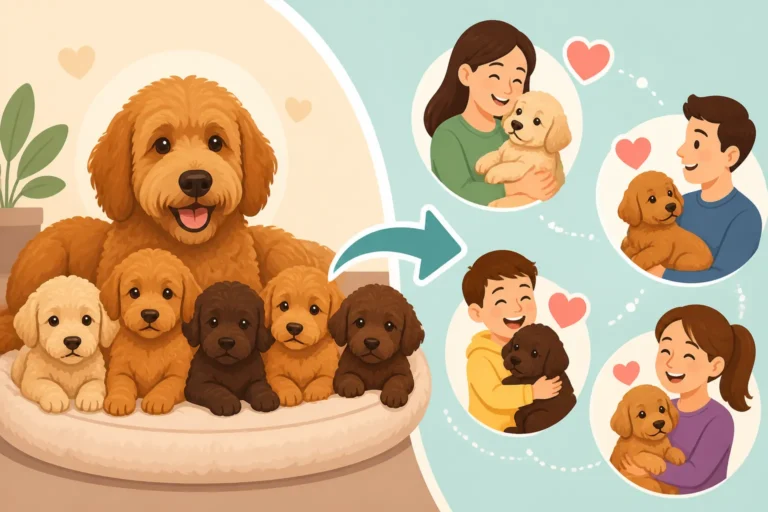
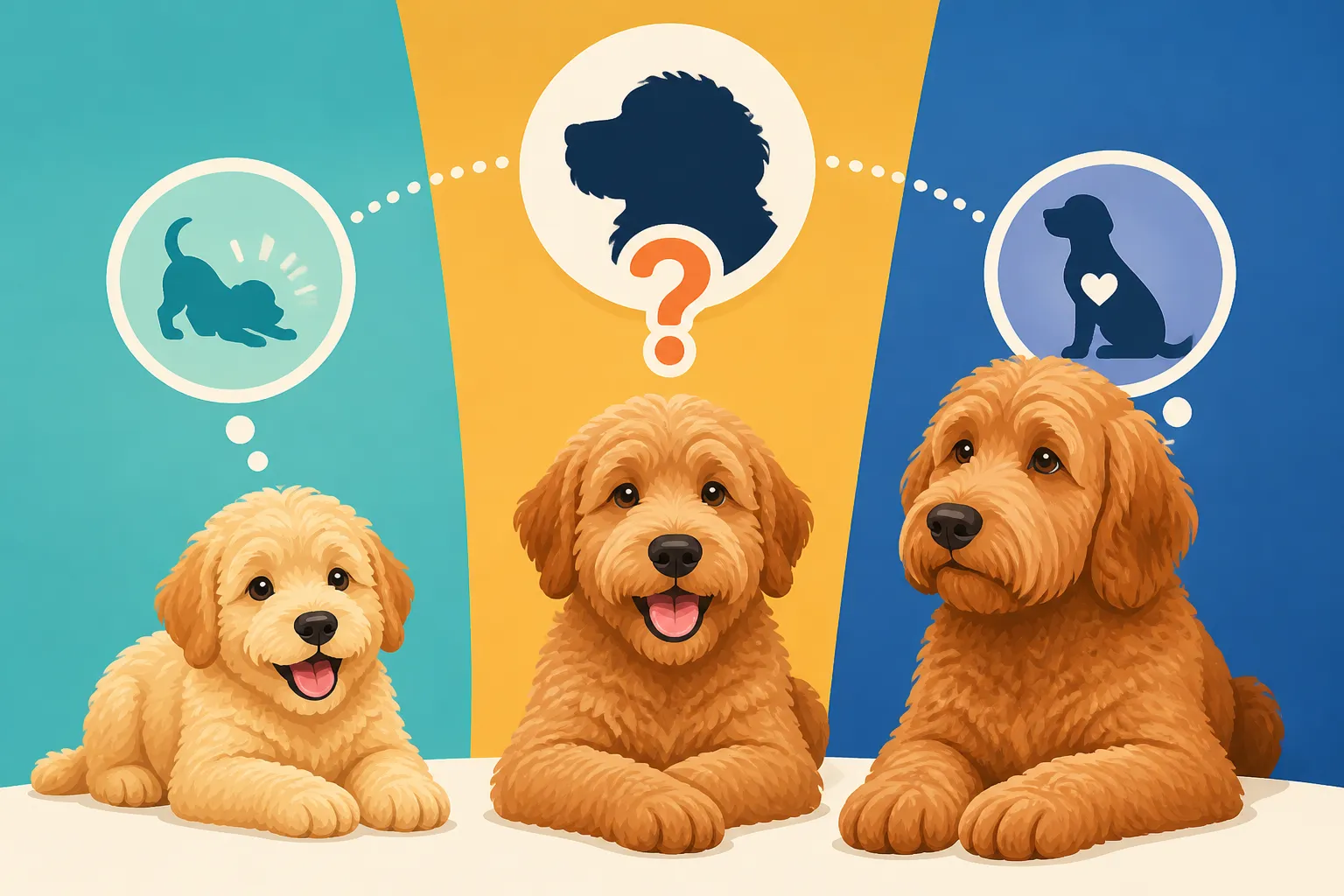
So, how does generation affect which of these traits you'll see? The general rule of thumb is that the closer a Labradoodle is to an F1 cross (50/50), the more variability you might see in a single litter. Some F1 pups might be total clowns with a strong retrieving drive, just like a Lab, while their littermates might be more thoughtful and observant, like a Poodle. It's a spectrum, and breeders often note this difference even within one litter.
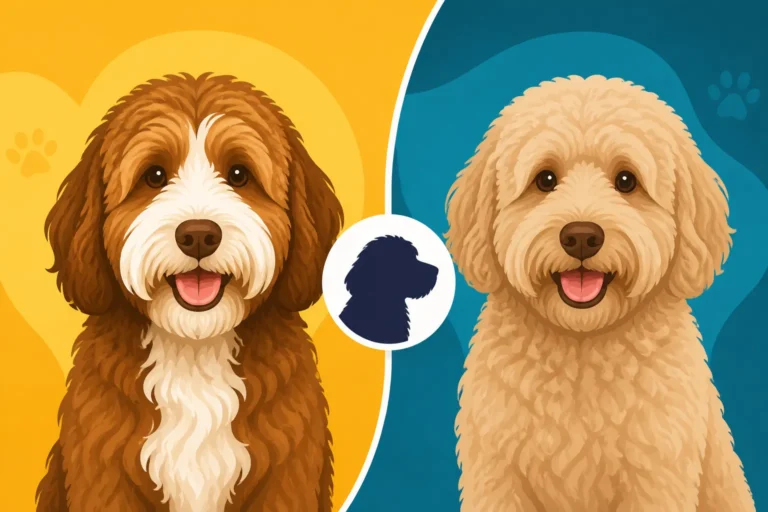
As you move into F1B, F2B, and Multigen generations, especially those with a higher Poodle percentage, breeders are actively selecting for traits that tend toward the Poodle's lower-shedding coat and often, its intelligence and somewhat more reserved nature. This isn't to say a multigen won't have the Labrador's happy-go-lucky attitude, but the likelihood of a more Poodle-leaning temperament (perhaps a bit more sensitive, quicker to learn complex tasks, but potentially less overtly outgoing with everyone they meet) increases.
However, it's critical to remember that genetics aren't simply additive. It's not like 75% Poodle means exactly 75% Poodle personality. Temperament is polygenic, meaning many genes contribute, and how they interact can be complex and unpredictable. Even within the same litter of F1Bs, you'll see individual personality differences. It’s why relying solely on generation to predict temperament can lead to disappointment.
| Generation | Parentage | Expected Coat Tendency | General Temperament Influence Tendency |
|---|---|---|---|
| F1 | Labrador Retriever x Poodle | Variable (Hair, Fleece, Wool) | Wide range, can lean Poodle or Labrador. Potential for strong retrieving drive, outgoing nature, high energy. |
| F1B | F1 Labradoodle x Poodle | More consistently Fleece or Wool | Increased Poodle influence; often more intelligent, sensitive, potentially slightly more reserved with strangers. |
| F2 | F1 Labradoodle x F1 Labradoodle | Variable (similar to F1) | Can be as variable as F1. Less predictable than F1B or Multigen in some aspects due to genetic recombination. |
| F2B | F2 Labradoodle x Poodle | More consistently Fleece or Wool | Similar to F1B, with enhanced Poodle characteristics for coat and temperament. |
| Multigen | F3 or higher Labradoodle x F3 or higher | Most consistently Fleece or Wool | Aimed for consistency; typically a balanced blend, often intelligent, friendly, but individual variation remains. |
Disclaimer: This table represents general tendencies and observations. Individual dogs can vary greatly within any generation.
Beyond Generation: Other Factors Shaping Your Labradoodle's Personality
While generation might give us some clues about potential genetic predispositions, it's absolutely not the be-all and end-all of temperament. So many other factors come into play, and frankly, some of these are far more influential than whether your Labradoodle is an F1 or an F1B. Getting caught up only in genetics can make you miss the bigger picture.
The Crucial Role of Early Socialization and Training
This is perhaps the single most impactful factor, no matter the generation. A puppy's experiences during its critical socialization period (roughly 3-16 weeks) shape its view of the world forever. A Labradoodle puppy, whether F1 or multigen, that is exposed to a wide variety of sights, sounds, people, and other friendly, vaccinated dogs in a positive and controlled manner is far more likely to grow into a confident, well-adjusted adult than one kept in isolation. Proper, consistent training from a young age also teaches them manners, boundaries, and how to communicate with humans.
Without good socialization and training, even the genetically calmest dog can become fearful or reactive. Conversely, with excellent early input, a dog with some genetic "challenges" can still blossom into a wonderful companion. It's truly a testament to nurture over nature in many cases. So, prioritize puppy classes, positive reinforcement methods, and making the world a good place for your pup. Remember, Raising a Labradoodle Through Its First Year is crucial for their development.
Breeder Practices and Parental Temperament
This ties directly into genetics but is distinct from "generation." A responsible breeder doesn't just breed for coat type or a specific generation; they prioritize the health and temperament of their breeding dogs above all else. They choose parent dogs with sound, stable, friendly personalities. Temperament is inherited, so if a puppy's parents are anxious, aggressive, or overly shy, there's a higher chance the puppies will inherit those predispositions.
A good breeder also provides an enriching environment for their puppies from day one. This includes early neurological stimulation, proper weaning, clean and safe living spaces, and regular, positive human interaction. They should be transparent about the temperaments of their parent dogs and be able to tell you about the personalities of individual puppies in a litter. A breeder who actively evaluates the puppies for different personality traits and helps match them to suitable families is invaluable. If you're wondering what you should really be looking for, consider the advice in What Nobody Tells a First Time Labradoodle Buyer.
Environment, Health, and Individual Variation
Even with excellent genetics, fantastic breeding practices, and superb early socialization, every dog is an individual. Just like human siblings, no two Labradoodles are exactly alike. Their individual personality will also be shaped by their daily environment, how much exercise and mental stimulation they receive, their diet, and their overall health.
A Labradoodle that lives in an active household where it gets plenty of walks, playtime, and training (which is essential, as The Exercise a Labradoodle Needs Before It Behaves cannot be overstated) will likely be a much calmer and happier dog than one stuck inside all day with little interaction. Health issues, chronic pain, or even poor nutrition can also subtly (or not so subtly) affect a dog's mood and behavior. It's a holistic picture, and all these pieces fit together to create the unique dog you bring home.
Making an Informed Choice: How to Find the Right Labradoodle for You
Given that generation is just one piece of the puzzle, how do you go about finding a Labradoodle that's a good fit for your life? It really comes down to doing your homework and focusing on the right priorities. Don't let the "generation" label blind you to what truly matters.
Prioritizing Breeder Ethics Over Generation Labels
This cannot be stressed enough: a responsible, ethical breeder is far more important than whether a puppy is F1 or Multigen. An ethical breeder will:
- Perform all necessary health testing on their parent dogs (hips, elbows, eyes, genetic diseases relevant to both Poodles and Labradors).
- Be transparent about their breeding philosophy and practices.
- Allow you to meet the puppy's mother (and ideally, the father or have plenty of information about him).
- Raise puppies in a stimulating, clean, and loving home environment.
- Socialize puppies appropriately from birth.
- Be knowledgeable about both parent breeds and the Labradoodle as a cross.
- Ask you many questions about your lifestyle to ensure a good match.
- Provide a comprehensive health guarantee and a clear contract.
Don't be afraid to ask direct questions, and pay attention to how they interact with their dogs. A good breeder cares deeply about where their puppies go and will prioritize temperament and health over trendy colors or specific "generations." They are the gatekeepers of good genetics and responsible early care. When looking at breeders, also consider associations like the ALAA (Australian Labradoodle Association of America) or WALA (Worldwide Australian Labradoodle Association), as they often set standards for health testing and breeding practices.
Spending Time with Puppies and Parents
If possible, spend time with the litter you're interested in, and observe the mother. How does she interact with her puppies? Is she calm, friendly, and well-adjusted? This gives you a great insight into her genetic contribution to temperament. When observing the puppies, look for their individual personalities. Are some shy and reserved, while others are boisterous and confident? A good breeder will help you interpret these observations. They might even perform some simple temperament evaluations to guide you.
Don't pick the puppy solely based on which one rushes up to you first, or the "cutest" one. Think about your family's energy levels and lifestyle. A very outgoing, high-energy puppy might be too much for a quiet home, while a more reserved pup might thrive there. The breeder, having spent weeks with them, can offer invaluable insights into their individual temperaments. This is where Temperament Testing a Labradoodle Puppy for Service can give you an idea of the types of assessments breeders might perform, even for companion animals.
Temperament Over Type: What Really Matters
Ultimately, what matters most is the individual dog's temperament and how well it aligns with your lifestyle, not the arbitrary generational label. An F1 Labradoodle from well-tempered, health-tested parents and raised in an enriching environment is far more likely to be a wonderful companion than a Multigen from a less scrupulous breeder.
Focus on finding a puppy that has:
- Healthy, well-tempered parents: This sets the genetic foundation.
- Excellent early socialization: This builds confidence and adaptability.
- An individual personality that matches your family: Whether you want a couch potato or an adventure buddy, there's a Labradoodle out there for you.
Brands like Chewy offer a fantastic array of resources, from training guides to durable toys, all of which can support the development of a well-adjusted Labradoodle, regardless of their generation. Equipping yourself with the right tools and knowledge for training and enrichment is much more powerful than simply picking a generation. Remember that consistency in training and positive reinforcement, along with quality food from Chewy, can make all the difference. Moreover, if you have a busy life, thinking about The Household a Labradoodle Actually Suits is more important than generation number.
Your Labradoodle's journey to becoming a beloved family member is a blend of genetics, environment, and your dedication. While generation can hint at certain probabilities, it’s the quality of the breeding, the early care, and your ongoing commitment to training and socialization that will truly shape the wonderful dog you share your life with. Make an informed decision based on a holistic view, and you'll set yourself and your new best friend up for success. You'll find everything from training treats to durable chew toys on Chewy that will aid in their development and keep them mentally stimulated, too.
Disclaimer
This article is for general informational purposes only and does not constitute professional advice. Laws, prices and regulations vary by location and change over time. Consult a qualified professional for guidance on your specific situation.