What F1 Means on a Labradoodle
The world of Labradoodles can feel like navigating an alphabet soup, especially when you first hear terms like "F1," "F1b," or "multigen." It's completely understandable to feel a bit lost in the jargon! Many aspiring Labradoodle owners find themselves scratching their heads, wondering what these labels actually mean for their potential furry family member. This guide is here to demystify "F1" and help you understand exactly what it signifies for a Labradoodle, from their unique genetic makeup to what you can realistically expect in terms of coat, temperament, and health.
Decoding the "F" in Labradoodle Generations
When breeders talk about "F" generations in Labradoodles, they're essentially giving you a shorthand for how far removed a puppy is from its original purebred parents. The "F" stands for "Filial," which is just a fancy way of saying "generation." So, an F1 Labradoodle is the very first generation born from the direct cross of a Labrador Retriever and a Poodle. This foundational cross is where the entire Labradoodle story began, even dating back to the pioneering efforts in Australia.
The Basics of F1: First Generation Cross
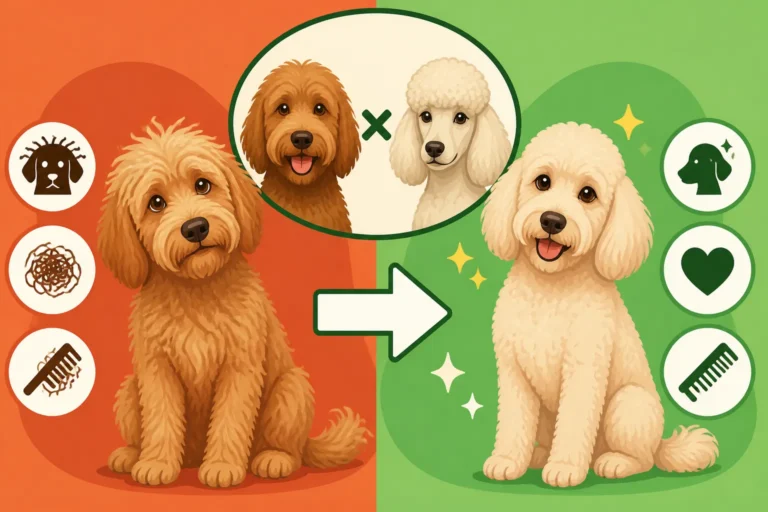
An F1 Labradoodle is, at its core, a true 50/50 blend. One parent is always a purebred Labrador Retriever, and the other is always a purebred Poodle. This is the original cross that captivated the world and made the Labradoodle famous. It’s important to remember that for an F1, both parents must be purebreds of their respective breeds. You won't find an F1 Labradoodle with a Goldendoodle parent or another Labradoodle parent; that would make it a different generation entirely.
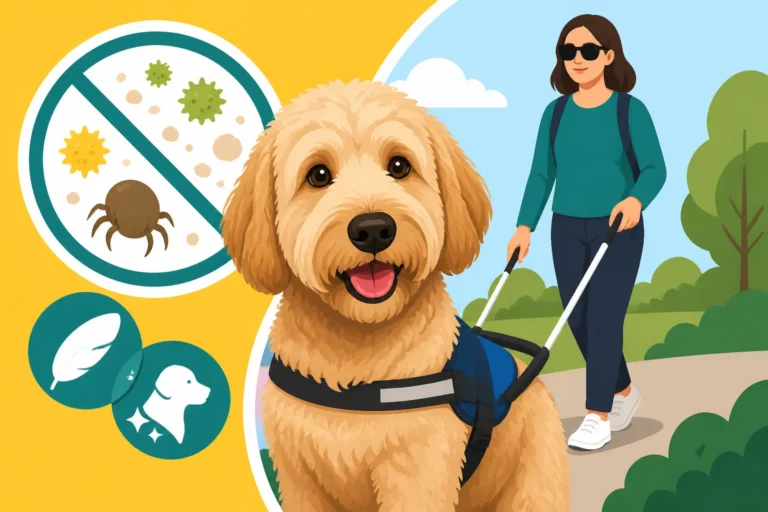
This specific pairing was initially conceived with a very noble goal in mind: to create a guide dog for a visually impaired woman in Hawaii who suffered from allergies. The hope was to combine the Labrador's excellent temperament and trainability with the Poodle's hypoallergenic coat. While the journey was complex, and even the creator had mixed feelings later, this F1 generation laid the groundwork. You can learn more about this fascinating origin story in The 1989 Cross That Made the First Labradoodle. The simplicity of this direct cross offers a unique genetic blend that is often sought after, yet it comes with its own set of characteristics and surprises.
The Genetic Lottery of the F1 Labradoodle
Here's where it gets really interesting, and sometimes, a little unpredictable. With an F1 Labradoodle, you're essentially looking at a genetic lottery. Each puppy in an F1 litter inherits a random mix of genes from its Labrador and Poodle parents. Imagine flipping a coin for every single trait – sometimes you get more Labrador traits, sometimes more Poodle, and sometimes a truly balanced mix. This means that two puppies from the same F1 litter can look, feel, and even act quite differently from each other.
For example, one F1 puppy might have a straighter, more Labrador-like coat that sheds, while its sibling could sport a curly, Poodle-like coat that hardly sheds at all. This genetic variability is both the charm and the challenge of the F1 generation. It's why purchasing an F1 Labradoodle requires a good understanding that while the potential for certain traits is there, the guarantee is much lower than in later generations where breeders have selectively bred for specific characteristics. If you're hoping for a specific coat type, an F1 can indeed be a bit of a gamble, a topic explored further in Whether an F1 Labradoodle's Coat Is a Gamble. This unpredictability is precisely what makes each F1 Labradoodle truly unique, a delightful surprise for those who embrace the diversity.
What to Expect from an F1 Labradoodle
So, you're considering an F1 Labradoodle – what does this genetic blend really mean for your day-to-day life with your dog? The F1 generation embodies a fascinating combination of traits from its purebred parents. It's not just about their looks; it's about their coat, their personality, and their health, all influenced by that initial 50/50 genetic split.
Coat Types in an F1 Labradoodle
This is probably the biggest variable when it comes to F1 Labradoodles, and it's often the source of both excitement and, frankly, frustration for new owners. Because it's a first-generation cross, the coat type is highly unpredictable. You could end up with one of three main coat types, or something in between:
- Hair Coat: This coat is more like a Labrador's, typically straight or slightly wavy, and it will shed. This is the least desired coat for those seeking a "hypoallergenic" dog, but it's a completely normal outcome for an F1.
- Fleece Coat: This is the wavy or shaggy look that many people associate with Labradoodles. It’s soft and usually low-shedding, making it very popular.
- Wool Coat: This coat is more Poodle-like, with tight curls. It is typically non-shedding but requires significant grooming to prevent matting.
It's common for puppies within the same F1 litter to display all three coat types! This means that while a breeder might give you an estimate based on the parents, there are no guarantees until the puppy matures. Regardless of the type, all Labradoodle coats require dedicated care. Even the "non-shedding" fleece and wool coats will mat if not brushed regularly and thoroughly, right down to the skin, not just the surface. You'll need good quality grooming tools, perhaps from a trusted retailer like Chewy, to keep their coat healthy and tangle-free. This often involves specific brushes, combs, and maybe even a detangling spray to maintain that beautiful fluff. For a deeper dive into these coats and their care, check out The Three Labradoodle Coats: Hair, Fleece and Wool and Brushing a Labradoodle to the Skin, Not the Surface.
Temperament and Personality Traits
When it comes to temperament, F1 Labradoodles tend to offer a wonderful blend of both parent breeds. You often get the intelligent, sometimes clownish nature of the Poodle combined with the friendly, eager-to-please, and devoted disposition of the Labrador Retriever. This makes for a dog that is generally intelligent, trainable, and keen to be part of family activities. They're often described as social, outgoing, and possessing a good amount of energy.
However, just like with coats, the exact blend can vary. Some F1 Labradoodles might lean more towards the Poodle's spirited independence, while others might embody the Labrador's relaxed, playful goofiness. They thrive on companionship and positive reinforcement, and they genuinely love being involved in their human family's lives. Early socialization and consistent training are key to nurturing their best traits, ensuring they grow into well-adjusted companions. Understanding the root temperaments can help you set expectations; The Temperament a Labradoodle Gets From Each Parent provides a great overview of these influences.
Health Considerations: Hybrid Vigor and Genetic Risks
One of the big draws for many people considering a crossbreed like the F1 Labradoodle is the concept of "hybrid vigor." The idea here is that by crossing two unrelated purebreds, you increase the genetic diversity, which can potentially lead to a healthier animal with a reduced risk of certain inherited diseases that might be more prevalent in a single, more inbred purebred line. In theory, an F1 Labradoodle might be less likely to inherit two copies of a recessive gene for a specific disease if those diseases aren't common to both the Labrador and the Poodle lines. This is discussed more fully in Whether Hybrid Vigor Is Real in a Labradoodle.
However, "hybrid vigor" is not a magic shield. F1 Labradoodles are still susceptible to health conditions common to both parent breeds. For instance, both Labradors and Poodles can suffer from hip and elbow dysplasia, certain eye conditions like progressive retinal atrophy (PRA), and even some forms of cancer. Poodles contribute a predisposition to issues like Addison's disease and sebaceous adenitis, while Labradors can pass on concerns like Exercise Induced Collapse (EIC).
This is why, regardless of the generation, choosing a responsible breeder who performs comprehensive health testing on both parent dogs is absolutely paramount. They should screen for hip and elbow dysplasia, conduct OFA or CERF eye exams, and run DNA tests for conditions like PRA and EIC. Don't be shy about asking to see those health certificates! Asking a Breeder for Labradoodle Eye Certificates is a vital step in this process. A reputable breeder will be transparent about their testing and happy to educate you on the potential health risks and how they mitigate them.
Is an F1 Labradoodle Right for You?
Deciding on any dog, let alone a specific generation of a crossbreed, is a huge decision. It's about finding the right fit for your lifestyle, your expectations, and what you're truly prepared for. An F1 Labradoodle can be an absolutely wonderful companion, but like all dogs, they come with their own set of unique characteristics and care requirements.
Weighing the Pros and Cons
To help you decide if an F1 Labradoodle is the right choice for your family, let's break down some of the key advantages and disadvantages you might encounter. Understanding these points can help you temper expectations and prepare adequately.
| Feature | F1 Labradoodle Pros | F1 Labradoodle Cons |
|---|---|---|
| Genetic Health | High potential for hybrid vigor, potentially fewer breed-specific issues. | Still susceptible to conditions found in either parent breed. |
| Coat Predictability | Unique appearance, can vary greatly even within a litter. | Highly unpredictable coat type and shedding level. |
| Grooming Needs | Can range from low-maintenance (hair coat) to high (wool coat). | Requires consistent brushing and professional grooming is often necessary regardless of coat type. |
| Temperament | Often a wonderful blend of Labrador friendliness and Poodle intelligence. | Can lean more strongly towards one parent's traits, requiring adaptability. |
| Availability | Often more readily available from breeders compared to later generations. | Less genetic predictability than multi-generational dogs bred for consistency. |
The biggest "con" for many is the coat and its associated shedding. If you have severe allergies, an F1 Labradoodle carries a higher risk of triggering them compared to later generations that have been bred specifically for non-shedding coats. You might find a gorgeous F1 puppy that grows up to shed more than you anticipated, which is a common regret for those who weren't fully prepared.
Questions to Ask an F1 Labradoodle Breeder
When you're looking for an F1 Labradoodle, the breeder's practices are incredibly important. Because of the variability in this first generation, a responsible breeder plays an even more crucial role in ensuring healthy, well-socialized puppies. Here are some essential questions you should always ask:
- "What health clearances do both the Labrador Retriever and Poodle parents have?" Look for certifications from organizations like OFA (Orthopedic Foundation for Animals) for hips and elbows, and CERF (Canine Eye Registry Foundation) or regular eye exams by a veterinary ophthalmologist. DNA tests for relevant genetic conditions like PRA and EIC are also critical.
- "Can I meet both parent dogs?" This is vital. Observing the temperament of both parents will give you a much better idea of what to expect in your puppy. A breeder who is hesitant to show you their breeding dogs should raise a red flag.
- "What kind of grooming routine do you expect for the puppies from this litter?" A good breeder will be honest about the potential coat types and the grooming commitment involved, preparing you for the reality.
- "How do you socialize your puppies?" Early exposure to different sounds, sights, people, and other animals is crucial for a well-adjusted dog.
- "What is your contract and health guarantee like?" Understand what, if anything, the breeder guarantees regarding health and for how long.
A reputable breeder will be happy to answer these questions transparently and provide evidence of health testing. They understand that bringing a dog into your home is a long-term commitment and want their puppies to go to well-informed families.
Living with an F1 Labradoodle: Daily Realities
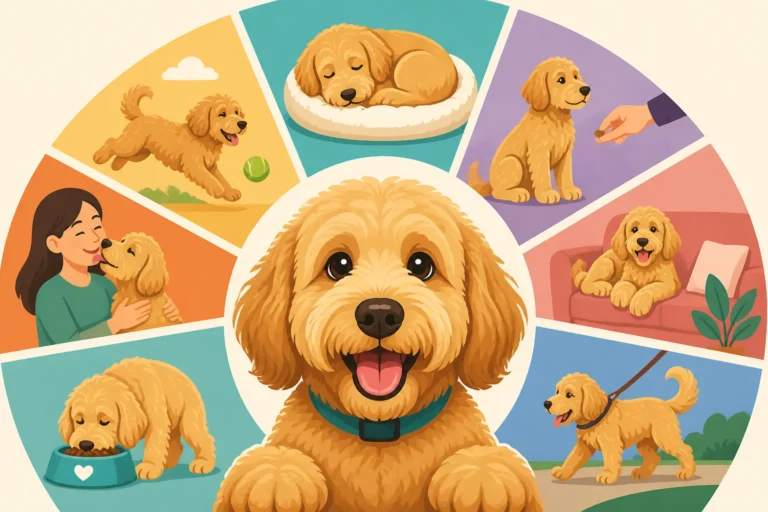
So, you've chosen your F1 Labradoodle puppy, and now you're embarking on the adventure of life together! The daily reality of living with an F1 is largely similar to living with any Labradoodle, but with heightened awareness around a few key areas.
First and foremost, grooming is non-negotiable. Even if your F1 puppy appears to have a relatively straight coat, you need to establish a consistent brushing routine from day one. Mats can form quickly, especially in areas like behind the ears, in the armpits, and on the legs. Regular visits to a professional groomer are also highly recommended, perhaps every 6-8 weeks, to keep their coat in top condition. You'll want to have a good stock of brushes, combs, and dog shampoo – all easily found at places like Chewy – to maintain their coat between professional grooms.
Exercise and mental stimulation are also paramount. F1 Labradoodles typically inherit a good amount of energy from both their Poodle and Labrador parents. They thrive on daily walks, playtime in the yard, and opportunities to learn new tricks or engage in dog sports. A bored Labradoodle is often a mischievous Labradoodle, and you definitely don't want them inventing their own "games" that might involve your furniture or prized possessions!
Finally, remember the training and socialization. These dogs are smart and eager to please, making them highly trainable. However, consistency is key. Puppy classes, positive reinforcement methods, and continuous exposure to new experiences will help shape your F1 Labradoodle into a confident, well-behaved companion. Many first-time Labradoodle owners sometimes underestimate the time commitment for training and grooming, which is a common theme that What Nobody Tells a First Time Labradoodle Buyer often touches upon. By being prepared for these realities, you set both yourself and your F1 Labradoodle up for a lifetime of happiness.
Disclaimer
This article is for general informational purposes only and does not constitute professional advice. Laws, prices and regulations vary by location and change over time. Consult a qualified professional for guidance on your specific situation.