Whether an Australian Labradoodle Comes From Australia
It’s easy to get confused when you hear terms like "Labradoodle" and "Australian Labradoodle." Many prospective puppy parents assume that "Australian Labradoodle" simply means a Labradoodle bred in Australia, much like an Australian Shepherd comes from… well, Australia. But the truth is far more nuanced, and it’s a distinction that carries significant weight for anyone looking to understand the breed's origins, characteristics, and genetic makeup. This guide aims to clear up that common misconception, diving deep into what truly defines an Australian Labradoodle, regardless of where they are physically born.
Understanding the Genesis: The Original Labradoodle
Before we can unravel the "Australian" part, it's crucial to understand the very first Labradoodle. This is where it all began, and it's a story often misunderstood or condensed into a simple "Poodle meets Labrador" narrative.
The Original Vision for a Hypoallergenic Guide Dog
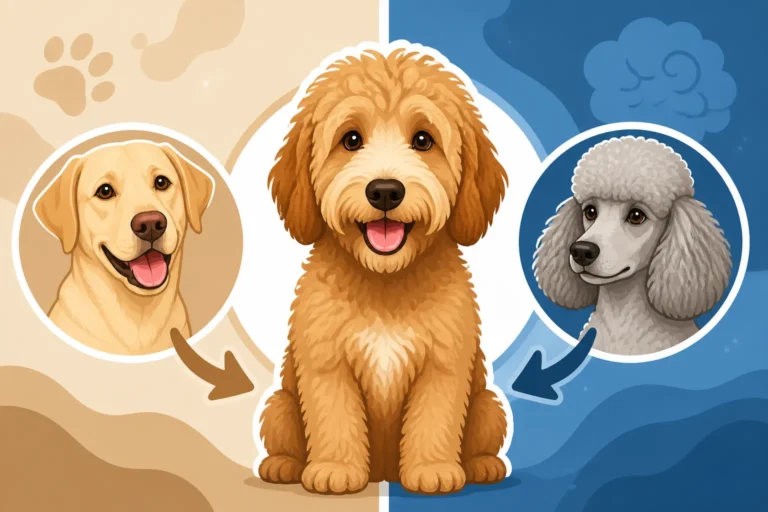
The true genesis of the Labradoodle dates back to 1989 in Australia. The Royal Guide Dogs Association of Australia had a client, Pat Blum, a visually impaired woman whose husband suffered from severe dog allergies. She needed a guide dog that wouldn't trigger his allergies. This was a challenging request, as typical guide dog breeds like the Labrador Retriever are known for shedding. Enter Wally Conron, the breeding manager for the association. His mission was clear: create a working dog with the intelligence and biddability of a Labrador but the low-shedding, hypoallergenic coat of a Poodle.
He successfully bred a Standard Poodle with a Labrador Retriever, resulting in the first litter of Labradoodles. One of these puppies, a dog named Sultan, was sent to Hawaii to be a guide dog for Pat Blum. The initial goal was purely functional: a dog that could work and not cause allergic reactions. The concept was revolutionary, but Conron later famously expressed regret over popularizing the "Labradoodle" name due to the explosion of indiscriminate breeding that followed. For a deeper dive into this historical moment, you can read The 1989 Cross That Made the First Labradoodle. These early Labradoodles, often referred to as F1 (first generation) crosses, were simply a direct mix of a Labrador and a Poodle. Their traits, including coat type and temperament, could be quite varied due to the unpredictable nature of a first-generation cross.
The Initial Spread and Lack of Consistency
As the news of these "hypoallergenic guide dogs" spread, the popularity of the Labradoodle soared. People were captivated by the idea of a friendly, intelligent dog that might be suitable for allergy sufferers. This led to many breeders, some responsible and many not, replicating the cross. However, the outcomes were often inconsistent. Some puppies in a litter might inherit more of the Labrador's shedding coat, while others might get the Poodle's curly, low-shedding fleece. Temperaments also varied, making it difficult to guarantee certain traits.
This inconsistency was a significant hurdle. For those seeking a specific type of dog – especially one with a reliably low-shedding coat – the F1 Labradoodle was a bit of a gamble. This era also saw a rise in what Conron regretted: people breeding Labradors and Poodles without proper health testing or consideration for temperament, simply to capitalize on the "designer dog" trend. This early period highlights the original, simpler definition of a Labradoodle: a direct mix of its two parent breeds.
The Evolution: What Makes an Australian Labradoodle "Australian" (Beyond Geography)
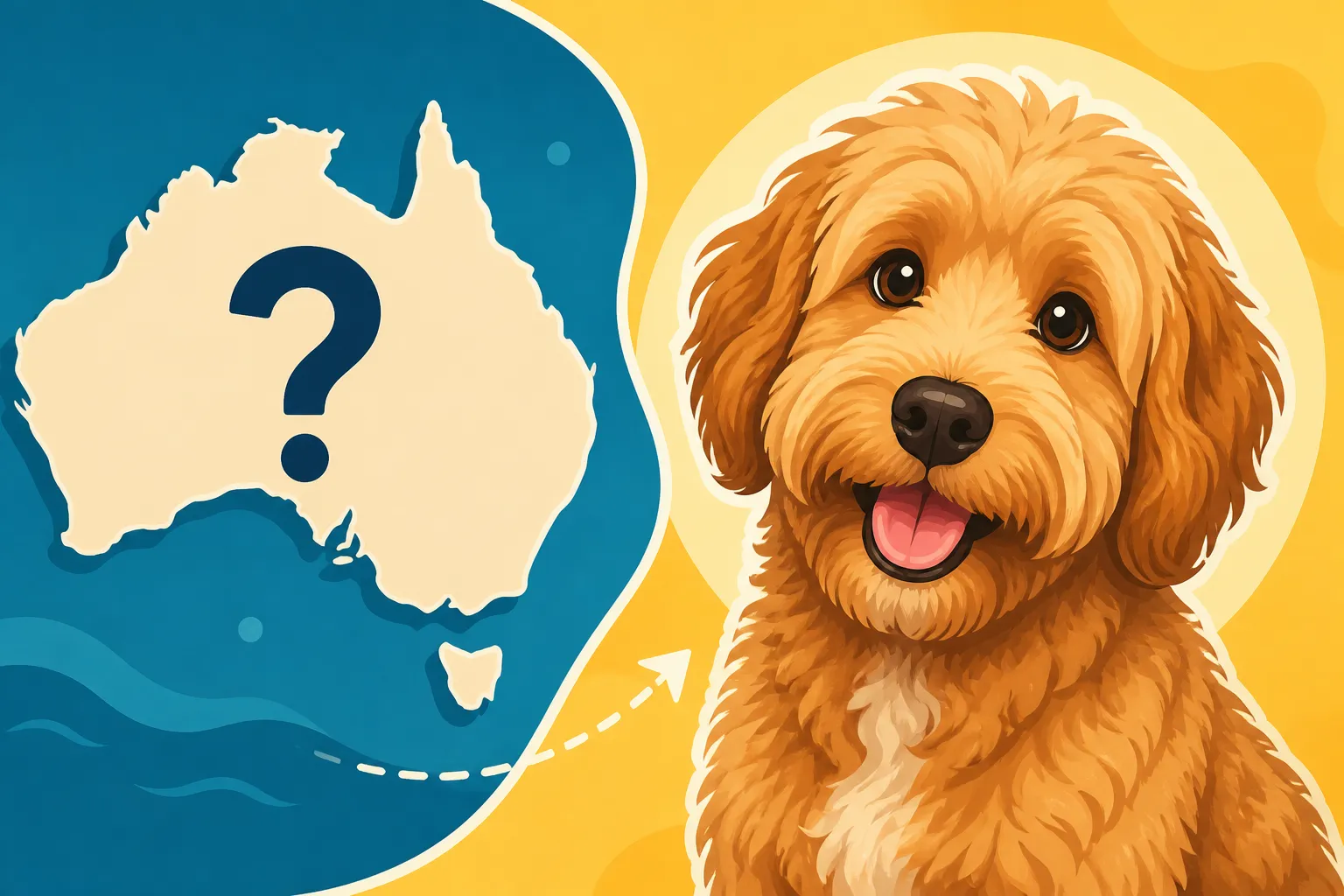
The "Australian" in Australian Labradoodle doesn't necessarily mean the dog was born there; rather, it signifies a distinct lineage and breeding philosophy that originated in Australia. It’s about the breed standard and the inclusion of additional breeds to stabilize desired traits.
The Infusion of Additional Breeds to Achieve Consistency
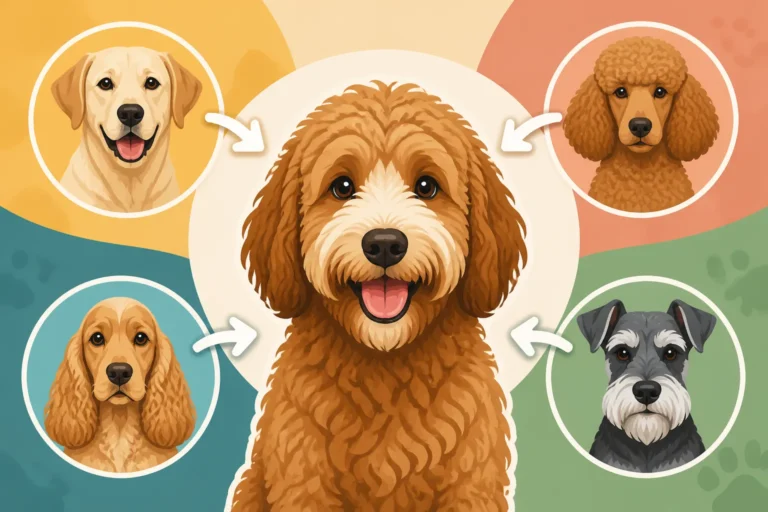
The early Australian breeders, seeing the potential but also the inconsistency of the F1 Labradoodle, embarked on a more deliberate breeding program. Their goal was to move beyond the simple Poodle-Labrador cross and create a dog that consistently produced specific traits in terms of temperament, health, and, critically, a non-shedding coat. To achieve this, they began infusing other breeds into the Labradoodle lines. This multi-generational breeding program moved away from simply crossing a Poodle and a Labrador.
The primary additions were the Irish Water Spaniel and the Cocker Spaniel (both English and American Cocker Spaniels have been used). These breeds were chosen carefully for a few reasons:
- Coat Type: Both the Irish Water Spaniel and Cocker Spaniels possess desirable coat characteristics that could contribute to the consistent fleece or wool coats sought in the Australian Labradoodle, further reducing shedding. You can learn more about The Irish Water Spaniel in the Australian Labradoodle and The Cocker Spaniel Infusion in the Australian Labradoodle.
- Temperament: These breeds also contributed to the desired temperament – friendly, intelligent, eager to please, and generally well-suited for family life and potential assistance work.
- Genetic Diversity: Introducing new bloodlines could also help broaden the genetic pool, potentially reducing the risk of certain hereditary conditions common in purebreds.
This careful selection and infusion of additional breeds over multiple generations transformed the "Labradoodle" into what is now known as the "Australian Labradoodle." It was a conscious effort to create a new developing breed with predictable characteristics, rather than just a first-generation hybrid. This is a fundamental difference, and it's why Why an Australian Labradoodle Is Not a Labradoodle is such an important topic.
Developing a Standard and Predictable Traits
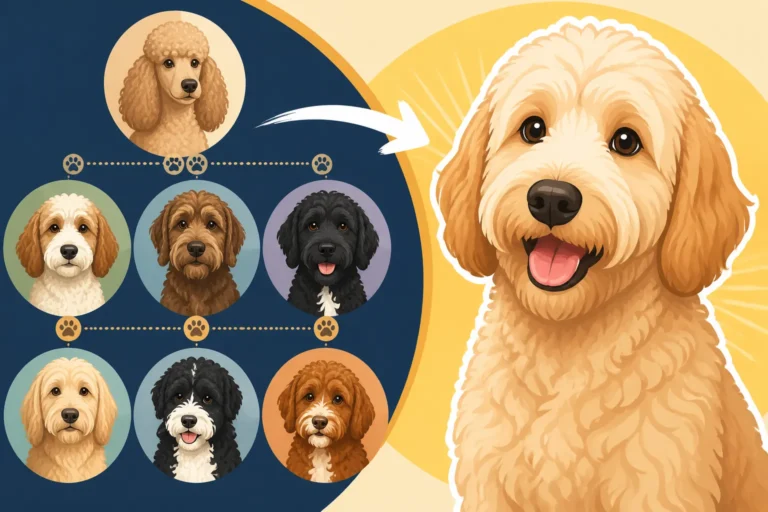
The aim of these foundational breeders in Australia was to create a dog that breeds true, meaning that when two Australian Labradoodles are bred together, their offspring consistently exhibit the desired traits of the developing breed. This is a hallmark of moving from a hybrid cross to a recognized breed. They developed specific breed standards encompassing temperament, health, coat type, structure, and size.
Key characteristics that breeders strove for in the Australian Labradoodle include:
- Consistent Coat: The goal was almost exclusively the fleece or wool coat, known for being low-shedding and often more amenable to allergy sufferers. This contrasts sharply with the often unpredictable coats of F1 Labradoodles, which could range from wiry to flat and shedding. Whether an Australian Labradoodle Sheds Less is a key factor here.
- Stable Temperament: Australian Labradoodles are specifically bred for their calm, intelligent, and intuitive nature, making them excellent family pets and therapy or assistance dogs. They are often described as "Velcro dogs" due to their strong bond with their families.
- Health Focus: Responsible Australian Labradoodle breeders prioritize extensive health testing on their breeding dogs to reduce the incidence of hereditary diseases that can plague parent breeds. This focus on health contributes to the overall longevity and well-being of the puppies.
Because of this intensive breeding program and the introduction of other breeds, an Australian Labradoodle is genetically distinct from a simple Poodle-Labrador cross. They are considered a multi-generational cross that has been carefully curated to consistently produce desired traits. This is truly What the Australian Labradoodle Program Added to the mix.
Sourcing an Australian Labradoodle Today: Geography vs. Genetics
So, knowing all this, does an Australian Labradoodle have to come from Australia? The simple answer is no, not anymore.
The Global Presence of the Australian Labradoodle Lineage
While the sophisticated breeding program for the Australian Labradoodle began in Australia, the lineage has since spread globally. Reputable breeders around the world now specialize in Australian Labradoodles, importing breeding stock from established Australian lines to continue the development of the breed in their own countries. This means an Australian Labradoodle puppy born in the United States, Canada, Europe, or anywhere else, is still considered an Australian Labradoodle if its parents are registered Australian Labradoodles from these specific, multi-generational lines that include the other infused breeds.
It's all about the pedigree and the genetic makeup, not the geographical birthplace. Think of it like a specific brand of car; while it might be designed in one country, it can be manufactured and sold worldwide. The "Australian" designation has evolved to refer to the type of Labradoodle, derived from those specific foundational lines, rather than its country of origin. This also means that not every Labradoodle born in Australia is automatically an "Australian Labradoodle" in the refined sense; some might still be simple Poodle-Labrador crosses. It truly comes down to the genetic heritage and adherence to the established multi-generational breeding program.
Identifying a Genuine Australian Labradoodle Breeder
Because of the breed's popularity and the potential for confusion, it's absolutely vital to do your homework when looking for an Australian Labradoodle. Simply seeing "Australian Labradoodle" in an advertisement isn't enough. You need to ensure the breeder is genuinely part of the established lineage and follows ethical breeding practices.
Here are some key things to look for:
- Pedigree and Registration: Genuine Australian Labradoodles are registered with specific organizations dedicated to the breed's development, such as the Australian Labradoodle Association of America (ALAA) or Worldwide Australian Labradoodle Association (WALA). These registries track multi-generational pedigrees, ensuring the dogs come from the correct lines. A breeder should be transparent about their dogs' registration and provide documentation. What ALAA Membership Requires of a Labradoodle Breeder is a good resource to understand the standards.
- Health Testing: A reputable breeder will conduct extensive health testing on their breeding dogs for conditions common in Poodles, Labradors, and the other foundational breeds. This includes hip and elbow evaluations, eye certifications, and genetic tests for conditions like progressive retinal atrophy (PRA) and von Willebrand's disease. They should be willing to share these results with you.
- Transparency and Communication: Good breeders are open and willing to answer all your questions, let you meet the puppy's parents (or at least the mother), and provide references. They will also be vetting you as a potential owner, as they want their puppies to go to loving, responsible homes.
- Coat Types: They will be knowledgeable about the different coat types (fleece and wool) and can explain how these relate to shedding and grooming needs. You won't typically find "hair" coated Australian Labradoodles in these programs, as the goal is a non-shedding coat. Understanding Telling an Australian Labradoodle From a Labradoodle by looking at their characteristics is critical.
- Support and Contract: A responsible breeder provides ongoing support, often has a take-back clause in their contract (meaning they want the dog returned to them if you can no longer care for it), and offers a health guarantee.
It's worth noting that the commitment to health and predictability often means that Australian Labradoodles come with a higher price tag than an F1 or F2 Labradoodle from a less scrupulous breeder. You're paying for the years of careful breeding, health clearances, and genetic consistency. When it comes to preparing for your new puppy, remember that a site like Chewy can be a fantastic resource for everything from appropriate grooming tools for a fleece coat to high-quality puppy food.
Choosing an Australian Labradoodle is a commitment, and it means investing in a dog whose lineage has been intentionally developed for specific, desirable traits, far beyond merely being a Poodle-Labrador mix. The "Australian" tag in their name is a testament to the origin of this selective breeding program, not necessarily the continent where your future furry family member took their first breath.
| Feature | Standard Labradoodle (F1) | Australian Labradoodle (Multi-gen) |
|---|---|---|
| Parent Breeds | Labrador Retriever + Poodle | Labrador Retriever, Poodle, Cocker Spaniel, Irish Water Spaniel (over many generations) |
| Coat Consistency | Variable (hair, fleece, wool), often shedding | Generally consistent (fleece or wool), low-shedding |
| Temperament Predictability | Variable | Bred for consistent calm, intelligent, intuitive temperament |
| Genetic Makeup | First-generation hybrid of two breeds | Multi-generational blend of several breeds, established lines |
| "Australian" Name Origin | No specific claim | Refers to the origin of the breeding program for consistency, not current location |
| Breed Status | Hybrid/Designer dog | Developing breed with specific standards and registries |
| Primary Goal | Initial creation for hypoallergenic guide work | Consistency in health, temperament, and coat for family & assistance roles |
Conclusion
So, to definitively answer the question of whether an Australian Labradoodle comes from Australia: not necessarily in terms of its birthplace today. The "Australian" in Australian Labradoodle refers to the origin of the specific breeding program that meticulously developed this distinct type of Labradoodle. This program began in Australia with the infusion of additional breeds beyond just the Labrador and Poodle, aiming for greater consistency in coat, temperament, and health.
Today, genuine Australian Labradoodles are bred worldwide, all tracing their lineage back to those foundational Australian lines. When you encounter an "Australian Labradoodle," you're not just looking at a dog from a particular country; you're considering a dog from a carefully curated genetic background, designed to offer predictable traits that have made them beloved companions. Always prioritize a reputable breeder who can provide transparent information about their dogs' pedigrees and health clearances, ensuring you're bringing home a true Australian Labradoodle, regardless of where on the globe they were whelped. Preparing for your new family member? You might find everything from training treats to sturdy leashes on Chewy, making the transition smoother for both of you.
Disclaimer
This article is for general informational purposes only and does not constitute professional advice. Laws, prices and regulations vary by location and change over time. Consult a qualified professional for guidance on your specific situation.