Whether a Chocolate Labradoodle Fades to Silver
It's a common and sometimes puzzling experience for Labradoodle owners: you bring home a beautiful, rich chocolate puppy, only to watch over time as that deep cocoa color begins to lighten, softening into shades you didn't quite expect. Many wonder if their dog's coat is truly "fading" or if there's something else at play, often comparing it to a sudden shift to silver. This guide will delve into the fascinating world of Labradoodle coat genetics to explain why your chocolate companion might be undergoing a stunning color transformation.
The Allure of Chocolate and the Reality of Color Genetics in Labradoodles
There's something undeniably captivating about a chocolate Labradoodle. That deep, luxurious brown coat often evokes images of warmth and sweetness, drawing many prospective owners to this particular color. However, what many don't realize when they first fall in love with a chocolate pup is that its coat color might not remain static throughout its life. Unlike some breeds where color is largely fixed from puppyhood, Labradoodles, with their diverse genetic background, can hold a few surprises when it comes to coat hues.
Why "Chocolate" Isn't Always a Forever Shade
The initial appeal of a chocolate Labradoodle is easy to understand – that rich, velvety brown is simply gorgeous. But as months turn into a year or two, some owners notice their dog's chocolate coat starting to lighten, sometimes subtly, sometimes dramatically. This isn't a sign of ill health or a coat defect; rather, it's a testament to the complex and often beautiful world of canine color genetics, particularly inherited from the Poodle side of their lineage.
In Labradoodles, "chocolate" refers to the brown pigment, determined by the 'b' locus gene. For a dog to be chocolate, they must inherit two copies of the recessive 'b' allele (bb). However, there's another set of genes at play, known as the "G" locus, or the greying gene. If a chocolate Labradoodle also inherits specific alleles at the 'G' locus, that deep chocolate pigment can progressively lighten over time. This isn't just a surface change; it's a genetic predisposition for the pigment in the hair shaft itself to fade as the dog matures. So, while you might start with a dark Hershey's bar shade, you could end up with a lighter milk chocolate, a café au lait, or even a soft, silvery-chocolate hue. It's part of the natural, genetically programmed evolution of their coat. Whether a Labradoodle's Color Fades With Age explores this broader phenomenon across all colors.
The Role of the Dilution Genes and Progressive Greying
To really understand why a chocolate Labradoodle might shift towards silver, we need to talk a little more about genetics. The primary factor in this transformation is often the "G" locus, which controls progressive greying. If a Labradoodle inherits a dominant "G" allele (Gg or GG), their coat will progressively lighten as they mature. This greying gene is a common trait in Poodles, and since the Poodle is one half of the Labradoodle's genetic makeup, it's frequently passed down. Which Labradoodle Traits Come From the Poodle delves into other traits you might see.
It's important to distinguish this progressive greying from other types of dilution. For instance, the "d" locus (dilute gene) turns black coats to blue and chocolate coats to a pale, grayish-brown often called Isabella or lilac. This is a distinct genetic process that is present from birth, making a puppy born a dilute color, whereas the greying gene manifests as a change over time. A chocolate Labradoodle that carries the greying gene will start life as a true chocolate, but as they age, the greying gene will activate, slowly diminishing the intensity of the chocolate pigment. This results in shades that range from a beautiful light brown, to a "café" color, or even a sophisticated "silver-chocolate" that has a distinct cool, greyish undertone. This process is not a fault, but a characteristic trait, often quite prized in Poodle circles for its unique beauty. In multi-generational Labradoodles, where breeders are carefully selecting for specific traits, they might intentionally or unintentionally select for or against this greying gene. Understanding What Multigen Means on a Labradoodle can help you appreciate the intricate breeding decisions behind your dog's unique traits.
What "Fading to Silver" Really Looks Like
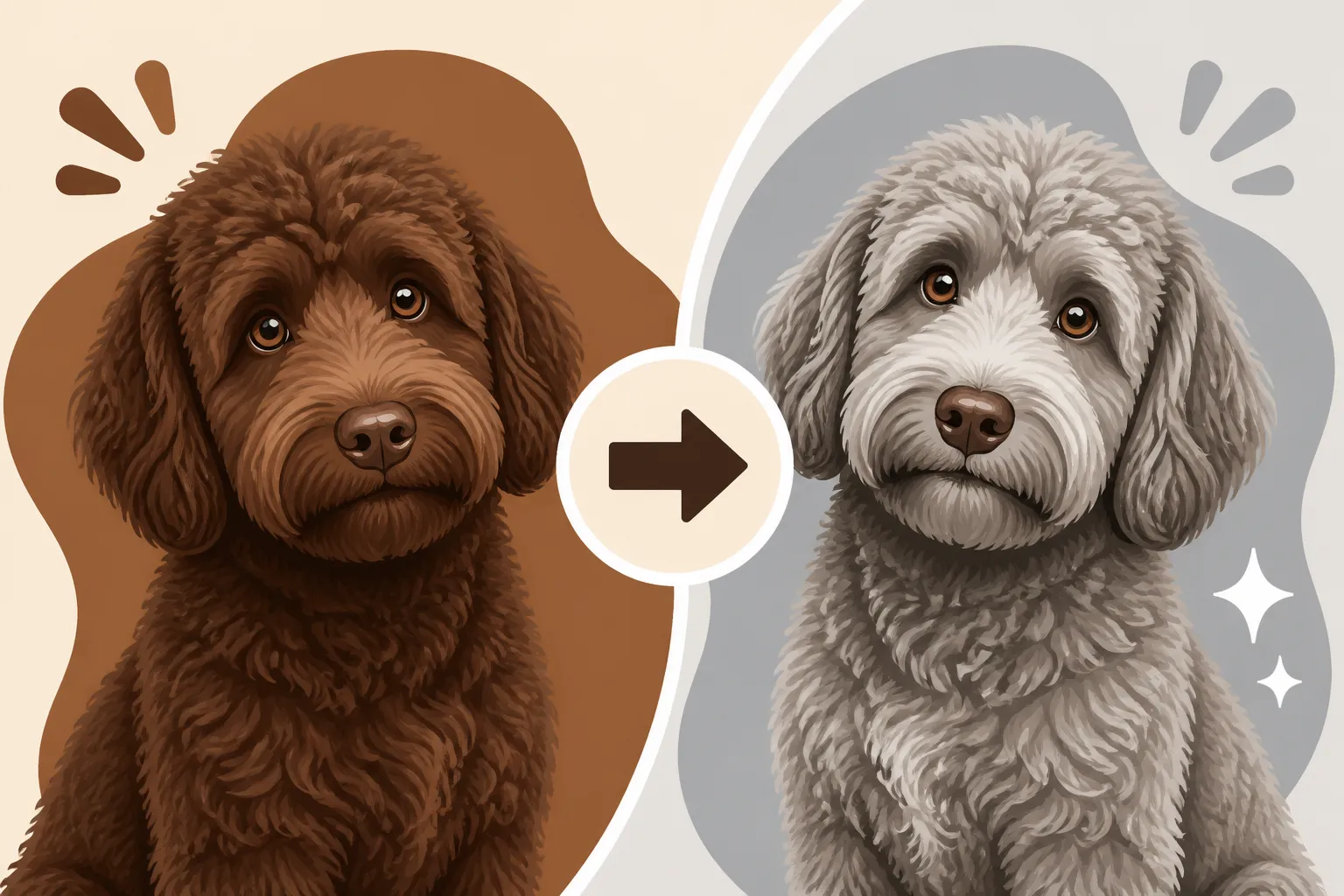
When we talk about a chocolate Labradoodle fading to "silver," it's rarely the dramatic, sparkly silver seen in some Poodles or other breeds. Instead, it's a unique progression of color that maintains its brown base but develops cool, lighter, and sometimes silvery undertones. It’s a beautiful evolution, but it certainly isn’t what many owners initially anticipate.
From Deep Brown to Café, Lavender, or Silver-Chocolate
The spectrum of "fading" in a chocolate Labradoodle is quite diverse and truly fascinating. It's not usually a sudden shift to a bright, shiny silver, but rather a gradual lightening that creates a palette of softer browns, sometimes with a noticeable silvery cast. You might see terms like "café," "parchment," or even "lavender" used to describe these evolving shades. A café Labradoodle, for instance, typically starts as a dark chocolate and fades to a rich, warm medium brown, similar to the color of coffee with a splash of milk. Parchment is an even lighter, often creamy tan, while lavender coats are a softer, silvery brown with a faint purple undertone – truly unique!
This color transformation often begins subtly, typically around 6 months to 2 years of age. You might first notice the muzzle lightening, appearing almost frosted, followed by areas around the eyes. Then, the fading usually spreads gradually through the rest of the body coat, sometimes more noticeably after the puppy coat has been shed and the adult coat comes in. Imagine your pup born with a coat as dark and rich as an artisan chocolate bar. By their first or second birthday, after their initial puppy coat has given way to their more mature fur, you might notice patches on their back or sides that have softened to a lighter, almost mocha hue, perhaps with a shimmer of silver visible in direct sunlight. This ongoing, gradual process can continue for several years, resulting in a dog that changes its shade as it ages, much like how a Labradoodle's coat changes texture with age is also a gradual process. Each dog's fade is unique, making their appearance truly one-of-a-kind.
Distinguishing Fading from Sun Bleaching or Poor Nutrition
It's natural to wonder if a change in coat color is due to genetics or something else. As a Labradoodle owner, it's really important to distinguish between true genetic fading and other factors like sun bleaching or poor nutrition, as these require different responses.
Genetic Fading: This is a uniform, progressive change embedded deeply within the hair shaft, not just on the surface. It starts at specific points (like the muzzle) and gradually spreads. It’s a permanent, genetic process that healthy, well-cared-for dogs will still undergo if they carry the appropriate genes. You can't "undo" genetic fading, but you can appreciate its unique beauty.
Sun Bleaching: This is a temporary and superficial lightening of the coat, especially prominent on the top layer that gets the most sun exposure. Sun bleaching often gives a reddish or brassy tint to chocolate coats, making them look dull rather than truly "faded" to a lighter, cooler shade. It's more about UV damage to the existing pigment. If your dog spends a lot of time outdoors in bright sunlight, you might see this. It’s not a deep, genetic change, and typically, new growth will come in the original color if sun exposure is reduced.
Poor Nutrition: A dull, dry, brittle coat, sometimes with patchy loss or simply a lack of vibrant color saturation, can be a sign of a less-than-optimal diet. While poor nutrition won't turn a chocolate coat silver, it can certainly make any existing color look lackluster and unhealthy. A high-quality diet provides the necessary nutrients, fatty acids, and vitamins for a strong, shiny, and richly pigmented coat, regardless of its underlying genetic color. For instance, a dog on a diet that lacks sufficient essential fatty acids might have a duller chocolate coat that appears less vibrant than it should, making any underlying genetic fading seem more pronounced or less appealing. Brands like Ollie, known for fresh, human-grade dog food, and Chewy, offering a wide array of premium kibbles and supplements, provide options that can support optimal coat health and color vibrancy. How Much an Adult Labradoodle Eats Daily details how to ensure proper nutrition.
Here’s a quick overview to help you tell the difference:
| Characteristic | Genetic Fading | Sun Bleaching | Nutritional Impact |
|---|---|---|---|
| Onset | Gradual, typically 6 months to 2 years+ | Appears after significant sun exposure | Can be gradual or sudden with dietary changes |
| Appearance | Uniform lightening, often with cool/silver tones | Reddish/brassy tint, superficial, dull | Dull, dry, brittle, lack of vibrancy, potential loss |
| Location | Starts at muzzle/eyes, spreads evenly | Top coat, most exposed areas | General coat, can be patchy or overall poor quality |
| Permanence | Permanent, genetic trait | Temporary; new growth typically restores color | Reversible with improved diet |
| Underlying Cause | Greying gene (G locus) | UV radiation damage | Lack of essential nutrients, vitamins, fatty acids |
Living With a Fading Chocolate Labradoodle
Discovering your chocolate Labradoodle is destined for a color transformation might initially be a surprise, but it's truly a beautiful journey to witness. Embracing this natural evolution is key to appreciating your dog's unique aesthetic.
Embracing the Evolving Coat Color
The most important thing to remember is that a fading coat color is a perfectly normal, genetically determined characteristic in many Labradoodles, particularly those from Poodle lines known for progressive greying. It doesn't mean your dog is unhealthy, aging prematurely, or somehow "lesser." In fact, many owners come to adore the softer, more nuanced shades that emerge over time. Think of it as your Labradoodle developing its own distinct, custom-made coat, a tapestry of evolving browns, cafés, and silvery accents. Each dog's fade is a little different, creating a truly unique and beautiful companion. Instead of a flaw, consider it an "extra feature" that makes your dog even more special. The diversity in Labradoodle coats, including The Three Labradoodle Coats: Hair, Fleece and Wool, adds to their charm, and this color change is just another dimension of that.
Coat Care for a Color-Changing Labradoodle
While genetic fading is inherent, proper coat care remains absolutely crucial for maintaining the health, beauty, and overall condition of your Labradoodle's fur, no matter its evolving hue. A well-cared-for faded coat will look vibrant and rich, whereas a neglected one, even if genetically beautiful, might appear dull or matted.
Regular brushing is non-negotiable. As the coat changes, its texture can sometimes subtly shift, potentially making it more prone to matting. Line brushing several times a week, ensuring you get down to the skin, is vital. You'll find a wide range of essential grooming tools, including slicker brushes and metal combs, on platforms like Amazon, making it easy to keep your dog's coat in top condition. Appropriate bathing with quality shampoos and conditioners is also important. How Often a Labradoodle Needs a Bath will depend on activity level and coat type, but using products like those recommended in Shampoos That Suit a Labradoodle's Coat can keep the coat clean, hydrated, and free from buildup that might dull its appearance.
Even if the fading is genetic, prolonged and intense sun exposure can still cause superficial damage, making the coat appear brassy or dull, especially in lighter areas. While it won't reverse the genetic fade, protecting your dog from excessive sun can help maintain the integrity and sheen of the existing color. Regular professional grooming appointments are also highly recommended. A good groomer understands different coat types and can help manage any texture changes, ensuring the coat is properly trimmed, brushed out, and looking its best. They can also advise on specific products or techniques suited to your Labradoodle's unique coat. Don't worry, Whether a Labradoodle's Coat Grows Back the Same applies even to faded coats – the texture and color will return as they were before the trim.
Understanding Your Labradoodle's Genetic Blueprint
For many Labradoodle owners, understanding the genetics behind their dog's coat color can add another layer of appreciation for their unique companion. This knowledge can also help set expectations and ensure you're making informed decisions, whether you're bringing home a new puppy or simply curious about your current dog's heritage.
Asking Your Breeder About Coat Color History
When considering a Labradoodle puppy, especially a chocolate one, don't hesitate to ask your breeder about the coat color history of the parents and previous litters. A responsible and reputable breeder will be transparent about their lines and should be aware of whether the "G" locus (greying gene) is present in their breeding stock. They can often tell you if a particular pairing is likely to produce puppies that will fade to café or silver-chocolate.
For example, a breeder might tell you that while the puppies are born a rich chocolate, they expect them to lighten to a "parchment" shade by two years of age, based on the genetics of the sire and dam. This kind of upfront information manages your expectations and allows you to truly appreciate the eventual adult color. While a responsible breeder’s primary focus should always be on health testing and temperament—as detailed in resources like The Health Tests a Labradoodle Breeder Should Show—understanding color genetics is also a part of comprehensive breeding practices. Don't be shy about asking for photos of older siblings from previous litters to see how their coats have matured.
DNA Testing for Coat Color Genes
For those who are truly curious or for breeders looking to make informed decisions, commercial DNA tests are readily available that can identify specific coat color genes, including the 'G' locus (greying gene) and the 'b' locus (chocolate/brown gene). These tests typically involve a simple cheek swab that you can collect at home and send to a specialized lab.
Receiving these results can provide definitive answers about why your chocolate Labradoodle might be fading or why a black dog might be turning blue. It can confirm the presence of the greying gene, giving you scientific insight into your dog's stunning transformation. For owners, it's a fascinating way to understand their dog's unique genetic blueprint. For breeders, this information is invaluable for predicting coat outcomes in future litters and for breeding purposefully, whether they aim to produce dogs that retain their deep chocolate hue or those that undergo a beautiful natural fade. You can often find these DNA testing kits from major pet retailers like Chewy, allowing you to unlock the secrets of your Labradoodle's coat right from your living room.
Disclaimer
This article is for general informational purposes only and does not constitute professional advice. Laws, prices and regulations vary by location and change over time. Consult a qualified professional for guidance on your specific situation.