Yeast Trapped Under a Labradoodle’s Coat
Yeast infections in Labradoodles cause musty odors, red skin, and scratching, driven by warm coats and fungus overgrowth.
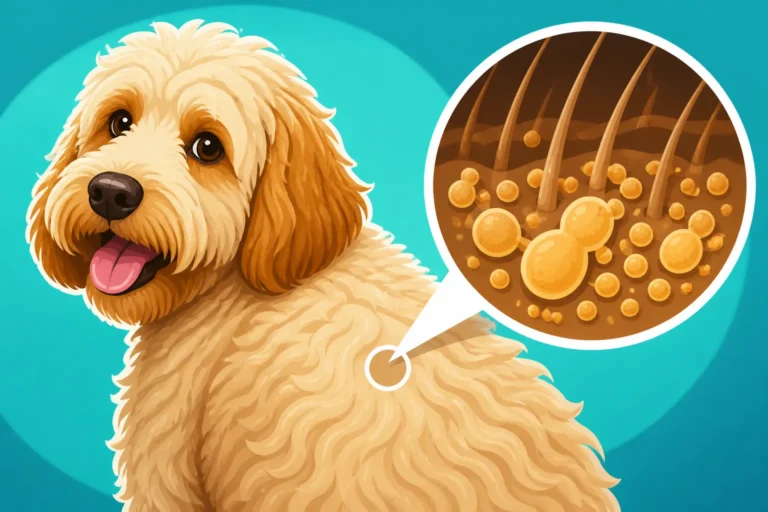
Yeast infections in Labradoodles cause musty odors, red skin, and scratching, driven by warm coats and fungus overgrowth.
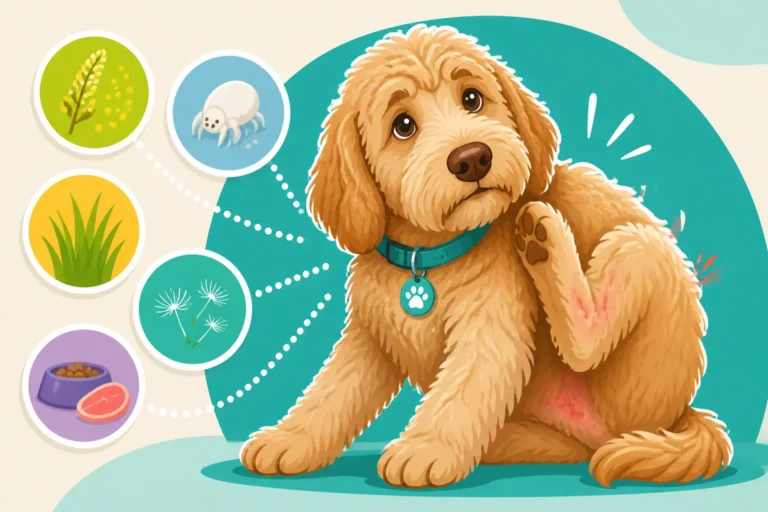
Labradoodle itching stems from inherited environmental allergies, food sensitivities, and coat moisture trapping pollen and bacteria.
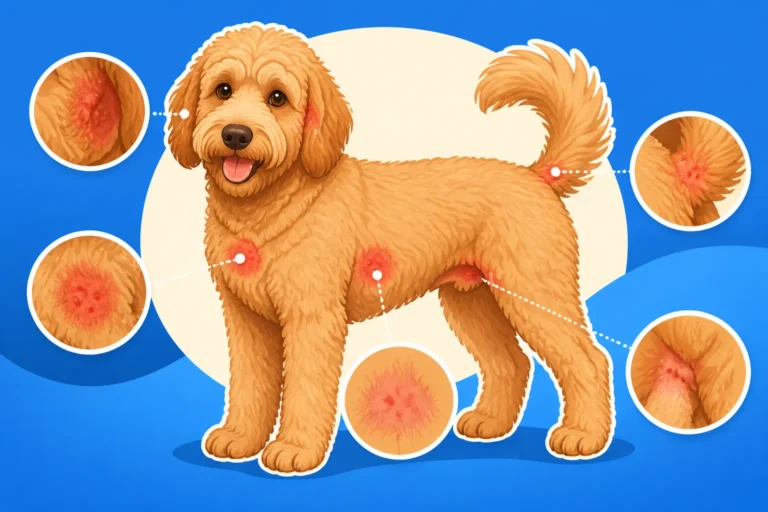
Sebaceous adenitis targets a Labradoodle’s sebaceous glands, causing hair loss and scaling on the dorsal midline, head, and ears.

Addison disease treatment for a Labradoodle restores normal life using daily medication for cortisol and aldosterone hormone deficiencies.
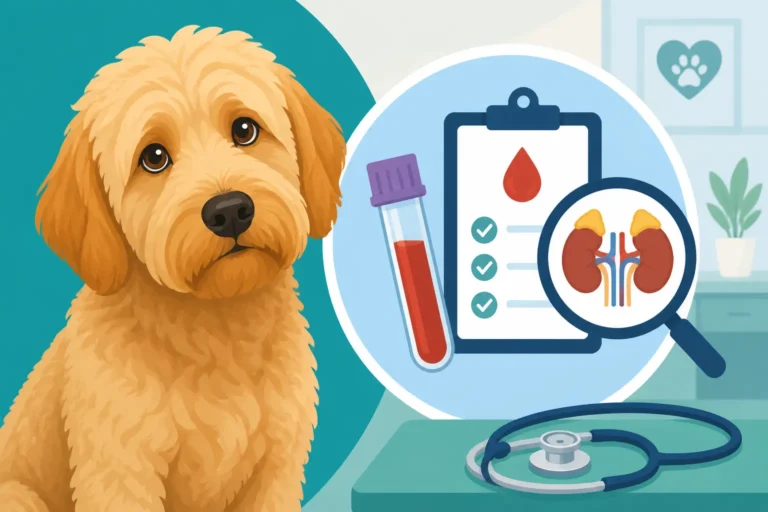
Addison disease diagnosis in Labradoodles involves evaluating vague symptoms and genetic risks inherited from the Standard Poodle.
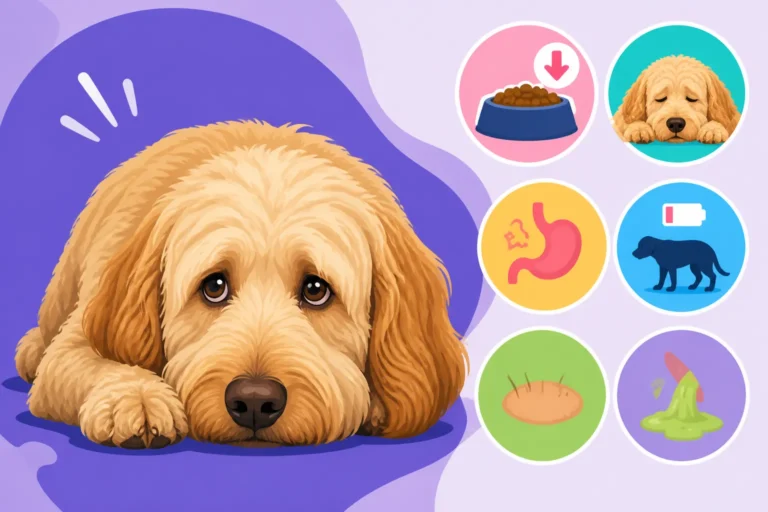
Addison disease symptoms in Labradoodles involve subtle hormonal imbalances and non-specific signs linked to Poodle genetics.
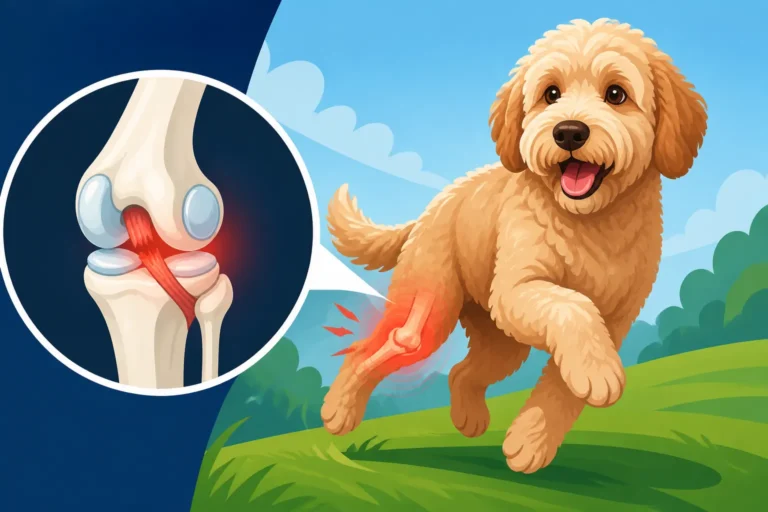
Torn cruciate ligaments in Labradoodles cause knee instability and lameness. Learn the signs, diagnosis, and treatment options.
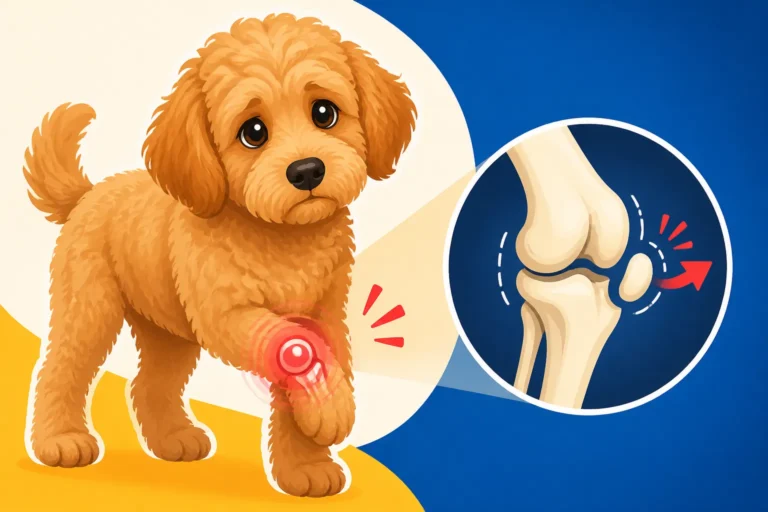
Patellar luxation causes a slipping kneecap in Miniature Labradoodles, leading to pain and lameness when the patella dislocates.
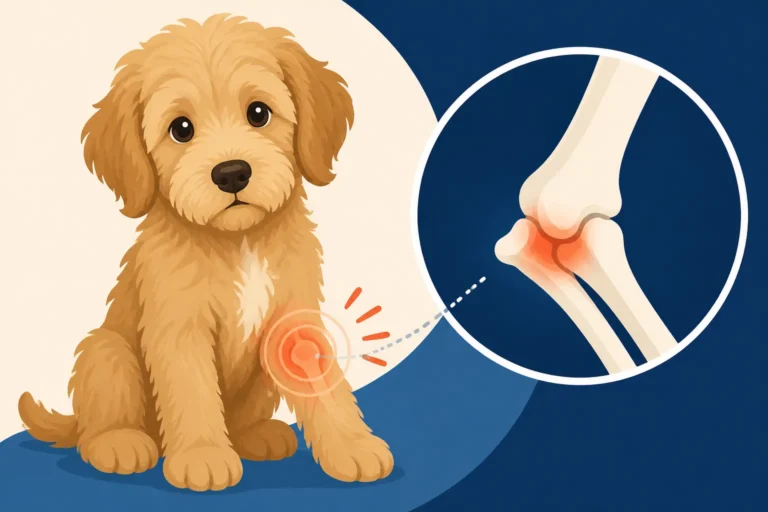
Elbow dysplasia in Labradoodle puppies involves developmental joint abnormalities causing pain, lameness, and osteoarthritis.

Official Orthopedic Foundation for Animals hip clearances for both Labradoodle parents prevent chronic pain and osteoarthritis.