What a Groomer Does With a Labradoodle That Will Not Stand
It’s a scenario many Labradoodle owners dread and groomers encounter regularly: you bring your beloved, fluffy companion in for their much-needed trim, only for them to turn into a wriggly, four-legged statue of protest on the grooming table. This isn't just frustrating; it can be genuinely distressing, making you wonder how any groomer can manage such a strong, determined dog. This guide delves into the realities of working with a Labradoodle that refuses to stand, exploring the underlying reasons and the patient, multi-faceted approaches professional groomers employ to ensure a safe and successful grooming experience for everyone involved.
Understanding Why Your Labradoodle Won't Stand for Grooming
When your Labradoodle decides that standing still on the grooming table is simply not an option, it's not usually out of malice or stubbornness, though it can certainly feel that way! There are often very real, understandable reasons behind their resistance. A good groomer knows that uncovering these root causes is the first step toward a more cooperative experience.
Fear, Anxiety, or Past Negative Experiences
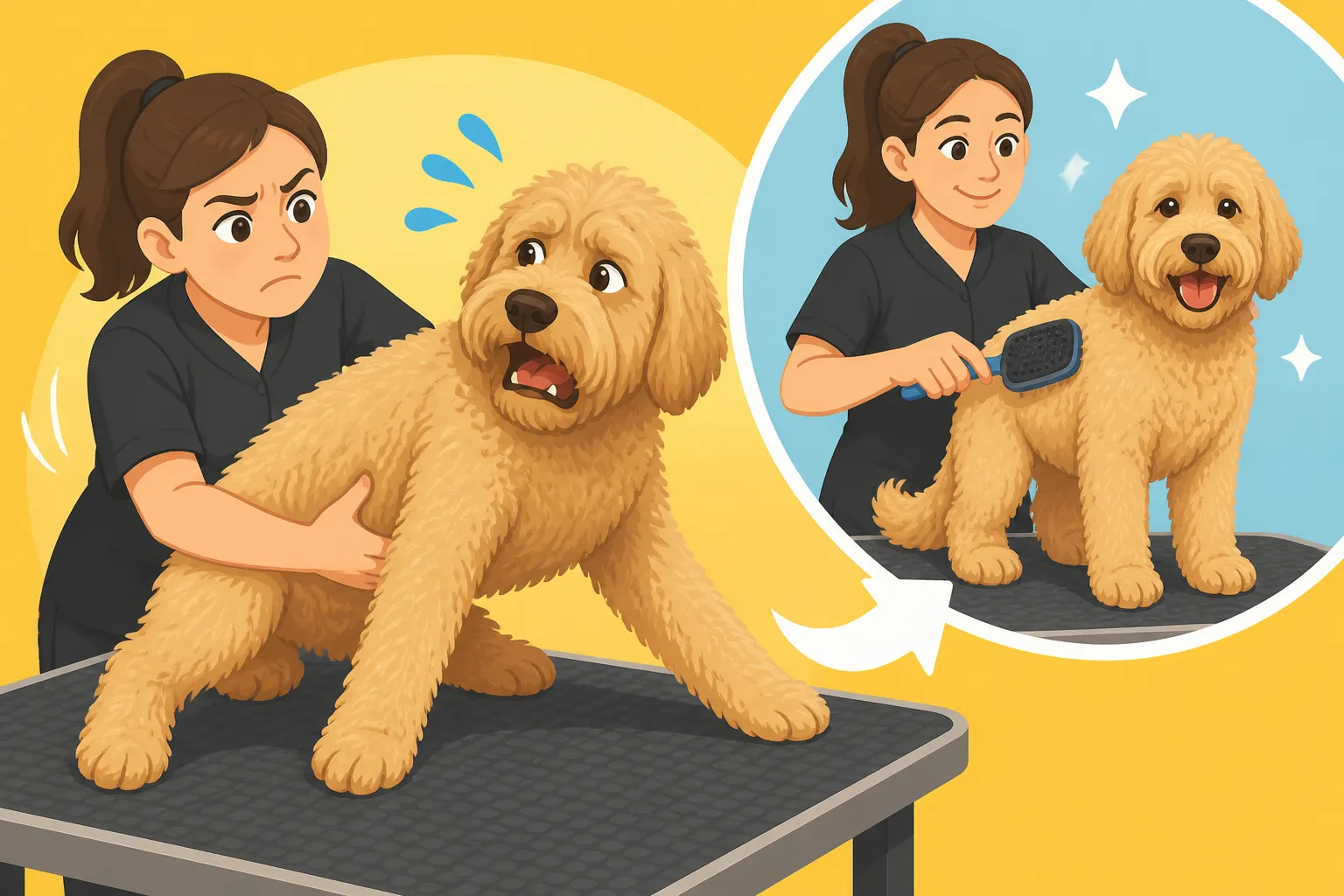
Imagine being in an unfamiliar place, on a slippery, elevated surface, with strange tools making whirring noises, and someone touching you in sensitive areas. For many Labradoodles, especially those not properly socialized or desensitized to grooming early on, this can be a genuinely terrifying ordeal. They might have had a previous bad experience, perhaps a painful mat removal, an accidental nip from clippers, or even just an overly rushed or rough session. Dogs remember these things. This fear or anxiety manifests as a refusal to cooperate, often expressed by planting all four paws firmly, leaning away, or trying to sit or lie down. They might be shaking, panting, or showing whale eye, desperately trying to communicate their discomfort. It's not about being "bad"; it's about feeling vulnerable and unsafe.
Consider a young Labradoodle puppy who was rushed through its first grooming experience. The buzzing clippers near its sensitive ears or the unfamiliar sensation of a forced air dryer might have been too much. Now, every time it sees the grooming table, those negative associations flood back, triggering a strong instinct to escape or freeze. This can quickly escalate, making future grooming sessions even more challenging. How Early a Labradoodle Should Meet a Groomer stresses the importance of positive early introductions, precisely to avoid these types of ingrained fears.
Lack of Early Desensitization and Training
One of the biggest culprits behind a non-standing Labradoodle is often a lack of consistent, positive exposure to grooming practices from a young age. Many owners, understandably, underestimate the sheer amount of handling, touching, and patience a Labradoodle's coat and temperament require. These dogs are intelligent, energetic, and can be quite sensitive. If they haven't been taught that grooming is a normal, even pleasant, part of life, they're not going to inherently understand why they need to stand still for a stranger for an hour or more.
Think about it: from puppyhood, a Labradoodle needs to be accustomed to having its paws handled, its ears cleaned, its tail lifted, and the buzzing sensation of clippers or dryers. If this foundational training isn't done at home, a groomer is starting from scratch, trying to teach a large, often strong dog to tolerate procedures it finds entirely alien. This isn't just about obedience; it's about comfort and habituation. Without this groundwork, the groomer is often battling a dog that simply hasn't learned the necessary manners for the table. The guidance in Building a Labradoodle Up to a Long Grooming Session really highlights the critical role owners play in this preparation.
Pain or Discomfort During Grooming
Sometimes, a Labradoodle's refusal to stand isn't psychological; it's physical. They might be experiencing actual pain or discomfort. This could range from underlying orthopedic issues like hip or elbow dysplasia, which make standing for extended periods painful, to minor injuries or sensitive skin conditions. Mats, particularly severe ones, can pull on the skin and cause significant pain when brushed or moved, prompting a dog to resist standing or any manipulation of its coat. Ear infections, anal gland issues, or even an ingrown nail can make a dog uncomfortable and less tolerant of being handled, especially if the groomer accidentally brushes against a sore spot.
A groomer is trained to look for these subtle signs. If a dog is usually cooperative but suddenly starts resisting, it's a huge red flag that something might be physically amiss. The groomer needs to assess for lameness, tenderness, or visible skin irritations. They know that forcing a dog through pain will only exacerbate the issue and create a lasting negative association with grooming. This is why thorough communication with your vet and groomer is so important, especially if you suspect any underlying health issues. Arthritis in a Labradoodle at Ten details how age-related discomfort can change a dog's grooming tolerance significantly.
Initial Steps a Groomer Takes with a Non-Standing Labradoodle
When a Labradoodle arrives and immediately demonstrates a reluctance to stand, a professional groomer doesn't typically force the issue. Instead, they pivot to a more strategic, compassionate approach, prioritizing safety and trust.
Assessing the Dog's Temperament and Stress Signals
The very first thing a skilled groomer does is a thorough "read" of the dog. They're looking for subtle (and not-so-subtle) cues about the Labradoodle's emotional state. Is the tail tucked? Are the ears pinned back? Is there excessive panting, drooling, or lip-licking? Are they trying to pull away, or are they frozen in place? A groomer will observe how the dog interacts with them upon arrival, how it reacts to being led to the table, and any changes in body language as they begin to interact. This initial assessment helps them determine if the dog is simply unsure, mildly anxious, or genuinely fearful or aggressive.
This temperament assessment often starts before the dog even touches the table. They might spend a few minutes talking calmly to the dog, offering gentle pets, and watching its response. If the dog is showing significant stress, the groomer understands that pushing forward aggressively will only make things worse, potentially leading to a bite or serious injury to the dog or themselves. They know that Grooming Stress Shows as Aggression in a Labradoodle is a real concern, and prevention is key.
Building Trust and Creating a Positive Environment
Once the groomer has an initial read, their focus shifts to building rapport. This means creating an environment where the Labradoodle feels as safe and comfortable as possible. This isn't about rushing; it's about patience. They might:
- Offer High-Value Treats: Small, delicious treats are often used to create positive associations with the groomer and the grooming tools. Every time a clipper buzzes nearby, or a brush touches the coat, a treat follows.
- Speak Calmy and Reassuringly: A calm, low voice can do wonders to soothe an anxious dog.
- Start with Gentle Touch: The groomer might begin by simply petting the dog in non-threatening areas, gradually moving to more sensitive spots only when the dog shows signs of comfort.
- Use Non-Slip Surfaces: A textured mat on the grooming table can make a huge difference, giving the dog better traction and reducing the feeling of instability that contributes to anxiety.
- Adjust Equipment: Sometimes, simply lowering the grooming table or allowing the dog to stand on the floor for certain parts of the groom can reduce stress.
- Short, Positive Interactions: Instead of trying to do a full groom, they might break it down into very short, positive interactions, giving the dog breaks and praise.
The goal is to show the Labradoodle that the groomer is not a threat and that grooming can be a manageable, even rewarding, experience. This is especially true for Labradoodles who are often described as "Velcro dogs" due to their strong attachment to their owners; separating them for a potentially scary experience can amplify their anxiety.
Modifying the Grooming Setup and Approach
A professional groomer will often adapt their entire setup and workflow to accommodate a non-standing Labradoodle. This might involve:
- Using a Grooming Sling or Hammock: For dogs that absolutely cannot or will not stand, a grooming sling or hammock can be a game-changer. These devices gently support the dog from underneath, allowing them to be safely elevated and held still without putting undue stress on their legs or back. This can be particularly useful for small to medium-sized Labradoodles for nail trims or paw pads.
- Working on the Floor: For very large or profoundly fearful dogs, a groomer might opt to work on the floor, especially for initial brushing or trimming of less sensitive areas. This removes the fear factor of the elevated table.
- Utilizing Multiple Staff Members: In some cases, having a second groomer or assistant dedicated solely to comforting and supporting the dog can make a significant difference. One person might offer treats and gentle reassurance while the other performs quick, efficient grooming tasks.
- Strategic Use of Grooming Loops: While not for restraint in a harsh sense, a grooming loop (often a soft material, not a harsh slip lead) can be used to keep a Labradoodle safely positioned on the table, preventing them from jumping off or turning excessively, while still allowing them movement within a safe boundary. These are always used with careful supervision and never to choke or cause distress.
- Muzzle Training: For dogs prone to biting when fearful, a comfortable, well-fitting muzzle might be introduced gradually and positively (paired with treats) to ensure the safety of both the dog and the groomer. This is a safety measure, not a punishment, and a good groomer will always prioritize making the muzzle a non-scary tool. A Labradoodle That Snaps at the Dryer highlights how fear can escalate to aggressive behaviors.
| Approach | Description | Benefits | Considerations |
|---|---|---|---|
| Floor Work | Groomer works with the dog on the ground, often on a non-slip mat, for initial brushing or parts of the trim. | Reduces fear of height/table; can be less intimidating for nervous dogs. | Physically demanding for the groomer; limited angles for precise cuts. |
| Grooming Sling/Hammock | A fabric sling supports the dog's body, lifting them slightly off the table or suspending them, often leaving legs free for paw work. | Provides support for dogs unable to stand; prevents sitting/lying down; good for small/medium doodles. | May not be suitable for very large Labradoodles; some dogs may still resist the confinement. |
| Breaks & Positive Reinforcement | Frequent short breaks, praise, and high-value treats are given throughout the session, especially after moments of cooperation. | Builds positive associations; reduces overall stress; encourages future cooperation. | Requires more time, which may impact appointment length and cost. |
| Two-Person Team | One person focuses on comforting and stabilizing the dog while the other performs grooming tasks. | Enhances safety for both dog and groomer; often allows for quicker, more efficient work on difficult areas. | May not always be available; typically reserved for more challenging cases. |
| Desensitization Tools | Using specific brushes, combs, or low-vibration clippers (some available on Amazon) along with treats to gradually introduce sensations the dog finds scary. | Slowly changes negative associations to positive ones over time. | Requires consistent effort from both groomer and owner; results take time. |
Grooming Techniques for a Labradoodle That Struggles to Stand
Once the initial trust is established and the environment is adapted, the actual grooming process requires a nuanced approach, prioritizing the dog's comfort and safety over speed or perfection.
Working in Short, Focused Sessions
One of the most effective strategies for a Labradoodle that resists standing is to break the grooming process into much shorter, more manageable sessions. Instead of aiming for a single, hour-long session, a groomer might schedule several shorter appointments, or simply tackle one section of the dog's coat at a time within a single visit, allowing for frequent breaks. For instance, they might do the body one day, and then schedule paws and face for another. Within a single appointment, they might work for 5-10 minutes, then allow the dog a mental break on the floor, a drink of water, or a quick potty break, before resuming.
This "little and often" approach significantly reduces the mental and physical fatigue for the dog. It lowers the overall stress level because the dog knows it won't be trapped on the table indefinitely. Each successful, short session builds positive reinforcement, gradually increasing the Labradoodle's tolerance for longer periods. This is a long-term investment in their comfort and cooperation. Teaching a Labradoodle to Lie Still for a Ninety Minute Groom often requires building up to it with these shorter, positive increments.
Utilizing Tools and Aids for Support
Groomers have a whole arsenal of specialized tools and aids designed to help dogs who struggle to stand or stay calm:
- Non-Slip Mats: As mentioned, these are crucial. Even a thin rubber mat provides much-needed grip, preventing the dog from feeling like it's constantly slipping, which can exacerbate fear.
- Grooming Loops and Belly Bands: While not for harsh restraint, a soft grooming loop around the neck (attached to the grooming arm) and sometimes a belly band (a wide strap under the abdomen, also attached to the arm) can provide gentle support and prevent a dog from sitting down or lying completely flat. This helps them maintain a standing position without feeling "held down." A belly band can be particularly useful for older dogs or those with joint issues, offering some relief from their own weight.
- Elevated Grooming Tubs with Ramps: For bathing, many professional salons have tubs with built-in ramps, allowing larger Labradoodles to walk in rather than being lifted. This can reduce anxiety and physical strain. Some tubs even have textured bottoms for better grip.
- Quiet Clippers and Low-Velocity Dryers: Recognizing that noise can be a major trigger for anxious dogs, many groomers invest in quieter clippers and force dryers that have adjustable speeds. A gentler, lower-velocity airflow might be used initially to desensitize a dog to the drying process.
- Comforting Aromas or Music: Some progressive grooming salons utilize calming essential oils (diffused safely, not applied to the dog) or classical music to create a more serene atmosphere, which can subtly help reduce overall anxiety.
The judicious use of these tools is about creating safety and comfort, not about forcing compliance.
The Importance of Communication with Owners
A responsible groomer understands that they are part of a team effort with the owner. If a Labradoodle consistently struggles on the table, the groomer will communicate openly and honestly with the owner about:
- The Dog's Behavior: Providing specific examples of how the dog reacted and what behaviors were observed.
- Recommended Home Practices: Offering advice on what the owner can do at home to help desensitize their Labradoodle. This might include daily short sessions of brushing, touching paws, or practicing "stand" commands with treats. Products like positive reinforcement training kits from BAXTER & Bella can be invaluable for owners learning these skills.
- Potential Underlying Issues: Suggesting a veterinary check-up if they suspect pain or discomfort is contributing to the dog's resistance.
- Realistic Expectations: Helping the owner understand that a perfect "teddy bear" trim might not be achievable in the first few sessions for a highly anxious dog. Sometimes, a shorter, more functional cut is necessary to prioritize the dog's welfare and prevent matting.
- The Next Steps: Collaborating on a plan for future grooms, whether that means shorter appointments, specific training goals, or considering other options.
Open communication ensures that owners are informed partners in their Labradoodle's grooming journey, fostering a supportive approach rather than leaving them feeling frustrated or judged. This partnership is crucial for managing coats prone to matting, where What a Groomer Charges to Dematt a Labradoodle by the Hour can quickly become a concern if issues aren't addressed.
When Professional Groomers Recommend Alternative Approaches (Or Referrals)
Despite a groomer's best efforts, some Labradoodles may still find the experience overwhelmingly stressful or even dangerous. In these situations, a professional groomer understands their limitations and will recommend alternative solutions or referrals. Their priority is always the safety and well-being of the dog.
Discussing Sedation or Veterinary Grooming Options
For Labradoodles with extreme anxiety, fear-based aggression, or those with significant pain issues that make standing or handling impossible without undue stress, a groomer may suggest veterinary assistance. This isn't a failure, but a responsible decision.
- Veterinary Grooming: Some veterinary clinics offer grooming services, specifically for dogs that require sedation or specialized handling due to medical conditions or extreme behavioral challenges. This allows the grooming to be performed under veterinary supervision, often with mild sedatives that help the dog relax without being fully unconscious. The vet can monitor vital signs and administer medications as needed, ensuring a much safer experience. Whether Sedation Is Ever Right for Grooming a Labradoodle is a question best discussed with your vet and groomer.
- Prescribed Sedation: A veterinarian might prescribe oral sedatives for the owner to administer before a grooming appointment. These are typically mild, designed to take the edge off anxiety, making the dog more amenable to handling without rendering them completely unresponsive. It's crucial that these medications are prescribed and monitored by a vet, as the correct dosage and type depend on the individual dog's health and specific needs. It’s also vital to let your groomer know if your dog has been sedated so they can adjust their approach accordingly.
These options are usually considered a last resort, but they can be a lifesaver for dogs who are otherwise unreachable by conventional grooming methods, preventing extreme suffering and potential injury.
Referring to Professional Trainers or Behaviorists
If a Labradoodle's refusal to stand is primarily a behavioral issue rooted in fear, lack of socialization, or general anxiety rather than just physical discomfort, a groomer might recommend consulting with a professional dog trainer or certified veterinary behaviorist. These experts can provide tailored support that goes beyond what a groomer can offer in the salon.
- Positive Reinforcement Training: A trainer can work with both the dog and owner on desensitization and counter-conditioning protocols. This involves gradually exposing the Labradoodle to grooming tools and handling in a positive, reward-based way, slowly changing their emotional response from fear to acceptance. This can be done at home, often with guidance from online programs or local classes. Programs that offer step-by-step guidance, such as those that can be found via BAXTER & Bella, empower owners to build confidence in their dogs.
- Behavior Modification Plans: For more severe cases, a veterinary behaviorist can develop a comprehensive behavior modification plan, which might include environmental management, training techniques, and, in some instances, temporary behavioral medications to help reduce anxiety during the re-training process. The goal is to address the underlying emotional issues that drive the dog's refusal to cooperate.
- Addressing Specific Triggers: A trainer can help identify specific triggers (e.g., the sound of clippers, the feel of a brush) and work on reducing the dog's reactivity to them. This can also involve teaching specific behaviors, like a calm "stand-stay" or "down-stay" on cue, which can then be transferred to the grooming environment.
The Long-Term Goal: Building Positive Associations
Ultimately, the goal with any Labradoodle who struggles to stand for grooming is to transform their experience from something terrifying into something tolerable, or even enjoyable. This is a journey, not a single appointment. For the groomer, it means patience, understanding, and a willingness to adapt. For the owner, it means consistent home practice, open communication with their groomer and vet, and a commitment to their dog's emotional well-being.
Building positive associations involves:
- Regular, Short Home Sessions: Even just 5 minutes a day of gentle brushing, paw handling, and ear checks, always paired with high-value treats and praise, can make a huge difference. Use simple tools found on Amazon, like a soft slicker brush or a wide-tooth comb.
- Frequent Grooming Appointments: Instead of waiting until the coat is matted and the dog is overdue, more frequent, shorter visits to the groomer can prevent coat problems from escalating and reinforce positive habits.
- Advocacy for Your Dog: Being honest with your groomer about your dog's fears or sensitivities, and being willing to explore different options, ensures that your Labradoodle gets the best care possible.
It's a testament to the dedication of both groomers and owners that even the most resistant Labradoodles can, with time and the right approach, learn to tolerate and even enjoy their pampering sessions. It’s about building a foundation of trust and understanding, one patient step at a time.
Disclaimer
This article is for general informational purposes only and does not constitute professional advice. Laws, prices and regulations vary by location and change over time. Consult a qualified professional for guidance on your specific situation.