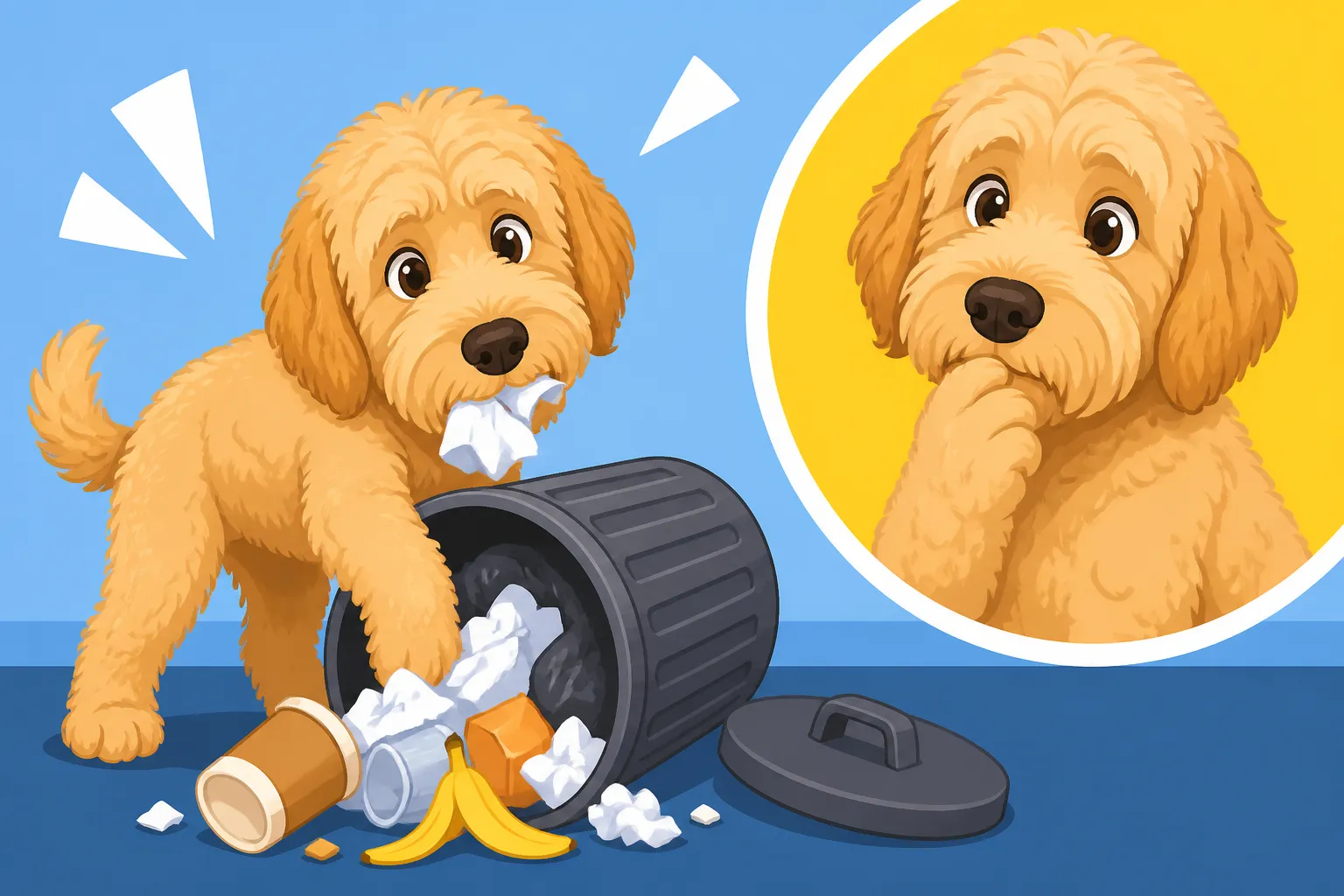
Whether a Labradoodle Raids the Trash
It's a familiar scenario for many Labradoodle owners: you leave the room for just a moment, only to return to a kitchen floor adorned with coffee grounds, discarded food wrappers, and the remains of last night's dinner. The sight of your beloved Labradoodle, looking innocently guilty amidst the chaos, is enough to make anyone sigh. Trash raiding isn't just a messy inconvenience; it's a frustrating, and potentially dangerous, habit that can put your dog's health at risk. This guide dives deep into why your Labradoodle might be treating your waste bin like a treasure chest and, more importantly, how you can put a stop to this common but troublesome behavior.
Why Your Labradoodle Sees the Trash as an All-You-Can-Eat Buffet
Labradoodles are intelligent, curious, and often food-motivated dogs, a delightful combination that can also lead them straight to your garbage can. Understanding the root cause of this behavior is the first step in addressing it effectively. It's rarely out of malice and almost always driven by instinct, boredom, or a lack of clear boundaries.
The Powerful Scent Drive from Their Labrador Side
One of the primary reasons Labradoodles, particularly those with a strong influence from their Labrador Retriever lineage, are drawn to the trash is their incredible sense of smell and innate retrieving drive. A Labrador's nose is designed to detect even the faintest scent of food, and their instinct is to retrieve it. To a Labradoodle, a trash can, overflowing with potent aromas from discarded food scraps, coffee filters, and even used tissues, is an irresistible beacon of potential treats.
This powerful scent drive means that even if a food item is well-wrapped or seemingly out of reach, your Labradoodle might still detect its presence. They don't differentiate between what's "food" and what's "garbage" in the human sense; if it smells interesting and edible, it's fair game. This is why a simple kitchen bin with an open lid is essentially an invitation for exploration, especially when you're not looking. They're just following their nose, often with impressive determination.
Boredom, Underexercise, or Lack of Mental Stimulation
A Labradoodle is a high-energy, intelligent breed that thrives on mental and physical engagement. When these needs aren't met, boredom can quickly set in, leading them to find their own forms of entertainment. And what's more entertaining than a hidden treasure trove of smells and textures? Raiding the trash provides a thrilling challenge, a sensory explosion, and often, a tasty reward, all rolled into one forbidden activity.
Imagine a typical day for a Labradoodle who doesn't get enough walks, playtime, or interactive toys. The house might feel monotonous, but then they catch a whiff of something intriguing from the trash. Tipping it over, rummaging through the contents, and perhaps tearing open a bag becomes a full-fledged activity, complete with problem-solving and a sense of accomplishment. It's not just about the food; it's about alleviating that pent-up energy and mental dullness. If you've ever wondered Whether a Labradoodle Gets Bored of Repetition, the answer is a resounding yes, and trash cans often bear the brunt of that boredom.
Opportunistic Behavior and Lack of Boundaries
Dogs are masters of observation and habit formation. If your Labradoodle has successfully raided the trash even once, they've learned that it's a rewarding activity. They'll quickly figure out the patterns: "Ah, the humans left the kitchen, now's my chance!" Or, "If I nudge this bin just right, it tips over, and goodies appear." Every successful raid reinforces the behavior, making it harder to break.
This opportunistic behavior is often compounded by a lack of consistent boundaries. If there are times when the trash is accessible, or when the "leave it" command isn't strictly enforced around tempting items, your Labradoodle might perceive an inconsistency in the rules. They need clear, unwavering boundaries to understand what is and isn't allowed. Without them, they'll simply test the limits, and the trash can is often the most tempting test subject in the house. This connects directly to the broader topic of The Ten Month Old Labradoodle That Forgets Everything, as consistency is key during their impressionable adolescent phase.
Anxiety, Stress, or Attention-Seeking
While less common than boredom or scent drive, some Labradoodles might resort to trash raiding due to underlying emotional issues such as separation anxiety or stress. If your dog only raids the trash when left alone, it could be a coping mechanism for anxiety, or even a way to seek attention, especially if they've learned that a messy kitchen guarantees your immediate return and focus (even if it's negative attention).
Consider the context in which the trash raiding occurs. Does it happen every time you leave the house? Is it accompanied by other destructive behaviors like chewing furniture or barking excessively? These could be signs of a deeper emotional struggle. Similarly, some dogs quickly learn that if they make a mess, you'll come running. Even if your response is scolding, it's still a form of attention. It's crucial to evaluate if the behavior is linked to your absence or presence and to address any underlying anxiety rather than just punishing the symptom.
Preventing Trash Raiding: Early Habits and Training
Prevention is always easier than cure, especially when it comes to undesirable behaviors like trash raiding. Establishing good habits from a young age and providing appropriate outlets for their energy and intelligence can significantly reduce the likelihood of your Labradoodle becoming a dumpster diver.
Crate Training and Supervised Exploration
For puppies and newly adopted Labradoodles, crate training is an invaluable tool in preventing trash raids. A crate provides a safe, secure space where your dog can't get into trouble when you can't actively supervise them. When they are out of the crate, it's essential to practice vigilant "umbilical cord" supervision, keeping them on a leash attached to you, or confined to a puppy-proofed area with you.
This close supervision allows you to intervene immediately if they show interest in the trash, redirecting their attention to appropriate toys or activities. It also prevents them from practicing the undesirable behavior in the first place, which is critical during their formative months. A young Labradoodle needs to learn boundaries around the home, and Raising a Labradoodle Through Its First Year includes teaching them what's off-limits from the start.
Teaching "Leave It" and "Drop It" Commands
These two commands are absolute lifesavers for any dog owner, especially one living with a curious Labradoodle. "Leave It" teaches your dog to ignore a tempting item, while "Drop It" teaches them to release something they already have in their mouth. Start practicing these commands in a low-distraction environment with low-value items, gradually increasing the difficulty and the value of the temptation.
Many online training programs, such as those offered by BAXTER & Bella, provide structured lessons that can guide you through teaching these critical commands effectively. Their approach focuses on positive reinforcement, which is incredibly effective for intelligent and eager-to-please Labradoodles. Consistent practice, even when there's no actual trash involved, builds a strong foundation for these commands, making them reliable when you truly need them in a high-stakes trash encounter.
Proper Management and Puppy-Proofing
The most straightforward way to prevent trash raiding is to remove the opportunity. This means investing in dog-proof trash cans. Forget the open-top bins or those with flimsy pedal lids that a determined Labradoodle can easily defeat. Look for cans with secure, locking lids, or those that are heavy enough not to be tipped over. You can find many robust options on Amazon, from simple lidded bins to more sophisticated, animal-proof designs.
Beyond the main kitchen trash, consider smaller bathroom bins or office wastebaskets. These often contain appealing items like tissues, cotton swabs, or food wrappers that your Labradoodle will find interesting. Ensure they are either lidded, placed inside cabinets, or entirely out of reach. Also, be mindful of what goes into the trash; if particularly smelly or tempting items are discarded, consider taking them directly to an outdoor, secure bin immediately.
Addressing Underlying Needs: Exercise and Enrichment
As mentioned earlier, a bored or under-exercised Labradoodle is a mischievous Labradoodle. Ensure your dog is getting adequate physical exercise for their age and size. This might mean longer walks, vigorous games of fetch, or trips to a dog park. Remember, Labradoodles are active dogs, and The Exercise a Labradoodle Needs Before It Behaves is often more than what new owners anticipate.
Beyond physical activity, mental stimulation is equally vital. Engage their intelligent minds with puzzle toys, interactive feeders, scent work, or training sessions. Consider enrolling in an online obedience course, like those from BAXTER & Bella, to teach new tricks or work on advanced obedience. Providing appropriate outlets for their natural drives—like a sturdy chew toy or a food-dispensing ball—can significantly reduce their desire to seek entertainment in your garbage.
Managing an Established Trash Raiding Habit
If your Labradoodle has already developed a habit of raiding the trash, it will require patience, consistency, and a multi-pronged approach to break it. This isn't just about punishment; it's about changing the environment, retraining their responses, and providing better alternatives.
Securing Your Trash Cans
This cannot be stressed enough: if your Labradoodle can get into the trash, they will. The first and most critical step is to make your trash cans completely inaccessible. This isn't just about having a lid; it's about having a lid that a clever dog can't remove or a bin that can't be tipped.
Here are some effective options for securing your trash:
| Type of Trash Can/Solution | Description | Pros | Cons |
|---|---|---|---|
| Locking Lid Bins | Bins with latches or secure clips that prevent lifting. | Highly effective at preventing lid removal. | Can still be tipped by larger, determined dogs. |
| Heavy-Duty/Weighted Bins | Made from durable materials, often with weighted bases. | Hard to tip over, durable against chewing. | More expensive, can still have unsecured lids. |
| In-Cabinet Bins | Trash cans hidden inside kitchen cabinets. | Completely out of sight and reach. | Requires cabinet space, may be less convenient for frequent use. |
| Motion-Sensor Bins | Some advanced models have tight-fitting lids and can deter. | Hygienic, might deter some dogs with the opening mechanism. | Can be expensive, very smart dogs might figure out the motion sensor. |
| Gates/Barriers | Using baby gates or pet gates to block access to the kitchen. | Prevents access to the entire area, not just the bin. | Inconvenient for humans, not always aesthetically pleasing. |
Consider where you keep your trash too. Can you put it in a pantry, a utility room, or a garage when you're not home? Any measure that creates a physical barrier between your Labradoodle and the alluring scents within your trash is a win.
Consistent Training and Reinforcement
Even with the most secure bins, training remains paramount. Reinforce those "Leave It" and "Drop It" commands daily. Practice them frequently with various distractions, not just around the trash. If you notice your Labradoodle even sniffing suspiciously around a secured bin, issue a calm "Leave It" command and reward them generously for complying.
If they do manage to get into the trash, avoid harsh punishment. This can create fear and anxiety, potentially exacerbating the problem or leading to secretive trash raiding. Instead, calmly remove them from the situation, clean up the mess, and reflect on how your management failed. The key is to prevent the practice of the behavior, not just to react to it. Remember, Whether a Labradoodle Works for Food Like a Labrador is often true, so use high-value treats to reward desired behaviors.
Diversion and Alternative Behaviors
Provide your Labradoodle with appropriate outlets for their natural instincts. If they love to chew, offer them durable chew toys. If they love to 'hunt' for things, use puzzle toys or scatter their kibble around the yard for a scent-based game. This satisfies their natural curiosity and drive in an acceptable way.
When you know you'll be busy or leaving the house, make sure your Labradoodle has been well-exercised and has a long-lasting, safe chew or a stuffed Kong toy to keep them occupied. This proactive approach redirects their attention away from tempting forbidden items and towards acceptable forms of entertainment. A good durable chew toy purchased from Amazon can keep them engaged for a long time.
Professional Help When Needed
If you've tried all the management and training techniques consistently and your Labradoodle continues to raid the trash, especially if it seems linked to anxiety or other behavioral issues, it might be time to consult a professional dog trainer or a veterinary behaviorist. They can help identify underlying causes, develop a tailored behavior modification plan, and provide guidance on more advanced training techniques.
Sometimes, what appears to be simple mischief is a symptom of a deeper issue, like separation anxiety that requires a specific training protocol. A professional can also rule out any medical conditions that might be contributing to increased appetite or unusual behaviors. Don't be afraid to seek expert help; it's a sign of a responsible pet owner committed to their dog's well-being.
Safety Concerns and What to Do If Your Labradoodle Eats Something Bad
Beyond the mess, the most significant concern with trash raiding is the very real danger it poses to your Labradoodle's health. Many common household items in the trash are toxic or dangerous if ingested.
Common Dangers in the Trash
The list of potentially harmful items in your trash is surprisingly long:
- Cooked Bones: Chicken, pork, or beef bones become brittle when cooked and can splinter, causing internal punctures or blockages.
- Food Scraps: Onions, garlic, grapes, raisins, chocolate, avocado, and anything with xylitol (a sugar substitute found in many sugar-free products) are highly toxic to dogs. Fatty foods can also lead to painful pancreatitis. Pancreatitis After a Labradoodle Raids the Trash is a very real concern.
- Packaging: Plastic wrappers, aluminum foil, plastic bags, and corn cobs can cause choking, intestinal blockages, or cuts.
- Cleaning Products/Chemicals: Even residue on discarded wipes or containers can be toxic.
- Medications: Any human medication is a serious poisoning risk.
- Coffee Grounds/Tea Bags: Contain caffeine, which is toxic to dogs.
- Batteries: Can cause chemical burns and heavy metal poisoning.
- Diapers/Sanitary Products: While not toxic, they can cause serious intestinal blockages.
It's vital to remember that even small amounts of certain substances can be dangerous for a Labradoodle, especially if they are a smaller variety.
Recognizing Signs of Trouble
If your Labradoodle has raided the trash, even if you didn't see them eat anything specific, it's important to monitor them closely for the next 24-48 hours. Watch for any of these signs, which could indicate a problem:
- Vomiting or Diarrhea: Especially if persistent or containing blood.
- Lethargy: Unusual tiredness or lack of energy.
- Loss of Appetite: Refusing to eat their regular food.
- Abdominal Pain: Whining when touched, hunching, or stretching in unusual ways.
- Straining to Defecate or Inability to Pass Stool: Could indicate a blockage.
- Excessive Drooling or Pawing at Mouth: Might suggest discomfort or something stuck.
- Restlessness or Disorientation: Can be a sign of toxicity.
If you observe any of these symptoms, contact your veterinarian immediately. It's always better to be safe than sorry, and early intervention can be life-saving.
Emergency Vet Preparedness
Being prepared for a trash-related emergency can make a huge difference. Keep the contact information for your regular veterinarian and the nearest emergency veterinary clinic readily accessible. If you suspect your Labradoodle has ingested something toxic, call your vet before inducing vomiting or trying any home remedies, as some substances cause more harm coming back up.
When you call, be ready to provide as much information as possible: what you suspect they ate, how much, when, and any symptoms you're observing. Take a picture of the packaging if you can. Having a pet first-aid kit on hand, which you can easily assemble with items from Amazon or your local pet store, is also a wise idea. This proactive approach ensures you can act swiftly and effectively if your Labradoodle's curiosity lands them in a dangerous situation.
Disclaimer
This article is for general informational purposes only and does not constitute professional advice. Laws, prices and regulations vary by location and change over time. Consult a qualified professional for guidance on your specific situation.