What a Labradoodle Should Know by Six Months
Ah, the six-month mark with a Labradoodle! It's that wonderful, frustrating, and often baffling time when your adorable, clumsy puppy starts to resemble a gangly, opinionated teenager. You might be looking at your furry friend, wondering why some of those early lessons seem to have vanished into thin air, or if you're even on the right track at all. This guide is here to help you navigate those turbulent adolescent waters, focusing on the crucial skills and behaviors your Labradoodle should ideally be mastering by this age, and what to do if they're not quite there yet.
The Six-Month Milestone: What's Really Going On?
When your Labradoodle hits six months, it's easy to assume they should be past the "puppy stage" and acting like a well-behaved young adult. However, this couldn't be further from the truth. Six months often marks the entry into adolescence, a period of significant physical and mental development that can feel like a rollercoaster. It's a time when many owners feel their dog has suddenly "forgotten" everything they learned, leading to immense frustration and even despair.
Managing Expectations for Your Adolescent Labradoodle
Let's be real: expecting a perfectly behaved, fully trained dog at six months is setting yourself up for disappointment. Your Labradoodle's brain is still developing, much like a human teenager's. They might be brimming with intelligence, but that doesn't always translate to unwavering obedience. Instead, you'll often see a surge in independence, boundary-testing, and a renewed interest in the world around them – which often means a reduced interest in what you want them to do. It's not personal; it's just biology. This is the period when many Labradoodle owners lament that The Ten Month Old Labradoodle That Forgets Everything they taught them just a few weeks prior.
Understanding this phase is crucial. Your Labradoodle isn't trying to be defiant; they're simply exploring their newfound confidence and capabilities. Their attention span might shorten, their recall might become "selective," and their energy levels can seem boundless. Instead of getting discouraged, view this as an opportunity to reinforce all the good habits you've been building and to introduce new challenges that channel their youthful exuberance productively. Remember, consistency and patience are your best friends right now.
Essential Foundational Skills, Not Just Tricks
At six months, the focus isn't just on dazzling tricks, though those are fun! It's about establishing solid foundational skills that make your Labradoodle a polite, safe, and happy member of society. These are the life skills that will prevent headaches down the line. Think about impulse control, polite interactions, and self-regulation. A Labradoodle's natural exuberance, a wonderful trait often inherited from both the Labrador and Poodle sides, can sometimes translate into boisterous greetings or an inability to settle.
The foundational skills we're talking about lay the groundwork for a well-adjusted adult dog. This includes learning to greet visitors calmly, not to pull on the leash, and to be comfortable in various environments without excessive barking or anxiety. These aren't just "nice-to-haves"; they are critical for ensuring your Labradoodle can accompany you to different places and interact safely with others, both human and canine. Without these basics, even the smartest Labradoodle can become overwhelming to manage.
Core Commands and Social Graces Your Labradoodle Needs Down
By six months, your Labradoodle should have a solid grasp of several core commands. These aren't just for showing off; they're vital for their safety and your peace of mind. Without a reliable recall or the ability to calmly "stay," managing a growing, energetic Labradoodle becomes incredibly challenging.
The Non-Negotiables: Recall, Sit, Stay, and Down
A reliable recall is paramount. Imagine your Labradoodle spotting a squirrel across a busy street, or bolting off during an off-leash park visit. A strong "come" command can be a literal lifesaver. By six months, your Labradoodle should respond to their name and a recall command with enthusiasm, even with minor distractions. It's a skill that needs constant practice in various environments to be truly dependable, as any owner whose dog has decided to play "catch me if you can" knows. This is where dedicated practice comes in, ensuring you are Building a Recall a Labradoodle Answers Off Leash consistently and positively.
Similarly, "sit," "stay," and "down" are essential for everyday management. "Sit" can be used for polite greetings, before meals, or simply to get their attention. "Stay" teaches patience and impulse control, crucial when you need them to wait at a door or while you attend to something. "Down" is often a more submissive and calming position, great for settling them during exciting moments or in public places. These commands should be understood and performed consistently on cue, even if they occasionally require a gentle reminder during their adolescent phase.
Walking Politely and Greeting People (and Other Dogs)
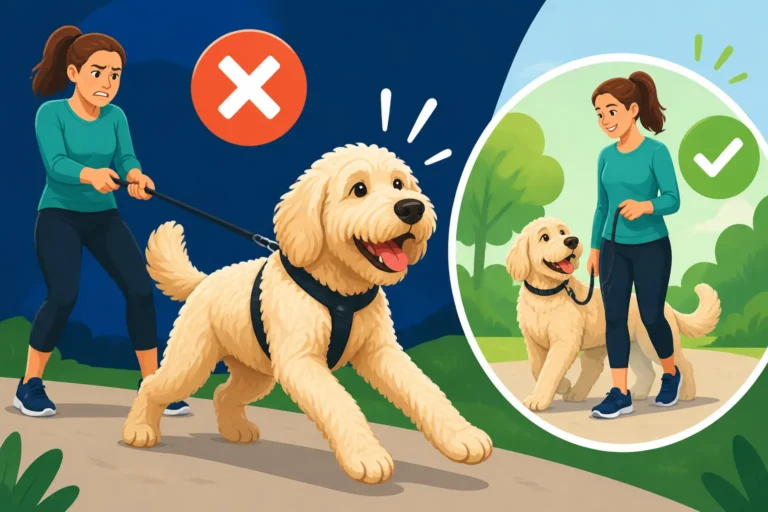
A Labradoodle can be a powerful dog, and by six months, they're often reaching a considerable size and strength. A dog that pulls incessantly on the leash can make walks a nightmare, not an enjoyable experience. By this age, your Labradoodle should be making good progress on loose-leash walking, understanding that pulling doesn't get them where they want to go faster. This often involves consistent training and the right tools. Many owners find success with front-clip harnesses, readily available on platforms like Amazon, as they discourage pulling by redirecting the dog's momentum. This is a common frustration, and resources like Teaching a Sixty Pound Labradoodle Not to Pull can offer deeper insights and strategies.
Polite greetings are equally important. Nobody enjoys being bowled over by an enthusiastic, muddy Labradoodle. By six months, your dog should understand that jumping on people is not acceptable. This involves teaching a "four paws on the floor" greeting, often by rewarding calm behavior and disengaging when they jump. The same goes for meeting other dogs; they should be able to approach calmly without excessive barking or over-excitement, learning appropriate doggy social etiquette. Addressing this proactively prevents issues like A Labradoodle That Jumps on Every Visitor from becoming ingrained habits.
Handling & House Manners: Setting Up for a Lifetime of Calm
Beyond formal commands, a well-adjusted Labradoodle needs to be comfortable with handling and exhibit good manners within the home. These often overlooked aspects are vital for their well-being and your daily life.
Grooming Tolerance and Handling
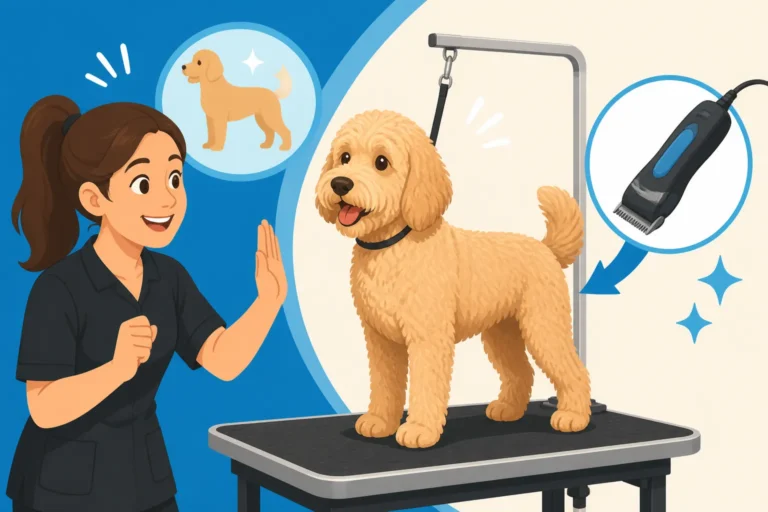
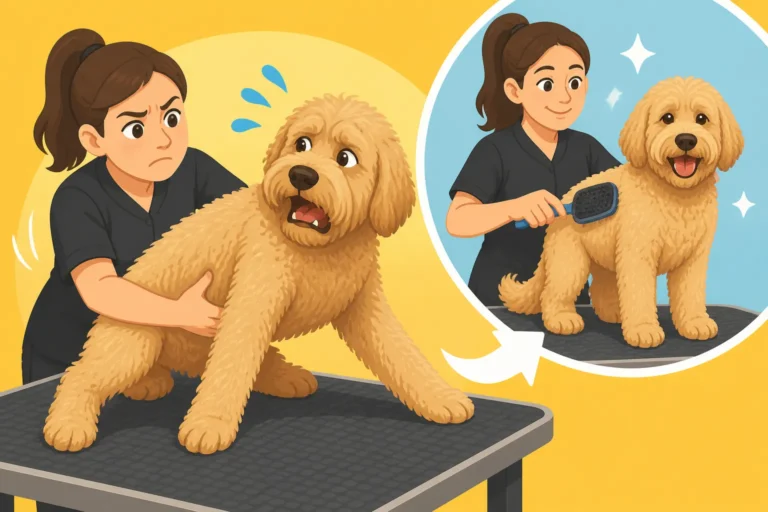
Labradoodles are renowned for their beautiful coats, but these coats demand regular attention. By six months, your Labradoodle should be completely comfortable with being brushed, having their paws handled, their ears examined, and their nails trimmed. This isn't just about aesthetics; it's essential for preventing painful mats, detecting health issues early, and making vet visits less stressful. Starting early and making grooming a positive experience with treats and praise is paramount. Ignoring this early on can lead to a lifetime of struggles, costly professional grooms, or even behavioral issues around handling.
Think about how often you brush your Labradoodle – it should be a regular occurrence. Even if they don't have their full adult coat yet, getting them accustomed to the tools and sensations is critical before their coat change, which can hit around nine months and dramatically increase matting potential. Resources like Starting Grooming Handling on a Labradoodle Puppy are invaluable for setting a good foundation. Investing in quality grooming tools from places like Amazon, such as a good slicker brush and metal comb, can make a huge difference in making these sessions effective and comfortable for your dog.
Crating, Alone Time, and House Training Mastery
House training should be well-established by six months. While occasional accidents can still happen, particularly if routines are disrupted or they're overly excited, your Labradoodle should reliably go to the bathroom outside. Any regression in house training at this age might warrant a vet visit to rule out medical issues, but more often, it's a sign that training needs reinforcement. Consistency is key: sticking to a schedule, rewarding outdoor potty breaks, and cleaning up accidents thoroughly.
Many Labradoodles are known for their "Velcro dog" tendencies, wanting to be with their people constantly. While endearing, it can lead to separation anxiety if not managed proactively. By six months, your Labradoodle should be able to comfortably spend short periods of time alone, whether in a crate or a designated safe space. This involves gradually building up alone time, making departures and arrivals low-key, and ensuring they have appropriate enrichment (like a puzzle toy stuffed with peanut butter) while you're gone. Programs like BAXTER & Bella offer excellent guidance on establishing positive crate training and building independence, which is crucial for helping The Alone Time a Velcro Labradoodle Can Build To. A comfortable, secure crate becomes their den, a safe place where they can relax when you're busy or away.
Continuing Education and Preventing Problem Behaviors
The six-month mark isn't the finish line for training; it's more like the end of the first chapter. Your Labradoodle is still learning and developing, and continued education is vital to solidify good behaviors and prevent new challenges from emerging.
Why Training is an Ongoing Journey, Not a Destination
The adolescent period, stretching roughly from six months to two years, is a time of intense learning, but also a time when "bad habits" can form quickly if training isn't maintained. Your Labradoodle's intelligence means they're always learning, whether you're actively teaching them or not. If you stop consistent training, they'll learn what works for them, which might include counter-surfing, barking at everything, or ignoring your commands in favor of more exciting stimuli.
Continued training helps to reinforce the commands they already know, introduces new skills, and provides vital mental stimulation. This engagement is crucial for a breed as smart as the Labradoodle. Consider enrolling in an intermediate obedience class, exploring dog sports like agility or scent work, or even just dedicating 10-15 minutes a day to practicing known commands in novel environments. The question of Whether a Labradoodle Needs a Trainer or a Class often becomes more pronounced during adolescence, and for many, a structured class or professional guidance can be incredibly beneficial for navigating this stage.
Proactive Solutions for Common Labradoodle Quirks
At six months, you might start noticing certain "quirks" or challenging behaviors emerging more consistently. These could include counter-surfing, excessive chewing, or increased reactivity to certain stimuli. Proactive management and consistent training are your best tools. If your Labradoodle starts reaching for things on the counter, it's not just "being a dog" – it's a behavior that needs to be managed and trained away. For instance, addressing A Labradoodle That Counter Surfs requires both managing the environment (keeping counters clear) and teaching an incompatible behavior (like "place" or "leave it").
Providing ample mental and physical exercise can also mitigate many problem behaviors. A bored Labradoodle is often a destructive Labradoodle. Ensure they're getting appropriate exercise for their age and size, and incorporate plenty of puzzle toys, chew items, and training sessions throughout the day. Online training programs, like those offered by BAXTER & Bella, can provide a structured curriculum and ongoing support to help you tackle these challenges, offering new ideas for mental enrichment and behavior modification.
Here's a quick overview of what your Labradoodle should ideally know by six months:
| Category | Core Skills/Behaviors | Signs of Progress | What to Watch Out For |
|---|---|---|---|
| Obedience | Reliable Recall, Sit, Stay, Down | Responds to commands consistently (80%+), even with mild distractions | Selective hearing, ignoring commands, bolting |
| Leash Manners | Loose-leash walking, no pulling | Walks calmly beside you, checks in, minimal pulling | Constant pulling, lunging at distractions, weaving |
| Socialization | Polite greetings (people & dogs), no jumping | Greets calmly with "four on the floor," appropriate doggy body language | Jumping, excessive barking, shyness/fear, aggression |
| House Manners | Fully house trained, comfortable alone (short periods), no counter-surfing/excessive chewing | Minimal accidents, settles in crate/pen, chews appropriate items | Frequent accidents, separation anxiety, destructive chewing, stealing food |
| Handling | Comfortable with brushing, nail trims, ear/paw handling | Tolerates grooming tools, relaxed during exams | Resists brushing, growls during handling, panics during nail trims |
| Impulse Control | "Leave It," "Wait" at doors/food bowl | Waits for permission, doesn't snatch food | Grabs food, rushes through doors, high reactivity |
This table offers a snapshot, but remember, every Labradoodle is an individual. The journey is ongoing, and celebrating small victories is just as important as addressing areas that need more work.
Disclaimer
This article is for general informational purposes only and does not constitute professional advice. Laws, prices and regulations vary by location and change over time. Consult a qualified professional for guidance on your specific situation.