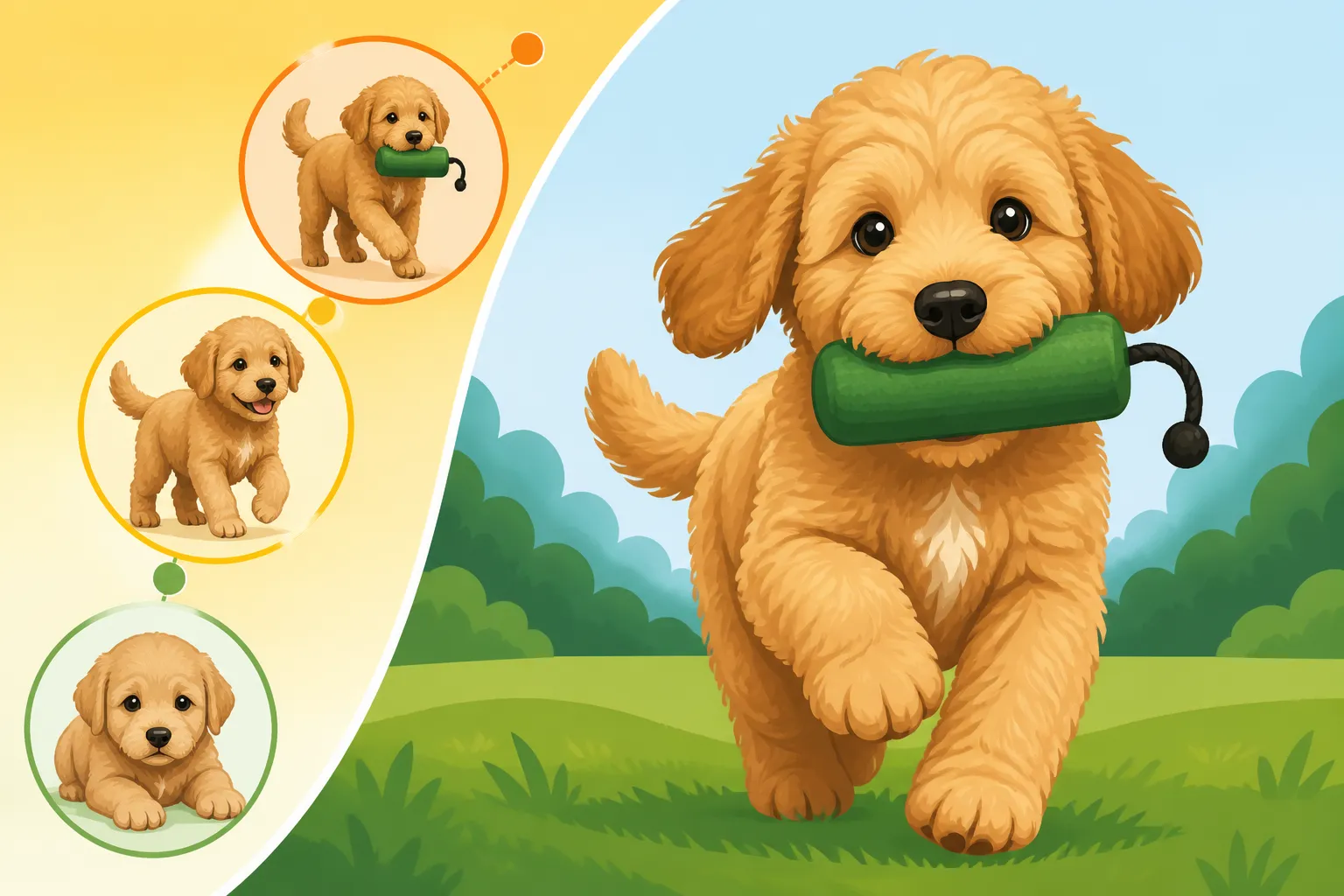
The Age a Labradoodle Starts Retrieving
It's such a joy to watch a Labradoodle puppy chase a ball, isn't it? But then you notice they don't always bring it back, or perhaps they're just not showing much interest in chasing at all. Many Labradoodle owners wonder when that classic retrieving instinct will kick in, or if their fluffy friend will ever be a fetch superstar. This guide will explore the nuances of the Labradoodle's retrieving drive, when you can expect to see it emerge, and how you can gently encourage this fun and engaging behavior.
The Inherited Drive: When Labradoodles Show Retrieving Instincts
Understanding a Labradoodle's retrieving drive means looking back at its parent breeds: the Labrador Retriever and the Poodle. Both bring different aspects to the table, creating a wonderful, if sometimes unpredictable, mix in their offspring. It's not always a straightforward inheritance, which can be part of the adventure!
The Labrador's Natural Inclination
The clue is right there in the name: Labrador Retriever. These dogs were bred for centuries to retrieve game for hunters, often from water, with a "soft mouth" that wouldn't damage the quarry. This isn't just a learned behavior for most Labradors; it's deeply ingrained, almost a genetic imperative. From a very young age, often as soon as they can waddle and pick things up, Labrador puppies exhibit a strong desire to pick up objects and bring them back to their human companions. They often don't need much encouragement beyond a tossed toy to understand the game.
When you're hoping for that strong retrieving drive in your Labradoodle, you're usually hoping for a healthy dose of this Labrador inheritance. Puppies from strong Labrador lines often demonstrate this keenness for fetch remarkably early, sometimes even before they're fully weaned. They instinctively understand the concept of "bring back," which makes early training relatively straightforward. This natural aptitude is one of the reasons the Labrador is so popular as a family pet and working dog. Owners often find their Labrador is eager to play fetch for hours, making it an excellent way to burn off energy. The Retrieving Drive a Labradoodle Gets From the Labrador often shines through, delighting owners who envisioned endless games of fetch.
The Poodle's Often-Overlooked Talent
Now, let's talk about the Poodle. While they might be known for their elegant clips and show-ring presence, Poodles were originally bred as water retrievers, just like Labradors! The word "Poodle" actually comes from the German word "Pudel," meaning "to splash in the water." They were used to retrieve ducks and other waterfowl, and possess remarkable intelligence, agility, and a strong work ethic. While not all Poodles have the same intense, unwavering drive as a Labrador to constantly retrieve, they certainly have the genetic capacity for it.
Poodles are highly intelligent and trainable, meaning they can learn to retrieve with enthusiasm, especially if the activity is framed as a fun puzzle or a way to engage with their beloved human. They might not exhibit the same natural, unsolicited retrieving as a Labrador from day one, but once taught, they can become incredibly proficient. Their motivation often stems from their desire to please and their love for mental stimulation. So, if your Labradoodle leans more towards its Poodle ancestry in terms of retrieving, you might find it needs a bit more structured introduction to the game, but once it clicks, they can be unstoppable. It's about tapping into that clever, eager-to-learn spirit.
The Labradoodle's Unique Blend
So, what does this mean for your Labradoodle? It means you get a wonderful genetic lottery! Some Labradoodles will inherit a very strong retrieving drive from their Labrador side, picking up toys and bringing them back naturally from a young age. Others might lean more towards their Poodle heritage, showing the capacity for retrieving but needing more specific guidance and encouragement to truly embrace the game. And then there are those who get a perfect blend, eager to retrieve and quick to learn. This variability is why it's hard to put an exact age on when every Labradoodle starts retrieving.
Generally, you'll see some signs of retrieving interest in a Labradoodle puppy between 8 and 16 weeks of age. This might be a spontaneous grab of a tossed toy and a scamper back, or simply picking up an object and parading around with it. The key is to observe and encourage. The beauty of the Labradoodle is their inherent intelligence and desire to engage with their family. Whether the drive is immediate and powerful or needs a gentle nudge, the foundational willingness to participate is often there. Don't be discouraged if your puppy isn't a natural retriever from the moment you bring them home; it's a skill that can be developed and refined. Understanding Whether the Poodle or the Labrador Shows Up in Training can help you tailor your approach to their individual personality.
| Trait / Breed | Labrador Retriever | Standard Poodle | Labradoodle (F1/Multigen) |
|---|---|---|---|
| Natural Retrieve Drive | High (Instinctive) | Moderate (Trainable) | Variable (Mix of both) |
| Early Interest (Weeks) | Often 6-8 weeks+ | Often 10-16 weeks+ | Varies widely, 8-16 weeks+ |
| Motivation for Fetch | Innate drive, joy | Engagement, mental stimulation, pleasing owner | Combination, can vary by individual |
| "Soft Mouth" Tendency | High | Moderate | Variable |
| Water Affinity | High | High | Variable |
Early Signs and Puppy Play: Nurturing the Retrieve
Even if your Labradoodle isn't a born retriever, there are plenty of ways to gently foster that instinct and turn it into a lifelong game you both enjoy. It's all about making it fun and low-pressure, especially during those crucial puppy months.
What to Look For in a Young Puppy
When your Labradoodle puppy is still quite small, generally from 8 to 16 weeks, pay attention to their interactions with toys. Do they pick up toys on their own? Do they carry them around? Do they sometimes bring a toy to you, even if they don't give it to you? These are all excellent indicators of a budding retrieving drive. They might not drop the toy at your feet yet, but merely picking it up and engaging with it around you is a positive sign. Some puppies will enjoy a gentle tug-of-war, which also builds a positive association with holding and interacting with objects.
Also, observe their general playfulness and curiosity. A puppy that enjoys exploring and interacting with objects is a great candidate for learning to retrieve. They might "mouth" things a lot; while you want to guide this towards appropriate chew toys, this oral fixation is a good sign that they're comfortable holding things in their mouth. This "soft mouth" quality, often seen in Labradors, is valuable for retrieving, as it means they're less likely to damage the object they're carrying. You can encourage this by using soft, appealing toys that are easy for them to pick up and carry.
Making Playtime a Learning Opportunity
The best way to encourage retrieving in a young Labradoodle is through positive, low-pressure play. Start in a quiet, confined area with minimal distractions. Choose a toy your puppy loves, perhaps a soft ball or a squeaky plush.
- Generate Interest: Wiggle the toy, make it exciting! Toss it a very short distance, just a foot or two away.
- Encourage the Grab: When your puppy goes to investigate, praise them enthusiastically. If they pick it up, even better!
- Call Them Back: If they've picked up the toy, gently call them back to you with an encouraging tone. Don't chase them if they run away with it; that often turns into a game of "keep away," which isn't what we want.
- Exchange for Something Better: Once they get close, offer a high-value treat or another equally exciting toy in exchange for the one they're holding. As soon as they drop the first toy, immediately reward and praise. This teaches them that bringing the toy back to you results in something good. This concept of trading for a reward is essential. Many new owners struggle with Whether a Labradoodle Brings the Ball Back, and this exchange method is key.
- Repeat and Gradually Increase Distance: Practice these short retrieves frequently in brief, fun sessions. As they get the hang of it, slowly increase the distance you toss the toy.
Remember, the goal is to make retrieving a rewarding and enjoyable experience for your Labradoodle. Keep it positive, keep it short, and always end on a high note, even if it's just one successful retrieve. Online training platforms, like those offered by BAXTER & Bella, often have modules specifically dedicated to teaching basic retrieves and proofing the "drop it" command, which can be invaluable for guiding first-time owners through these steps effectively.
Introducing Different Objects and Environments
Once your Labradoodle is reliably retrieving a favorite toy in a calm environment, you can start to diversify. Introduce different types of toys – various textures, sizes, and weights (always appropriate for their mouth size and safety). This helps them generalize the concept of retrieving beyond just one specific item. You can find a huge variety of appropriate toys on platforms like Amazon, from classic tennis balls to durable tug toys and floating water toys.
Gradually introduce new environments. Start with a different room in your house, then your securely fenced backyard, and eventually quiet parks on a long line. Each new environment brings its own set of distractions, which makes the retrieve a bit more challenging. Keep initial sessions in new places very short and rewarding. If your Labradoodle gets distracted, go back to a simpler environment or a shorter distance. The goal is to build confidence and consistency, not to overwhelm them.
It's also a good time to gently introduce them to water if that's something you'd like them to enjoy. Introducing a Labradoodle to Water in a positive way can open up a whole new world of retrieving fun, as many Labradors and Poodles naturally love to swim. Start with shallow water and make it a fun, splashing experience, rather than forcing them in.
Formalizing the Retrieve: Training Timelines and Techniques
While the early stages are all about play and positive association, as your Labradoodle matures, you can introduce more formal training. This helps solidify the "retrieve" command and makes the behavior more reliable, even in distracting situations.
When to Start Structured Training
Many Labradoodles are ready for more structured retrieving lessons between 4 and 6 months of age, once they have a good grasp of basic obedience commands like "sit" and "stay," and are consistently coming when called. At this age, their focus and attention spans are developing, making them more receptive to learning sequences of commands. They're also often past the most intense "puppy mouthing" phase, making them better at carrying objects without destroying them. What a Labradoodle Should Know by Six Months often includes these foundational skills, which are critical precursors to effective retrieve training.
Before diving into formal retrieving, ensure your Labradoodle understands "take it" (to encourage them to pick up the object) and "drop it" or "give" (to release the object into your hand). These are building blocks. If your puppy is still inclined to run off with the toy, or play keep-away, focus on perfecting "drop it" with high-value treats first. A strong "drop it" command is essential for a successful retrieve, otherwise you'll be endlessly chasing them!
Step-by-Step Training Approach
For a structured retrieve, we'll build on the exchange method:
- "Take It" and "Hold": With your Labradoodle sitting in front of you, present a toy. Say "Take it!" and encourage them to mouth it. As soon as they do, praise and give a small treat. Practice holding the toy for short periods, extending the duration gradually, always with praise.
- "Fetch" (Short Toss): Once "take it" is solid, toss the toy a very short distance (a few feet). As they go for it, say "Fetch!" When they pick it up, encourage them to return to you. If they waver, clap your hands or make happy noises to get their attention.
- "Give": As they approach, kneel down and present your hand, saying "Give" or "Drop it." When they release the toy, immediately reward with a treat and enthusiastic praise.
- Gradual Increase: Slowly increase the distance of the throw. Practice in different locations with varying levels of distraction. Always keep it fun and positive. If your Labradoodle loses interest, shorten the session and make it easier next time. Remember that consistency is more important than speed.
Many owners find immense value in professional guidance, especially if they hit a roadblock. Reputable online dog training programs, such as those from BAXTER & Bella, offer structured lesson plans and support for teaching retrieving. They can help you break down the steps, understand canine behavior, and troubleshoot specific issues, making the process much smoother. Using a clicker in combination with treats can also be a powerful tool for precision training, clearly marking the exact moment your Labradoodle performs the desired action.
Overcoming Common Retrieving Challenges
It's completely normal to encounter a few bumps in the road when teaching retrieving. One common challenge is the "keep away" game, where your Labradoodle picks up the toy but then runs off with it, refusing to bring it back. The solution here is to go back to basics with the "give" command, always ensuring that bringing the toy to you results in an even better reward (a tastier treat or an even more exciting game of tug with a different toy). Never chase your dog to get the toy back, as this only reinforces the game.
Another hurdle can be a lack of interest. If your Labradoodle simply doesn't seem to care for retrieving, try different types of toys, play in different locations, or at different times of day. Some dogs prefer soft plush toys, others love a squeaky ball, and some are motivated by interactive toys. Whether a Labradoodle Has a Soft Mouth can influence what types of toys they prefer to carry comfortably. You might also find that pairing retrieving with another activity they love, like a short run before fetch, increases their enthusiasm.
Distractions are also a big one. Training in new environments with other dogs, people, or interesting smells can make your Labradoodle forget all about the ball. Start by practicing in very low-distraction environments and gradually introduce more stimuli. Use a long line to keep them safely within reach, so you can guide them back if they get sidetracked. Always reward highly for returning the toy despite distractions.
Beyond the Basics: Advanced Retrieving and Fun Activities
Once your Labradoodle has mastered the basic retrieve, a whole world of fun and engaging activities opens up! Many Labradoodles, with their intelligence and athletic build, excel at more advanced retrieving tasks, which can be fantastic for both their physical and mental stimulation.
Expanding the Retrieve Command
Beyond simply bringing a tossed toy, you can expand your Labradoodle's retrieving skills to include specific objects or even retrieving from different locations. Imagine asking your Labradoodle to "Get the leash!" or "Bring me your toy!" This takes the basic retrieve to a new level of cognitive engagement. You can teach this by first having the desired object as the only retrieve target, then gradually introducing other objects and using specific names for each, always rewarding them for bringing the correct item.
You can also teach them to retrieve objects from water, which many Labradoodles absolutely adore thanks to their Poodle and Labrador heritage. Whether a Labradoodle Takes to Water on Its Own varies, but with positive reinforcement, most can be encouraged. Start in shallow, calm water with a floating toy and make it an exciting adventure. Using a dedicated water-retrieving toy from Amazon can make it even more enticing, as they're often brightly colored and easy for dogs to spot and grab. This is a wonderful way to exercise your Labradoodle, especially in warmer weather.
Water Retrieving and Sporting Fun
For Labradoodles with a strong retrieving drive and a love for water, activities like dock diving can be incredibly fun and rewarding. While it's a more advanced sport, it's essentially a high-energy retrieve where your dog jumps off a dock to retrieve a toy thrown into a pool of water. It showcases their athleticism and natural instincts. Even if competitive dock diving isn't your goal, simply playing fetch at a dog-friendly lake or beach can be a fantastic bonding experience and a great way to burn off energy.
Beyond dock diving, retrieving can be integrated into other dog sports like agility, where a dog might need to retrieve a specific object, or even scent work, where retrieving a hidden scented article is the goal. These activities tap into a Labradoodle's natural abilities, keeping them sharp and happy. They transform a simple game of fetch into a structured, stimulating challenge.
Maintaining Enthusiasm and Engagement
To keep your Labradoodle's retrieving enthusiasm alive for years, remember to keep it fresh and fun. Vary the toys you use, change up the locations, and sometimes hide the toy for them to "find" and retrieve. Don't always make it a rigorous training session; sometimes, just enjoying a relaxed game of fetch in the backyard is exactly what you both need.
Pay attention to your Labradoodle's age and physical condition. As they get older, their energy levels might decrease, and they might not be able to run as fast or jump as high. Adjust the intensity and duration of retrieving games accordingly. A 10-year-old Labradoodle might enjoy a gentle roll of the ball rather than a full-speed sprint. The key is continued engagement and interaction, regardless of the intensity. Retrieving is a fantastic way to build a strong bond with your Labradoodle, providing both physical exercise and mental stimulation that can last their entire lives.
Disclaimer
This article is for general informational purposes only and does not constitute professional advice. Laws, prices and regulations vary by location and change over time. Consult a qualified professional for guidance on your specific situation.