Temperament Testing a Labradoodle Puppy for Service
It's an exciting dream, isn't it? Bringing home a fluffy Labradoodle puppy with the hope that they might one day become your loyal, life-changing service dog. But the reality is, not every adorable pup has the innate qualities needed for such a demanding role, and discerning those crucial traits early on can feel like trying to read tea leaves. This guide is here to demystify the process of temperament testing a Labradoodle puppy, helping you understand what to look for and how to assess a pup's potential for service work.
Understanding the Service Dog Temperament
When we talk about a service dog, we're not just talking about a well-behaved pet. We're talking about a canine partner with a very specific, almost superhuman, set of emotional and intellectual skills. It’s a huge distinction, and one that often catches first-time service dog hopefuls by surprise. The journey begins long before formal training; it begins with their very essence.
Core Traits for a Working Labradoodle
A successful service dog, regardless of breed, needs a rock-solid foundation of temperament. For a Labradoodle, this means inheriting the best of both its Poodle and Labrador Retriever lineages. We're looking for a dog that is calm under pressure, highly trainable, and resilient. They need to possess an inherent desire to please and a remarkable ability to focus, even in distracting environments. A true service dog candidate will show an impressive level of emotional stability, not easily rattled by unexpected noises, strange sights, or new people. They should be confident without being pushy, friendly without being overly excitable, and incredibly observant. Imagine a dog that can navigate a crowded supermarket, lie quietly under a restaurant table, or calmly ignore a barking dog, all while remaining attuned to its human partner's needs. This isn't just good manners; it's deep-seated temperament.
Furthermore, tolerance for handling is non-negotiable. A service dog will be touched, positioned, and sometimes moved by its handler, and occasionally by strangers who are assisting. They need to accept this without fear or aggression. They also require a certain level of physical resilience; they'll be working, moving, and sometimes providing brace or balance. The Tasks a Labradoodle Is Taught for Disability Work are varied and demand both mental and physical fortitude. A service dog needs to be able to recover quickly from minor stresses or startling events, shaking it off and returning to their task with minimal fuss.
The Difference Between Pet and Service Temperament
This is where many aspiring service dog owners, and even some breeders, get tripped up. A wonderful pet dog can be playful, goofy, a bit dramatic, and deeply affectionate. They can be reactive to squirrels, bark at the mail carrier, and demand attention from every stranger they meet. These traits, while endearing in a family companion, are absolute deal-breakers for a service dog. A service dog must be predictable and unobtrusive in public. Their job is to facilitate their handler's independence, not draw attention to themselves or become a liability.
Consider a dog that will happily jump on visitors or bark excitedly when someone new enters the home. That's a normal, often cherished, pet behavior. For a service dog, that's a massive failure of temperament and training, as What Public Access Training Asks of a Labradoodle is about maintaining composure and focusing solely on their handler. A pet can have a low frustration tolerance, giving up on a puzzle toy quickly, but a service dog needs persistence and problem-solving skills to learn complex tasks. The bar for a service temperament is simply much, much higher, requiring an intrinsic calm and a strong desire to work cooperatively that goes beyond basic obedience.
Why Breed Lines Matter Poodle & Labrador Contributions
The Labradoodle, being a hybrid, brings a fascinating blend of genetics to the table. The Labrador Retriever side contributes its renowned biddability, eager-to-please nature, and a strong work ethic. Labradors were, after all, bred for retrieving, water work, and a general desire to be with their people. This forms a fantastic base for a service dog. On the other hand, the Poodle contributes incredible intelligence, focus, and a surprising athletic ability. Poodles are far more than just pretty show dogs; they are sharp, perceptive, and highly capable working dogs with a history in hunting and performance sports. The Temperament a Labradoodle Gets From Each Parent is a blend that can, in the right breeding, produce a dog with exceptional traits for service work.
However, it's crucial to understand that these are general breed tendencies, not guarantees. A poorly bred Labrador can be anxious, and a poorly bred Poodle can be reactive. When selecting a Labradoodle for service potential, you want parents who exemplify the very best of their breeds' working temperaments, not just their looks or a claim of "allergy-friendliness." A reputable breeder focusing on health and temperament will know their lines intimately, understanding which combinations tend to produce the calm, stable, intelligent offspring needed for service roles. This is where researching the lineage and parental health clearances becomes paramount.
When and How to Conduct Temperament Tests
Timing is everything when it comes to temperament testing. Test a puppy too young, and their little personalities haven't fully emerged. Test them too old, and some critical developmental windows might have already passed. It's a delicate balance to catch them at their most revealing stage.
The Ideal Age for Puppy Testing
Most experienced breeders and service dog programs agree that the sweet spot for formal temperament testing is between 7 and 8 weeks of age. At this point, puppies are generally weaned, mobile, and their individual personalities are beginning to solidify, but they haven't yet entered their intense fear period or teenage rebellion. They're curious, open to new experiences, and their innate drives – like how they react to sound, touch, and isolation – are quite apparent. Testing before this age might give misleading results because their neurological development isn't quite there yet. After 8 weeks, while you can still get valuable insights, some early behaviors might become harder to isolate from learned ones, and their responses could be influenced more by their immediate environment rather than pure genetics. This narrow window requires planning, both from the breeder and from any potential service dog prospect family.
The Role of the Breeder in Early Assessment
A responsible Labradoodle breeder plays an absolutely critical role, even before any formal testing begins. They spend every day with these puppies from birth, observing subtle nuances that a one-time test might miss. They see which puppy is the first to explore, which one is always at the bottom of the pile, which one startles easily, and which one quickly recovers. They should be actively engaged in early neurological stimulation (ENS) and robust socialization protocols, exposing the puppies to a variety of sounds, textures, people, and objects. Raising a Labradoodle Through Its First Year begins with a solid foundation from the breeder.
A breeder dedicated to producing service dog candidates won't just tell you "they're all good dogs." They will have specific notes on each puppy's personality, energy levels, and general demeanor. They will have documented their observations, and a good breeder will welcome your questions about these early insights. They should be transparent about which puppies they believe have the highest potential for specific roles, whether it's a calm family pet, an agility star, or a future service dog. Their daily interaction offers an invaluable, ongoing "temperament test" that complements any formal assessment.
Standard Puppy Aptitude Test PAT Elements
The Puppy Aptitude Test (PAT), often referred to as the Volhard Puppy Aptitude Test, is one of the most commonly used methods for evaluating a puppy's temperament at that crucial 7-8 week mark. It’s a series of short, simple exercises designed to assess different aspects of a puppy’s character. Typically, these tests are done by a neutral party, someone the puppies haven't formed a strong bond with, to ensure unbiased results. Each test is scored, and the scores are then interpreted to give an overall picture of the puppy's inherent traits.
The core elements usually include:
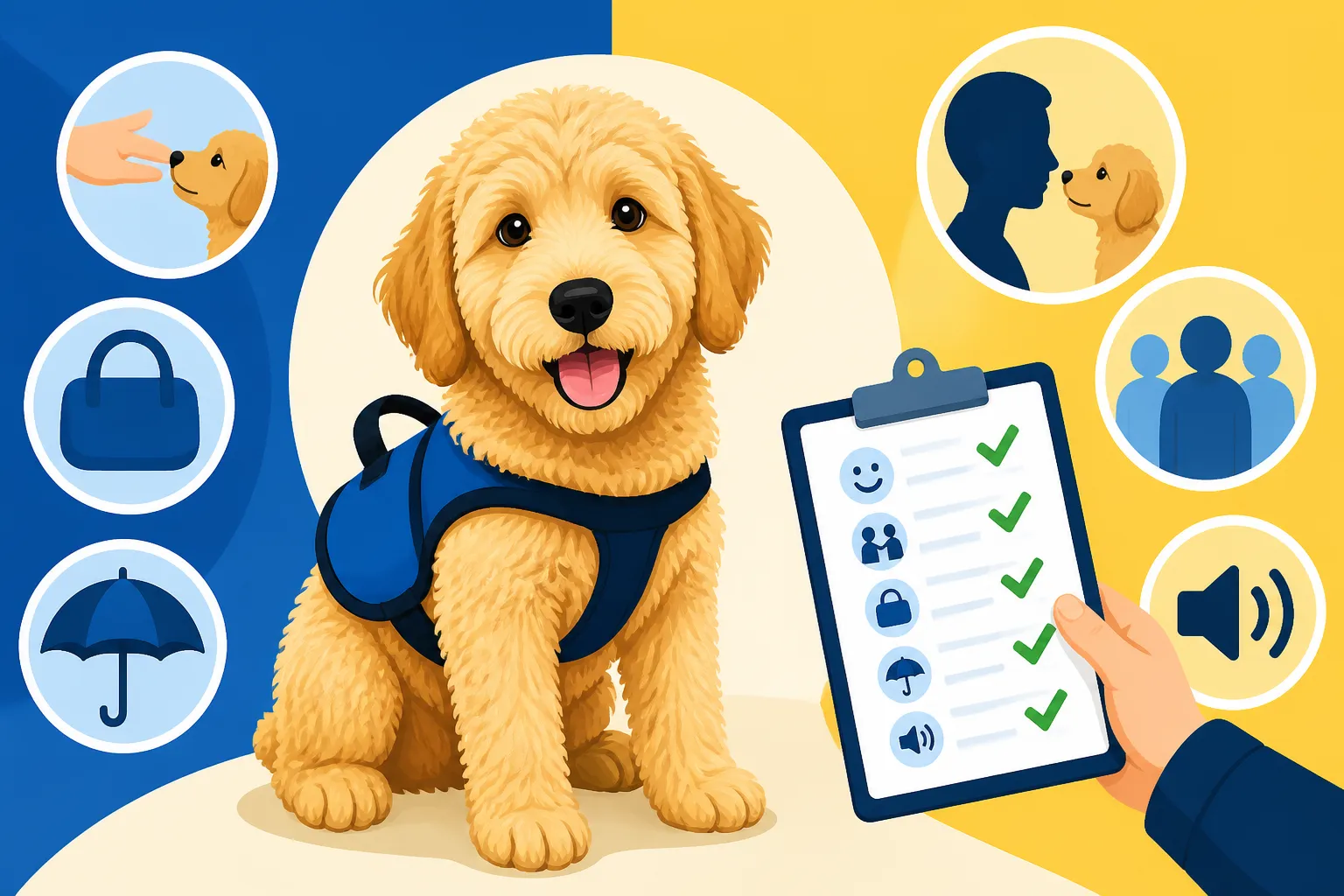
- Social Attraction: How does the puppy respond to a person walking away? Do they follow readily, cautiously, or not at all?
- Following: Does the puppy follow a person consistently when walking?
- Restraint: How does the puppy react to being gently held on its back or side? Do they struggle intensely, or do they calm quickly?
- Social Dominance/Elevation: How does the puppy react to being lifted gently off the ground?
- Retrieving: Does the puppy show interest in retrieving a crumpled piece of paper or toy?
- Sensitivity: How does the puppy react to a light tap or a sudden noise?
- Stability: How does the puppy react to an umbrella opening suddenly?
These tests aren't about 'passing' or 'failing,' but about understanding the puppy's natural inclinations and how they might translate into future behavior, particularly for a demanding role like service work.
Key Tests and What They Reveal
Each component of a temperament test is designed to poke and prod at different facets of a puppy's developing personality. They're not meant to be stressful or cruel, but rather to observe natural, instinctual reactions that shed light on their potential.
Social Attraction and Following Drive
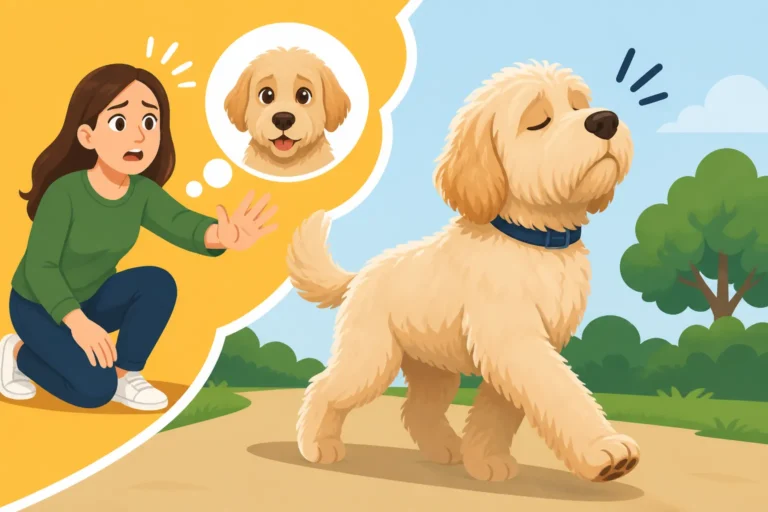
These two tests are fundamental for a service dog candidate. When assessing social attraction, the evaluator will typically walk a short distance away from the puppy, encouraging it to follow. A puppy with good service potential will likely follow eagerly, showing an interest in connecting with the human. This demonstrates a natural inclination towards partnership and a desire to be with their person, which is the bedrock of a service dog-handler team. A puppy that wanders off or shows no interest might be too independent or easily distracted for the constant focus required in service work.
Similarly, the following drive test involves the evaluator simply walking away from the puppy at a normal pace. A strong service candidate will follow closely, often right at the evaluator's heels. This indicates not only a willingness to stay near but also a certain level of attentiveness to human movement. A puppy that lags, gets distracted by smells, or runs off to explore independently might struggle with the continuous "heeling" and close proximity required for public access work. What Guide Dog Schools Look For in a Labradoodle often includes this strong intrinsic desire to work cooperatively with a human.
Response to Restraint and Startle
These tests gauge a puppy's resilience and tolerance for unexpected physical handling or sudden events – crucial traits for a working dog. The restraint test involves gently placing the puppy on its back or side and holding it there for a short period. An ideal service dog prospect will initially resist a little, as it's a natural instinct, but then quickly relax and submit to the restraint, indicating a good level of trust and an ability to settle. Puppies that thrash violently, bite, or scream relentlessly might indicate an unwillingness to be handled or a high level of anxiety that would be challenging to manage in a service role.
The startle test often involves dropping a metal pan or opening an umbrella suddenly nearby. An appropriate response for a service dog candidate is to startle, perhaps jump, but then quickly recover and investigate the source of the noise or movement with curiosity. This shows resilience and a healthy curiosity over extreme fear. A puppy that cowers, flees, or remains frozen in fear for an extended period might be overly sensitive or prone to anxiety, which could wash them out of a service program. Conversely, a puppy that shows no reaction at all might be too aloof or unresponsive. What Washes a Labradoodle Out of a Program often includes these types of sensitivity issues.
Sensitivity to Sound and Touch
These tests are critical for understanding how a Labradoodle puppy processes sensory information, which is vital for maintaining composure in diverse environments. For sound sensitivity, beyond the startling noise mentioned above, a softer noise like a clap or a crinkling bag can be used. A puppy with good service potential will show a mild reaction, perhaps an ear flick or a brief pause, and then proceed to investigate or ignore it. They shouldn't be overly reactive or completely unresponsive. The goal is a balanced response – aware but not overwhelmed.
Touch sensitivity is assessed by gently stroking the puppy's back or running a hand down its side. The ideal puppy will acknowledge the touch but not overreact with nipping, jumping, or excessive shyness. They should accept gentle handling, which is crucial for a future service dog that will be touched during tasks, grooming, and routine veterinary care. This also ties into how they might react to brushing or having their paws handled, which is important for their well-being. Knowing whether a puppy reacts calmly to different touches gives an insight into their potential for tolerating various public interactions.
Focus and Problem-Solving Skills
While not always explicit in every PAT, observing a puppy's focus and rudimentary problem-solving is incredibly valuable for a service dog. This might be assessed informally by rolling a treat or toy under an object and seeing if the puppy works to get it, or by observing how quickly they learn a simple command like "come" during the test. A puppy that shows sustained interest in a novel object, or perseveres in figuring out how to get a hidden treat, indicates a good capacity for learning and focus. These are traits that will be heavily relied upon during extensive service dog training.
Conversely, a puppy that gives up easily, gets distracted, or shows little interest in engaging with problem-solving tasks might find the rigor of service dog training overwhelming. The ability to concentrate on a task, despite ambient distractions, is paramount for a service dog working in the real world. A short attention span or an inability to focus on a human's cues would make it extremely difficult for a Labradoodle to learn and execute complex service tasks reliably.
Interpreting Test Results for Service Potential
Once the tests are complete, you'll have a series of scores and observations. The real skill lies not just in tallying numbers, but in understanding what these collective behaviors truly mean for a dog's future in service work. It's not a pass/fail exam, but a detailed psychological profile.
Identifying Red Flags: Over-Reactivity or Extreme Shyness
Certain responses during temperament testing are definite red flags when evaluating a Labradoodle for service work. Extreme shyness, for instance, where a puppy consistently avoids interaction, cringes from touch, or hides from new stimuli, indicates a high likelihood of anxiety. A service dog needs to be confident and comfortable in all public settings, not fearful. Similarly, over-reactivity – whether it's excessive barking, growling, or frantic struggling during restraint – suggests a lack of impulse control or an overly sensitive nervous system. This kind of excitability or fear-based aggression is incompatible with the calm, predictable demeanor required for a service dog.
Another red flag is a puppy that is completely aloof or disinterested in human interaction. While independence can be a trait, a service dog needs a strong bond and desire to work with its handler. A puppy that consistently ignores overtures, shows no interest in following, or prefers to explore entirely on its own might lack the biddability and partnership drive essential for the role. These extreme reactions, at either end of the spectrum, usually point away from service potential.
The Importance of a Balanced Score
What you're ideally looking for in a service dog candidate is a balanced score across all temperament tests. This doesn't mean perfect scores in every category, but rather responses that indicate a moderate, adaptable temperament. For example, a puppy might show a mild struggle during restraint but quickly settle, or jump at a loud noise but recover within seconds and show curiosity. This balance demonstrates resilience, a willingness to engage, and an ability to self-regulate. They shouldn't be too dominant, nor too submissive. They should be confident without being pushy, and social without being overly dependent.
A balanced puppy indicates they are flexible and trainable, capable of handling new situations with appropriate caution but also a willingness to investigate and adapt. This adaptability is key, as a service dog will encounter countless novel and potentially challenging situations throughout its working life. A balanced temperament suggests a strong inner calm, an essential trait for navigating the unpredictable nature of public access work.
Beyond the Test: Ongoing Observation
While temperament testing provides a snapshot, it's just that – a moment in time. The ongoing observation by the breeder, and later by the prospective owner, is equally, if not more, important. A puppy’s temperament isn't static; it's influenced by genetics, environment, and early experiences. How a puppy interacts with its littermates, how it reacts to being separated for short periods, how it eats, and how it plays all offer continuous insights. A puppy that consistently plays fairly, is neither a bully nor constantly bullied, and shows appropriate bite inhibition, is generally a good sign.
As you consider bringing a puppy home, look for breeders who continue these observations and can share detailed accounts of the puppy's day-to-day behavior. After you bring your Labradoodle puppy home, these observations continue. Pay attention to how they adapt to their new environment, how they handle new sounds in your home, and how they react to different people. The formal test gives you a starting point, but the daily life of a puppy, especially in those formative early weeks, reveals so much more about their true character and potential.
The Role of Professional Evaluators and Training Programs
While temperament tests are incredibly helpful, they're not foolproof, and for something as critical as a service dog, you really want as many expert eyes on the puppy as possible. This is where professionals come in.
Why a Professional Opinion is Invaluable
Let's be honest, it's hard to be completely objective when you're looking at a fluffy, adorable puppy. Our hearts tend to get involved! This is why a neutral, experienced professional evaluator is so invaluable. These individuals, often certified trainers or behavioral specialists with specific experience in service dog selection, can conduct the temperament tests without emotional bias. They know precisely what subtle cues to look for – a flick of an ear, a tense tail, a momentary freeze – that an untrained eye might miss. They understand how different scores correlate with future success in service work.
A professional can offer a detached, expert assessment that validates your own observations or, more importantly, flags potential issues you might have overlooked. They can also explain the nuances of the results, helping you understand why a certain reaction is significant for a service role. Investing in a professional evaluation can save you years of heartbreak and substantial financial investment if a puppy ultimately isn't suited for the demanding life of a service dog. It's a crucial step in ensuring you select a Labradoodle with the best possible chances of success.
How Service Dog Programs Conduct Their Own Assessments
Established service dog organizations, like those that breed and train their own assistance animals, have incredibly rigorous assessment protocols. They often have their own proprietary temperament tests, which can be even more extensive than a standard PAT, and they conduct these evaluations at multiple stages of the puppy's development. They might test at 7-8 weeks, again at 12-16 weeks, and then continuously throughout their early training. These programs also have the luxury of observing generations of their own dogs, giving them an intimate understanding of which bloodlines consistently produce puppies with the desired temperament.
Furthermore, these programs aren't just looking for "good" scores; they're looking for a specific blend of traits that align with the demanding needs of their service users. They might prioritize extreme calm for a mobility assistance dog, or high drive and focus for a medical alert dog. Their assessment process is continuous, involving puppy raisers, trainers, and veterinarians, creating a comprehensive profile of each candidate. This multi-stage, multi-person evaluation process is why dogs from accredited service dog programs have such high success rates.
Resources for Owner-Trainers
If you're considering owner-training your Labradoodle, the onus is entirely on you to ensure your puppy has the right temperament. This can feel overwhelming, but there are excellent resources available to help. First, seek out experienced mentors – trainers who specialize in service dog work or have successfully owner-trained their own. They can guide you through temperament testing, interpret results, and help you identify potential pitfalls. Many online communities and forums also offer invaluable advice and support.
For structured guidance, online puppy training programs can be incredibly helpful. Companies like BAXTER & Bella, for example, offer comprehensive online courses that guide you through puppyhood, obedience, and socialization, laying a solid foundation that's crucial for any aspiring service dog. While these programs don't replace hands-on professional evaluation, they provide a framework for consistent training and socialization. You can also find numerous books and guides on Amazon that delve deep into puppy development and service dog selection. Remember, selecting the right puppy is just the first step; commitment to lifelong training and socialization is what truly shapes a service dog. Whether an Owner Can Train Their Own Service Labradoodle explores this journey in more detail.
Setting Your Labradoodle Up for Success Beyond Temperament
Even with a perfect temperament score, a Labradoodle puppy's journey to becoming a service dog is far from guaranteed. Genetics provide the raw material, but environment, exposure, and consistent training sculpt the finished product.
Early Socialization and Exposure
The most stable temperament in the world can be undermined by a lack of proper socialization. From the moment your Labradoodle puppy comes home, they need controlled, positive exposure to a vast array of sights, sounds, smells, people, places, and other animals. This means taking them safely to different environments – busy parks, quiet cafes, hardware stores (where permitted), and even just walking them around your neighborhood during different times of day. Introduce them to people of all ages, sizes, and appearances, including those with disabilities or using assistive devices like wheelchairs or canes.
The goal isn't to overwhelm them, but to normalize the world. Every new, positive experience builds confidence and teaches them that the world is a safe, predictable place. Without this critical early socialization, even a naturally calm puppy can develop anxieties or reactivity that would prevent them from performing service dog duties. Think of it as building a mental resilience muscle; the more varied and positive the experiences, the stronger that muscle becomes.
Continued Training and Confidence Building
Beyond initial puppy classes, a service dog candidate needs ongoing, consistent, and increasingly complex training. This isn't just about obedience; it's about building a strong working relationship, fostering focus, and constantly reinforcing calm behavior. Enroll in advanced obedience classes, explore canine good citizen training, and consider dabbling in fun activities like rally obedience or scent work that further build their focus and confidence. The more "jobs" a Labradoodle has, even fun ones, the more they learn to enjoy working alongside their human. The Exercise a Labradoodle Needs Before It Behaves also highlights how physical activity plays a role in mental well-being and trainability.
Each successful training session, each new skill mastered, adds to their confidence and solidifies their role as your partner. Learning to settle in novel environments, practicing "leave it" around enticing distractions, and refining their public access manners are all ongoing processes. Even if you're not planning for full public access certification right away, building a well-trained, confident dog through positive reinforcement is the best way to develop their full potential.
Health Clearances and Physical Suitability
Finally, no matter how stellar a Labradoodle's temperament, they must also be physically sound to perform service dog tasks. A service dog often works for many years, requiring a robust body to withstand the rigors of daily life and specific tasks. This means selecting a puppy from parents who have undergone extensive health clearances for genetic conditions common in Labradors and Poodles. This includes, but isn't limited to, hip and elbow dysplasia clearances, eye certifications, and DNA tests for conditions like progressive retinal atrophy (PRA) and Exercise Induced Collapse (EIC). Hips and Elbows in a Sixty Pound Labradoodle are especially important if your service dog will be providing mobility assistance.
Always ask to see the health certifications for both parents from a reputable breeder. This transparency is a non-negotiable sign of a responsible breeding program. A dog with excellent temperament but chronic pain or a debilitating genetic condition simply cannot perform its duties reliably or ethically. The Health Tests a Labradoodle Breeder Should Show should be a foundational conversation with any breeder you consider. A healthy body is just as crucial as a healthy mind for a long and successful career as a service dog.
| Temperament Trait | Ideal Service Dog Puppy | Less Desirable for Service |
|---|---|---|
| Social Attraction | Approaches eagerly, interested in interaction | Avoids, ignores, or is overly cautious |
| Following Drive | Follows closely and consistently | Lags, wanders, easily distracted, or runs off independently |
| Response to Restraint | Mild struggle then quickly settles and relaxes | Frantic struggling, biting, screaming, or extreme fear |
| Startle Response | Startles, then quickly recovers and investigates | Prolonged fear, cowering, fleeing, or aggressive reaction |
| Sound/Touch Sensitivity | Mild reaction, acknowledges, then normalizes | Overly reactive (yelping, biting) or completely unresponsive |
| Focus/Persistence | Shows sustained interest, attempts to solve simple problems | Gives up quickly, easily distracted, or uninterested |
| Confidence | Explores new areas with curiosity, recovers quickly | Extremely shy, clings to handler, or hyper-vigilant |
| Biddability | Shows a desire to please, responds to gentle cues | Stubborn, ignores cues, or overly independent |
Disclaimer
This article is for general informational purposes only and does not constitute professional advice. Laws, prices and regulations vary by location and change over time. Consult a qualified professional for guidance on your specific situation.