Whether Cataract Surgery Suits a Labradoodle
Finding out your beloved Labradoodle is developing cataracts can be a truly heart-wrenching experience. You watch them hesitate on familiar stairs, bump into furniture, or just seem a little less enthusiastic about their favorite games, and your heart sinks. The thought of them losing their vision completely is terrifying, and then the question of surgery looms large. It’s a big decision, filled with worries about cost, recovery, and whether it’s even the right choice for your dog. This guide is here to walk you through everything you need to know about cataract surgery for Labradoodles, helping you understand the condition, the procedure, and what to consider when making this important decision.
Understanding Labradoodle Cataracts: More Than Just Blurry Vision
Cataracts aren't just a minor visual impairment; they represent a significant clouding of the eye's lens, much like looking through a frosted window. For a dog that relies so heavily on its sight for navigating the world, playing, and interacting with you, this progressive vision loss can be profoundly impactful. It's a natural fear for any owner, especially with an active, curious breed like the Labradoodle.
What are Cataracts and Why Do Labradoodles Get Them?
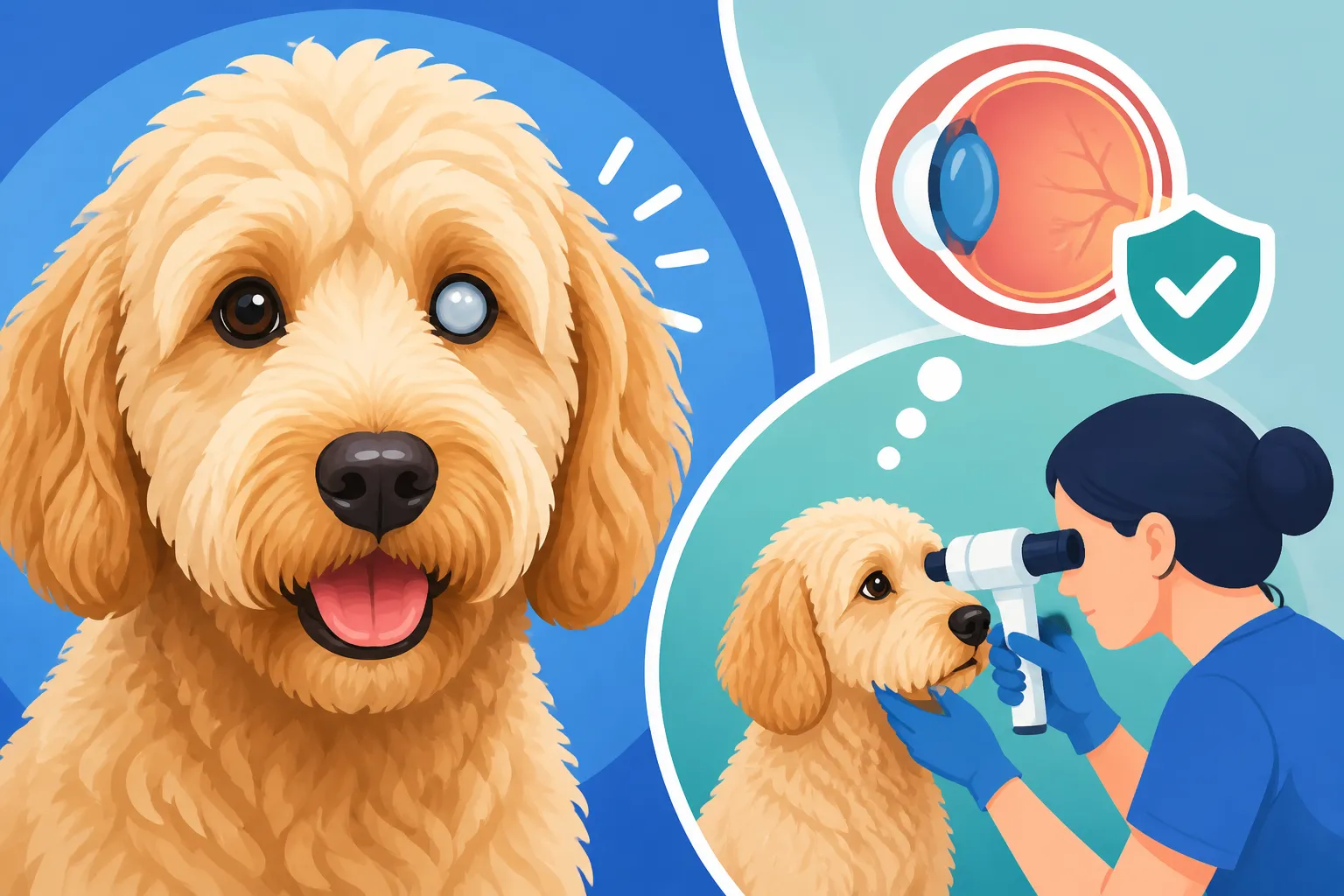
At its core, a cataract is an opacity that develops within the lens of the eye, preventing light from reaching the retina properly. Think of your dog's eye lens as a tiny, clear camera lens. When a cataract forms, that lens becomes cloudy, opaque, and less effective at focusing images. This isn't just a surface issue; it’s a change within the lens itself, which is why simply cleaning the eye won't help.
Labradoodles, being a crossbreed of Labrador Retrievers and Poodles, can inherit predispositions to certain conditions from both sides of their family tree. Both parent breeds are known to develop cataracts. For instance, hereditary cataracts are a concern in Poodles, and while less common than Progressive Retinal Atrophy, they can definitely manifest in Labradoodles. Genetics play a huge role, meaning some Labradoodles are simply more prone to developing them than others, sometimes even at a younger age. Beyond genetics, age is a common factor; just like in humans, the lens can naturally degrade over time. Diabetes is another major culprit; diabetic cataracts can develop very rapidly, sometimes progressing to blindness within weeks or even days, which can be particularly shocking for owners. Trauma to the eye, certain nutritional deficiencies, or inflammation within the eye can also lead to cataracts, although these causes are less frequent. It’s crucial to remember that not all cloudy eyes are cataracts; sometimes it’s a less severe, age-related condition called nuclear sclerosis, which causes far less vision impairment. If you're wondering, you might find our article on Telling Nuclear Sclerosis From Cataracts in a Labradoodle useful.
Recognizing the Signs of Cataracts in Your Labradoodle
The earliest signs of cataracts can be subtle and easily missed, especially with an adaptable dog like a Labradoodle. They might initially compensate by relying more on their other senses. However, as the condition progresses, you'll likely start noticing changes in their behavior and appearance. The most obvious visual cue is a bluish-grey or white cloudiness within their pupils, which gradually becomes more pronounced. This isn't just a reflection; it's a visible change in the lens itself.
Behaviorally, you might observe your Labradoodle bumping into familiar objects, particularly in dim lighting or unfamiliar environments. They might hesitate before jumping onto furniture, descending stairs, or navigating tight spaces. Their confidence on walks might decrease, and they might stick closer to your side. You might notice them startling more easily when approached from a blind side or seeming less interested in playing fetch if they can't track the ball as well. Sometimes, their pupils might appear dilated more often, as their eyes try to let in more light to compensate for the cloudy lens. They might also become more reliant on sound and scent to navigate their environment. If you notice any of these signs, it's definitely time for a vet visit. Understanding What a Labradoodle Owner Should Watch For After Eight can also provide insights into general age-related changes that might coincide with or be mistaken for early cataract symptoms.
Evaluating Your Labradoodle for Cataract Surgery
Once cataracts are suspected, the journey to decide on surgery begins with a thorough evaluation. This isn't just about confirming cataracts; it's about determining if your Labradoodle is a good candidate for the procedure and what the potential outcomes might be. It’s a comprehensive process that often requires a specialist.
The Veterinary Consultation and Pre-Surgical Workup
Your first stop should always be your regular veterinarian. They can perform an initial eye exam and, if cataracts are confirmed or strongly suspected, will likely refer you to a board-certified veterinary ophthalmologist. This specialist has advanced training and equipment to accurately diagnose the severity of the cataracts and assess your dog's overall eye health.
The ophthalmologist will conduct a meticulous examination of both eyes, often using specialized tools like slit lamps and ophthalmoscopes. They'll also perform a battery of diagnostic tests. These usually include a complete ophthalmic exam, checking intraocular pressure (to rule out glaucoma, a potential complication), and a Schirmer tear test to assess tear production. Crucially, they’ll often recommend an electroretinogram (ERG) to evaluate the function of the retina behind the cataract. This test is vital because if the retina isn't healthy, restoring lens clarity won't bring back useful vision, rendering surgery pointless. They'll also perform an ocular ultrasound to check for any abnormalities behind the lens that might be hidden by the opaque cataract. Beyond the eyes, a comprehensive pre-surgical blood panel and urinalysis will be performed to assess your Labradoodle's general health and ensure they can safely undergo anesthesia. If your Labradoodle has any underlying health conditions, like diabetes or Addison's disease, these will need to be carefully managed and stabilized before surgery. You might want to review Whether Anesthesia Is Safe for an Addisonian Labradoodle if this is a concern.
Factors Influencing Surgical Candidacy
Not every Labradoodle with cataracts is an ideal candidate for surgery, and making this decision involves weighing several important factors with your ophthalmologist.
- Severity and Maturity of Cataracts: Surgery is typically most successful when cataracts are mature enough to significantly impair vision but not so advanced that they’ve caused other irreversible eye damage, like lens-induced uveitis (inflammation). If the cataracts are very early and not affecting quality of life, a "wait and see" approach might be recommended.
- Overall Health and Age: While age isn't a strict barrier, a Labradoodle's general health is paramount. Any chronic conditions, especially heart disease, kidney issues, or uncontrolled diabetes, can increase anesthetic risks. A thorough pre-surgical workup aims to identify and mitigate these risks. Our article on Keeping a Labradoodle Sound Into Its Teens discusses general health for older dogs, which is highly relevant here.
- Retinal Function: As mentioned, a healthy retina is non-negotiable. If the ERG test shows compromised retinal function, surgery will likely not improve vision, and therefore wouldn't be recommended.
- Temperament: Your Labradoodle's personality plays a role in post-operative care. The recovery period requires strict adherence to medication schedules, activity restrictions, and often wearing an Elizabethan collar. A dog that is extremely anxious, aggressive, or impossible to medicate might struggle significantly with recovery, increasing the risk of complications.
- Owner Commitment: Your commitment to post-operative care is critical. This isn't a "set it and forget it" procedure. It demands diligent medication administration, careful monitoring, and multiple follow-up visits. If you're unable to commit to this intensive period, the success rate plummets.
Ultimately, the goal is to determine if surgery offers a realistic chance of significantly improving your Labradoodle's quality of life and if they can safely endure the procedure and recovery.
The Cataract Surgery Procedure and What to Expect
Once the decision is made to proceed, it’s natural to feel a mix of hope and apprehension. Knowing what to expect during the surgery and the recovery period can help ease some of those worries.
How the Surgery is Performed
Cataract surgery in dogs is a highly specialized procedure performed by veterinary ophthalmologists, using techniques very similar to those used in humans. The most common method is called phacoemulsification.
Here's a simplified breakdown of what happens:
- Anesthesia: Your Labradoodle will be placed under general anesthesia. This means they will be completely unconscious and pain-free throughout the procedure. The surgical team will carefully monitor their vital signs.
- Micro-Incision: The ophthalmologist makes a tiny incision, usually less than 3 millimeters, into the cornea (the clear front part of the eye).
- Phacoemulsification: A specialized ultrasonic probe is inserted through this incision. This probe emits high-frequency sound waves that gently break up the cloudy cataract lens into tiny pieces. These fragments are then carefully suctioned out of the eye. This precision work avoids damaging the delicate structures surrounding the lens.
- Artificial Lens Implantation (IOL): In most cases, once the natural lens material is removed, an artificial intraocular lens (IOL) is implanted into the eye. This IOL replaces the focusing power of the natural lens, allowing for clearer vision. While most dogs receive IOLs, sometimes, due to specific circumstances or complications, an IOL might not be placed. Even without an IOL, vision is often improved, though dogs will be very farsighted.
- Closure: The small incision is usually self-sealing or may require one or two very fine stitches, which often dissolve on their own.
The entire procedure for both eyes typically takes about an hour or two, depending on the complexity of the cataracts and any individual factors. It’s a marvel of modern veterinary medicine!
Post-Operative Care and Recovery
The surgery itself is only half the battle; the post-operative care is just as, if not more, critical for a successful outcome. This is where your commitment as an owner truly shines.
- Immediate Post-Op: Your Labradoodle will likely stay at the veterinary hospital overnight, or sometimes just for the day, for monitoring as they recover from anesthesia. The veterinary team will start administering their eye medications.
- Medications, Medications, Medications: Get ready for a rigorous schedule! You will be sent home with multiple types of eye drops (anti-inflammatory, antibiotic) and often oral medications (anti-inflammatory, pain relief). These need to be given frequently and precisely as prescribed, sometimes every few hours in the initial days. Missing doses can lead to complications like inflammation and infection. It can feel like a full-time job for a few weeks, but it's absolutely vital.
- Elizabethan Collar (Cone of Shame): Your Labradoodle will need to wear an Elizabethan collar (the infamous "cone") continuously for several weeks to prevent them from rubbing or scratching their eyes, which could dislodge stitches or introduce infection. This can be frustrating for both of you, but it’s non-negotiable.
- Activity Restriction: For several weeks following surgery, your Labradoodle’s activity will need to be severely restricted. No jumping, running, roughhousing, or going up and down stairs unsupervised. Short, leashed potty breaks are generally the only outdoor activity allowed. This helps prevent sudden increases in eye pressure or accidental trauma.
- Follow-up Appointments: Expect frequent follow-up visits with the veterinary ophthalmologist – often weekly for the first month, then tapering off to monthly, quarterly, and eventually yearly checks. These appointments are crucial for monitoring healing, adjusting medications, and detecting any early complications.
- Potential Complications: While cataract surgery has a high success rate, complications can occur. These can include post-operative inflammation (the most common), glaucoma (increased eye pressure), retinal detachment, infection, or even recurrence of cataracts (secondary cataracts). Early detection and intervention are key to managing these issues. Your ophthalmologist will discuss these risks with you in detail.
It's a demanding recovery period, but seeing your Labradoodle regain their sight and confidence is an incredibly rewarding experience that makes all the effort worthwhile.
Weighing the Pros and Cons: Is Surgery Right for Your Labradoodle?
Deciding on surgery for your Labradoodle's cataracts is a deeply personal choice, and there's no single "right" answer for every dog or family. It's essential to consider all aspects, from the potential benefits to the risks and financial implications.
Potential Benefits of Cataract Surgery
For many Labradoodles, successful cataract surgery offers a dramatic improvement in their quality of life. The benefits can be truly transformative:
- Restored Vision: The primary and most obvious benefit is the restoration of functional vision. Imagine your dog, who was once hesitant and bumping into things, suddenly seeing clearly again! They can navigate their environment with confidence, enjoy walks without fear, and easily find their toys.
- Improved Quality of Life and Independence: Regaining sight often leads to a significant boost in a dog's overall well-being. They become more engaged, playful, and independent. They can interact with you and their surroundings more fully, reducing anxiety and frustration that often comes with blindness. This renewed zest for life is often palpable.
- Increased Safety: A dog that can see is a safer dog. They are less likely to stumble, fall down stairs, or encounter hazards they can't perceive. This can give you, as an owner, immense peace of mind.
- Enhanced Bond: Seeing your Labradoodle thrive again after regaining their sight can deepen the bond you share. The joy they experience, and the ease with which they navigate their world, are incredibly heartwarming.
For many owners who've been through it, the investment in surgery pays off in years of happy, sighted companionship.
Risks, Costs, and Alternatives
While the benefits are compelling, it's equally important to be realistic about the potential downsides and other considerations.
Risks:
- Anesthesia Risks: Any general anesthesia carries inherent risks, especially for older dogs or those with underlying health conditions. While modern veterinary anesthesia is very safe, complications like adverse reactions, breathing issues, or heart problems can occur.
- Surgical Complications: As mentioned, complications during or after surgery are possible, including severe inflammation, glaucoma, retinal detachment, infection, or bleeding. While uncommon, some complications can lead to permanent blindness or even necessitate eye removal in severe cases.
- Post-Operative Compliance: A significant risk factor is the challenge of adhering strictly to the post-operative care regimen. If medications are missed or activity restrictions aren't followed, the chances of complications rise sharply.
Costs:
Cataract surgery for dogs is a major veterinary procedure and carries a substantial price tag. The total cost can vary widely depending on your location, the veterinary ophthalmologist's fees, the complexity of the case, and whether one or both eyes are operated on. Generally, you can expect to pay anywhere from $3,000 to $6,000 per eye, and sometimes even more. This typically includes the pre-surgical diagnostics, the surgery itself, the artificial lens, anesthesia, post-operative medications, and initial follow-up visits. It's important to get a detailed estimate from your ophthalmologist.
Alternatives to Surgery:
For some Labradoodles, surgery might not be an option due to health concerns, advanced eye disease, or financial constraints. In such cases, the alternative is to manage their blindness or low vision.
- Medications for Secondary Issues: If cataracts are causing inflammation (lens-induced uveitis), anti-inflammatory eye drops may be prescribed to manage comfort, even if they won't reverse the cataracts.
- Environmental Adaptations: This involves making your home safe and easy to navigate for a blind dog. Keep furniture in consistent locations, use tactile markers (like rugs) for different areas, and block off stairs. Consider items like "halo" devices that protect their head from bumping into things.
- Training and Scent Work: Encourage your Labradoodle to use their other senses. Scent games, verbal cues, and consistent routines can help them adapt remarkably well. Many blind dogs live incredibly happy and fulfilling lives with dedicated owners.
- Quality of Life Assessment: Ultimately, the decision comes down to your Labradoodle's quality of life. Would managing blindness be more stressful for them than the surgery and recovery? Or are the risks of surgery too high given their overall health? This is a discussion to have openly with your veterinary team.
Here's a quick comparison to help visualize the decision:
| Feature | Cataract Surgery | Managing Blindness (No Surgery) |
|---|---|---|
| Outcome | Potential restoration of clear vision | Adaptation to permanent vision loss |
| Cost | High (>$3,000 per eye), potentially recurring | Lower immediate cost, but ongoing management needs |
| Invasiveness | High (surgical procedure, anesthesia) | Non-invasive, focus on environmental and behavioral changes |
| Recovery | Intensive post-op care, strict restrictions, frequent meds | No physical recovery, but psychological adjustment |
| Risks | Anesthesia complications, surgical complications | Falls, injuries, increased anxiety, reduced independence |
| Time Commitment | High for initial recovery (weeks) | Ongoing (environmental maintenance, dedicated guidance) |
| Quality of Life | Greatly improved for many, renewed confidence | Can be good with adaptation, but may reduce independence |
Financial Considerations and Insurance Support
The cost of cataract surgery can be a significant hurdle for many families. Understanding what contributes to these expenses and how pet insurance can help is crucial for making an informed decision without financial stress being the sole factor.
Understanding the Costs Involved
When your vet gives you an estimate for cataract surgery, it's rarely just one number for "the surgery." It's a comprehensive package of services, each contributing to the total.
- Initial Consultations and Diagnostics: This includes the specialized ophthalmologist exam, intraocular pressure tests, Schirmer tear test, ocular ultrasound, and the crucial electroretinogram (ERG) to check retinal function. These alone can cost several hundred dollars.
- Pre-Anesthetic Workup: Blood tests, urinalysis, and potentially cardiac evaluations (like an ECG) are essential to ensure your Labradoodle is healthy enough for anesthesia.
- The Surgery Itself: This is the bulk of the cost, covering the surgeon's fee, anesthesia monitoring, use of the specialized phacoemulsification equipment, the artificial intraocular lens (IOL), and any materials used. Whether you're doing one eye or both simultaneously will obviously impact this.
- Medications: Post-operative eye drops and oral medications are numerous and often quite expensive. They are vital for preventing infection and managing inflammation, and you'll need them for weeks or even months.
- Post-Operative Follow-ups: The frequent re-check appointments with the ophthalmologist for the first few months are critical and incur separate consultation fees. They are necessary to monitor healing and adjust the medication regimen.
- Potential Complications: If complications arise, such as glaucoma or severe inflammation, additional diagnostic tests, medications, or even further procedures will add to the overall expense.
It’s easy to feel overwhelmed by these numbers, and it's a frustration many pet owners share. Veterinary care has become incredibly advanced, but that advancement often comes with a significant price.
How Pet Insurance Can Help
This is where pet insurance can be a true lifesaver for conditions like cataracts. A good pet insurance policy can drastically reduce your out-of-pocket expenses for such a costly procedure.
When researching policies, look for comprehensive plans that cover hereditary and congenital conditions, as cataracts can sometimes fall into these categories, especially if they develop at a younger age. Companies like Healthy Paws are known for their comprehensive coverage, often covering up to 90% of veterinary bills after your deductible is met, which can include diagnostics, surgery, and medications for a condition like cataracts.
- Understanding Coverage: Most policies work on a reimbursement model. You pay the vet bill upfront, then submit a claim to your insurance provider. After your deductible is met, they reimburse you a percentage (e.g., 80%, 90%).
- Waiting Periods: Be aware that all pet insurance policies have waiting periods for illnesses, and often longer ones for orthopedic or hereditary conditions. This means you can't sign up for insurance today and expect coverage for a cataract diagnosed tomorrow. It's why many experienced owners advocate for Insuring a Labradoodle Before Anything Is On Record.
- Pre-Existing Conditions: Unfortunately, if your Labradoodle was diagnosed with cataracts (or even showed signs) before your policy's waiting period ended, it would likely be considered a pre-existing condition and therefore excluded from coverage. This is a common and understandable frustration for many pet parents.
- Choosing the Right Plan: When considering pet insurance, ask about annual limits, deductibles, and reimbursement percentages. It's a good idea to get quotes from several providers and compare their coverage for major medical conditions. You’ll want to understand Whether a Labradoodle Policy Covers Hereditary Conditions in particular.
While pet insurance does involve a monthly premium, for a procedure like cataract surgery, it can literally save you thousands of dollars and allow you to make medical decisions based on what’s best for your Labradoodle, rather than solely on your bank balance. Considering that The Full Cost of Fourteen Years With a Labradoodle can be substantial, pet insurance is an investment in their long-term health and your peace of mind.
Disclaimer
This article is intended for informational purposes only and does not constitute professional veterinary advice. Always consult with a qualified veterinarian or veterinary ophthalmologist for any health concerns or before making any decisions about your Labradoodle's medical care. Individual outcomes for cataract surgery can vary.