Whether a Labradoodle’s Knee Needs Operating
It's incredibly worrying when your lively Labradoodle suddenly starts limping or showing signs of discomfort in their back legs. Knee issues can be a common source of frustration for many doodle parents, bringing with them a flurry of questions about discomfort, mobility, and, most pressingly, whether surgery is going to be part of your dog's future. This comprehensive guide is here to walk you through the various knee conditions Labradoodles can face, explore all the treatment avenues available, and help you understand when an operation might truly be the best path forward for your beloved companion.
Understanding Common Labradoodle Knee Issues
Labradoodles are wonderful, active dogs, but like many breeds, they can be prone to certain orthopedic conditions, particularly involving their knees. Understanding these common problems is the first step in knowing how to help your furry friend. It's not just about a limp; it's about the underlying mechanics.
Patellar Luxation (Slipping Kneecaps)
Patellar luxation, more commonly known as "slipping kneecaps," is a condition where the patella (kneecap) dislocates or moves out of its normal groove on the femur (thigh bone). This can happen suddenly, causing your Labradoodle to skip a step or hold a leg up for a few strides before it pops back into place. While it can affect any dog, it's particularly prevalent in smaller breeds, and a miniature Labradoodle might be more predisposed than a standard one.
The severity of patellar luxation is graded from I to IV. A Grade I luxation might involve the kneecap slipping out occasionally but easily returning, often without your dog showing much pain. Owners might notice a slight "skip" in their dog's gait. However, a Grade IV luxation means the kneecap is permanently dislocated and cannot be manually put back into place, leading to persistent lameness and significant discomfort. Over time, even mild luxation can contribute to arthritis and other degenerative joint diseases if left unaddressed. It's a progressive condition, and what starts as a minor skip can worsen with age and continued activity, especially if not managed correctly.
Cranial Cruciate Ligament (CCL) Rupture
The cranial cruciate ligament (CCL) in dogs is very similar to the anterior cruciate ligament (ACL) in humans – it’s a crucial band of tissue that stabilizes the knee joint. When this ligament tears, either partially or completely, it creates instability in the knee, leading to pain and lameness. This is a remarkably common orthopedic injury in dogs, and it often occurs due to chronic degeneration of the ligament over time, rather than a single traumatic event. However, an active Labradoodle can certainly experience an acute tear during vigorous play or a sudden, awkward movement, like skidding or jumping incorrectly.
You might notice your Labradoodle suddenly unwilling to put weight on a back leg, or perhaps a gradual onset of limping that worsens with exercise. The instability allows the tibia (shin bone) to slide forward relative to the femur, which is incredibly painful and damaging to the joint over time. Beyond the immediate pain, a torn CCL almost always leads to the rapid development of arthritis in the affected knee due to the abnormal movement. It’s a significant injury that rarely resolves completely on its own, making it one of the primary reasons veterinary surgeons are called upon for knee operations in dogs.
Diagnosing Knee Problems in Your Labradoodle
Pinpointing the exact cause of your Labradoodle's knee discomfort is crucial for effective treatment. It's not always obvious from just observing a limp, as many different issues can present similarly. A thorough veterinary examination is always the starting point.
Initial Veterinary Examination and Lameness Assessment
When you bring your Labradoodle to the vet with a suspected knee issue, the first thing they’ll do is a comprehensive physical exam, paying close attention to their gait and how they bear weight. They’ll watch them walk, trot, and stand, looking for any subtle signs of lameness, abnormal posture, or reluctance to move. This initial observation often gives crucial clues.
Next, your vet will perform a palpation of the affected leg. They'll gently feel the knee joint, checking for swelling, pain response, muscle atrophy, and any instability. For a suspected CCL tear, they'll often perform specific tests like the "cranial drawer test" and "tibial compression test." These tests involve manipulating the tibia and femur to check for abnormal forward movement of the shin bone, which indicates a torn ligament. If the kneecap is slipping, your vet will be able to feel it dislocate and relocate as they flex and extend the leg. It's a hands-on process that requires a skilled touch to properly assess the joint's integrity. Don't be surprised if your dog needs a little sedation to get a truly accurate assessment, especially if they're particularly painful or tense.
Imaging and Further Diagnostics
While a physical exam can tell your vet a lot, imaging is often necessary to confirm a diagnosis and rule out other conditions. X-rays are usually the first line of diagnostic imaging. While X-rays don't directly show ligaments, they can reveal signs of instability in the joint, such as bone spurs (osteophytes) indicative of arthritis, abnormal positioning of the bones, or effusion (fluid buildup) within the joint capsule. They also help rule out fractures, tumors, or other bone abnormalities that might be causing similar symptoms. For instance, with a luxating patella, X-rays can show how shallow the trochlear groove is or if there are any underlying bone deformities contributing to the problem.
In more complex cases, or when X-rays are inconclusive, your vet might recommend more advanced imaging like an MRI or CT scan. These provide highly detailed images of soft tissues, including ligaments, menisci (cartilage pads in the knee), and joint capsules, which can be invaluable for confirming partial CCL tears or meniscal injuries that aren't visible on X-rays. Joint fluid analysis might also be performed if an infection or inflammatory condition is suspected. Understanding the full picture helps inform whether your Labradoodle's knee needs operating, or if other interventions might suffice. For many pet parents, this can be an expensive part of the diagnostic journey, and having pet insurance like Healthy Paws can certainly help alleviate some of that financial burden.
Non-Surgical Approaches to Knee Care
While surgery is often necessary for severe knee issues, especially full CCL tears or high-grade patellar luxation, many Labradoodles can benefit from conservative, non-surgical management, particularly in milder cases or as a precursor to surgery.
Conservative Management for Mild Cases
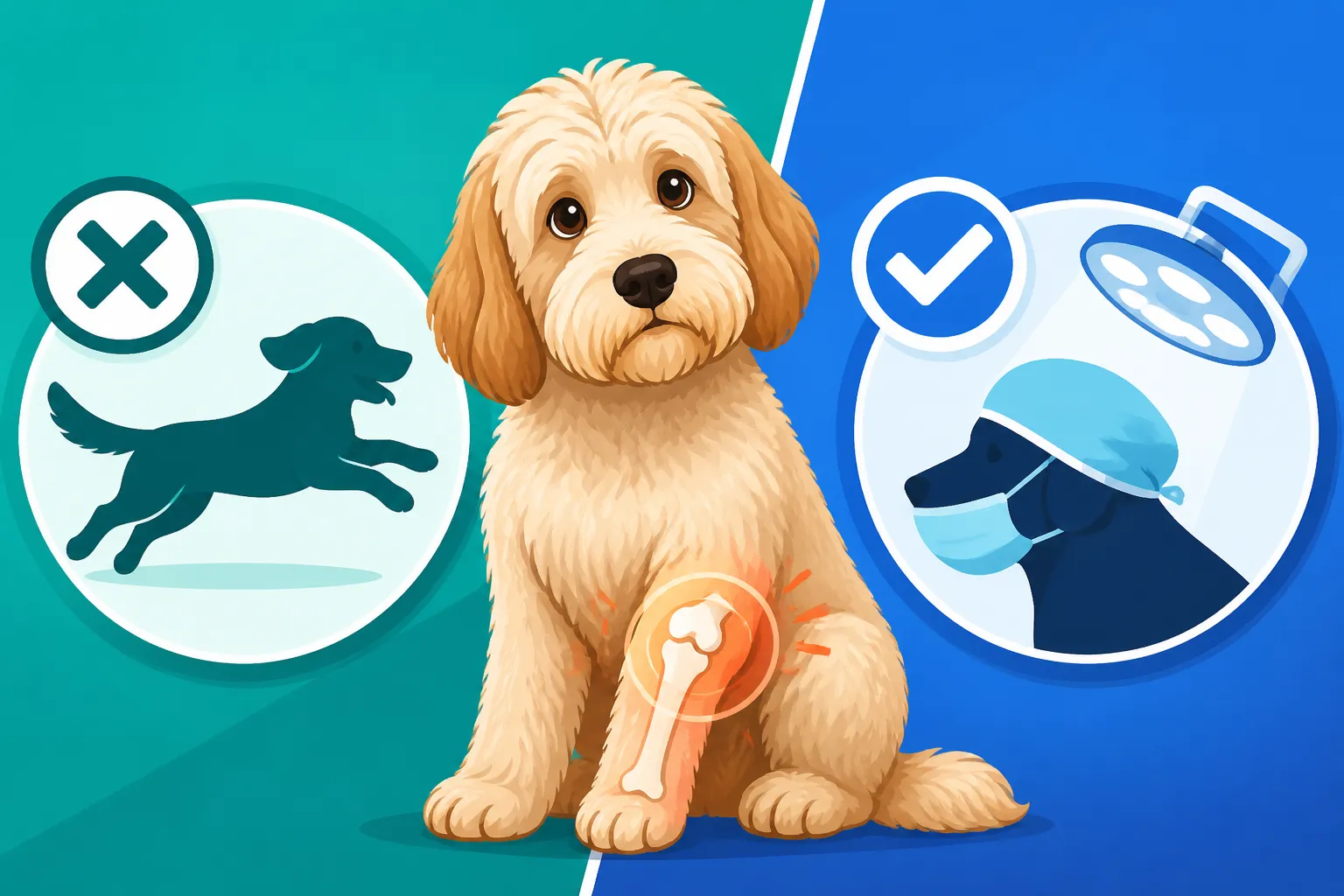
For minor issues like a low-grade patellar luxation (Grade I or II) or a very partial CCL tear, your vet might suggest a period of conservative management. This typically involves strict rest and restricted activity for several weeks. This means no running, jumping, stairs, or rough play – essentially, short, controlled leash walks only. Keeping your Labradoodle quiet can be a challenge, especially for a high-energy breed, but it's vital for allowing the joint to stabilize and any inflammation to subside.
Alongside rest, weight management is paramount. Excess weight puts incredible strain on all joints, particularly compromised knees. Helping your Labradoodle reach and maintain a healthy weight can significantly reduce pain and slow the progression of arthritis. This might involve a prescription diet, careful portion control, and monitoring their caloric intake. Anti-inflammatory medications, such as NSAIDs (non-steroidal anti-inflammatory drugs), are often prescribed to manage pain and reduce inflammation during this initial period. These medications can provide much-needed relief and help your dog be more comfortable, but they don't fix the underlying mechanical problem.
Physical Therapy and Rehabilitation
Physical therapy and rehabilitation play a huge role in both non-surgical management and post-operative recovery for knee problems. Even if surgery isn't immediately on the table, strengthening the muscles around the knee can provide additional support and stability to the joint. A certified canine rehabilitation therapist can design a tailored program for your Labradoodle. This might include passive range of motion exercises, therapeutic exercises to build muscle mass, and balance exercises to improve proprioception (awareness of body position).
Hydrotherapy, such as underwater treadmill sessions or swimming, is particularly beneficial. The buoyancy of the water reduces weight-bearing stress on the joints while still allowing for effective muscle strengthening. This can be especially good for an old Labradoodle with stiff hips or knees, where land-based exercise might be too painful. Regular, controlled exercise helps maintain joint flexibility and can prevent further muscle atrophy. For many Labradoodle owners, the commitment to regular therapy sessions can be significant, but the long-term benefits for their dog's mobility and quality of life are immeasurable.
Joint Supplements and Dietary Support
Integrating joint supplements and specific dietary support can also contribute to overall knee health, whether used alone or in conjunction with other treatments. Supplements like glucosamine and chondroitin are widely used for their potential to support cartilage health and reduce inflammation. These aren't magic bullets, but they can provide building blocks for cartilage repair and help maintain joint fluid viscosity. Many high-quality dog foods now include these ingredients, but your vet might recommend additional supplements, especially for dogs with diagnosed joint issues. You might wonder, for instance, whether glucosamine helps a Labradoodle's joints, and the answer is often a cautious "yes," as part of a broader management plan.
Omega-3 fatty acids, particularly EPA and DHA found in fish oil, are another excellent addition due to their powerful anti-inflammatory properties. They can help reduce pain and swelling associated with arthritis. Your vet might also suggest a prescription joint care diet, which is formulated with higher levels of these beneficial ingredients, as well as controlled calorie content to aid in weight management. Remember, always consult your veterinarian before starting any new supplements or changing your Labradoodle's diet, as dosages and specific formulations can vary greatly.
When Surgery Becomes Necessary for Labradoodle Knees
Despite the best conservative efforts, there are many situations where surgery is the most effective, or only, way to restore full function and quality of life to a Labradoodle with a knee injury. Making this decision can feel overwhelming, but understanding the surgical options can help bring clarity.
Surgical Options for Patellar Luxation
When a Labradoodle's patellar luxation causes persistent lameness, pain, or is a higher grade (Grade III or IV), surgical correction is typically recommended. The goal of surgery is to realign the kneecap so it tracks properly within the trochlear groove. One common procedure is trochlear groove deepening, where the groove on the femur is deepened to better hold the kneecap in place. Imagine a train track that's too shallow for the train wheel; deepening the groove gives the kneecap a more secure path.
Another frequently performed surgery is tibial tuberosity transposition. This involves moving the bony prominence on the tibia (where the patellar ligament attaches) to a more lateral or medial position, depending on whether the kneecap is luxating inwards or outwards. This repositions the entire quadriceps mechanism, ensuring the kneecap pulls straight. Sometimes, a soft tissue release or tightening procedure is also performed, where the tight tissues on the side the kneecap is pulling towards are released, and the loose tissues on the opposite side are tightened. Recovery from patellar luxation surgery usually involves a period of restricted activity followed by physical therapy, similar to other orthopedic procedures. The prognosis is generally good, especially with early intervention, and can prevent painful arthritis down the line.
Surgical Options for Cranial Cruciate Ligament Rupture
A torn cruciate ligament, particularly a complete rupture, almost always requires surgery to stabilize the knee and prevent progressive arthritis. There are several highly effective surgical techniques for CCL repair, each with its own advantages. The most common modern approaches are osteotomy procedures, which involve cutting and realigning the bones.
Tibial Plateau Leveling Osteotomy (TPLO) is one of the most popular and successful techniques. In a TPLO, a curved cut is made in the tibia, and the tibial plateau (the top surface of the shin bone) is rotated and secured with a plate and screws. This changes the angle of the joint, effectively eliminating the "tibial thrust" that occurs when the CCL is torn, making the knee stable without relying on the ligament itself. Another advanced option is Tibial Tuberosity Advancement (TTA), where the front part of the tibia (tibial tuberosity) is cut and advanced forward, then stabilized with a plate. This also alters the biomechanics of the joint, neutralizing the abnormal forces. For pet parents, the cost of these advanced procedures can be substantial, often running into several thousands of dollars per knee, which is why many value having comprehensive pet insurance like Healthy Paws to help with these unexpected, yet critical, expenses.
A more traditional approach, still used for smaller dogs or specific cases, is the lateral suture technique (also known as extracapsular repair). This involves placing a strong suture material outside the joint capsule to mimic the function of the torn CCL, providing stability. While generally less expensive than TPLO or TTA, it may not be as robust for larger, more active Labradoodles or those with significant instability. The choice of surgery often depends on the dog's size, age, activity level, and the surgeon's preference and expertise. Regardless of the technique, the goal is the same: to provide a stable, pain-free knee for your Labradoodle, preventing further damage and allowing them to return to a normal, active life, free from the debilitating effects of torn cruciates in an active Labradoodle.
The Surgical Process and Post-Operative Care
Deciding on surgery for your Labradoodle's knee is a big step, but understanding what to expect before, during, and after the procedure can make the journey feel much less daunting. The recovery process is just as crucial as the surgery itself.
Preparing Your Labradoodle for Surgery
Once the decision for surgery is made, your veterinary team will provide detailed instructions for preparing your Labradoodle. This typically includes a pre-operative blood panel to ensure their organs are functioning correctly and that they can safely undergo anesthesia. They'll also check for any underlying conditions that might complicate the surgery or recovery. You'll usually be asked to withhold food for 8-12 hours before the procedure, though water may be allowed until a few hours prior.
It's a good idea to discuss the specific procedure with your surgeon in detail, asking any questions you might have about the risks, benefits, and expected outcomes. Understanding the surgical plan, the type of anesthesia used, and pain management strategies will help you feel more at ease. Preparing your home for their return is also critical: think about a quiet, comfortable space for them to recover, perhaps a crate or small pen, with easy access to food and water. Having a plan for managing their restricted activity from day one will make the transition smoother for both of you.
The Recovery Journey at Home
The recovery period after knee surgery is lengthy and requires significant dedication from you, the owner. Your Labradoodle will come home with pain medication, anti-inflammatory drugs, and often antibiotics. Administering these exactly as prescribed is paramount for their comfort and healing. Wound care, such as keeping the incision clean and dry and preventing your dog from licking or chewing it (often with an Elizabethan collar), is also crucial to prevent infection.
The most challenging aspect for many Labradoodle owners is enforcing strict activity restriction. For the first several weeks, your dog will only be allowed short, controlled leash walks for potty breaks, with no running, jumping, or playing. This is a critical period for bone and tissue healing, and over-activity can lead to complications or even surgical failure. As healing progresses, a gradual increase in activity, often guided by a rehabilitation specialist, will begin. This might involve specific exercises at home or professional physical therapy sessions to rebuild muscle strength and restore range of motion. It's a long road, often 8-12 weeks or more until full recovery, but consistency is key. Financial assistance for the extensive follow-up care, physical therapy, and medications can quickly add up, making a robust pet insurance plan like Healthy Paws incredibly beneficial during this demanding time.
Long-Term Outlook and Preventing Future Issues
The long-term outlook for Labradoodles who undergo successful knee surgery is generally very good, with most dogs returning to excellent function. However, surgery doesn't completely eliminate the risk of arthritis. In fact, some degree of arthritis is almost inevitable after a major joint injury or surgery. The goal of surgery is to minimize its severity and manage its progression. Continued rehabilitation, even after formal therapy ends, will be important, focusing on maintaining muscle mass and joint flexibility.
Lifelong joint care, including appropriate joint supplements and a balanced diet to maintain a healthy weight, will be key to managing any developing arthritis. Monitoring for signs of discomfort or lameness is also important, as the contralateral (other) knee is often at a higher risk of developing similar issues, especially after a CCL tear. Regular veterinary check-ups, perhaps with the yearly screening a Labradoodle should get, will help catch any potential problems early. While genetics can play a role in joint health, proactive care, sensible exercise (considering the exercise limit for a growing Labradoodle), and maintaining a healthy weight are the best ways to support your Labradoodle's knees and overall orthopedic well-being for years to come.
Comparing Surgical Options for Cranial Cruciate Ligament Rupture
Choosing the right surgical approach for a CCL rupture in your Labradoodle can be a complex decision, often made in consultation with a board-certified veterinary surgeon. Here's a quick overview of the primary options:
| Surgical Technique | Description | Pros | Cons | Recovery Time (Approx.) | Ideal For |
|---|---|---|---|---|---|
| TPLO (Tibial Plateau Leveling Osteotomy) | Tibial plateau cut, rotated, and stabilized with a plate to neutralize tibial thrust. | Highly effective for all sizes, excellent long-term stability, rapid return to weight-bearing. | More invasive bone cut, higher cost, potential for bone complications (though rare). | 8-12 weeks for full activity | Active, larger Labradoodles; complete tears; young dogs. |
| TTA (Tibial Tuberosity Advancement) | Tibial tuberosity cut and advanced forward, stabilized with a plate to realign forces. | Less invasive bone cut than TPLO, good stability, potentially faster initial recovery. | Not suitable for all anatomical configurations, slightly higher risk of meniscal injury post-op. | 8-12 weeks for full activity | Active, medium to large Labradoodles; specific knee anatomies. |
| Lateral Suture (Extracapsular Repair) | Strong suture placed outside the joint to mimic the torn CCL's function. | Less invasive, lower cost, good for smaller or less active dogs. | Less robust for larger/active dogs, higher risk of suture failure or stretching, more arthritis long-term. | 12-16 weeks for full activity | Smaller Labradoodles, less active dogs, financial constraints. |
Disclaimer
This article is intended for informational purposes only and does not constitute veterinary medical advice. Always consult with a qualified veterinarian for any health concerns or before making any decisions about your Labradoodle's care, especially regarding surgical interventions.