Whether a Retired Owner Can Manage a Labradoodle
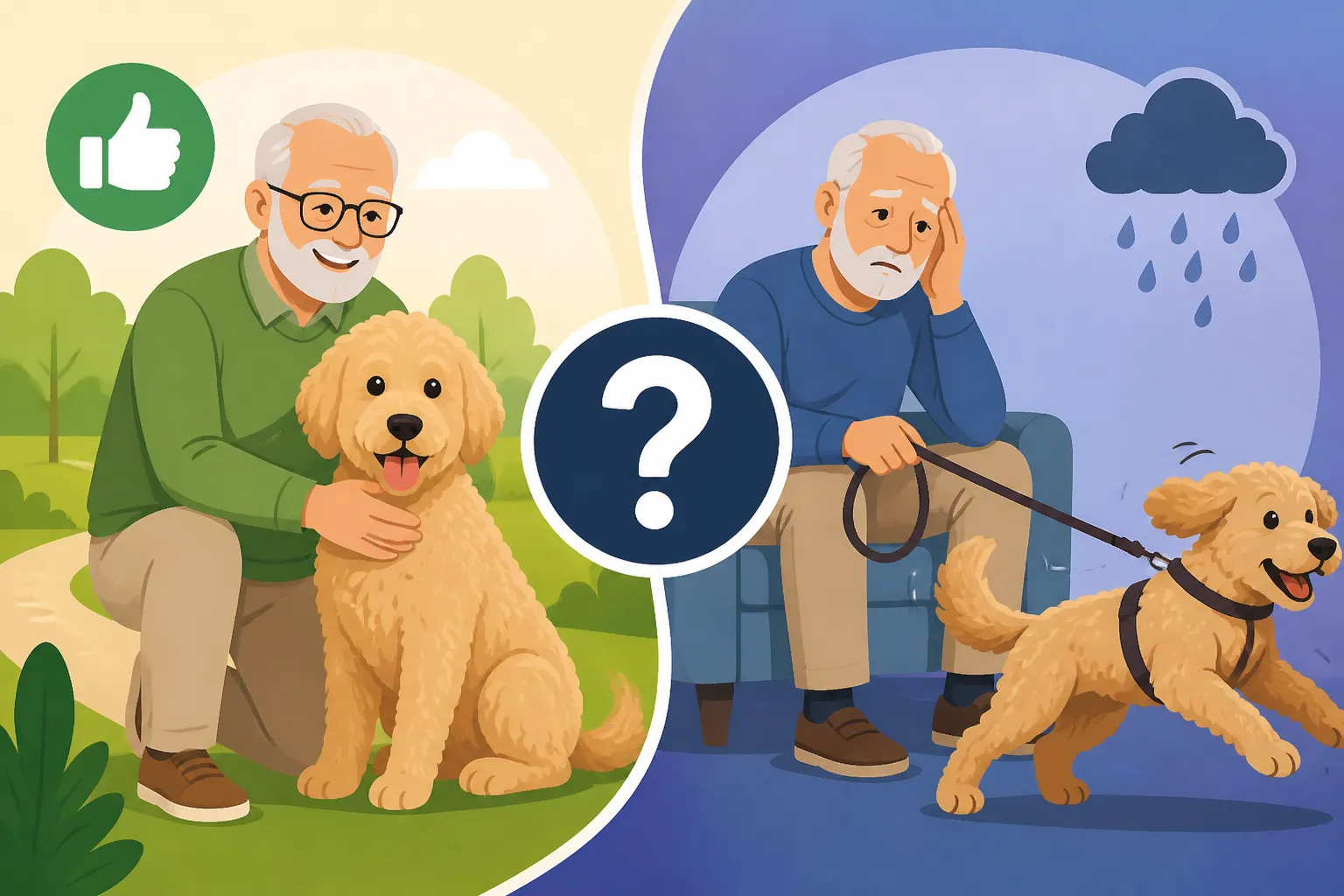
Retirement can make room for a dog, but it does not automatically make life with a Labradoodle easy. A lively young dog may pull hard, need regular grooming, and struggle to be alone, while its owner may be balancing travel, health changes, or a tighter budget. This guide helps you weigh the breed’s real care needs against your routine and choose a manageable match.
What retirement changes and what it does not
Time at home is helpful, but energy still matters
Being retired can be a real advantage for a Labradoodle. You may have more time for walks, training, companionship, and the steady routines that help a dog settle. But the breed’s friendly, people-focused reputation can make it sound easier than it is. Many Labradoodles are energetic, curious dogs that need more than an open door to the yard and a quick stroll around the block.
A puppy or adolescent can be especially demanding. Expect frequent potty trips, supervision, training, and bursts of unruly energy. Some young Labradoodles jump up, mouth sleeves, pull toward other dogs, or get overexcited when visitors arrive. That is not a reason to rule out the breed, but it is worth picturing an ordinary Tuesday, not only a relaxed weekend with a well-trained adult dog. For a closer look at breed expectations, read The Household a Labradoodle Actually Suits.
A helpful question is not simply, “Will I have time?” but, “Can I comfortably do the things this particular dog needs?” Consider whether you can manage a walk when the weather is poor, make time for short training sessions, and keep up with grooming even when your schedule changes. If you have mobility or stamina limits, you might still be a good match for a calmer adult Labradoodle, but a strong young dog that pulls may be difficult without support.
Physical strength can matter as much as walking distance
Labradoodles vary widely in size and build. A dog that looks manageable as a fluffy puppy can grow into a substantial adult, and even a medium-sized dog can be difficult to hold if it lunges suddenly. Think about balance, grip, stairs, getting in and out of a vehicle, and whether you can safely handle a dog that has spotted a squirrel on a path.
The challenge is not necessarily walking for miles. It may be the sudden tug at the end of the leash, lifting a muddy dog into a car, or bending to brush out knots. If you have arthritis, back pain, or a condition that affects balance, consider whether those tasks are manageable now and how you would handle them if your health changed. The Three Labradoodle Sizes and How They Are Set can help you think through size, but an individual dog’s strength and manners matter too.
| Part of daily life | What to consider | Ways to make it more manageable |
|---|---|---|
| Leash walks | Can you hold the dog if it pulls or reacts suddenly? | Choose an adult with known leash manners, practice with a trainer, and use safe walking routes |
| Grooming | Can you brush and handle the dog regularly? | Keep a short coat, establish a grooming routine, and budget for professional care |
| Exercise | Can you provide regular activity without overexerting yourself? | Mix walks with indoor games, training, and help from family or a dog walker |
| Travel or illness | Who can care for the dog if you are unavailable? | Arrange backup caregivers before bringing a dog home |
| Ongoing costs | Can you cover food, grooming, routine care, and unexpected needs? | Build a realistic budget and review insurance or savings options |
The everyday care a Labradoodle needs
Exercise can be flexible, but it should be reliable
A Labradoodle does not need the same routine every day, and activity does not have to mean strenuous hikes. A comfortable walk, a sniff-filled outing, a few minutes of training, or a food puzzle can all contribute to a more settled dog. The key is consistency and matching the activity to the dog’s age, health, and temperament.
If walking is uncomfortable or unreliable for you, plan alternatives before adoption. A relative might handle longer outings; a dog walker could help on certain days; or a secure yard could make play easier, though it does not replace interaction and training. Some older dogs enjoy gentle outings and short games, while a young dog may need more engagement than an owner can provide alone. Think about the help you would actually use, rather than assuming it will be easy to arrange later.
Mental activity is useful, too. A few minutes practicing “come,” “wait,” or calm greetings can be more productive than trying to tire a dog out with nonstop exercise. A Labradoodle that has learned to settle is often easier to live with than one that is simply exhausted. For more on realistic household activity, see The Exercise a Labradoodle Needs Before It Behaves.
Grooming is a regular commitment, not an occasional treat
The coat is one of the biggest practical considerations for many Labradoodle owners. Coat type and texture vary, and a long, curly, or wavy coat can mat close to the skin if it is not brushed thoroughly. Brushing only the visible surface may leave tangles underneath, especially around the ears, legs, collar, and armpits. A dog can look fluffy and still have uncomfortable mats hidden underneath.
Professional grooming can make the work easier, but it requires appointments, transport, and an ongoing budget. Home care still matters between visits. If bending or handling a brush is difficult, ask a groomer what maintenance the dog’s particular coat needs and whether a shorter clip is practical. A manageable haircut can reduce brushing time, although it does not eliminate grooming.
Before choosing a puppy, ask what the likely adult coat may require and how the breeder introduces puppies to handling. No coat promise removes the need for care. The Three Labradoodle Coats: Hair, Fleece and Wool explains why Labradoodle coats differ, and Brushing a Labradoodle to the Skin, Not the Surface covers the hands-on work that can prevent tangles. If gathering food and grooming supplies is physically inconvenient, Chewy can be one option for arranging delivery of routine items, but it cannot replace brushing or professional grooming.
Choosing a dog that fits your life now and later
An adult dog may be a better match than a puppy
Puppies are appealing, but they come with unpredictable energy, house-training needs, chewing, and months of teaching basic manners. For a retired owner, an adult Labradoodle with a known temperament may offer a clearer picture of daily life. You can ask whether the dog walks calmly, settles indoors, tolerates brushing, and has lived comfortably with other pets or visitors.
An adult dog is not automatically easy. Some may have separation distress, fearfulness, reactivity, or gaps in training. Ask specific questions and, if possible, spend time with the dog in the kinds of situations you expect at home. A walk together can reveal how much pulling there is; a quiet visit at home may show whether the dog can relax. Consider a foster-based rescue where caregivers can describe the dog’s ordinary routine. Whether There Are Ever Labradoodles in Shelters and What a Doodle Rescue Asks a Labradoodle Applicant may help you prepare for that process.
A calm temperament and manageable size may matter more than the label “miniature,” “medium,” or “standard.” Small dogs can be energetic and strong-willed, while a larger adult may be gentle and easy to handle. Meet the individual dog, observe its behavior, and be honest about what you can safely manage.
Plan for your own changing needs as well as the dog’s
Retirement can include long stretches of free time, but it can also bring travel, family caregiving, a move, or changes in health. A dog’s life may extend through several chapters of yours. Before committing, identify who could step in if you are sick, hospitalized, or away for a few days. A dependable backup caregiver is not a luxury; it is part of responsible planning.
Write down the practical arrangements: who can drive the dog to a groomer or veterinarian, who can walk it if you are temporarily unable, and whether your home is comfortable for an aging dog. Stairs, slippery floors, and access to a safe outdoor area can become more important over time. It is also wise to consider what you would do if the dog developed a condition needing regular treatment or additional help with mobility.
Budget for routine food and care as well as unexpected needs. Costs vary by location, dog size, coat, and health, so use local estimates from veterinary practices and groomers rather than relying on a single figure. Chewy may make delivery of familiar food or basic supplies easier when carrying heavy bags is a concern; check the retailer’s current availability and delivery details for your area. Keep veterinary decisions and medication instructions between you and your veterinarian.
A practical way to decide
Test the routine before you commit
Try a realistic version of the routine you expect to follow. Take a daily walk at the time you would normally go out, including in less-than-perfect weather. Visit a groomer to understand what coat maintenance involves. If possible, dog-sit or foster a Labradoodle for a short period and notice how the dog’s needs fit around meals, errands, rest, and social plans.
Use that trial to answer concrete questions. Are you comfortable holding the leash? Can you manage muddy paws and regular brushing? Does the dog settle while you read or watch television, or does it constantly seek activity? A short visit may not reveal everything, but it can replace vague assumptions with useful observations. If a dog’s needs seem close to your limit, arrange support before adoption rather than hoping you will adapt without help.
A trainer can also help you assess leash skills and settling behavior. Training is not only for correcting problems; it can make everyday tasks safer and more pleasant. If you are considering a puppy, ask how the breeder prepares puppies for grooming, handling, and household noises, and plan for classes or individual support.
Use a clear fit check, not just a feeling
Loving the breed is a meaningful starting point, but it does not answer whether a particular dog suits your capacity and lifestyle. Before you decide, look at the whole picture: physical handling, coat upkeep, exercise, companionship, finances, transportation, and emergency backup. If several needs feel uncertain, slow down and gather more information. Waiting for a better match is kinder than taking home a dog whose needs exceed what you can comfortably provide.
A Labradoodle may suit a retired owner who enjoys regular companionship, can provide or arrange consistent activity, and is prepared for grooming and ongoing care. The best fit may be an adult dog with a settled temperament rather than a puppy, or a dog whose coat and size are manageable for that owner. Consider Whether a Labradoodle Is More Work Than a Purebred and What Labradoodle Owners Say They Underestimated as you compare expectations with your day-to-day reality.
If you decide to proceed, make a written care plan with names and phone numbers for backup help, a grooming schedule, a realistic budget, and a training approach. That preparation can turn retirement into a good time to share life with a dog—not because you have unlimited time or energy, but because you have chosen a dog and routine that genuinely fit.
Disclaimer
This article is for general informational purposes only and does not constitute professional advice. Laws, prices and regulations vary by location and change over time. Consult a qualified professional for guidance on your specific situation.