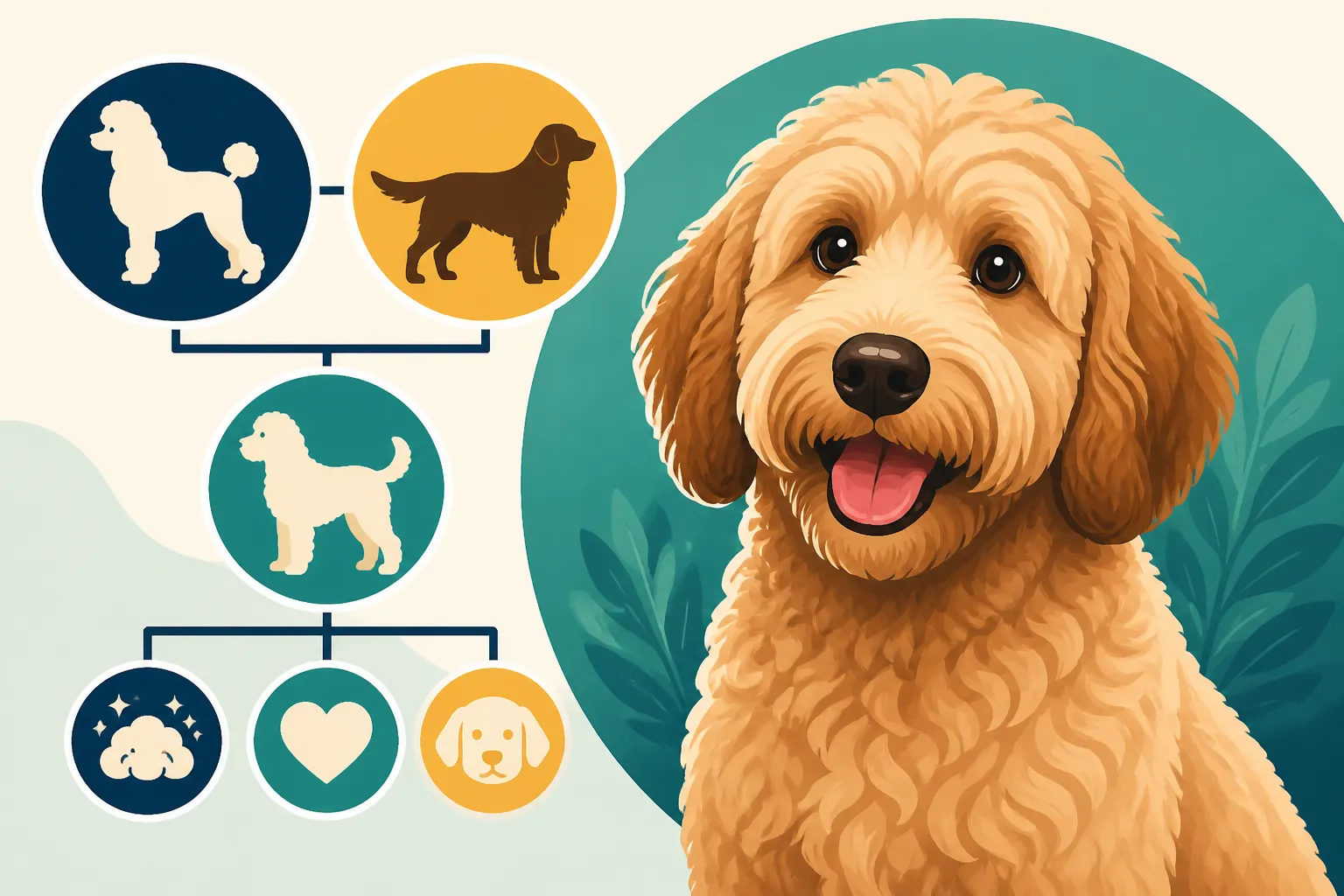
What a WALA Pedigree Shows About a Labradoodle
It’s a common scenario: you’re dreaming of bringing a charming Labradoodle into your home, but as you start researching breeders, you encounter a dizzying array of terms like "F1," "Multigen," "health clearances," and "WALA pedigree." It can feel like you need a degree just to understand what you're buying, and the worry about getting a puppy with unknown health issues is very real. This guide is here to cut through the confusion, explaining exactly what a WALA (Worldwide Australian Labradoodle Association) pedigree shows about a Labradoodle, and why it can be such a valuable document for prospective owners.
Understanding the Worldwide Australian Labradoodle Association (WALA)
When you start looking into Labradoodles, you quickly realize they're not recognized by traditional kennel clubs like the American Kennel Club (AKC) or The Kennel Club (UK). This isn't because they're "lesser" dogs, but simply because they are a hybrid crossbreed, not a purebred with a centuries-old, standardized lineage. This lack of official recognition, however, created a vacuum where a lot of less scrupulous breeding could occur, leading to unpredictable puppies and sometimes significant health problems. This is where organizations like the Worldwide Australian Labradoodle Association (WALA) stepped in.
WALA was founded with a clear mission: to promote and protect the true Australian Labradoodle by establishing rigorous ethical breeding standards, documenting pedigrees, and advocating for responsible practices. Unlike a national kennel club that registers purebred dogs based on their parentage within an established breed, WALA focuses specifically on the Australian Labradoodle. This distinction is crucial because an Australian Labradoodle isn't just a Labrador-Poodle cross; it's a specific lineage that was developed over generations, potentially incorporating other breeds like the Irish Water Spaniel and Cocker Spaniel to achieve consistent traits. So, while a basic "Labradoodle" can be any cross between a Labrador Retriever and a Poodle, a WALA-registered Labradoodle refers to this more complex, multi-generational Australian line. This commitment to documentation helps breeders and owners navigate a complex landscape and provides some assurance of a puppy's background and potential.
Deciphering the Information on a WALA Pedigree
So, you've got a WALA pedigree in your hand, or your breeder has offered to show you one. What exactly are you looking at? This document is far more than just a piece of paper; it's a window into your potential puppy's genetic heritage, health background, and the breeder's commitment to the breed's future. It’s designed to provide transparency and accountability, offering details that can help you make an informed decision.
Tracing Ancestry and Generations
One of the first things a WALA pedigree will clearly display is the dog's lineage, going back several generations. For Australian Labradoodles, this typically means seeing a "Multigen" designation, indicating that the dog is several generations removed from the original Labrador-Poodle cross. This is important because the Multigen program that made the Australian Labradoodle was specifically developed to produce more consistent traits, coat types, and temperaments, moving away from the more unpredictable outcomes sometimes seen in early F1 (first-generation) crosses.
You’ll see the names of the dam (mother) and sire (father), along with their WALA registration numbers. Following these names, you can trace back to grandparents, great-grandparents, and so on. This deep dive into the family tree helps to confirm that the puppy truly comes from an established Australian Labradoodle line, rather than a more recent, less predictable cross. It gives you a sense of the continuity and intentionality behind the breeding program.
Comprehensive Health Testing Records
Perhaps the most critical information conveyed on a WALA pedigree relates to health testing. Reputable Labradoodle breeders prioritize health, and WALA requires members to perform specific health screenings on their breeding dogs. The pedigree will list the results, or reference numbers for these tests, for not just the parents, but often for ancestors as well. These typically include:
- OFA/PennHIP for Hips and Elbows: Screening for hip and elbow dysplasia, common orthopedic conditions in larger breeds. Hips and Elbows in a Sixty Pound Labradoodle are a serious concern.
- Eye Certifications (CERF/OFA Eye Exams): To screen for hereditary eye diseases like Progressive Retinal Atrophy (PRA). The prcd-PRA Test Both Labradoodle Parents Need is a common test.
- Genetic Panel Testing: This is increasingly comprehensive and can include DNA tests for conditions like:
- Exercise Induced Collapse (EIC): A neuromuscular disorder that can cause a dog to collapse after intense exercise.
- Von Willebrand's Disease (vWD): A bleeding disorder.
- Progressive Retinal Atrophy (PRA): A group of genetic eye diseases that cause blindness.
- Degenerative Myelopathy (DM): A progressive disease of the spinal cord.
- Addison's Disease: While not always a specific DNA test, the pedigree might note if a line has a history of this. Addison's Disease a Labradoodle Inherits From the Poodle is something to be aware of.
These records are invaluable. They demonstrate that the breeder is actively working to reduce the incidence of inherited diseases in their lines. A clear health panel on the parents doesn't guarantee your puppy will never have a health issue, but it significantly reduces the risk of inheriting these specific genetic conditions, giving you a much better chance at a healthy companion. This level of transparency in health reporting is a cornerstone of responsible breeding, and it's the health tests a Labradoodle breeder should show you without hesitation.
Documented Coat Type and Color
WALA pedigrees also often include information about the dog's coat type and color. Labradoodles come in a variety of coats—hair, fleece, and wool—and colors. Breeders of Australian Labradoodles typically aim for the low-shedding fleece or wool coats, which are often preferred by allergy sufferers. The pedigree might specify the coat type of the parents, which can help predict the likely coat of the puppies. The Three Labradoodle Coats: Hair, Fleece and Wool outlines these differences.
While perhaps not as critical as health information, knowing the coat type helps manage expectations regarding grooming and potential allergenicity. Similarly, color information helps track genetics and confirms the dog's appearance matches its documented heritage.
Identification and Breeder Details
Each registered dog on a WALA pedigree will have a unique identification number, usually linked to a microchip. This provides undeniable proof of the dog's identity, linking it directly to the documented lineage.
The pedigree will also clearly state the name of the breeder, including their WALA membership status. This allows you to verify their standing with the association and provides a point of contact for any future inquiries about the dog's background.
Here's a quick look at what you might expect to find:
| Category | Information Included | Importance for Owners |
|---|---|---|
| Dog ID | Name, WALA Registration Number, Microchip Number | Verifies identity and links to official records |
| Ancestry | Names & WALA # of Parents, Grandparents, Great-Grandparents | Confirms lineage, ensures Australian Labradoodle status |
| Generation | F1, F1b, Multigen (typically Multigen for WALA) | Predictability of traits, coat, and temperament |
| Health Clearances | OFA/PennHIP (Hips/Elbows), Eye Certs, DNA Panels (EIC, PRA, vWD, etc.) | Reduces risk of inherited health conditions |
| Coat Type | Hair, Fleece, Wool (for ancestors) | Helps predict puppy's coat, grooming needs |
| Color | Specific color/pattern (for ancestors) | Confirmation of visual traits, genetic tracking |
| Breeder Info | Breeder Name, Kennel Name, WALA Membership | Verifies breeder's credentials and accountability |
The Value and Limitations of a WALA Pedigree for Owners
Having a WALA pedigree for your Labradoodle comes with significant advantages, but it's also important to understand its boundaries. It’s a tool for informed decision-making, not a magic bullet guaranteeing a perfect puppy.
The Clear Advantages
For many prospective Labradoodle owners, the biggest benefit of a WALA pedigree is the enhanced confidence it provides regarding health. Knowing that the breeding parents and their ancestors have undergone extensive health testing for common genetic conditions offers a much greater peace of mind. You’re not just hoping for the best; you’re making a choice backed by documented efforts to breed healthier dogs. This significantly reduces the chances of encountering heartbreaking and costly hereditary diseases down the line. It's a key factor in whether health tested parents add years to a Labradoodle puppy's life.
Beyond health, a WALA pedigree provides a strong indicator of predictability in terms of temperament and physical traits. Because WALA focuses on the multi-generational Australian Labradoodle, these dogs often have more consistent characteristics than early-generation crosses. This means you have a better idea of what to expect in terms of your puppy's adult size, coat type, and overall disposition. This predictability is often why people opt for an Australian Labradoodle in the first place, as whether an Australian Labradoodle is more predictable than other generations is a common question.
Furthermore, a WALA pedigree signifies a breeder's commitment to ethical and responsible breeding practices. WALA members adhere to a code of ethics that prioritizes the welfare of the dogs, proper socialization of puppies, and transparency with buyers. This level of oversight, even though WALA is not a traditional kennel club, sets a high bar for quality and care. If you're wondering what WALA does for Labradoodle pedigrees, it's essentially to uphold these standards.
Important Limitations to Keep in Mind
While incredibly valuable, a WALA pedigree isn't a silver bullet. Firstly, it doesn't offer a 100% guarantee against all health problems. Genetic testing significantly reduces the risk of inherited conditions, but dogs, like humans, can still develop unforeseen illnesses, allergies, or injuries throughout their lives. Environmental factors, nutrition, and pure chance still play a role.
Secondly, the reliability of the pedigree ultimately rests on the integrity of the breeder. While WALA has standards and processes, it’s essential to choose a reputable breeder who is transparent and willing to discuss their practices. Always verify the information provided. There are sadly always those who try to cut corners, and it's prudent to ensure your breeder is genuinely committed to the WALA standards. If you encounter a Labradoodle without any papers or clear lineage, it's worth considering whether a Labradoodle without papers is cheaper for a reason.
It's also crucial to remember that WALA primarily focuses on the Australian Labradoodle. If you are looking for a first-generation Labradoodle (F1) or an F1b, a WALA pedigree might not be the most relevant document, though a good breeder of any generation should still provide extensive health clearances. The breed is still young and developing, which is why no kennel club registers the Labradoodle still holds true for all types.
How to Effectively Use a WALA Pedigree
So, you've decided to move forward with a WALA-registered Australian Labradoodle. How can you best use this pedigree to ensure a positive experience and a healthy puppy? It's about proactive engagement and utilizing the information effectively.
Verification and Due Diligence
The first step is always to verify the pedigree's authenticity. Don't be afraid to ask your breeder for copies of the parents' actual health certificates from OFA, PennHIP, or genetic testing labs, rather than just relying on the summary on the pedigree. Many testing organizations have online databases where you can look up results by the dog's registered name or number. You can also contact WALA directly to confirm the breeder's membership status and the registration of the dogs in question. A reputable breeder will welcome your questions and be eager to provide all documentation. Remember, you're making a significant investment of time, emotion, and money, so it’s perfectly reasonable to do your homework.
Asking the Right Questions
Once you've reviewed the pedigree, use it as a springboard for deeper conversations with your breeder. Ask them about specific health tests: "I see both parents are clear for prcd-PRA, which is great. Have there been any instances of Cataracts in a Middle Aged Labradoodle in their lines?" or "What are your thoughts on the likelihood of Bloat Risk in a Standard Poodle Bred Labradoodle given the lineage?" Inquire about the temperaments of the ancestors listed, as this can give you insights into your puppy's potential personality. Ask about any "carriers" if they appear on the pedigree—dogs that carry a gene for a condition but don't express it. A responsible breeder will have clear answers and a well-thought-out breeding plan.
Planning for Long-Term Health and Care
A WALA pedigree isn't just for purchasing your puppy; it's a valuable document for the entire life of your dog. Share it with your veterinarian at your puppy's first check-up. This information helps your vet understand your dog's genetic predispositions and allows them to tailor a preventative health plan. For example, knowing the history of Addison's disease in a line might prompt your vet to be extra vigilant for the vague signs of The Vague Signs of Addison's in a Labradoodle if your dog ever shows them.
Beyond health, the pedigree can inform your general care routine. If the coat types of the ancestors are predominantly wool, you'll know to prepare for more intensive grooming needs, perhaps stocking up on specialized brushes and shampoos from a retailer like Chewy. If your Labradoodle's lineage suggests a higher energy level, you might plan for more structured exercise routines and engaging activities, considering durable toys and treats that can be found on Chewy.
Ultimately, a WALA pedigree represents a commitment to raising healthy, well-adjusted Australian Labradoodles. It's a tool that empowers you, the owner, to make an informed choice and to partner with a breeder who shares your dedication to responsible dog ownership. While it doesn't remove all uncertainties, it significantly improves your chances of bringing home a truly wonderful companion. And when it comes to stocking up on grooming tools, quality food, and even tasty training treats, often found at places like Chewy, knowing your dog's likely needs from their pedigree can help you make smart choices.
Disclaimer
This article is for general informational purposes only and does not constitute professional advice. Laws, prices and regulations vary by location and change over time. Consult a qualified professional for guidance on your specific situation.