Who Asked for the First Labradoodle
It's quite natural to wonder about the origins of a breed as popular and distinct as the Labradoodle. Many people assume these delightful dogs were simply a happy accident, a casual crossbreed that took off, but the truth is far more intentional and rooted in a very specific, heartfelt request. This guide will take you back to the very beginning, revealing the unique circumstances and the specific individual whose need sparked the creation of the first Labradoodle, and how a challenge to a guide dog organization changed canine history.
The Urgent Need for a Specific Kind of Guide Dog
Imagine being visually impaired and needing the assistance of a guide dog, but your spouse is severely allergic to dogs. This was the precise predicament that led to the Labradoodle's inception, a story that began not in a designer kennel, but in a very practical quest for a solution to a real-world problem.
Pat Blum's Quest for an Allergen-Friendly Companion
Our story begins with Pat Blum, a visually impaired woman living in Hawaii. Pat's reliance on a guide dog was absolute; these animals provide unparalleled independence and safety for those with sight loss. However, her husband suffered from severe allergies, making the traditional choice of a guide dog, like a Labrador or a German Shepherd, impossible. These breeds, wonderful as they are, shed a significant amount of dander and hair, triggering debilitating allergic reactions. Pat Blum was caught in an agonizing bind: she needed a guide dog, but couldn't have one without compromising her husband's health. It was a deeply frustrating situation, one that many families with allergies can still relate to today when considering pet ownership. She truly just wanted to be able to live her life with the independence a guide dog could offer, without causing her loved one discomfort.
The Royal Guide Dogs Association of Australia Steps In
Desperate for a solution, Pat Blum reached out to the Royal Guide Dogs Association of Australia in 1989. This esteemed organization was dedicated to breeding and training exceptional guide dogs, primarily relying on breeds like Labradors and German Shepherds known for their consistent temperament and trainability. The idea of breeding a "crossbreed" was, at the time, quite outside their standard operating procedure. Guide dog programs typically adhere to strict breeding protocols with purebred lines to ensure predictability in health and temperament.
However, Pat Blum's request was so unique and compelling that it couldn't be ignored. She wasn't asking for a novelty pet; she was asking for a life-changing service animal. The challenge was presented to Wally Conron, the breeding manager for the association. He was tasked with finding a solution that could provide the guide dog qualities of a Labrador combined with an allergy-friendly coat. This was a monumental ask, pushing the boundaries of what guide dog programs typically considered. The pressure was immense to find a dog that could not only perform the rigorous tasks of a guide dog but also live in a home where allergies were a serious concern. It wasn't about aesthetics; it was about accessibility and enhancing a person's quality of life. The story of The Royal Guide Dogs Program Behind the Labradoodle truly highlights their dedication.
Wally Conron's Experiment: Marrying Form and Function
Faced with Pat Blum's pressing need, Wally Conron embarked on what many considered a radical experiment. His goal was clear: create a dog with the intelligence and biddability required for guide work, coupled with a low-shedding coat to accommodate allergies. He wasn't aiming to start a new trend; he was trying to solve a very specific problem.
Why the Poodle and Labrador Were Chosen
Conron's choice of parent breeds was highly strategic, based on their individual strengths. The Labrador Retriever was an obvious candidate due to its long-established reputation as an excellent guide dog. Labradors are known for their calm demeanor, high trainability, eagerness to please, and strong work ethic. They possess a natural retrieving drive, which is beneficial for guide work, and generally have a stable, confident temperament essential for navigating public spaces. The Retrieving Drive a Labradoodle Gets From the Labrador is a characteristic that made the Labrador such a cornerstone of guide dog programs.
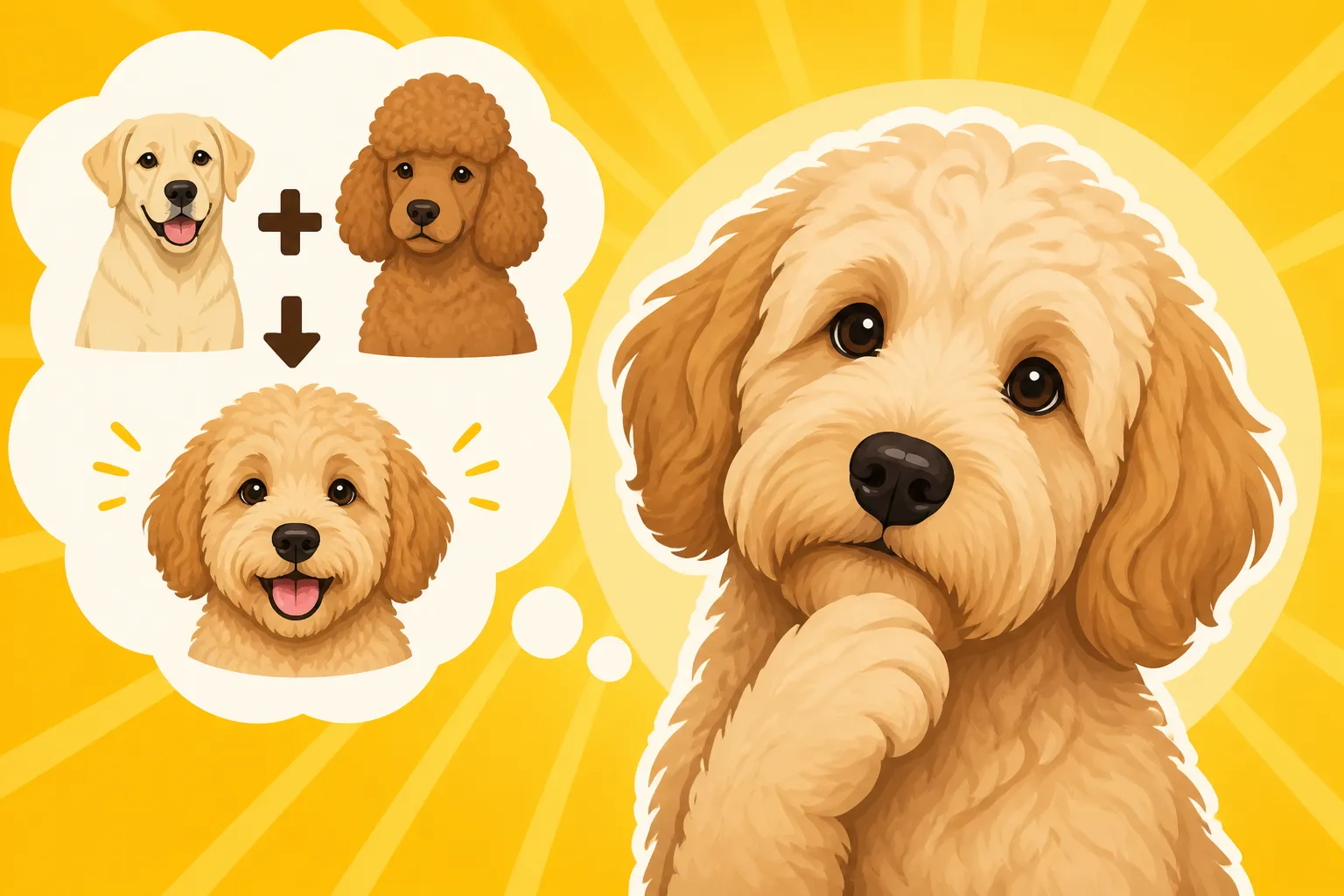
On the other side, the Standard Poodle was selected primarily for its coat. Poodles are renowned for their curly, non-shedding, and often hypoallergenic coats, making them suitable for individuals with allergies. Beyond their glamorous looks, Poodles are incredibly intelligent, highly trainable, and agile dogs, historically bred for retrieving in water. By combining these two breeds, Conron hoped to create a dog that inherited the Labrador's guiding instincts and gentle nature, along with the Poodle's smarts and allergy-friendly coat. It was a gamble, but one based on sound genetic principles, aiming for a true "best of both worlds." This critical decision underscores Why a Guide Dog Had to Be Allergy Friendly.
The Birth of Sultan and the First Litter
After careful selection, a Labrador bitch was bred with a Standard Poodle dog. The resulting litter was a mixed bag, as is often the case with first-generation crosses (F1 Labradoodles). There was variability in coat type, ranging from more Labrador-like hair to Poodle-like curl, and differences in temperament. However, one puppy, named Sultan, stood out. Sultan possessed the ideal combination that Wally Conron had envisioned: a friendly, intelligent, and calm temperament perfectly suited for guide work, along with a coat that produced minimal dander and shed very little.
Sultan was rigorously trained and eventually made the journey to Hawaii to become Pat Blum's guide dog. He proved to be an exceptional working dog, successfully guiding Pat and allowing her husband to live comfortably without allergic reactions. Sultan's success was a testament to the potential of this cross, demonstrating that it was possible to breed for specific functional traits rather than just purebred lineage. His story is famously detailed in Sultan, the Labradoodle That Proved the Idea. The positive outcome with Sultan validated Conron's risky endeavor and offered hope for future guide dog recipients facing similar challenges. You can imagine the joy and relief this brought to Pat Blum, finally having the companion she needed.
The Unexpected Legacy: Beyond a Single Request
While Sultan's story was a triumph for Pat Blum and a significant milestone in guide dog history, the broader implications of Conron's experiment spiraled in ways he never anticipated, profoundly shaping the perception and future of the Labradoodle.
The Initial Goal: One Guide Dog for One Person
It's crucial to remember that the original goal was incredibly specific: to produce one suitable guide dog for one visually impaired individual whose husband suffered from allergies. Wally Conron was not attempting to create a new "designer breed" for the masses. The success of Sultan in fulfilling Pat Blum's requirements was, from the perspective of the Royal Guide Dogs Association, a job well done. Sultan excelled, providing years of dedicated service, a true testament to the initial vision. Pat Blum, the Woman the First Labradoodle Was Bred For was the focus.
However, after Sultan's success, the guide dog program itself showed limited interest in continuing the crossbreed on a large scale. Why? Because while Sultan was a triumph, other puppies in the litter didn't consistently meet the stringent temperament and coat standards required for guide work. The unpredictability of the first-generation cross meant that many dogs wouldn't make the cut, making it less efficient than their established purebred programs. The program ultimately decided not to continue systematic breeding of Labradoodles for guide work, making the initial success with Sultan somewhat of a standalone miracle from their institutional perspective. The decision of Whether the Labradoodle Program Was Continued became a key point in its early history.
The Public's Reaction and the 'Doodle' Craze
Despite the guide dog association's cautious approach, the news of the "hypoallergenic guide dog" quickly captured the public's imagination. People, enchanted by the idea of a clever, friendly dog that didn't shed, began clamoring for Labradoodles. The name itself, coined by Conron for its catchy appeal to generate interest in his initial litter, became an instant hit. This public demand led to a boom in breeding, often by individuals less concerned with the meticulous health and temperament screening of guide dog programs.
Wally Conron, the very man who created the Labradoodle, would later famously express deep regret for opening what he called "Pandora's Box." He became increasingly concerned about irresponsible breeding practices, the proliferation of dogs with unpredictable health and temperaments, and the commercialization of the crossbreed. He saw the shift from a functional, purposeful guide dog to a trendy family pet as problematic. This phenomenon is why Why Conron Called the Labradoodle a Mistake is such a widely discussed topic. The Labradoodle's soaring popularity inadvertently sparked the entire "doodle" craze, leading to a myriad of Poodle crosses, all capitalizing on the perceived benefits of a low-shedding coat and friendly demeanor. This widespread demand highlighted the public's desire for companion animals that fit into modern lifestyles, including considerations for allergies and perceived ease of care, often overlooking the deeper commitment required. Many modern owners find themselves asking what they truly need from their everyday pet supplies, and resources like Chewy provide a vast selection, but they also highlight the market for all these new breeds.
Understanding the Original Vision vs. Modern Reality
The Labradoodle of today is a far cry from the single, purposeful creation that was Sultan. Understanding the original intent helps us appreciate both the potential and the ongoing challenges of the breed.
What the Original Request Hoped to Achieve
Pat Blum's request and Wally Conron's subsequent breeding program were driven by a clear, functional checklist. They weren't looking for a dog that simply looked cute or was easy to market. They needed a highly capable service animal that could integrate seamlessly into an allergy-sensitive home.
Here's a breakdown of the key traits they were hoping to combine:
| Desired Trait for Guide Dog | From Labrador Retriever | From Standard Poodle | Outcome in Sultan |
|---|---|---|---|
| Trainability & Intelligence | High, eager to please | Very High, intelligent | Excellent |
| Temperament | Calm, biddable, friendly | Alert, intelligent, social | Excellent |
| Low-Shedding Coat | Moderate to High Shedding | Low Shedding, hypoallergenic | Low Shedding |
| Size & Sturdiness | Medium-large, robust | Medium-large, athletic | Suitable |
| Health & Longevity | Generally healthy | Generally healthy | Appears healthy |
This table clearly illustrates the careful thought that went into the selection of the parent breeds. The ultimate goal was to achieve a dog with an excellent working temperament and intelligence, housed within a coat that wouldn't exacerbate allergies. When Sultan achieved this, it was a profound breakthrough. This careful consideration for combining the best aspects of both breeds also speaks to The Temperament a Labradoodle Gets From Each Parent.
How the Breed Evolved from That First Request
The Labradoodle, as a breed, has evolved significantly since Sultan. What started as a focused experiment quickly expanded into a worldwide phenomenon, leading to different "generations" and breeding approaches.
Early Labradoodles, like Sultan, were F1 crosses (first generation, purebred Labrador bred to a purebred Poodle). These dogs exhibited the most variability in terms of coat type and temperament. Some were truly low-shedding, while others shed almost as much as a Labrador. This inconsistency was a major reason why the original guide dog program didn't continue the cross. However, breeders outside the program began to develop further generations, often breeding F1 Labradoodles back to Poodles (F1b) to increase the likelihood of a low-shedding coat, or breeding two F1 Labradoodles together (F2). Later came "multigenerational" Labradoodles, where several generations of Labradoodle-to-Labradoodle breeding occur, striving for greater consistency. The different generations, such as What F1 Means on a Labradoodle, are crucial for understanding their development.
The explosion in popularity, however, also brought challenges. Without kennel club recognition and a universally accepted breed standard, consistency in health and temperament can vary widely depending on the breeder. Many early breeders prioritized coat over other crucial traits, sometimes leading to dogs with less stable temperaments or genetic health issues. Today, responsible Labradoodle breeders strive to uphold the original intent by carefully health testing their breeding stock and focusing on temperament as much as coat type. They utilize extensive health clearances, which are critical, and The Health Tests a Labradoodle Breeder Should Show are a must-see for any prospective owner. While a trip to Chewy can cover your everyday needs, finding a reputable breeder who focuses on the whole dog is paramount for a happy, healthy companion that can stay sound into its later years. It is important to know What a Labradoodle Owner Should Watch For After Eight as they age.
The journey of the Labradoodle, from a specific request for a guide dog for Pat Blum to a global sensation, is a fascinating story of intention, unforeseen consequences, and evolution. While Wally Conron may have regretted the "Pandora's Box" he opened, the initial spark came from a place of deep empathy and a desire to help one person gain her independence. The Labradoodle's origins highlight the profound impact a single, heartfelt need can have on the canine world, influencing not just guide dog programs, but the very landscape of pet ownership. Many people, still seeking a low-shedding companion, will look into The Three Labradoodle Coats: Hair, Fleece and Wool to understand what they are getting into.
Disclaimer
This article is for general informational purposes only and does not constitute professional advice. Laws, prices and regulations vary by location and change over time. Consult a qualified professional for guidance on your specific situation.