Why Labradoodle Breeders Avoid the F2 Cross
So, you're diving into the wonderful world of Labradoodles, and you're quickly discovering that it's not as simple as just "Labrador plus Poodle." There's a whole alphabet soup of F1, F1b, F2, and multigen designations, and it can feel overwhelming trying to figure out what it all means, especially when breeders warn against something called an "F2 cross." Many hopeful owners get confused and frustrated by this jargon, wondering if they're missing out on something or if an F2 puppy is inherently problematic. This guide is here to shed light on exactly why many reputable Labradoodle breeders deliberately avoid the F2 cross and what that means for you as a prospective puppy parent.
Understanding Labradoodle Generations Beyond F1
Before we can truly grasp why the F2 cross is often bypassed, we need to understand the foundational genetics of Labradoodles. It’s like baking a cake – you need to know what ingredients went into the first batch before you can predict what the second batch will taste like when you use some of that first cake as a base.
The Foundation: What is an F1 Labradoodle?
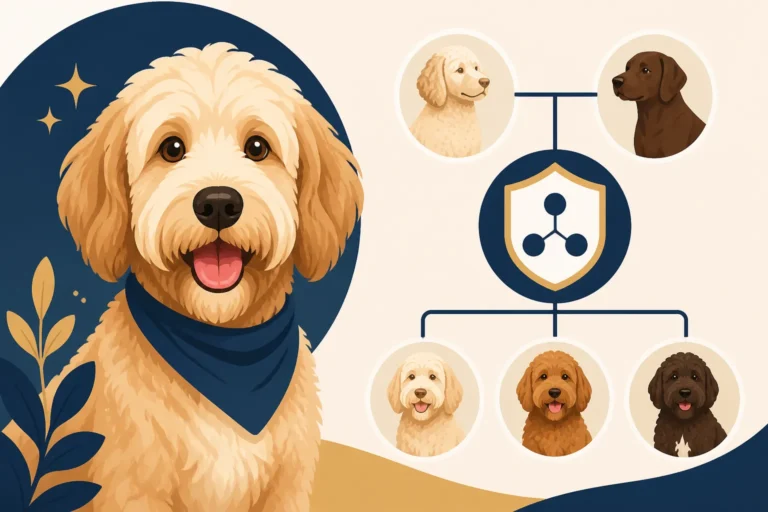
The F1 Labradoodle is the original cross, the one that started it all. When you breed a purebred Labrador Retriever to a purebred Poodle, their puppies are F1 Labradoodles. The "F" simply stands for "filial," meaning offspring, and the "1" means it's the first generation of this specific cross. Each F1 puppy gets 50% of its genetic material from its Labrador parent and 50% from its Poodle parent.
This first cross is often lauded for its "hybrid vigor," a phenomenon where the offspring of two distinct purebred parents can be healthier and more robust than either parent line due to increased genetic diversity. Think of it as mixing two strong gene pools – you often get the best of both worlds. While F1s are known for this vigor, their appearance, particularly their coat, can still be quite variable. Some might lean more towards the Poodle's curly, low-shedding coat, while others might have a wavier or even a more Labrador-like coat that sheds. It’s a bit of a genetic lucky dip, but generally, the health and temperament tend to be quite predictable and delightful. You can learn more about this initial cross in What F1 Means on a Labradoodle.
Moving On: The F1b and Multigen Advantage
So, if F1s are great, why don't breeders stop there? The answer often lies in the desire for greater predictability, especially when it comes to the highly sought-after low-shedding coat. This is where F1b and multigen Labradoodles come into play, offering a more consistent outcome for families, particularly those with allergies.
An F1b Labradoodle is the result of breeding an F1 Labradoodle back to a purebred Poodle. The "b" stands for "backcross." This intentionally increases the Poodle genetics, usually resulting in a puppy that is roughly 75% Poodle and 25% Labrador. Why do this? Because the Poodle side brings in the strong non-shedding, curly coat genes. For families seeking a truly hypoallergenic companion, the F1b often provides a much more reliable low-shedding coat than an F1. While the Poodle influence is stronger, the Labrador's wonderful temperament is generally retained, making for an excellent family dog. Understanding this generation is key, and you can delve deeper into it with What F1b Means on a Labradoodle.
Beyond the F1b, breeders committed to developing predictable Labradoodles move into "multigen" or "multi-generation" breeding. This involves breeding Labradoodle to Labradoodle for several generations, carefully selecting breeding pairs to consolidate desired traits – consistent coat types, stable temperaments, and sound health. The goal is to move past the unpredictability of early crosses and produce puppies that consistently express the traits we associate with the Labradoodle. These are dogs where the genetic contributions of Labrador and Poodle are more thoroughly mixed and expressed in a predictable way across many generations. This careful, selective breeding over time is how the Australian Labradoodle, for example, eventually evolved into a distinct type. For more insight, check out What Multigen Means on a Labradoodle.
The Unpredictable Nature of the F2 Cross
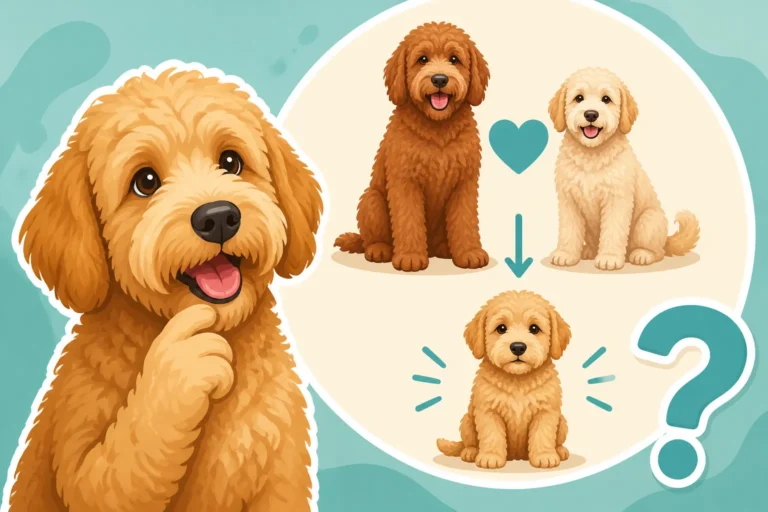
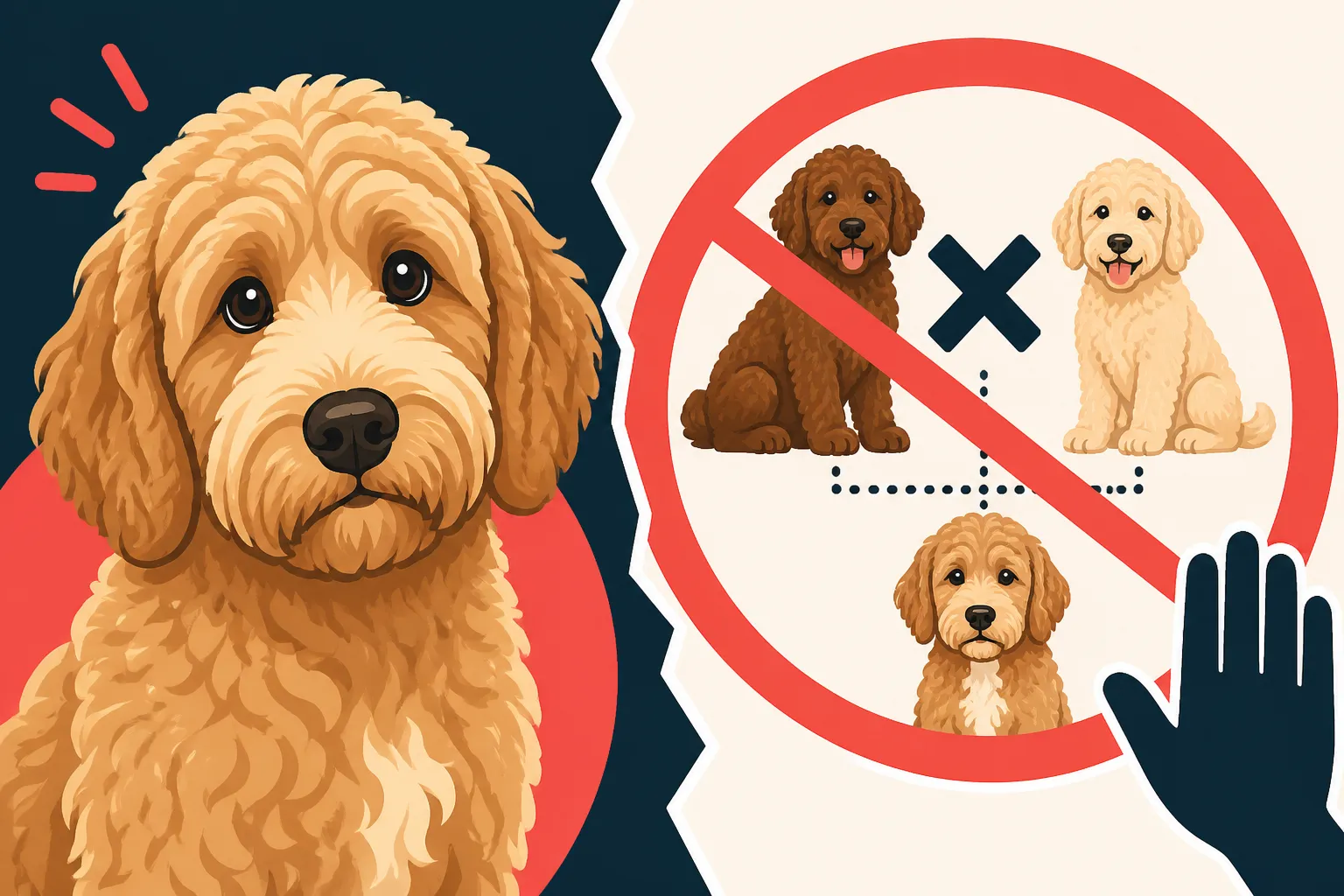
Now that we've set the stage, let's tackle the F2 cross directly. The reason many reputable breeders give the F2 a wide berth comes down to simple genetics: the second filial generation (F2) is notoriously unpredictable. Imagine taking two F1 Labradoodles, each a unique blend of 50% Labrador and 50% Poodle, and breeding them together. What happens? A genetic lottery with a much wider range of possible outcomes than the F1 or even the F1b.
Genetic Lottery: Why F2 Coats Are So Variable
The most common and frustrating issue with F2 Labradoodles is the incredible variability in their coats. When you breed two F1 Labradoodles, each carrying a mix of shedding and non-shedding genes, as well as different coat textures and lengths, their offspring can inherit almost any combination of these traits.
You might end up with a puppy that has a beautiful, wavy, non-shedding fleece coat, just like the ideal Labradoodle. But in the very same litter, you could find a puppy with a flat, coarse coat that sheds just as much as a Labrador, or even one with a wiry, sparse coat. This is often referred to as an "improper coat," meaning it lacks the soft, non-shedding qualities typically desired in a Labradoodle. For families who chose a Labradoodle specifically for its hypoallergenic qualities or its minimal shedding, an F2 puppy with an improper coat can be a huge disappointment and a real struggle. The emotional and practical impact of getting a shedding dog when you expected a non-shedding one can be significant. It’s a genuine gamble, and it's why Whether an F1 Labradoodle's Coat Is a Gamble discusses this unpredictability.
This wide range of coat types makes it very difficult for breeders to guarantee what kind of coat an F2 puppy will develop. Prospective owners often have a specific image in mind – that soft, fluffy, teddy-bear look – and the F2 generation is the one most likely to deviate from that ideal.
Temperament and Health: A Wider Spectrum of Traits
While the coat variability often gets the most attention, the unpredictability of the F2 cross extends to temperament and health as well. In the F1 generation, the combination of two distinct purebred lines often smooths out extreme traits from either parent, leading to that beneficial hybrid vigor. However, when you breed two F1s together, those individual genetic components from the original Labrador and Poodle can re-sort and recombine in myriad ways.
This means an F2 puppy might inherit a stronger concentration of certain Poodle traits, such as higher energy levels, a more reserved nature, or a tendency towards being vocal. Conversely, another F2 puppy from the same litter might strongly inherit Labrador traits, displaying a more boisterous personality, a relentless retrieving drive, or even a higher prey drive. While both Labradors and Poodles are intelligent and trainable dogs, the sheer range of temperamental expressions within an F2 litter can be much wider, making it harder to predict the adult personality of an individual puppy. This inconsistency is a challenge for breeders aiming for a specific "Labradoodle temperament."
Similarly, when it comes to health, the concept of hybrid vigor, while often present in F1 crosses, can become diluted or less predictable in the F2 generation. If both F1 parents carry recessive genes for certain health conditions (even if they don't express them themselves), there's a 25% chance in an F2 cross that a puppy could inherit two copies of that recessive gene and therefore express the condition. This means that genetic issues from both the Labrador and Poodle lines, which might have been somewhat masked in the F1, can resurface more prominently in the F2. This isn't to say F2s are inherently unhealthy, but the predictability of health outcomes becomes more challenging for a breeder to manage. For a broader discussion on hybrid vigor, consider reading Whether Hybrid Vigor Is Real in a Labradoodle.
Breeder Goals and the F2 Dilemma
Reputable Labradoodle breeders aren't just in the business of making cute puppies; they are often dedicated to developing a consistent, healthy, and predictable companion dog. This commitment to consistency is a major driving force behind their decision to avoid the F2 cross.
Striving for Consistency: Why Breeders Avoid F2
For any breeder who is genuinely trying to establish a consistent "type" or eventually a true breed, predictability is paramount. Imagine if every puppy from every litter was a complete surprise – different coats, wildly varying temperaments, unpredictable sizes. It would be impossible to offer buyers a reliable expectation of what they're getting. Breeders invest significant time, effort, and resources into health testing their breeding stock, studying pedigrees, and carefully planning matings. Their reputation hinges on delivering puppies that meet specific standards for health, temperament, and appearance.
The F2 cross, with its inherent genetic unpredictability, directly undermines this goal. If a breeder consistently produces F2 litters, they might find themselves with puppies that shed excessively, have less desirable temperaments, or develop unexpected health issues. This lack of consistency makes it difficult to maintain a good reputation and ensures customer satisfaction. It's a risk most serious breeders simply aren't willing to take, especially when they can achieve greater consistency through F1b or carefully selected multigen pairings. They want families to fall in love with a Labradoodle that truly lives up to the breed's reputation, not one that turns out to be a genetic outlier within the F2 spectrum.
The Australian Labradoodle: A Different Path
The challenges presented by the F2 generation were actually a significant catalyst in the development of the Australian Labradoodle. Early Labradoodle breeders in Australia, faced with the very same unpredictability in coat, temperament, and health from F2 crosses, realized that to move forward and establish a truly consistent breed, they needed a different approach.
Instead of continuing to breed F1 x F1, they began to introduce other breeds, such as the English Cocker Spaniel, American Cocker Spaniel, and Irish Water Spaniel, into their breeding programs over many generations. This careful infusion of additional genetics, followed by meticulous selective breeding, allowed them to stabilize traits and create a more uniform type of dog. The goal was to consolidate those desirable low-shedding coats, gentle temperaments, and robust health into a dog that would "breed true" – meaning offspring would consistently resemble their parents and meet a specific breed standard.
This is a crucial distinction: the Australian Labradoodle is not simply a Labradoodle from Australia. It's a multigen dog developed through a much broader and more controlled breeding program that intentionally moved away from the F2 model. This journey to consistency is a testament to the desire to overcome the unpredictability that the F2 cross represents. If you're curious about this fascinating development, The Multigen Program That Made the Australian Labradoodle offers a deeper dive, and Why an Australian Labradoodle Is Not a Labradoodle clarifies the differences. This dedicated approach to breeding generations beyond F2 is what allows Australian Labradoodle breeders to offer a higher degree of predictability in their puppies.
What This Means for Potential Owners
For you, the prospective Labradoodle owner, understanding the F2 cross isn't just academic; it has practical implications for your search for the perfect furry family member. Being informed empowers you to make better decisions and ask the right questions.
The Risks of Choosing an F2 Labradoodle
The primary risk of choosing an F2 Labradoodle is the unpredictability we've been discussing. While you might see a cute F2 puppy with a lovely wavy coat, there's a higher chance that it could develop a shedding coat as it grows older, especially during the coat change phase. This can be heartbreaking for families with allergies or those who specifically desired a low-shedding dog to minimize household hair. You might also find yourself with a dog whose adult temperament leans more heavily towards one parent breed than the harmonious blend you expected.
Furthermore, without careful health testing, the genetic lottery of an F2 cross could potentially lead to a higher incidence of health issues emerging. Reputable breeders understand these risks and often avoid F2 breeding precisely because they want to offer families a more reliable and satisfying experience. They prioritize the long-term health and happiness of their puppies and their future owners. When a breeder is transparent about the generation of their puppies and why they choose specific crosses, it's a good sign they are committed to responsible breeding. For details on what to look for, check out The Health Tests a Labradoodle Breeder Should Show.
Informed Decisions: Asking the Right Questions
As a prospective owner, your best defense against unexpected outcomes is information and due diligence. Don't be shy about asking breeders about the generation of their puppies. A good breeder will be happy to explain their breeding philosophy and the reasons behind their choices.
Here are some key questions to ask:
- "What generation are your puppies?" This is fundamental. If they are F2, ask for specific details about the parents' coats and health clearances.
- "What are the coat types of the parents, and what can I expect regarding shedding?" Understand that even with F1 parents, F2 offspring can be highly variable.
- "What health clearances do both parents have?" Regardless of generation, both parents should have undergone comprehensive health testing for conditions common to Labradors and Poodles (hips, elbows, eyes, genetic diseases like PRA and EIC).
- "Can I meet the parents (at least the mother) and see how they interact?" Observing the parents can give you insights into the potential temperament of the puppies.
If you decide to proceed with an F2 puppy, be prepared for potential coat variability and ensure you're comfortable with that. While F2s can be wonderful dogs, managing unexpected shedding or coat types might require specific grooming tools and products. Thankfully, resources like Chewy offer a wide array of brushes, shampoos, and other grooming essentials designed for every possible coat type, ensuring you'll find what you need regardless of your Labradoodle's final look. Being prepared for the possibilities means you can embrace your dog for who they are, shedding or not!
The Coat Conundrum in Detail
Let's dive a little deeper into the specific genetic reasons behind the F2 coat unpredictability. It’s fascinating how two seemingly similar dogs can produce such a varied litter, and it all comes down to the genes they carry.
Understanding the Genetics of Labradoodle Coats
The coat type of a Labradoodle is primarily determined by a few key genes, most notably the "furnishings" gene (which gives them their signature facial hair, eyebrows, and beard) and genes that control shedding and curl. Labradors inherently have short, smooth, shedding coats and typically lack furnishings. Poodles, on the other hand, have long, curly, non-shedding coats and possess the furnishings gene.
When you breed an F1 Labradoodle (which is heterozygous for many of these traits, meaning it has one copy of the Labrador gene and one copy of the Poodle gene) to another F1 Labradoodle, the possibilities for genetic recombination are wide open. This is where Mendelian genetics really comes into play, leading to a 25% chance for a puppy to inherit two copies of the "Labrador-like" coat genes. This can result in what's often called an "improper coat" – a flat, shedding coat with little to no furnishings. Essentially, the puppy ends up looking much more like a Labrador, despite both its parents being Labradoodles.
This is the big reason for the F2 coat gamble. You can have a litter where some puppies have the desired fleece or wool coat, some have a less desirable but still manageable wavy coat, and others have a completely flat, shedding coat. It’s a literal genetic roulette. The furnishings gene is particularly important for the classic Labradoodle look and low-shedding qualities, and you can explore its impact further in The Furnishings Gene Behind a Labradoodle's Beard. When this gene isn't properly expressed, you get What an Improper Coat Means on a Labradoodle.
Management and Expectations for Varied Coats
Given the potential for such a wide range of coat types within an F2 litter, managing expectations and preparing for varied grooming needs is essential. The ideal Labradoodle coat is generally considered to be fleece (soft, wavy) or wool (dense, curly), both of which are low-shedding but require significant grooming to prevent matting. However, an F2 puppy could end up with a hair coat, which sheds like a Labrador, or something in between.
Let’s consider the spectrum:
- Hair Coat (Shedding): If your F2 Labradoodle inherits a hair coat, similar to a Labrador, you'll be dealing with shedding. While it won't mat, regular brushing (perhaps daily during peak shedding seasons) will be necessary to manage loose hair around your home. This type of coat might not be ideal for allergy sufferers.
- Fleece Coat (Low-Shedding, Wavy): This is often the most desired coat. It's soft and wavy but still requires consistent line brushing to prevent mats, especially in areas like behind the ears, armpits, and under the collar. Professional grooming every 6-8 weeks is typically needed.
- Wool Coat (Non-Shedding, Curly): Similar to a Poodle's coat, this is dense and curly. It's excellent for allergy sufferers but demands the most intensive grooming. Daily brushing and professional grooming every 4-6 weeks are often necessary to keep it mat-free.
You can learn more about the different coat types in The Three Labradoodle Coats: Hair, Fleece and Wool and the grooming commitments involved in Why a Wool Coated Labradoodle Costs More to Groom. Regardless of what coat type your F2 Labradoodle ends up with, being prepared with the right tools is key. From slicker brushes and detangling sprays to professional grooming clippers, all these items can be found at retailers like Chewy, ensuring you're ready for whatever grooming challenges (or lack thereof) your dog's unique coat presents. It’s all about meeting your dog’s specific needs once you know what they are.
| Labradoodle Generation | Parentage | Coat Predictability | Temperament Predictability | Health Predictability | Best For Allergy Sufferers | Breeder Preference |
|---|---|---|---|---|---|---|
| F1 | Purebred Labrador x Purebred Poodle | Moderate to Variable | Generally Good, Hybrid Vigor | Generally Good, Hybrid Vigor | Sometimes, but Variable | Foundation for others |
| F1b | F1 Labradoodle x Purebred Poodle | High (more Poodle-like) | Generally Good | Generally Good | Often Yes | Preferred for consistency |
| F2 | F1 Labradoodle x F1 Labradoodle | Highly Variable (Genetic Lottery) | Highly Variable | Variable | Unpredictable | Generally Avoided |
| Multigen | Labradoodle x Labradoodle (multiple generations) | High (with careful selection) | High (with careful selection) | High (with careful selection) | Often Yes | Preferred for consistency |
In conclusion, while the F2 Labradoodle isn't inherently "bad," its genetic unpredictability, especially concerning coat type, makes it less desirable for most reputable breeders. These breeders are striving for consistency in appearance, temperament, and health, and the F2 cross simply doesn't offer that level of reliability. By understanding the genetics behind these generations, you, as a prospective owner, can make more informed decisions, ask the right questions, and ultimately find a Labradoodle that truly fits your family's expectations and needs. Whether you choose an F1, F1b, or multigen, a well-researched decision based on breeder transparency will lead to a happier, healthier companion for years to come.
Disclaimer
This article is for general informational purposes only and does not constitute professional advice. Laws, prices and regulations vary by location and change over time. Consult a qualified professional for guidance on your specific situation.