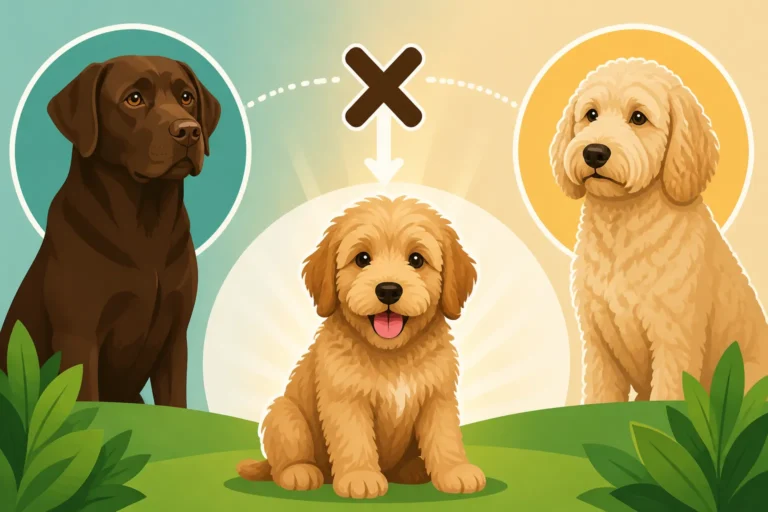
The Cocker Spaniel Infusion in the Australian Labradoodle
When you first fall in love with the idea of a Labradoodle, you might imagine a dog with a specific look, temperament, and low-shedding coat. But the reality for many early owners of these delightful crossbreeds was often a bit of a genetic lottery, leading to inconsistencies that could be frustrating, especially for those seeking an allergy-friendly companion. This guide will walk you through how the Australian Labradoodle evolved, specifically examining the crucial role the Cocker Spaniel played in shaping the predictable, beloved breed we know today.
The Journey to a Consistent Labradoodle Type
The original Labradoodle, a simple cross between a Labrador Retriever and a Standard Poodle, was initially bred with a very specific goal: to create a guide dog for a vision-impaired woman whose husband had allergies. This first generation, known as F1, often showed a wide range of traits, which, while charming, didn't always meet the criteria for consistency that serious breeders and potential owners desired. This variability was the driving force behind the development of the Australian Labradoodle.
The Early Labradoodle's Inconsistencies
Imagine bringing home an F1 Labradoodle puppy, hoping for that fluffy, low-shedding "doodle" coat, only to find as it matures that its coat is more like a Labrador's, shedding hair all over your furniture. Or perhaps you were looking for a dog with a specific calm demeanor for your family, but your puppy inherited a higher energy level than anticipated. These scenarios were not uncommon in the early days. The simple F1 cross didn't guarantee the traits enthusiasts were hoping for, leading to a spectrum of coat types, temperaments, and even sizes that varied wildly from one litter to the next, and sometimes even within the same litter. This unpredictability was a significant challenge for breeders trying to establish a consistent breed type.
Many owners can tell you stories about their early Labradoodles, how they loved them dearly, but maybe they shed a lot more than expected or needed a different kind of grooming than the "hypoallergenic" promise had led them to believe. It was a learning curve for everyone involved. For a truly deep dive into the foundational cross, you might want to read The 1989 Cross That Made the First Labradoodle.
The Quest for a More Predictable Companion
Breeders in Australia, notably Rutland Manor and Tegan Park, recognized these inconsistencies and saw the potential for something more. They weren't content with a genetic toss-up; they wanted a dog that consistently displayed the desired traits: an allergy-friendly coat, a stable temperament, intelligence, and good health. Their vision was to move beyond the "hybrid" label and develop a true breed, one that could be reliably reproduced with specific characteristics. This meant moving away from the simple F1 or F1b crosses and embarking on a multi-generational breeding program. To achieve this, they realized that introducing carefully selected other breeds into the mix could help 'set' certain traits, providing the foundation for the stable, predictable Australian Labradoodle we see today. It was a meticulous and often lengthy process of selective breeding and careful infusion.
This pursuit of predictability wasn't just about aesthetics; it was about ensuring the dogs could reliably serve as assistance animals, fulfill their role as family companions, and be more manageable for owners who were seeking a particular type of dog. The goal was to eliminate the guesswork and provide families with a dog they could truly count on to fit their lifestyle.
Introducing New Blood: The Cocker Spaniel's Role
To achieve the desired consistency and refinement in the Labradoodle, particularly concerning coat quality, size, and temperament, the Australian breeders began to introduce other breeds into their lines. The Cocker Spaniel was one of these carefully chosen "infusions." It wasn't a random addition; rather, it was a strategic move aimed at enhancing specific characteristics that were sometimes lacking or inconsistent in the earlier Labradoodle generations. The idea was to bring in complementary genes that would help stabilize the desired traits more quickly and effectively.
Desired Traits from the Cocker Spaniel
The Cocker Spaniel, both American and English varieties, brought several valuable characteristics to the developing Australian Labradoodle. Primarily, breeders were looking for the Cocker Spaniel's wonderful temperament: cheerful, eager to please, intelligent, and generally quite biddable. These traits were highly desirable for a companion or assistance dog. They are known for being affectionate and good with children, which aligned perfectly with the Labradoodle's evolving role as a family dog. Furthermore, Cocker Spaniels often have a softer, more manageable coat texture than some Poodles or Labradors, which could contribute to the low-shedding, fleece or wool coats that breeders were striving for.
The Cocker Spaniel's moderate size was also beneficial. While Standard Poodles and Labradors are relatively large dogs, the inclusion of a smaller breed like the Cocker Spaniel helped in establishing the various size categories that Australian Labradoodles are known for today, particularly influencing the development of the "medium" and "miniature" lines with more consistency. This meant breeders could more reliably produce dogs within certain weight and height ranges, which is a huge benefit for families looking for a specific size of dog to fit their living situation.
Addressing Health and Temperament Gaps
Beyond just looks and initial temperament, the infusion of Cocker Spaniel lines also played a role in broadening the genetic diversity of the emerging Australian Labradoodle. While the original intent was often focused on coat and temperament, genetic health is always a concern in any breeding program. By introducing new bloodlines, breeders hoped to reduce the potential for inherited health issues that might be more prevalent in either purebred Poodle or Labrador lines due to limited gene pools. Of course, this is a delicate balance, as any new breed introduced can also bring its own set of health considerations. Whether Hybrid Vigor Is Real in a Labradoodle is a complex topic that breeders constantly grapple with.
Temperamentally, Cocker Spaniels are generally known for being robust and joyful. This contributed to a more consistently outgoing and adaptable nature in the Australian Labradoodle, aiming to smooth out any potential shyness or stubbornness that might occasionally crop up from the Poodle or Labrador side, respectively. The goal was a dog that was confident, friendly, and easy to train, qualities that make a dog an exceptional family member or a successful service animal. The carefully selected Cocker Spaniel additions helped cement these desirable behavioral traits across generations, moving the Australian Labradoodle closer to a predictable, ideal companion.
What the Cocker Spaniel Brought to the Australian Labradoodle
The deliberate decision to incorporate Cocker Spaniel genetics into the Australian Labradoodle's foundation lines was a game-changer, profoundly influencing the breed's development. It wasn't merely an arbitrary mixing; rather, it was a precise strategy to "lock in" certain characteristics that breeders felt were essential for the ultimate vision of the Australian Labradoodle. The impacts are visible in the physical traits and temperaments that set these dogs apart today.
Refining the Coat and Reducing Shedding
One of the primary motivations for introducing the Cocker Spaniel was to refine the coat. Early Labradoodles often had coats that were inconsistent – some shed, some were coarse, and others simply didn't have the desired low-allergen qualities. The Cocker Spaniel, with its typically soft, wavy, or curly coat, contributed genes that helped establish the signature fleece and wool coats of the Australian Labradoodle. These coats are known for being much more consistent in texture, less prone to heavy shedding, and therefore, more allergy-friendly.
This infusion helped ensure that more puppies in a litter would possess the soft, flowing fleece or the dense, spiraling wool coat that owners so often seek. It greatly reduced the occurrence of the "hair coat" or "improper coat" which resembles a Labrador's coat and sheds significantly. This consistency in coat type is a huge advantage for families with allergies or those simply looking to minimize pet hair in their homes. Of course, even with these efforts, proper grooming is still paramount. For specialized brushes and grooming tools perfect for these unique coats, checking out resources like Chewy can be incredibly helpful to keep that fleece or wool in prime condition. Understanding the intricacies of different coat types is crucial, and you can learn more about The Three Labradoodle Coats: Hair, Fleece and Wool to further your knowledge.
Influencing Size and Structure
The addition of the Cocker Spaniel also played a role in the careful management of size and overall structure. While the Standard Poodle and Labrador are larger dogs, the Cocker Spaniel’s smaller frame helped breeders to reliably produce Australian Labradoodles in a range of sizes, including the medium and miniature categories. This meant that families living in smaller homes or those simply preferring a more compact dog could find an Australian Labradoodle that fit their lifestyle, without compromising on the desired temperament or coat.
Furthermore, the Cocker Spaniel's robust, well-proportioned structure contributed to the overall health and athleticism of the Australian Labradoodle. Breeders aimed for a dog with good bone structure, balanced proportions, and healthy joints, all of which are vital for a dog meant to be an active, long-lived companion. The careful selection of Cocker Spaniel lines with sound structure helped to reinforce these physical attributes within the growing Australian Labradoodle gene pool. It's a testament to the thoughtful planning that went into every aspect of this breed's development.
Adding to the Temperament Mosaic
Perhaps one of the most significant contributions of the Cocker Spaniel to the Australian Labradoodle was in solidifying its renowned temperament. While Labradors contribute friendliness and a love for retrieving, and Poodles offer intelligence and grace, the Cocker Spaniel brought an extra layer of cheerful enthusiasm, gentleness, and eager-to-please nature. These traits are invaluable for a family pet and crucial for assistance dogs, where calm focus and trainability are paramount.
The combination of these influences resulted in a dog that is typically outgoing, highly intelligent, easy to train, and profoundly loyal. They are often described as having an intuitive sense, making them excellent therapy or assistance animals. This blend of characteristics ensures that the Australian Labradoodle is not just a pretty face with a low-shedding coat, but also a truly delightful and adaptable companion. It's this careful combination of traits, meticulously cultivated over generations, that makes the Australian Labradoodle such a sought-after breed for many households. The importance of temperament cannot be overstated when considering The Temperament a Labradoodle Gets From Each Parent.
Distinguishing the Australian Labradoodle from the Original Labradoodle
The historical infusion of breeds like the Cocker Spaniel is a key factor in understanding why the term "Australian Labradoodle" refers to something quite distinct from a simple "Labradoodle." Many people use the terms interchangeably, which can lead to confusion and unmet expectations. The difference lies not just in geography, but in the intentional multi-generational breeding program that defines the Australian variety. It’s a divergence from a casual crossbreed to a more established, albeit still developing, breed type.
The Multi-Generational Breeding Philosophy
The defining characteristic of the Australian Labradoodle is its multi-generational breeding philosophy. Unlike the F1 Labradoodle (first cross of Poodle x Labrador) or F1b (F1 Labradoodle x Poodle/Labrador), the Australian Labradoodle descends from multiple generations of planned pairings, often incorporating the Cocker Spaniel and sometimes other breeds like the Irish Water Spaniel to achieve specific goals. This continuous selective breeding, generation after generation, is aimed at fixing desired traits and reducing variability.
This means that an Australian Labradoodle breeder isn't just breeding two different purebreds together; they are breeding Australian Labradoodle to Australian Labradoodle, with a known lineage that includes these foundational breeds. This extensive breeding history and careful selection process means that when you acquire an Australian Labradoodle puppy, you have a much higher likelihood of knowing what traits you can expect in terms of coat, size, and temperament. This commitment to multi-generational breeding is a significant part of Why an Australian Labradoodle Is Not a Labradoodle.
Predictability Versus Genetic Lottery
For potential owners, the distinction between an Australian Labradoodle and an F1 or F1b Labradoodle often boils down to predictability. With a simple F1 cross, the outcome can be a true genetic lottery. You might get a dog that sheds heavily, has a sparse coat, or displays a temperament that's not quite what you expected. There's a wide range of possibilities, reflecting the full genetic diversity of both parent breeds coming together for the first time.
| Feature | Original F1 Labradoodle (Labrador x Poodle) | Australian Labradoodle (Multi-generational) |
|---|---|---|
| Parentage | Direct cross of Labrador Retriever and Poodle | Multi-generational, includes Poodle, Labrador Retriever, and Cocker Spaniel (and sometimes Irish Water Spaniel) |
| Coat Consistency | Highly variable (hair, fleece, wool possible) | More consistent (fleece or wool coats are standard) |
| Shedding | Can range from low to moderate/heavy | Typically low-shedding |
| Temperament | Can be variable; mix of parent traits | More consistent, generally outgoing, intelligent, eager-to-please |
| Size Range | Generally standard, can be unpredictable | More predictable; defined standard, medium, and miniature sizes |
| Breed Status | Hybrid/Designer Dog | Attempting to establish as a pure breed with associations (ALAA, WALA) |
| Health Testing | Dependent on individual breeder | Generally comprehensive, with lineage tracking |
The Australian Labradoodle, by contrast, offers a much higher degree of predictability due to generations of careful selection. The introduction of the Cocker Spaniel and other breeds, along with stringent breeding practices, has allowed breeders to stabilize traits. This means that if you're looking for a dog with a non-shedding fleece coat and a specific calm disposition, you are much more likely to find it consistently in an Australian Labradoodle. This consistency is a huge relief for families who have very specific needs or preferences for their canine companion. Reputable breeders will often provide detailed information about their breeding programs and the health testing done on parent dogs, which further enhances predictability. You can delve into Whether an Australian Labradoodle Is More Predictable for more on this.
Implications for Today's Australian Labradoodle Owners
Understanding the deliberate infusion of breeds like the Cocker Spaniel into the Australian Labradoodle's lineage isn't just an interesting historical fact; it has tangible implications for current and prospective owners. This unique genetic background influences everything from their appearance and behavior to their health and grooming needs. Knowing this heritage helps you appreciate the breed's qualities and prepare for their specific care requirements.
Understanding Your Dog's Unique Heritage
Owning an Australian Labradoodle means embracing a dog whose lineage is more complex than a simple two-breed cross. Your dog carries the traits not just of the Labrador and Poodle, but also of the Cocker Spaniel, and potentially other breeds. This rich genetic tapestry contributes to the well-rounded nature and often appealing qualities that Australian Labradoodles are known for. It's why they tend to be so consistently friendly, intelligent, and possess those sought-after low-shedding coats.
This unique heritage also means that your dog might display a wider array of behavioral nuances or physical traits. For instance, some may have a stronger retrieving drive from their Labrador side, while others might exhibit the Poodle's penchant for problem-solving, or the cheerful, companionable nature often seen in Cocker Spaniels. Understanding this background can help you better appreciate your dog's individual personality and tailor your training and enrichment activities to suit their natural inclinations. For further reading, check out The Four Breeds Inside an Australian Labradoodle.
Caring for a Cocker-Influenced Coat
The Cocker Spaniel's genetic contribution has largely solidified the Australian Labradoodle's coat to the desirable fleece or wool types, which are low-shedding and generally considered allergy-friendly. However, "low-shedding" does not mean "no maintenance." These coats are prone to matting if not properly cared for. The soft, sometimes dense texture requires regular brushing, often daily, especially if your dog has a longer coat or is going through the "coat change" phase as a puppy.
This can be a significant commitment, and many owners underestimate the time and effort involved. You'll need high-quality grooming tools – slicker brushes, combs, and perhaps a dematting rake – to brush all the way down to the skin, preventing mats from forming deep within the coat. Regular professional grooming every 6-8 weeks is also usually essential to keep the coat manageable and healthy. Failing to groom adequately can lead to painful matting, which may require shaving the dog down, potentially altering the coat's texture as it grows back. Finding the right grooming products and tools is crucial, and online retailers like Chewy often have a vast selection, from shampoos designed for curly coats to specific brushes. To avoid common pitfalls, it’s worth reviewing Brushing a Labradoodle to the Skin, Not the Surface.
Navigating Potential Health Considerations
While the multi-generational breeding program, including the Cocker Spaniel infusion, was partly aimed at broadening the gene pool and potentially reducing some inherited health issues, no breed is entirely free from health concerns. Australian Labradoodles still inherit potential predispositions from all their foundational breeds. This means owners should be aware of conditions commonly seen in Labradors (like hip and elbow dysplasia, Hips and Elbows in a Sixty Pound Labradoodle), Poodles (such as Addison's Disease a Labradoodle Inherits From the Poodle and certain eye conditions), and Cocker Spaniels (like ear infections and certain eye issues).
Reputable Australian Labradoodle breeders conduct extensive health testing on their breeding dogs to minimize the risk of passing on these conditions. As an owner, it’s important to familiarize yourself with these potential issues, maintain a good relationship with your veterinarian, and schedule regular check-ups. Being proactive about their health, providing a balanced diet (Chewy offers many premium dog food brands catering to specific breed needs), and ensuring they get appropriate exercise can contribute significantly to their long and healthy life. Always ask a breeder about the health clearances of the parent dogs and be prepared for potential vet bills, just as you would with any beloved canine companion.
Disclaimer
This article is for general informational purposes only and does not constitute professional advice. Laws, prices and regulations vary by location and change over time. Consult a qualified professional for guidance on your specific situation.