Why No Kennel Club Registers the Labradoodle
It can be incredibly confusing and even a little frustrating when you’re looking into getting a Labradoodle, doing your research, and then you stumble upon the fact that this beloved, well-known companion isn't actually recognized by major kennel clubs. You might wonder if it means they're not "real dogs" or if there's something inherently wrong with them. This guide will delve into the nitty-gritty of why your charming Labradoodle, or the one you dream of bringing home, doesn't carry a kennel club stamp of approval, breaking down the historical, genetic, and cultural reasons behind this often-misunderstood status.
Understanding Kennel Club Recognition: What It Means for a Dog Breed
When you hear about a "recognized" dog breed, it often conjures images of majestic show dogs prancing around a ring or a pedigree certificate with a long lineage. But what does that recognition truly signify, and why is it such a benchmark in the canine world? It's not just about winning ribbons; it's about a deeply rooted system that aims to preserve specific traits and histories.
The Purpose of a Kennel Club and Its Breed Standards
At its heart, a kennel club exists to register purebred dogs, promote responsible breeding, and preserve the integrity of specific breeds. Think of organizations like the American Kennel Club (AKC) in the United States or The Kennel Club (KC) in the UK. They establish detailed "breed standards" – essentially, a blueprint describing the ideal characteristics of a particular breed. This standard covers everything from physical appearance, like coat type, color, size, and bone structure, to temperament and even gait. Breeders of recognized breeds strive to produce dogs that conform as closely as possible to this ideal, ensuring a predictable outcome in terms of looks, health, and behavior. This predictability is a cornerstone of purebred dog ownership. Whether the AKC Recognizes the Labradoodle is a common question, and understanding these foundational principles helps clarify the answer.
The Rigorous Path to Full Breed Recognition
Becoming a fully recognized breed by a major kennel club is far from an overnight process. It's a journey that often spans decades, sometimes even centuries, and requires immense dedication from a core group of breeders. First, a new breed typically begins as a "foundation stock" or a "new breed in development" program. Breeders must consistently produce dogs that meet a developing standard, proving that the traits are reliably passed down through generations. This involves meticulous record-keeping, health testing, and usually a provisional period where the breed can compete in limited events before gaining full recognition. The goal is to demonstrate genetic stability, health, and a distinct identity that sets the new breed apart from all others.
Benefits and Drawbacks of Kennel Club Endorsement
For breeds that achieve it, kennel club recognition comes with significant advantages. It provides a uniform standard, helping to guide ethical breeding practices and ensure predictability for potential owners. Owners of recognized breeds can participate in a vast array of sanctioned events, from conformation shows to obedience trials, which further validates and promotes the breed. However, there are also potential drawbacks. The focus on specific physical traits for show purposes can sometimes inadvertently lead to exaggerated features or health issues if not carefully managed. Furthermore, the stringent requirements can make it difficult for newer, less established crossbreeds, like the Labradoodle, to ever meet the criteria. Whether a Labradoodle Has a Breed Standard is one of the central issues, as the informal nature of its development means there isn't one universal, agreed-upon definition.
The Labradoodle's Unique Genesis: A Deliberate Hybrid, Not a Purebred Creation
To truly understand why kennel clubs haven't embraced the Labradoodle, we need to go back to its beginnings. Unlike many purebreds that evolved over centuries or were developed through selective breeding for specific tasks like hunting or herding, the Labradoodle was a very intentional, relatively recent cross.
Wally Conron's Vision for an Allergy-Friendly Guide Dog
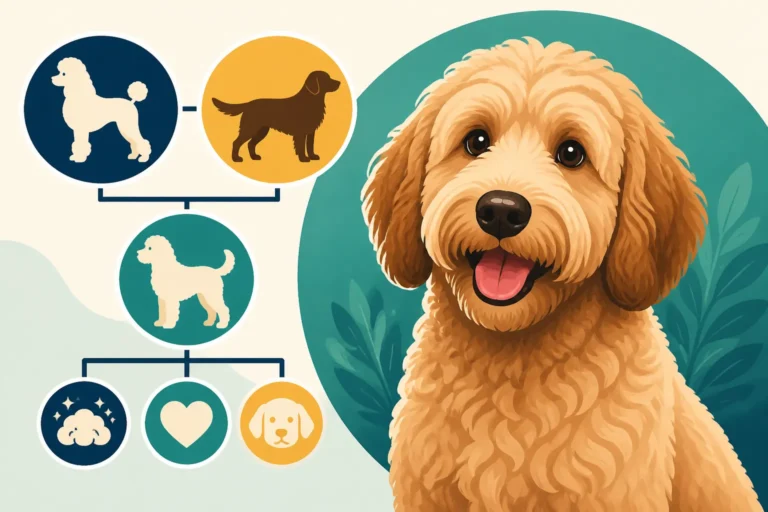
The story of the Labradoodle famously begins in 1989 with Wally Conron, the breeding manager for the Royal Guide Dogs Association of Australia. A woman in Hawaii, who was blind and whose husband was allergic to dogs, needed a guide dog. Traditional Labrador Retrievers, while excellent guide dogs, shed and often triggered allergies. Conron's innovative idea was to cross a Standard Poodle, known for its intelligence, trainability, and low-shedding, hypoallergenic-friendly coat, with a Labrador Retriever, celebrated for its gentle temperament, strong retrieving drive, and aptitude for guide work. He hoped to combine the best traits of both breeds into one ideal assistance dog. This initial cross, designed for a very specific, compassionate purpose, was the genesis of the Labradoodle. The 1989 Cross That Made the First Labradoodle was a turning point, creating a dog that would capture the public's imagination.
The Initial Cross: Labrador Retriever Meets Standard Poodle
Conron's groundbreaking experiment resulted in a litter of puppies that were indeed promising. One puppy, Sultan, was ultimately sent to Hawaii and proved to be an excellent guide dog for the client. The first-generation (F1) Labradoodles showed a mix of traits from both parents, and while some did inherit the desired low-shedding coat, others still shed like Labradors. This variability is a key characteristic of first-generation crosses and is a major hurdle for kennel club recognition. You can imagine the excitement, though, when people saw these charming, intelligent dogs. They had the friendly appeal of a Labrador but the often more manageable coat of a Poodle. This blend, however, wasn't yet stable enough to be considered a true "breed" in the traditional sense.
From Purpose-Bred to Popular Crossbreed
While Conron's initial intent was noble and highly specific, the public quickly caught on to the charm and perceived benefits of the Labradoodle. What started as a focused breeding program for assistance dogs soon exploded into a popular demand for "doodle" dogs as family pets. Suddenly, everyone wanted an allergy-friendly dog with a great temperament. Wally Conron and the Labradoodle He Regrets is a poignant part of the story, as he later expressed regret over the uncontrolled explosion of the cross, fearing it led to irresponsible breeding practices and dogs with unpredictable health and temperament. The sheer speed and scale of the Labradoodle's rise in popularity meant there was little time or coordinated effort to establish a consistent breeding program that would satisfy kennel club requirements for generational predictability and standardization.
The Elusive Labradoodle Breed Standard: Why Consistency Remains a Challenge
One of the most significant barriers to kennel club recognition for the Labradoodle is the fundamental absence of a universally accepted, consistently applied breed standard. Without this, how can any organization regulate and verify what constitutes a "true" Labradoodle?
Variability in Appearance and Coat Types
Walk through a park and you'll see Labradoodles of all shapes, sizes, and coat textures. This incredible variability is charming to many owners, but it's exactly what makes kennel club recognition difficult. You might see a Labradoodle that looks almost entirely like a Labrador, another that strongly resembles a Poodle, and others that are a truly even blend. Their coats can range dramatically, from the low-shedding, wavy "fleece" coat that many seek, to a curlier "wool" coat, or even a straighter "hair" coat that sheds quite a bit. The Three Labradoodle Coats: Hair, Fleece and Wool are distinct and often require different grooming regimens. This lack of uniformity in physical traits – head shape, ear set, tail carriage, leg length, and size – means there's no single ideal to which all breeders are aiming. A recognized breed, in contrast, strives for consistency in all these aspects across its population.
Diverse Temperaments and Energy Levels
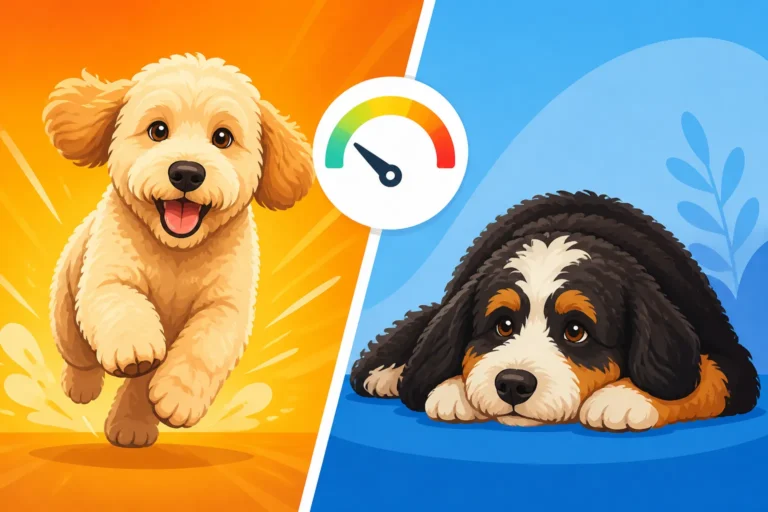
Beyond physical appearance, Labradoodles also exhibit a wide range of temperaments and energy levels, reflecting the diverse genetic contributions of their parent breeds. While many are indeed the friendly, intelligent, and energetic companions people expect, others might inherit more of the independent, sensitive nature of some Poodles, or the boisterous, high-drive energy of certain Labrador lines. This isn't to say one temperament is "bad," but rather that the lack of a predictable, consistent temperament profile across the entire Labradoodle population is another hurdle for official recognition. A breed standard outlines the expected temperament, ensuring that the dog's character is as predictable as its looks. Without this, buyers can't be sure what they're getting, and kennel clubs can't standardize it. The Temperament a Labradoodle Gets From Each Parent is a complex mix, and predicting which traits will dominate can be a roll of the genetic dice, especially in earlier generations.
The Australian Labradoodle's Attempt at Standardization
It's important to distinguish between the "Labradoodle" (a first-generation or early-generation cross between a Labrador and a Poodle) and the "Australian Labradoodle." The latter is a different story entirely. Australian Labradoodle breeders made a concerted effort to create a consistent breed by infusing other breeds (like the Irish Water Spaniel, Cocker Spaniel, and English Cocker Spaniel) into the mix and then breeding them together for many generations. Their goal was to produce a dog that "breeds true" – meaning puppies consistently exhibit the same traits, generation after generation. This group developed its own rigorous standards for appearance, health, and temperament, and established its own registries. While they have achieved a far greater degree of consistency than the original Labradoodle, this journey has essentially created a new breed, separate from the initial Labrador-Poodle cross. Why an Australian Labradoodle Is Not a Labradoodle is a critical distinction in understanding the nuances of breed development. They are, in essence, trying to forge their own path to recognition, even if it's outside traditional kennel clubs.
Generational Breeding: A Hurdle for Kennel Club Acceptance
The way Labradoodles are bred, specifically the concept of "generations," presents a significant challenge for traditional kennel club recognition. Recognized breeds are established through generations of breeding within the same breed, aiming for genetic stability and predictability. Labradoodles, by their very nature, often deviate from this.
Understanding F1, F1b, F2, and Multigenerational Crosses
If you've ever looked into Labradoodle puppies, you've undoubtedly seen terms like F1, F1b, F2, and Multigen. These describe the "generation" of the cross:
- F1: A first-generation cross, meaning a purebred Labrador Retriever bred to a purebred Poodle. This is the original Labradoodle.
- F1b: An F1 Labradoodle bred back to a purebred Poodle (or sometimes a Labrador). The 'b' stands for backcross. This often aims to increase the Poodle's low-shedding qualities.
- F2: An F1 Labradoodle bred to another F1 Labradoodle.
- Multigenerational (Multigen): Dogs that are three or more generations removed from the original purebred parents, meaning Labradoodle bred to Labradoodle for several generations. This is what Australian Labradoodle breeders typically focus on.
Each generation introduces varying degrees of genetic mixing and, consequently, varying degrees of predictability. What F1 Means on a Labradoodle is the starting point, the original hybrid that unleashed the phenomenon.
The Unpredictable Nature of Early Generations
The main issue for kennel clubs lies in the unpredictable nature of these early generations, particularly F1 and F2 crosses. When you cross two different purebreds, the genetic lottery is very much in play. Puppies in the same litter can look wildly different, have vastly different coats (some shedding, some not), and exhibit a broad spectrum of temperaments. An F1 Labradoodle might inherit the best of both worlds, or it might inherit undesirable traits from both. An F2 cross, where two F1s are bred, can be even more unpredictable because you're essentially mixing two already mixed genetic pools. This makes it impossible to define a consistent breed standard or guarantee specific traits for future generations, which is precisely what kennel clubs require.
Why True-Breeding is Essential for Recognition
For a dog to be recognized as a true breed, it must "breed true." This means that when two dogs of that breed are mated, their offspring consistently exhibit the defining characteristics of that breed, generation after generation. Think of a Golden Retriever: when two Golden Retrievers breed, you expect Golden Retriever puppies with predictable looks, coat, and temperament. With early-generation Labradoodles, this simply isn't the case. While some multigenerational Labradoodle lines, particularly those of the Australian Labradoodle variety, are striving for this "breeding true" characteristic, they are still a relatively young endeavor compared to centuries-old recognized breeds. What Multigen Means on a Labradoodle is a step in the direction of consistency, but it's a long road.
Prioritizing Function Over Form: The Labradoodle's Focus
One of the beautiful ironies of the Labradoodle's story is that its very creation prioritized function and specific needs over the strict adherence to conformation that traditional kennel clubs value. This inherent difference in focus has naturally steered the Labradoodle away from the path of official recognition.
Emphasizing Health Testing and Temperament
Reputable Labradoodle breeders, understanding the genetic background of their dogs, often place a huge emphasis on comprehensive health testing and temperament evaluation. They diligently screen parent dogs for common genetic conditions found in both Labradors and Poodles, such as hip and elbow dysplasia, eye conditions like PRA, and certain heart conditions. Their goal is to produce healthy, well-adjusted puppies that make excellent family companions or assistance dogs, not necessarily dogs that conform to a strict visual standard. This focus on wellness and disposition over arbitrary appearance is admirable, but it doesn't align with the conformation-centric approach of many kennel clubs. For owners, ensuring Whether Health Tested Parents Add Years to a Labradoodle is far more important than a dog's pedigree certificate.
The Demand for "Doodle" Traits in Family Pets
The immense popularity of the Labradoodle, and indeed other "doodle" crosses, stems directly from a consumer demand for a specific set of traits: often low-shedding coats, friendly temperaments, intelligence, and a generally good-natured disposition suitable for family life. People are less concerned with their dog looking exactly like every other Labradoodle and more concerned with getting a healthy companion that won't trigger allergies and will be a joy to live with. This market-driven demand is powerful and has shaped how Labradoodles are bred. Instead of breeders trying to fit an existing mold, they are responding to what dog owners want in their homes. You can even find specialized grooming tools for managing these coats on sites like Chewy, a testament to the unique needs and popularity of these dogs.
Breeder Goals Diverging from Traditional Show Ring Ideals
For many purebred dog fanciers, the ultimate goal of breeding is often to produce dogs that excel in the conformation show ring, adhering meticulously to the breed standard. This means a focus on aesthetics, structure, and movement. Labradoodle breeders, on the other hand, generally have different objectives. Their primary goals typically revolve around combining the positive traits of the Labrador and Poodle: intelligence, trainability, a friendly nature, and a hypoallergenic-friendly coat. While they still aim for attractive dogs, the exact dimensions of a skull or the precise angle of a stifle joint are often secondary to overall health, temperament, and coat quality. This divergence in breeding philosophy makes it difficult for Labradoodles to fit into the traditional kennel club model. The Health Tests a Labradoodle Breeder Should Show are far more telling of a reputable breeder than any potential future show wins.
Independent Registries and Associations: Filling the Void
Just because major kennel clubs don't recognize the Labradoodle doesn't mean there's no organization or structure around them. In fact, a number of independent registries and associations have emerged to support Labradoodle breeders and owners, attempting to bring some order and accountability to the growing breed.
The Role of Organizations Like ALAA and WALA
Given the lack of traditional kennel club recognition, dedicated Labradoodle enthusiasts and breeders have created their own organizations. Two prominent examples are the Australian Labradoodle Association of America (ALAA) and the Worldwide Australian Labradoodle Association (WALA). These groups have stepped up to provide a framework for ethical breeding, health testing guidelines, and even their own evolving breed standards for the Australian Labradoodle. They offer pedigrees, track lineage, and require their member breeders to adhere to specific health testing protocols and codes of ethics. While not official kennel club recognition, these associations play a crucial role in promoting responsible breeding practices and offering a degree of assurance to prospective puppy buyers. What ALAA Membership Requires of a Labradoodle Breeder is a great example of self-regulation within the Labradoodle community.
Establishing Guidelines Without Full Breed Status
These independent registries operate outside the purview of the AKC or The Kennel Club, but they establish their own robust guidelines. They define what they consider an "Australian Labradoodle" (which, as discussed, is a more developed cross than the initial Labradoodle), often specifying acceptable coat types, sizes, and temperaments. They emphasize genetic health testing and responsible breeding practices, often requiring proof of clearances for conditions like hip and elbow dysplasia, progressive retinal atrophy (PRA), and Von Willebrand's disease. By creating their own standards and monitoring adherence, these organizations are essentially acting as de facto kennel clubs for the Labradoodle community, providing structure where traditional organizations do not.
How These Registries Benefit Owners and Breeders
For breeders, membership in an organization like ALAA or WALA can provide credibility and a network for sharing best practices and genetic information. It helps them differentiate themselves from less scrupulous breeders and demonstrates a commitment to the health and integrity of their lines. For prospective owners, these registries offer a valuable resource. They can research registered breeders, verify health testing, and understand the specific standards that a particular breeder is working towards. This provides a level of transparency and assurance that might otherwise be missing in an unregulated market. When buying a puppy, it's always wise to ask about the breeder's affiliation with such groups, alongside other critical questions about the puppy’s parents. What WALA Does for Labradoodle Pedigrees highlights how these organizations fill a crucial need for documentation and lineage tracking. You can often find member breeders listing their available puppies on their websites, detailing the health clearances and generational information, sometimes even providing recommendations for reputable online pet supply retailers like Chewy.
The Ongoing Debate: Does Official Recognition Truly Matter for the Labradoodle?
The question of kennel club recognition for the Labradoodle isn't just a technicality; it sparks a lively debate within the dog community. For some, it's a critical missing piece; for others, it's irrelevant to the breed's success and charm.
Arguments For and Against Kennel Club Status
Arguments For Recognition:
- Standardization and Predictability: Proponents argue that official recognition would bring much-needed standardization to the Labradoodle, leading to more predictable traits in terms of appearance, coat, and temperament.
- Health and Welfare: A regulated system could enforce rigorous health testing requirements across the board, potentially reducing the incidence of genetic diseases. Whether Recognition Would Help Labradoodle Health is a valid concern for many.
- Legitimacy: Official status would lend legitimacy to the breed, elevating its standing in the wider canine world and possibly reducing the stigma associated with "designer dogs."
- Show Opportunities: Recognition would open doors for Labradoodles to compete in conformation shows, obedience, and other events under kennel club rules.
Arguments Against Recognition (or why it's not a priority):
- Focus on Health Over Conformation: Many Labradoodle breeders and owners prefer the current system where the emphasis remains on health, temperament, and suitability as a family pet, rather than strict physical conformation.
- Loss of Diversity: Imposing a rigid standard too early could stifle genetic diversity and limit the positive traits that come from the breed's varied heritage.
- It's Already a Success: The Labradoodle has achieved immense popularity and success without official recognition, demonstrating that kennel club status isn't always necessary for a breed to thrive.
- Alternative Registries: The existence of organizations like ALAA and WALA already provides a framework for responsible breeding and support.
What the Absence of Recognition Means for Owners
For the average Labradoodle owner, the lack of kennel club recognition often means very little in their day-to-day lives. Their dogs are still cherished family members, capable companions, and wonderful pets. It does, however, mean a few practical differences:
- No AKC or KC Pedigrees: You won't find a Labradoodle with an AKC or Kennel Club pedigree. However, many reputable breeders will provide a pedigree from one of the independent Labradoodle associations. Whether Papers Matter When Buying a Labradoodle is still important, just from a different source.
- Limited Show Opportunities: Labradoodles cannot compete in AKC or KC conformation shows. They can, however, participate in many performance events (like agility, obedience, rally) under various organizations, as long as they meet the individual event's entry requirements, which often include a basic registration with a kennel club's mixed-breed or 'canine partners' program.
- Variability: Owners must be prepared for the potential for greater variability in appearance, coat, and size, especially in earlier generations. This makes choosing a reputable breeder who focuses on health and temperament even more critical.
The Future of the Labradoodle as a "Breed"
The future of the Labradoodle is interesting. The "Australian Labradoodle" is certainly making strides towards becoming a fully recognized breed in its own right, having established consistent breeding programs and a distinct identity. For the broader term "Labradoodle" (the general Labrador x Poodle cross), it's likely to remain a popular hybrid or crossbreed. The demand for these dogs isn't slowing down, and the appeal of their combined traits continues to resonate with families.
It's entirely possible that, over many more decades of careful, selective breeding by dedicated individuals, the general Labradoodle could eventually gain formal recognition, much like other breeds have evolved over time. However, it would require a unified effort, a consensus on a specific breed standard, and a commitment to consistently producing dogs that meet that standard. Until then, the Labradoodle will continue to charm its way into homes worldwide, a testament to its innate appeal, even without a formal nod from the traditional kennel club establishment.
| Feature | Recognized Breed (e.g., Labrador Retriever) | Labradoodle (F1-F2) | Australian Labradoodle (Multigen) |
|---|---|---|---|
| Kennel Club Recognition | Yes (AKC, KC, etc.) | No | No (but striving for it independently) |
| Breed Standard | Strict, universally defined | Varies widely, informal or breeder-specific | Strict, defined by ALAA/WALA |
| Predictability (Appearance) | High consistency | Low to moderate variability | Moderate to high consistency |
| Predictability (Coat) | Consistent (e.g., short, dense) | Highly variable (hair, fleece, wool) | More consistent (fleece, wool) |
| Parentage | Purebred to purebred of same breed | Labrador x Poodle (F1), F1 x F1 (F2), etc. | Labrador, Poodle, Cocker Spaniel, etc. x Multigen |
| Primary Breeding Goal | Conformation to standard, specific function | Combination of traits, pet suitability | Consistency in traits, pet suitability |
| Available Registries | AKC, KC, breed-specific clubs | Independent Doodle Registries (ALAA, WALA) | Independent Doodle Registries (ALAA, WALA) |
Disclaimer
This article is for general informational purposes only and does not constitute professional advice. Laws, prices and regulations vary by location and change over time. Consult a qualified professional for guidance on your specific situation.