Signs a Labradoodle Is Carrying Too Much Weight
It can be incredibly tricky to tell if your adorable, fluffy Labradoodle is carrying a few extra pounds, especially when their beautiful coat hides so much! Many of us owners don't realize our furry friends are gaining weight until it's become a significant problem. This guide will walk you through the subtle and not-so-subtle signs that your Labradoodle might be carrying too much weight, offering practical ways to assess their condition and keep them healthy.
Why It's So Hard to Spot Weight Gain in a Labradoodle's Fluffy Coat
Let's be honest, one of the Labradoodle's most endearing features is that magnificent, luxurious coat. Whether it's a wavy fleece or a curly wool, it’s soft, inviting, and a joy to cuddle. But that very attribute can become a camouflage for weight gain, making it incredibly difficult for even the most attentive owner to notice those extra pounds creeping on. Unlike short-haired breeds where every curve and angle is visible, a Labradoodle's coat can expertly disguise a thickening waistline or a disappearing tuck.
This isn't just a vanity issue; it's a genuine challenge for their health. We often rely on visual cues for our own bodies and our pets, but when those cues are hidden, the problem can escalate unnoticed. You might think your Labradoodle just looks a little "fluffier" or "stockier," when in reality, they're accumulating dangerous fat around their organs and joints. It’s a common frustration among Labradoodle parents, and it’s why we need to adopt a more hands-on approach to monitoring their physique. The Weight a Labradoodle Puts On Without Anyone Noticing perfectly describes this silent creep.
Compounding this difficulty is the gradual nature of weight gain. It's rarely an overnight transformation. Instead, it's often a slow, steady accumulation of a few extra kibbles here, an unnoticed decrease in activity there, or perhaps just the natural slowing down as they mature. You see your dog every single day, so subtle changes become almost invisible. It's like trying to watch grass grow – you know it's happening, but the daily observation makes it hard to pinpoint the exact moment. This is why regular, objective assessments are crucial, rather than relying solely on your day-to-day glance.
The Illusion of "Big Boned" or "Just Fluffy"
It’s easy to fall into the trap of excusing weight gain by thinking your Labradoodle is "big-boned" or that their coat simply makes them look larger. While some Labradoodles are indeed more robustly built than others, this shouldn't be confused with excess fat. A healthy dog, regardless of their skeletal structure, should still have a discernible waist and easily palpable ribs. The coat also plays a significant role in perception; a professionally groomed Labradoodle with a shorter clip might look svelte, while the same dog with a longer, shaggier coat appears much bulkier.
Many owners find themselves rationalizing slight weight increases because their Labradoodle still seems active and happy. However, even a small amount of extra weight can put undue strain on joints, organs, and overall cardiovascular health over time. What seems like a trivial increase in weight today can lead to serious health issues down the line, shortening their lifespan and impacting their quality of life. It’s a loving owner's responsibility to distinguish between a healthy, well-muscled build and a body carrying too much fat.
The tendency to overfeed or offer too many treats out of love also contributes to this problem. It’s hard to resist those soulful Labradoodle eyes, isn’t it? Every owner wants to spoil their dog, and food often becomes a primary way we show affection. However, it's essential to remember that true love also means prioritizing their long-term health, even if it means saying no to that extra biscuit. Understanding the ideal weight for your particular Labradoodle size is key, and this can vary significantly between a miniature and a standard Labradoodle. The Weight a Labradoodle Should Hold provides more insight into this.
Visual Clues: What to Look For Beyond the Fluff
Even with a thick coat, there are visual cues you can train your eye to spot if you know what you’re looking for. These signs require a bit more intentional observation than a casual glance, but they are invaluable in catching weight creep early. Remember, we’re looking for subtle changes, not just obvious rolls of fat.
Disappearing Waistline and Tummy Tuck
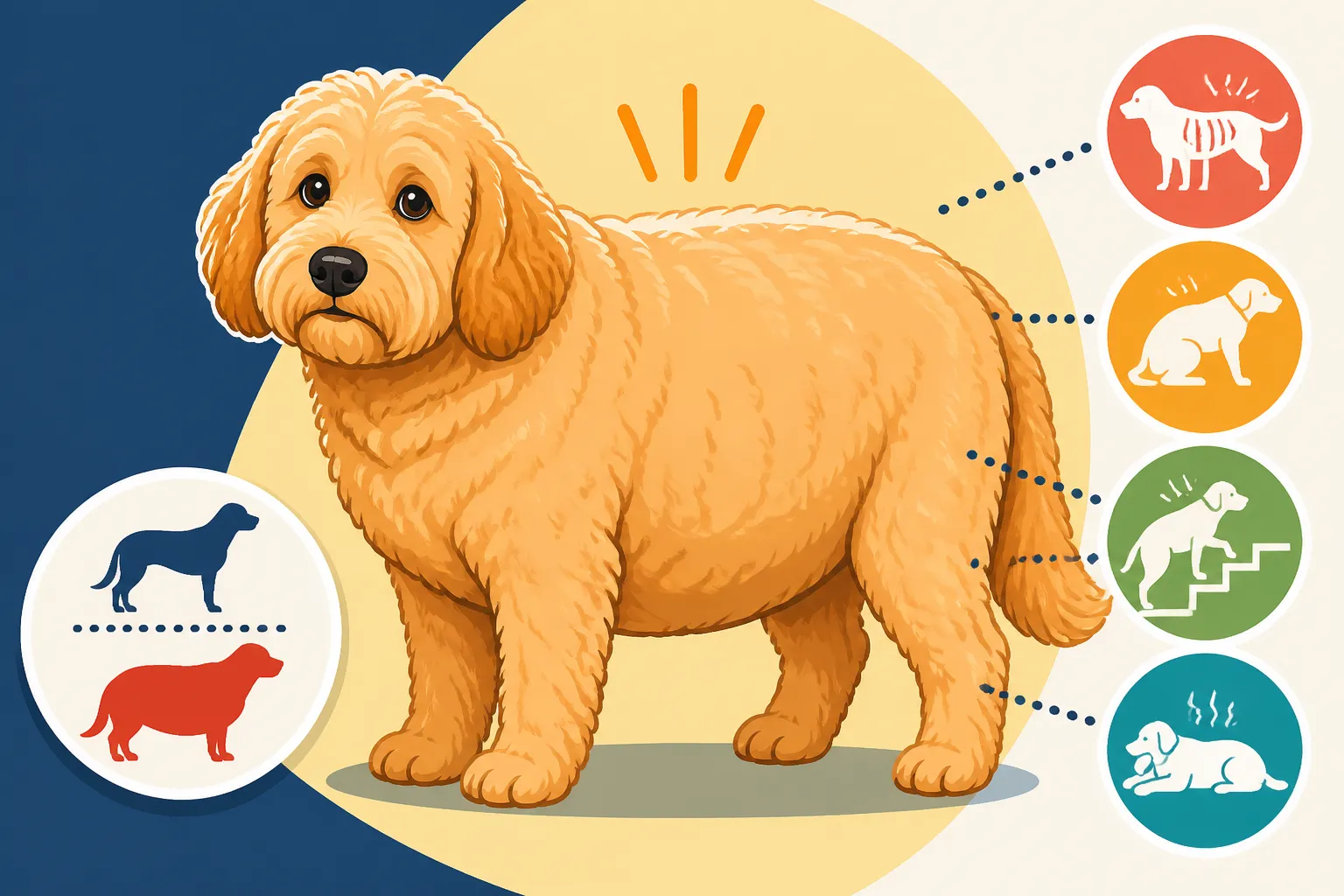
One of the most reliable visual indicators of a healthy weight is a visible waistline. When viewed from above, your Labradoodle's body should narrow slightly behind their rib cage, creating a distinct "tuck." As they gain weight, this waistline begins to disappear, and their body might start to look more like a straight line from ribs to hips, or even bulge outwards. This change can be incredibly difficult to see through a long, fluffy coat, especially if you’re not brushing them out regularly and observing their silhouette.
Beyond the waist from above, also observe your Labradoodle from the side. A healthy Labradoodle should have an abdominal tuck – meaning their belly should rise slightly from their rib cage to their hind legs, rather than hanging low or being parallel to the ground. If their belly starts to sag, or if that distinct upward curve flattens out, it's a strong visual sign that they're gaining weight. This is particularly noticeable after they've had a drink or just after a meal, so pay attention to their posture and shape at various times throughout the day.
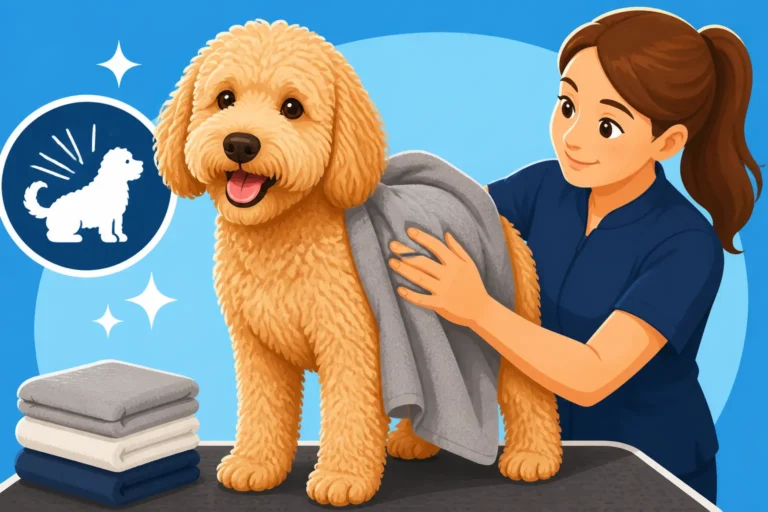
Think of it like this: imagine your Labradoodle is wearing a thick winter coat. Even with that coat, you can usually still discern their general shape underneath. If that shape starts to look less defined, more cylindrical, or simply thicker all around, it's time for a closer inspection. Don't let the fluff fool you into thinking they're just well-insulated. Getting into a routine of observing them when they are wet after a bath can also offer a rare, clear view of their true body shape.
Rounder Face and Thicker Neck
While less commonly discussed, excess weight can also manifest in your Labradoodle's face and neck. A healthy Labradoodle typically has a well-defined jawline and a graceful neck that blends smoothly into their shoulders. As they gain weight, you might notice their face appearing rounder, their jowls becoming heavier, and their neck looking thicker or less defined. The skin around their neck might even start to fold slightly, or their collar might feel tighter than it used to, even if you haven't adjusted it.
This change is particularly subtle and can easily be mistaken for natural aging or simply a "fuller" appearance. However, fat deposits can accumulate in these areas just like anywhere else on the body. Pay attention when you're stroking their head or neck; does it feel softer, less muscular, or perhaps a bit squishy? These are often signs that fat is starting to accumulate.
A thicker neck can also contribute to other issues, such as snoring or laboured breathing, especially during sleep or after exercise. While these could be signs of other underlying conditions, they are often exacerbated by excess weight. Keeping an eye on these facial and neck changes can provide early indicators that your Labradoodle's overall body condition is trending towards overweight.
Hands-On Assessment: The Rib and Spine Test
The most accurate way to assess your Labradoodle’s weight, regardless of their coat type, is through a hands-on examination. This method allows you to feel what you can’t always see and gives you a much clearer picture of their body condition. It’s a simple check that every Labradoodle owner should perform regularly.
Feeling for Ribs, Spine, and Hip Bones
To perform the rib check, gently place both hands on your Labradoodle's sides, just behind their front legs. Your fingers should be spread slightly apart. With light pressure, run your hands along their rib cage. You should be able to feel their ribs individually, much like feeling the knuckles on your hand, without having to press hard. If you have to dig your fingers in to feel the ribs, or if they feel completely cushioned under a layer of fat, your Labradoodle is likely overweight. Conversely, if the ribs are extremely prominent and feel sharp with no muscle or fat covering, they might be underweight.
Next, move to their spine. Run your hand down the length of their back. You should be able to feel the individual bumps of their vertebrae without them protruding too sharply. If the spine feels like a smooth, unbroken line, cushioned by a thick layer, it's another indicator of excess fat. On the other hand, a bony, very prominent spine suggests they are too thin. Similarly, you should be able to feel their hip bones near the base of their tail, again, without them being overly prominent or completely hidden.
This hands-on technique is your secret weapon against the "fluff factor." It cuts through the visual deception of the coat and gives you real, tactile feedback on your dog's body condition. Make it a regular part of your grooming routine, perhaps weekly, so you become familiar with what a healthy feel is for your specific Labradoodle. It also helps to keep them accustomed to being handled, which is great for vet visits too!
The Body Condition Score (BCS) System
Veterinarians often use a Body Condition Score (BCS) system, typically on a scale of 1 to 5 or 1 to 9, to objectively assess a dog's weight. Understanding this system can empower you to make more informed decisions about your Labradoodle's health. While your vet will give you the most accurate score, you can learn to do a reasonable at-home assessment.
| BCS Score (1-5 Scale) | Description | What You Feel/See |
|---|---|---|
| 1 (Emaciated) | Severely underweight, little to no body fat. | Ribs, spine, hip bones, and all bony prominences are easily visible from a distance and feel very sharp to the touch. No muscle mass. |
| 2 (Underweight) | Thin, with minimal body fat. | Ribs, spine, and hip bones are easily palpable and visible, but some muscle mass is present. Abdominal tuck is very prominent. |
| 3 (Ideal) | Healthy, well-proportioned. | Ribs are easily palpable without excess fat covering. Waist is visible from above, and an abdominal tuck is present from the side. |
| 4 (Overweight) | Slightly heavy, with some excess body fat. | Ribs are palpable but require moderate pressure. Waistline is less obvious, and abdominal tuck is diminished. |
| 5 (Obese) | Severely overweight, significant fat deposits. | Ribs are difficult to palpate due to heavy fat cover. No waist visible, and abdominal tuck is absent or bulging. Significant fat deposits over lumbar area and tail base. |
Your goal for your Labradoodle is a BCS of 3. This means you can feel their ribs easily, see a slight waist from above, and notice an abdominal tuck. If you find your Labradoodle trending towards a 4 or 5, it's definitely time to reassess their diet and exercise routine. Remember, even minor adjustments can make a big difference over time.
This hands-on check should be done regularly, perhaps weekly or bi-weekly. It takes less than a minute and is the most reliable way to monitor their weight effectively. It ensures you're addressing the problem before it becomes a serious health concern. Whether a Labradoodle's Coat Changes Texture With Age can affect how this feels, so keep that in mind for older dogs.
Beyond the Body: Behavioral and Lifestyle Indicators
It's not just about what you see or feel; your Labradoodle's behavior and overall lifestyle can also signal that they're carrying too much weight. These are often secondary signs that emerge as the physical changes start to take their toll. Being observant of these subtle shifts can provide another layer of understanding.
Decreased Stamina and Labored Breathing
One of the earliest behavioral signs of weight gain in an active breed like the Labradoodle is a noticeable decrease in their stamina. Where they once enthusiastically romped for an hour, they might now tire more quickly, lagging behind on walks, or opting out of playtime sooner. You might find them panting excessively after relatively mild exercise, or struggling more than usual to keep up with you on a hike. This isn't just a sign of getting older; it can often indicate that their body is working harder to carry extra weight.
Labored breathing, especially after activity, is another critical indicator. If your Labradoodle is huffing and puffing more than usual, or if their breathing seems shallow and fast even at rest, it's a concern. Extra fat around the chest and abdomen can restrict lung capacity, making it harder for them to breathe efficiently. This is particularly important for breeds that have a predisposition to certain respiratory or cardiac issues. Don't dismiss these signs as merely "getting older" – investigate them, as they could be related to carrying too much weight.
Observe their play style. Are they less keen on jumping, running, or fetching? Do they prefer to just lie down while you throw the ball? These changes in activity level might be subtle at first, but over time, they can become quite pronounced. It's not uncommon for an overweight dog to become less enthusiastic about activities they once loved, simply because it's become physically uncomfortable or too difficult. This creates a vicious cycle: less activity leads to more weight gain, which further reduces activity.
Reluctance to Jump or Climb Stairs
Joint pain and discomfort are common consequences of excess weight, especially in a breed that can be prone to hip and elbow issues. If you notice your Labradoodle hesitating before jumping onto the couch or into the car, or struggling to climb stairs they once navigated with ease, it could be a sign that their joints are under strain from extra pounds. This might manifest as a stiff gait, limping, or even just a general reluctance to move quickly.
Dogs are incredibly stoic and often hide pain, so any overt sign of discomfort should be taken seriously. A Labradoodle that used to leap into your arms might now prefer to put their front paws up and wait for assistance. They might take stairs one at a time, or pause at the bottom as if contemplating the effort required. These aren't just quirks; they are often silent cries for help from an overburdened body.
Addressing weight issues promptly can significantly alleviate this joint stress, improving their mobility and comfort. Early intervention can also help prevent or slow the progression of conditions like arthritis. If your Labradoodle is showing these signs, combine your visual and hands-on checks with this behavioral observation to form a complete picture. Arthritis in a Labradoodle at Ten discusses joint issues in older dogs, which are often exacerbated by weight.
When to Talk to Your Vet and Make Changes
Identifying that your Labradoodle is carrying too much weight is the crucial first step. The next is taking action, and the best action always starts with a conversation with your veterinarian. They are your primary resource for tailoring a safe and effective weight management plan for your specific dog.
Consulting Your Veterinarian for a Professional Assessment
Once you’ve identified some of these signs in your Labradoodle, the very next step should be a visit to your vet. They can accurately assess your dog’s Body Condition Score, weigh them on a proper scale, and rule out any underlying medical conditions that might be contributing to weight gain or making weight loss more challenging. Sometimes, issues like thyroid failure or other metabolic disorders can impact a dog's weight, and these need veterinary diagnosis and treatment.
Your vet can also help you set realistic weight loss goals and create a personalized plan that considers your Labradoodle's age, activity level, and overall health. They can recommend specific dietary changes, advise on appropriate portion sizes, and suggest safe exercise routines. Don't try to guess or implement drastic changes on your own, as this could inadvertently harm your dog. A professional assessment is invaluable for a structured and healthy approach to weight management.
During your vet visit, be prepared to discuss your Labradoodle's current diet in detail – including specific food brands (like whether you use a high-quality kibble from Chewy or a fresh food option like Ollie), portion sizes, and all treats, chews, and human food scraps they receive. This comprehensive information helps your vet understand the full caloric intake and make targeted recommendations. They might also suggest specific supplements or a prescription diet if needed.
Adjusting Diet and Exercise for Weight Management
Once you have your vet's guidance, you'll likely need to make adjustments to your Labradoodle's diet and exercise routine. The goal is to reduce caloric intake while increasing energy expenditure. This isn't about starvation, but about providing balanced, nutritious meals in appropriate quantities and ensuring they get enough physical activity.
Start by accurately measuring their food. This is often where many owners accidentally overfeed. Don't eyeball it; use a proper measuring cup or a kitchen scale to ensure precise portions. Your vet might recommend reducing their current portion size or switching to a lower-calorie or "light" dog food. For instance, if you usually buy their kibble in bulk from a site like Amazon, consider looking for specific weight-management formulas that are lower in fat and higher in fiber.
Increasing exercise is equally important. This doesn't necessarily mean marathon runs, especially if your Labradoodle is already overweight and prone to joint issues. Start slowly and gradually increase the duration and intensity of walks. Incorporate more active playtime, like fetching a ball in the yard (if their joints allow) or engaging in mentally stimulating games. Even an extra 10-15 minutes of brisk walking each day can make a significant difference over time. Remember, consistency is key. Exercise for a Stiff Old Labradoodle offers more nuanced advice if your dog is older.
Key Strategies for Weight Management:
- Accurate Portions: Use a measuring cup or kitchen scale for every meal.
- Quality Food: Consider a vet-recommended weight management formula. Brands like Ollie often provide pre-portioned fresh food that can help with portion control.
- Reduce Treats: Treats should be minimal and low-calorie. Break larger treats into smaller pieces.
- Increase Activity: Gradually extend walks, add playtime, or explore dog sports suitable for their current condition.
- Consistent Monitoring: Regularly weigh your Labradoodle and perform the hands-on BCS check.
Weight loss is a journey, not a sprint. Be patient and consistent, and celebrate small victories. Your Labradoodle's health and happiness are worth the effort, and a fitter dog will enjoy a better quality of life and potentially a longer, healthier one.
Disclaimer
This article is for general informational purposes only and does not constitute professional advice. Laws, prices and regulations vary by location and change over time. Consult a qualified professional for guidance on your specific situation.