Whether an Old Labradoodle’s Head Tilt Is Ear or Brain
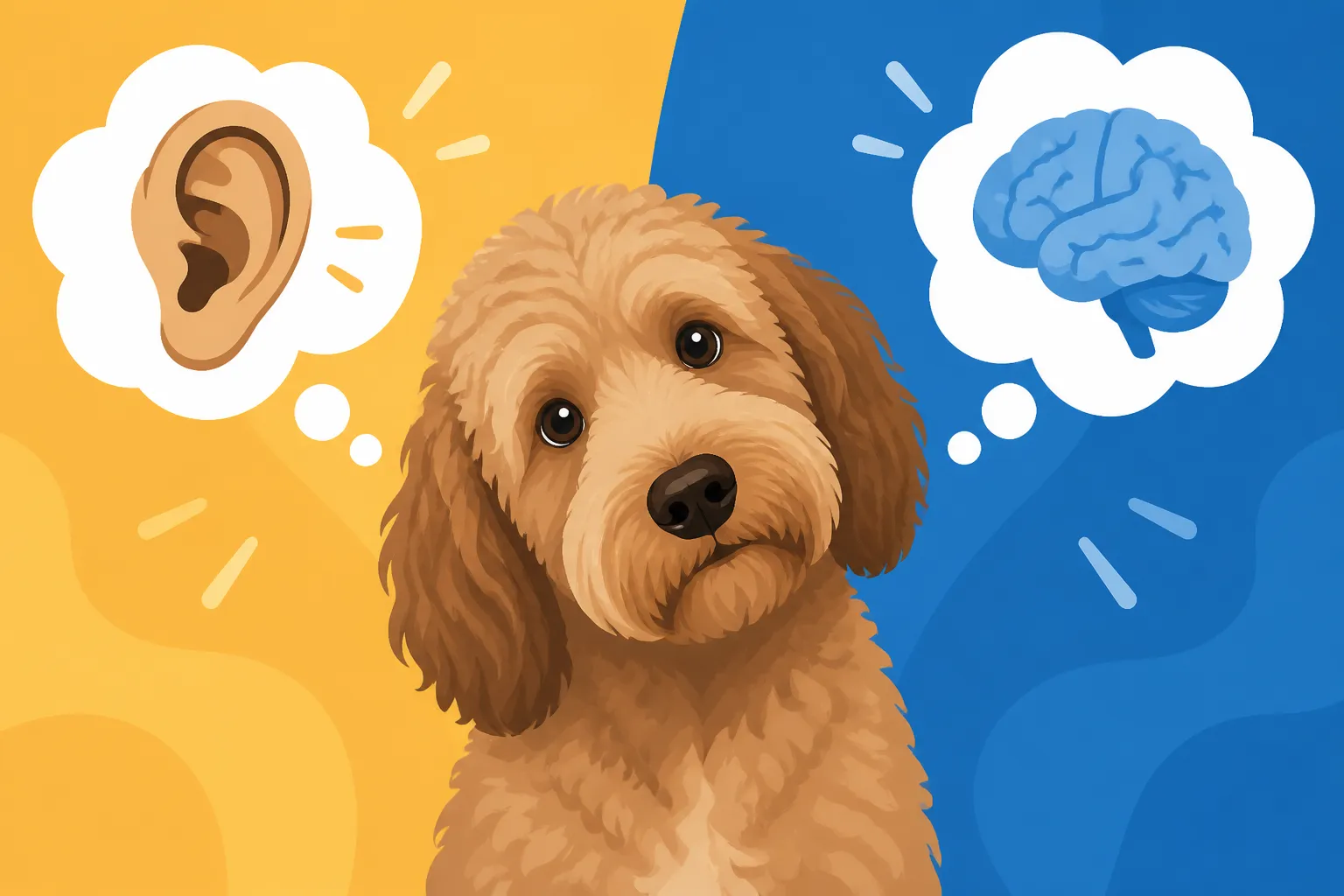
It’s truly alarming when your cherished senior Labradoodle suddenly starts tilting their head. One day they're perfectly balanced, and the next, they're leaning like they've had too much fun at a doggy disco, often accompanied by stumbling or eye flickers. This sudden change can be incredibly frightening, leaving you wondering if it's a simple ear problem or something much more serious happening in their brain. This guide will walk you through the common causes of head tilts in older Labradoodles, helping you understand the distinctions and, most importantly, what steps to take when you notice these concerning signs.
Understanding the Sudden Head Tilt in Older Labradoodles
When your older Labradoodle develops a head tilt, it's often a sign of a problem within their vestibular system. This intricate system is responsible for maintaining balance and coordinating eye movements, and it has components both in the inner ear (peripheral) and in the brain (central). When something goes awry, your dog's perception of gravity and their position in space gets scrambled, leading to that tell-tale tilt, staggering, and sometimes even nausea. It’s a truly disorienting experience for them, and a worrying one for us owners.
The Alarming Nature of Vestibular Syndrome
Canine vestibular syndrome, often colloquially referred to as "old dog vestibular disease" or "geriatric vestibular syndrome," is a common cause of sudden-onset balance issues in older dogs. Imagine waking up one morning and the room is spinning uncontrollably, you can't walk straight, and you feel incredibly sick. That's a bit like what your Labradoodle is experiencing. The onset is typically acute, meaning it appears suddenly and dramatically, which is why it often sends owners into a panic, fearing a stroke.
The signs can include a persistent head tilt to one side, circling, loss of balance, staggering, falling over, and involuntary, jerky eye movements called nystagmus. Sometimes, you might also see vomiting and a general reluctance to move. The sheer intensity of these symptoms can make any dog parent immediately assume the worst, especially when their vibrant Labradoodle suddenly seems so incapacitated. It’s a testament to the strong bond we share that we feel their distress so deeply.
Why Age Matters in Diagnosing Head Tilts
Age, unfortunately, plays a significant role in making Labradoodles more susceptible to certain health conditions, including those that can cause a head tilt. Just like humans, dogs can experience a decline in various bodily functions as they age, and their vestibular system is no exception. Conditions that might be easily shrugged off in a younger dog can have more severe or prolonged impacts on a senior one.
For instance, older Labradors, and by extension Labradoodles, can be prone to certain ear issues that accumulate over time. Their long, floppy ears, while adorable, can trap moisture and debris, increasing the risk of chronic ear infections. When these infections become severe enough to affect the inner ear, they can certainly trigger a head tilt. Additionally, as dogs age, the risk of developing masses or tumors, both benign and malignant, increases, and these can occur in the ear canal or within the brain itself, directly impacting neurological function. Understanding The Birthday a Labradoodle Counts as Senior can help set expectations for potential age-related health changes.
Ear-Related Causes of Head Tilt
When a Labradoodle suddenly develops a head tilt, the inner ear is often the first place veterinarians look. It's an incredibly common culprit, and thankfully, often treatable, though it can still be quite uncomfortable for your dog.
Inner Ear Infections
Ear infections are a persistent nemesis for many Labradoodle owners. Their beautiful, floppy ears, inherited from both the Labrador and Poodle sides, create a warm, moist environment that's just perfect for bacteria and yeast to thrive. While outer and middle ear infections can cause discomfort, itching, and discharge, it's when the infection penetrates into the inner ear that it can truly wreak havoc on your Labradoodle's balance.
An inner ear infection, also known as otitis interna, directly affects the vestibular apparatus located within the cochlea and semicircular canals. When this area becomes inflamed or damaged, the signals sent to the brain about spatial orientation become garbled, resulting in a head tilt, loss of balance, and sometimes even hearing loss on the affected side. You might notice your Labradoodle scratching at their ear, shaking their head excessively, or exhibiting pain when you touch the ear. A foul odor or discharge from the ear canal is also a huge red flag. Don't underestimate Ear Infections Built Into a Labradoodle's Drop Ear; they can be serious. Regular ear cleaning and vigilance are key to preventing these painful issues, especially considering Whether a Labradoodle's Ear Hair Causes Its Infections.
Polyps and Tumors in the Ear
While less common than infections, polyps or tumors growing within the ear canal or surrounding structures can also cause a head tilt in older Labradoodles. These growths can physically press on the delicate structures of the inner ear or even invade them, disrupting the normal functioning of the vestibular system.
Polyps are typically benign (non-cancerous) growths that can arise from chronic inflammation. Tumors, however, can be either benign or malignant (cancerous). Both can cause similar symptoms to an ear infection, including head shaking, pawing at the ear, discharge, and, critically, a head tilt if they are affecting the inner ear. Because these growths can be hidden deep within the ear canal, they often require advanced diagnostic tools like an otoscope, or even imaging such as X-rays, CT scans, or MRIs, to properly visualize and diagnose. The treatment depends entirely on the nature of the growth, ranging from surgical removal to radiation therapy in the case of malignancies. Early detection is always best, so any persistent ear issue, especially with a head tilt, warrants a thorough veterinary examination.
Brain-Related Causes of Head Tilt
While inner ear issues are common, sometimes a head tilt points to a problem within the brain itself. These "central" vestibular problems are generally more serious and require immediate and often more intensive veterinary attention.
Central Vestibular Disease
When the problem lies within the brain, specifically the brainstem or cerebellum where the central vestibular system is located, we refer to it as central vestibular disease. This is a much more concerning diagnosis than a peripheral (ear) issue because it indicates a neurological problem. The symptoms can be more severe and often include additional neurological signs not typically seen with ear infections alone.
Common causes of central vestibular disease in older Labradoodles include:
- Brain Tumors: As dogs age, the risk of developing brain tumors increases. These tumors can press on or invade parts of the brain responsible for balance, leading to a head tilt, coordination issues, seizures, and changes in personality or behavior. The location and type of tumor will dictate the specific symptoms and prognosis.
- Strokes: While less common than in humans, dogs can experience strokes, which occur when blood flow to part of the brain is interrupted. A stroke affecting the brainstem or cerebellum can cause acute central vestibular signs, including a head tilt, severe balance loss, and sometimes weakness on one side of the body.
- Inflammatory Diseases: Conditions like encephalitis or meningitis (inflammation of the brain or its surrounding membranes) can also affect the central vestibular system. These can be caused by infections (bacterial, fungal, viral) or immune-mediated processes.
- Infarctions: Similar to strokes, an infarction is tissue death due to lack of blood supply. Vestibular infarctions can occur in the brainstem or cerebellum and present with sudden, severe signs.
With central vestibular disease, the nystagmus (involuntary eye movements) often has a more vertical component or changes direction, unlike the typically horizontal nystagmus seen with peripheral vestibular disease. Other signs like weakness in the limbs, abnormal gait that's not just staggering, or changes in consciousness can also point to a central cause.
Other Neurological Conditions
Beyond explicit central vestibular disease, other neurological conditions can sometimes present with a head tilt as one of their symptoms, particularly in older Labradoodles.
- Canine Cognitive Dysfunction (CCD): Often likened to Alzheimer's in humans, CCD can manifest in various ways, including disorientation, changes in sleep patterns, anxiety, and sometimes, subtle neurological deficits that might include a head tilt or leaning. While not a direct cause of vestibular disease, the overall neurological decline can affect coordination and awareness. You might notice other signs like your Labradoodle getting stuck in corners or forgetting familiar routines, indicating Canine Cognitive Decline in an Old Labradoodle.
- Cerebellar Disease: The cerebellum is critical for coordinating movement and balance. Diseases affecting this part of the brain, such as degeneration or tumors, can lead to ataxia (uncoordinated gait), tremors, and a head tilt.
- Epilepsy: While primarily characterized by seizures, some forms of epilepsy or post-seizure symptoms (post-ictal phase) can temporarily affect a dog's balance and coordination, potentially leading to a transient head tilt. However, a persistent head tilt is usually not the primary symptom of epilepsy itself. Understanding Epilepsy Recorded in Labradoodle Lines can be helpful in broader health awareness.
These conditions highlight the complex nature of neurological health in older dogs. Diagnosis often involves a thorough neurological exam, advanced imaging like an MRI or CT scan of the brain, and sometimes cerebrospinal fluid analysis to pinpoint the exact issue.
Differentiating Between Ear and Brain Issues and What to Do
Facing a Labradoodle with a head tilt is undoubtedly stressful. The key to effective treatment lies in quickly and accurately determining whether the problem originates in the ear (peripheral) or the brain (central). While only a vet can make a definitive diagnosis, understanding the key differences in symptoms can help you provide crucial information.
Key Signs to Observe for Head Tilt Causes
Here’s a helpful table summarizing the common differentiating signs between peripheral (ear) and central (brain) vestibular disease:
| Symptom | Peripheral Vestibular Disease (Ear) | Central Vestibular Disease (Brain) |
|---|---|---|
| Head Tilt | Often pronounced and consistent to one side. | Can be pronounced, but sometimes subtle or changes direction. |
| Nystagmus (Eye Movement) | Usually horizontal, often beating rhythmically away from the head tilt. | Can be horizontal, vertical, or rotatory; may change direction. Often more severe. |
| Ataxia (Incoordination) | Typically staggering, leaning, falling to the side of the tilt; may circle. | More severe disequilibrium, can be accompanied by weakness in limbs; may drag feet. |
| Consciousness/Mentation | Generally normal, alert, but may be nauseous. | Can be altered: lethargy, stupor, disorientation, personality changes. |
| Cranial Nerves | May affect facial nerve (drooping lip, eye) on the same side. | More likely to affect multiple cranial nerves (e.g., swallowing, eye movement abnormalities). |
| Other Ear Signs | Often present: redness, discharge, odor, pain, scratching, aural hematoma. | Less likely to have primary ear signs; internal ear issues are secondary if present. |
| Proprioception | Usually normal (dog knows where its feet are, but cannot balance). | Often abnormal (dog doesn't know where its feet are, may knuckly over). |
| Vomiting | Common due to severe nausea and disorientation. | Possible, but may be accompanied by other severe neurological signs. |
Remember, this table is a general guide. Individual dogs can present with variations, and some conditions can mimic others. For example, a severe middle ear infection can sometimes cause central-like signs. This is why a professional veterinary evaluation is paramount.
The Importance of Prompt Vet Care
The moment you notice your Labradoodle developing a head tilt, it’s imperative to contact your veterinarian immediately. Do not wait to see if it improves on its own. While geriatric vestibular syndrome can resolve on its own over a few weeks, early diagnosis is crucial to rule out more serious and potentially life-threatening conditions like brain tumors or severe infections. Prompt intervention can significantly impact the outcome, potentially saving your dog's life or preventing irreversible damage.
When you arrive at the vet, they will perform a comprehensive physical and neurological examination. This will include looking into your Labradoodle's ears with an otoscope, checking their eye movements, assessing their gait and balance, and testing their cranial nerves. They might recommend further diagnostics such as blood work to check for underlying infections or metabolic issues, X-rays of the skull, or more advanced imaging like a CT scan or MRI, especially if a central cause is suspected. Your vet might also discuss The Yearly Screening a Labradoodle Should Get which can catch potential issues early. These diagnostic steps, while sometimes costly, are invaluable for getting to the root of the problem. Many pet parents find that having pet insurance, such as a policy from Healthy Paws, can make these unexpected diagnostic and treatment costs much more manageable, allowing them to make decisions based on what’s best for their beloved Labradoodle, rather than just their wallet.
Treatment will depend entirely on the underlying cause. For peripheral vestibular disease due to an ear infection, antibiotics or antifungals, anti-inflammatory medications, and anti-nausea drugs are often prescribed. For central causes, treatment might involve steroids to reduce inflammation, chemotherapy or radiation for tumors, or supportive care for stroke recovery.
Living with a Recovering Labradoodle
The recovery period for a Labradoodle experiencing a head tilt can vary widely. If it's a case of idiopathic (geriatric) vestibular syndrome, improvement often begins within a few days, though a residual head tilt might persist for weeks or even permanently. With severe ear infections, it could take several weeks for the infection to clear and balance to return. Central vestibular issues can have a much longer and more complex recovery trajectory, potentially requiring specialized care and rehabilitation.
During recovery, your Labradoodle will need a lot of supportive care at home. They may be disoriented, unsteady, and prone to falling. Here are some tips:
- Create a safe environment: Block off stairs, pad sharp corners, and provide easily accessible food and water bowls. Consider a ramp if they struggle with elevation. For a sixty-pound Labradoodle, helping them get up and move can be challenging, so Supporting a Sixty Pound Labradoodle That Cannot Rise is important to consider.
- Assist with mobility: You might need to gently support them with a towel sling under their belly or a specialized harness when they need to walk outside to relieve themselves.
- Comfort and reassurance: Being dizzy and disoriented is scary. Provide a quiet, comfortable space for them to rest, and offer plenty of gentle reassurance.
- Medication administration: Stick diligently to the medication schedule prescribed by your vet, including antibiotics, anti-inflammatories, and anti-nausea drugs.
- Follow-up appointments: Attend all recommended follow-up visits to monitor progress and adjust treatment as needed.
Dealing with a senior dog's health issues, especially sudden and dramatic ones, is never easy. But with prompt veterinary care, accurate diagnosis, and dedicated home support, many Labradoodles can recover well and continue to enjoy their golden years. Having a robust pet insurance plan, like those offered by Healthy Paws, can really alleviate the financial burden during these challenging times, allowing you to focus on your Labradoodle’s recovery without added stress.
Disclaimer
This article is for general informational purposes only and does not constitute professional advice. Laws, prices and regulations vary by location and change over time. Consult a qualified professional for guidance on your specific situation.