The States Where Labradoodle Breeders Charge Most
It’s a frustrating reality when you start looking for a Labradoodle puppy: the price tags seem to fluctuate wildly, not just from breeder to breeder, but often from one state to another. You might find yourself scratching your head, wondering why your friend in Ohio paid less for their darling doodle than someone you know in California. This guide will unpack the complex web of factors that contribute to these geographic price differences, helping you understand why Labradoodle breeders in some states tend to charge more.
Understanding the Geographic Cost Divide for Labradoodle Puppies
Bringing a Labradoodle puppy into your home is a significant investment, and it’s natural to want to understand all the costs involved. Beyond the initial purchase price, there are ongoing expenses for their care, grooming, and health. The sticker shock many prospective owners experience isn't just about the breed itself; it’s deeply intertwined with where they live, or where their chosen breeder is located. It can feel unfair, almost arbitrary, but there are concrete economic reasons behind these regional variations.
Think about it this way: the cost of living varies dramatically across the United States. What seems like a reasonable price for a cup of coffee or a month's rent in one city might be exorbitant in another. The same principle applies to the business of breeding and raising puppies. A breeder operating in a high-cost-of-living state faces higher expenses for nearly every aspect of their operation, from property taxes and utilities to the wages they pay any staff. These increased operational costs naturally translate into higher prices for their puppies. It’s not about greed; it’s about covering the basic expenses of running a responsible breeding program in a particular economic environment.
Furthermore, the legal and regulatory landscape around dog breeding can differ significantly from state to state, and even county to county. Some areas might have stricter licensing requirements, more frequent inspections, or specific mandates regarding kennel conditions or veterinary care. While these regulations are often in place to protect animal welfare, complying with them can add to a breeder's overhead. These costs, too, must eventually be factored into the puppy's price. So, while you're seeking to understand "The Fifteen Hundred to Three Thousand a Labradoodle Puppy Costs", remember that a significant chunk of that variation can come down to location.
The Role of Local Economics in Puppy Pricing
Local economic conditions play a colossal role in determining the base price of a Labradoodle puppy. In areas where the general cost of living is high—places like major metropolitan areas or popular coastal regions—everything from rent for breeding facilities to the cost of quality dog food and veterinary services will be elevated. A breeder in, say, New York City or San Francisco needs to generate more income just to break even compared to a breeder operating in a more rural or lower-cost state.
Consider the simple act of feeding a litter of growing Labradoodle puppies. High-quality puppy food can be a substantial expense. If a breeder is sourcing their food from local pet supply stores in an expensive area, the retail price they pay will reflect the higher operational costs of that store. Even if they order online from a service like Chewy or Ollie, shipping costs or regional pricing models might subtly increase their expenditure. Similarly, the local veterinarians in these high-cost regions often charge more for routine check-ups, vaccinations, and potential emergency care, simply because their own overhead (staff salaries, rent for their clinic, equipment maintenance) is higher. These aren't minor differences; they can add up to thousands of dollars over the course of raising a single litter, and that cost has to be recouped through the puppy price.
Moreover, the availability and cost of skilled labor, if a breeder employs assistants or professional trainers, will also directly impact their pricing. If a breeder needs to hire staff for daily care, cleaning, or early socialization, the prevailing wages in a high-cost state will be significantly higher than in a state with a lower minimum wage and lower cost of living. All these factors contribute to the overall economic pressure on breeders in certain areas, compelling them to price their puppies accordingly to maintain a sustainable, ethical program.
Demand and Availability Across State Lines
Beyond the pure economics of overhead, the classic forces of supply and demand significantly influence Labradoodle puppy prices. In states where the Labradoodle's popularity has soared, and there's a high concentration of potential buyers, breeders can often command higher prices. This isn't just about general popularity; it’s about localized demand. A state with a dense population and a strong pet-owning culture, particularly one that values designer breeds, will naturally create a more competitive market for puppies.
Imagine a state like Florida, where many families reside and often seek out companion animals. If the number of reputable Labradoodle breeders within that state or easily accessible to it is limited, while demand remains consistently high, prices will naturally trend upwards. Conversely, in a state where there might be a greater number of breeders relative to the interested buyers, or where the general interest in Labradoodles is slightly lower, prices might be more competitive as breeders strive to place their puppies in good homes.
This dynamic also explains why some people are willing to travel across state lines, or even arrange for special transport, to acquire a puppy. They might find a breeder in a neighboring state with a lower cost of living, where the overall price is more appealing, even after factoring in travel expenses. This cross-state purchasing can slightly equalize prices over time, but localized demand still remains a powerful driver. Furthermore, if you are looking for specific traits, such as a particular coat type or size, the rarity of that specific puppy might further concentrate demand on a few select breeders, regardless of their geographic location, thereby sustaining higher prices.
Factors Driving Labradoodle Prices in Different States
When you're trying to figure out why one Labradoodle puppy costs more than another, especially across different states, it's easy to get caught up in comparing numbers alone. But the true story is in the factors that contribute to that price. These aren't just arbitrary figures; they're a reflection of the significant effort, expense, and expertise that a responsible breeder pours into each litter. Understanding these underlying costs can help you appreciate the value proposition, even when prices seem steep.
It's not just the region that dictates cost; it's the specific practices of the breeder. A breeder who invests heavily in comprehensive health testing, top-tier nutrition, early socialization programs, and provides extensive support to new owners will naturally have higher operating costs. These costs are consistent whether they are in a high-cost state or a lower-cost one, but the regional economic factors amplify them. For instance, obtaining certifications for Whether Both Labradoodle Parents Need OFA Hips or running The prcd-PRA Test Both Labradoodle Parents Need costs money, and these vet-related expenses will fluctuate based on local vet fees.
Moreover, some states might have a higher concentration of breeders adhering to very specific, high-standard practices, which inherently raises their collective price points. For example, breeders focused on producing genuine Australian Labradoodles, with their multi-generational pedigree requirements and potentially imported lines, often face different and higher costs than breeders of F1 or F1b Labradoodles. This niche market can also contribute to regional price differences if certain states have a higher concentration of these specialized breeders.
The Cost of Responsible Breeding Practices
One of the biggest drivers of a Labradoodle puppy's price, regardless of location, is the commitment of the breeder to responsible practices. This isn't just about keeping the puppies fed; it encompasses a whole suite of activities designed to produce healthy, well-adjusted dogs. But, these practices come with a price tag, and that price tag is influenced by local economic conditions.
For example, extensive health testing of parent dogs is paramount for reducing the risk of hereditary conditions like hip dysplasia, elbow dysplasia, eye issues, and certain genetic diseases such as Addison's disease. Reputable breeders invest in these screenings, which can include OFA or PennHIP evaluations for hips and elbows, annual eye certifications by a veterinary ophthalmologist, and DNA panels for conditions like The DNM1 Mutation Behind Labradoodle Collapse or Von Willebrand's disease. Each of these tests costs money, and veterinary specialist fees can vary greatly depending on the state and even the city where the clinic is located. A board-certified veterinary ophthalmologist in a metropolitan area like Boston or Seattle will likely charge more for an eye exam than one in a rural town in Kansas.
Beyond health, consider the investment in early socialization and enrichment. Puppies raised in a stimulating environment with exposure to various sights, sounds, textures, and people are more likely to grow into confident, stable adult dogs. This might involve specialized puppy culture programs, dedicated whelping rooms, or even employing staff for daily handling and training. These aren't cheap endeavors, and the cost of property, utilities, and labor directly impacts a breeder’s ability to provide such an environment, further pushing prices up in higher-cost regions. The breeder is effectively putting years of planning, significant financial outlay, and immense personal time into that puppy before it even goes home with you.
Regional Overhead and Operating Expenses
The overarching operational costs of running a breeding program are profoundly affected by geographic location. These are the expenses that many prospective puppy owners don't even consider but are fundamental to a breeder's ability to maintain their facilities and care for their dogs.
Property costs, whether it's rent for a facility or property taxes for owned land, are wildly divergent across states. A large property suitable for breeding dogs in a suburb of Los Angeles will cost exponentially more than a similar property in a less populated state. This isn't just a one-time cost; it's an ongoing expense that must be factored into the price of every puppy. Utilities, insurance, and licensing fees also fall into this category, with rates varying significantly based on location. In some states, particularly those with strong animal welfare laws, breeders might need to obtain specific permits or licenses that carry annual fees and require adherence to costly facility standards.
Even seemingly small expenses add up. High-quality bedding, cleaning supplies, training equipment, toys for enrichment, and even marketing and website development all contribute to a breeder's overhead. When every single one of these items, or the services to provide them, costs more in a particular state, the cumulative effect on the puppy's final price becomes substantial. This is why a breeder might need to charge a premium simply to cover the fundamental costs of providing a clean, safe, and enriching environment for their parent dogs and puppies.
Identifying High-Cost States for Labradoodle Puppies
It’s often said that you get what you pay for, and while that’s true to a certain extent with Labradoodles, the “where” you pay can also make a significant difference. While it's impossible to list every single state with exact pricing, general economic trends allow us to identify regions where you're likely to encounter higher prices for a well-bred Labradoodle puppy. These tend to be areas with a high cost of living, robust economies, and often, a strong demand for companion animals.
When you're researching, you'll likely notice a pattern. States known for being expensive places to live and do business often have higher Labradoodle puppy prices. This isn't a hard and fast rule, as you can find excellent breeders with fair prices anywhere, but it's a general indicator of what to expect. Think of the states where housing costs are astronomical, gas prices are consistently above the national average, and even a trip to the grocery store feels pricier. These economic realities trickle down into every industry, including dog breeding.
The demand for premium pet services, designer breeds, and comprehensive pet care also contributes. In areas where people generally have higher disposable incomes, they might be more willing to pay a premium for a puppy from a reputable breeder, especially one who goes above and beyond with health testing and socialization. This isn't a judgment, but an observation of market dynamics.
States With High Cost of Living
States with a notoriously high cost of living consistently rank among those where Labradoodle breeders charge more. These often include:
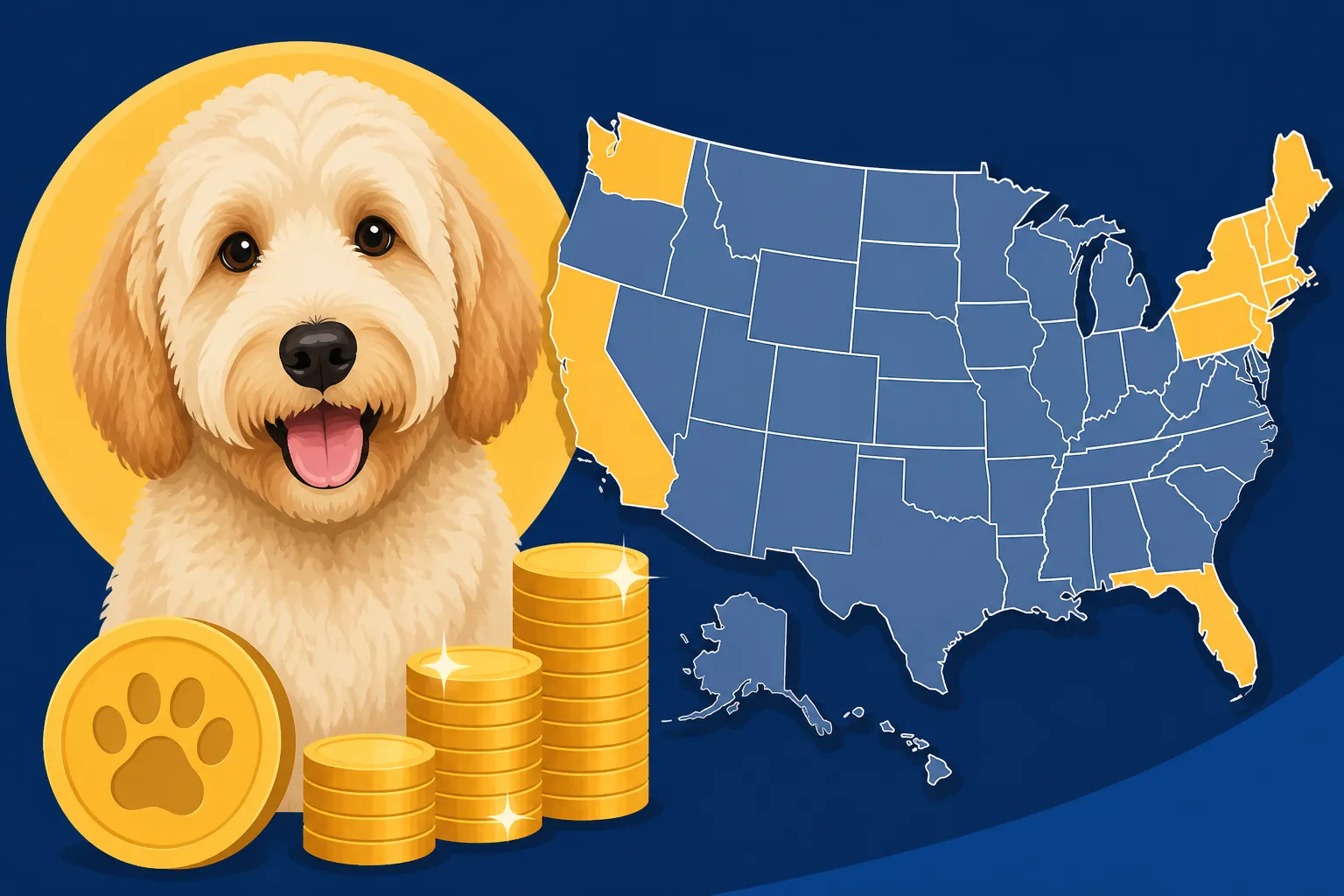
- California: From the bustling cities of Los Angeles and San Francisco to the affluent suburbs, California’s housing costs, labor rates, and general expenses are some of the highest in the nation. This directly translates to higher operational costs for breeders, from property taxes on their facilities to the cost of local veterinary care.
- New York: Particularly in and around New York City and its surrounding areas, the cost of living is incredibly steep. Breeders in this region face immense pressure to cover their expenses, and puppies reflect that. Even upstate, while somewhat less expensive, the general economic environment remains elevated compared to many other parts of the country.
- Massachusetts: With its strong economy and dense population centers like Boston, Massachusetts presents a similar scenario. High demand in an affluent area, combined with high operational costs, pushes prices upward.
- Hawaii: As an island state, Hawaii faces unique logistical challenges and incredibly high costs for importing goods, including quality dog food and supplies. Property values are astronomical. These factors converge to make pet ownership, and therefore puppy acquisition, significantly more expensive.
- Coastal Regions (e.g., parts of Washington, Oregon, Florida, New Jersey, Connecticut): While not every part of these states will be equally expensive, the highly desirable coastal regions, often home to affluent communities, tend to see higher Labradoodle prices due to concentrated demand and higher local living costs.
In these states, finding a "deal" might mean compromising on breeder quality, health testing, or puppy care, which is a gamble no responsible owner should take. It's often better to plan for the higher investment and seek out a breeder who prioritizes the well-being of their dogs.
States with Lower Breeder Costs
Conversely, you might find more competitive pricing in states with a lower cost of living, where operational expenses for breeders are significantly reduced. These often include:
- Midwestern States (e.g., Iowa, Kansas, Missouri, Nebraska): These states generally offer more affordable land, lower property taxes, and a lower cost of daily goods and services. Breeders here can often maintain excellent facilities and provide top-notch care without facing the same economic pressures as their coastal counterparts.
- Southern States (e.g., Arkansas, Mississippi, Alabama, Oklahoma): Similar to the Midwest, many Southern states have a lower cost of living. This can translate to more accessible pricing for Labradoodle puppies, provided you are still seeking out reputable breeders who prioritize health and temperament.
- Rural Areas of Any State: Even within generally expensive states, moving away from major metropolitan areas into more rural settings can sometimes lead to lower prices. Land is cheaper, competition for services might be less intense, and overall overhead can be reduced, allowing breeders to offer puppies at a more modest price point while still maintaining high standards.
It’s crucial to remember that lower prices do not automatically equate to lower quality. Many exceptional, responsible breeders operate in these regions, offering healthy, well-socialized puppies at prices that reflect their lower overhead. The key is always to thoroughly vet any breeder, regardless of location or price, ensuring they adhere to ethical practices, conduct proper health screenings, and provide a nurturing environment for their dogs. Looking into options for pet insurance like Healthy Paws can also help mitigate the financial risk of potential future health issues, regardless of where you purchase your puppy.
Navigating the Search for a Labradoodle Across State Lines
The thought of traveling to another state to pick up a puppy might seem daunting, or even excessive, but for many prospective Labradoodle owners, it becomes a practical solution to finding the right dog at a more manageable price point. It’s not just about saving money on the initial purchase; it’s about expanding your options to find a breeder whose values align with yours, whose health testing protocols are exemplary, and whose puppies are a good fit for your family, regardless of where they are geographically located.
The internet has made the world a much smaller place, allowing you to research breeders far beyond your local vicinity. This gives you the freedom to compare not just prices, but also reputations, breeding practices, and available litters from across the country. However, this convenience also comes with its own set of responsibilities. You need to be even more vigilant when dealing with out-of-state breeders, as physically visiting their facility might not be feasible for everyone. This requires a deeper dive into their online presence, testimonials, and communication with them.
Considering a broader search means being prepared for logistics that extend beyond just picking up a puppy down the street. It involves understanding travel arrangements, health certificates, and the added stress that travel can place on a young puppy. But for many, the opportunity to find a high-quality Labradoodle at a price that works for their budget, or to access a specific lineage or type of Labradoodle that isn't available locally, makes the extra effort well worth it. You might find a breeder who prioritizes Whether Health Tested Parents Add Years to a Labradoodle more rigorously, or one who specializes in certain coat types, simply by looking further afield.
The Pros and Cons of Out-of-State Puppy Purchases
Deciding whether to buy a Labradoodle puppy from an out-of-state breeder involves weighing several factors carefully. There are definite advantages, but also some notable challenges.
Pros:
- Wider Selection and Potentially Lower Prices: As we've discussed, looking beyond your state borders can open up a much larger pool of reputable breeders, potentially leading to more competitive pricing, especially if you're exploring states with lower costs of living. You might also find specific bloodlines, sizes, or colors that aren't available locally.
- Access to Specific Breeding Programs: Some breeders specialize in particular temperaments, working lines, or health clearances that might be unique. Searching out of state allows you to access these niche programs, which might offer puppies better suited to your lifestyle or specific needs. For instance, if you're keen on a Labradoodle for service work, a breeder focused on those traits might be across state lines.
- Opportunity for Thorough Research: The online world allows for extensive research into breeder websites, social media, and forums, regardless of location. You can gather a lot of information and ask for virtual tours or extensive photo/video updates.
Cons:
- Logistical Challenges and Stress for Puppy: The biggest hurdle is getting the puppy home. This often involves flying (either you fly to pick up, or the puppy is flown as cargo, which many reputable breeders avoid due to stress) or a long road trip. Both options can be stressful for a young puppy and require careful planning and health considerations. For some, the cost of traveling or arranging for a flight nannyor specialized transport can offset any initial savings on the puppy's price.
- Limited In-Person Interaction: Ideally, you'd visit a breeder's facility to meet the parent dogs, see the living conditions, and interact with the puppies in person. This is often difficult or impossible with out-of-state purchases, making it harder to gauge the breeder's environment and the puppies' personalities firsthand. This is why asking for video calls and extensive documentation is even more crucial.
- Difficulty with Guarantees/Contracts: While a reputable breeder's contract should be legally binding regardless of state, enforcing it can be more complicated if the breeder is in a different jurisdiction. Understanding whether a Labradoodle breeder's contract is enforceable is vital. Follow-up support, such as training advice or assistance with minor health issues, might also be harder to facilitate from afar.
Essential Steps for Vetting an Out-of-State Breeder
When you're considering an out-of-state Labradoodle breeder, due diligence becomes even more critical. Since you might not be able to physically visit, you need to be extra thorough in your vetting process to ensure you're working with an ethical and responsible individual.
Here’s a checklist of crucial steps:
- Request Extensive Documentation: Ask for copies of all health clearances for both parent dogs (OFA, PennHIP, CERF, DNA panels). Don't just take their word for it. Look for official certificates for all relevant tests, such as The DNA Test That Clears a Labradoodle of EIC. A reputable breeder will be transparent and happy to provide these.
- Video Calls and Virtual Tours: Insist on a video call where you can see the puppies, the mother, and ideally, the living environment. A good breeder will be proud to show you their clean facility and healthy dogs. Be wary of breeders who only offer pictures or make excuses about not being able to show you their setup.
- Ask for References: Request contact information for previous puppy buyers. These individuals can provide invaluable insights into their experience with the breeder, the health and temperament of their dog, and the quality of the breeder’s post-purchase support.
- Discuss Transportation Thoroughly: Understand exactly how the puppy will travel. Reputable breeders typically prefer that you pick up the puppy in person. If shipping is necessary, discuss the process, the age of the puppy, and how they ensure the puppy's comfort and safety. Be very cautious of breeders who offer to ship puppies via cargo at a very young age or through unconventional methods.
- Review the Health Guarantee and Contract: Read the breeder's contract and health guarantee carefully. Understand what it covers, for how long, and what your responsibilities are. Does it require a vet check within a certain number of days? Does it cover genetic conditions? Make sure you’re comfortable with all terms before committing.
- Budget for Additional Costs: Factor in the cost of travel (flights, gas, accommodation) if you're picking up the puppy yourself. If using a flight nanny or specialized ground transport, research those costs thoroughly. Also, consider the cost of an initial vet check once the puppy arrives home. This crucial first check, soon after arrival, is often a requirement of the breeder’s health guarantee, and is an important part of ensuring The Yearly Screening a Labradoodle Should Get starts early.
| Factor | Higher Cost States (e.g., CA, NY, MA) | Lower Cost States (e.g., IA, AR, MO) |
|---|---|---|
| Breeder Property Costs | Significantly Higher | Lower |
| Veterinary Fees (Testing, Care) | Higher | More Moderate |
| Cost of Quality Supplies (Food, Equipment) | Higher (due to local retail markups) | More Moderate (often better bulk prices) |
| Demand for Labradoodles | Often Very High | Variable, but potentially lower |
| Labor Costs for Staff | Higher Wages | Lower Wages |
| Compliance/Licensing Fees | Potentially Higher or more stringent | Generally lower or less stringent |
| Overall Puppy Price | Tends to be Higher | Tends to be More Competitive |
When you decide to bring a Labradoodle into your life, the journey often involves more than just finding the perfect furry face. It's about understanding the entire ecosystem that supports responsible breeding, including the economic forces that shape pricing. By understanding why certain states have higher Labradoodle prices, you can make a more informed decision, whether you choose to buy locally or expand your search nationwide.
Disclaimer
This article is for general informational purposes only and does not constitute professional advice. Laws, prices and regulations vary by location and change over time. Consult a qualified professional for guidance on your specific situation.