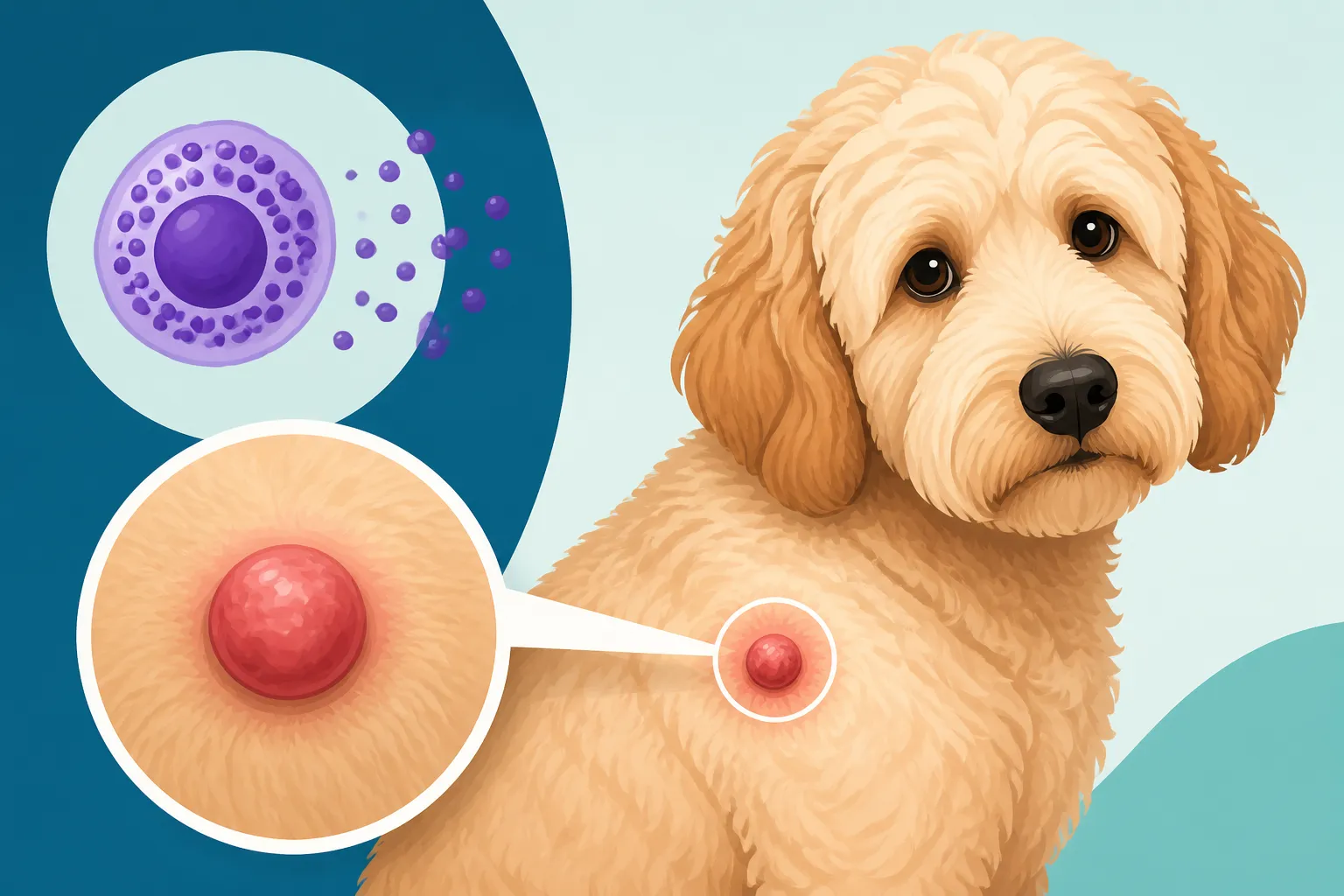
Mast Cell Tumors on a Labradoodle
Finding a new lump on your beloved Labradoodle can send a jolt of panic through any dog owner. One minute you're enjoying a relaxing belly rub, the next your fingers brush against something unfamiliar, and your mind immediately races to the worst-case scenario. It's a terrifying moment, filled with anxiety and uncertainty. Unfortunately, some lumps are more serious than others, and mast cell tumors are a type of cancer that Labradoodles, like many other breeds, can be prone to developing. This comprehensive guide aims to shed light on mast cell tumors, helping you understand what they are, how they're diagnosed and treated, and what you can do to be prepared.
What Exactly Are Mast Cell Tumors in Labradoodles?
Mast cell tumors are a sneaky, often unpredictable type of cancer that arises from mast cells, which are a normal part of your dog's immune system. When these cells go rogue, they can form tumors that range from relatively benign to highly aggressive. It’s important not to underestimate any lump until you know exactly what you’re dealing with.
Understanding Mast Cells and Their Role
Let's start by understanding what mast cells are supposed to do. In a healthy dog, mast cells are like the body's little alarm systems. They're found throughout the body, especially in areas that are exposed to the outside world, like the skin, respiratory tract, and gastrointestinal tract. Their job is to respond to inflammation and allergic reactions. When triggered, they release substances like histamine, which causes local swelling, redness, and itching – think of an insect bite or an allergic reaction to pollen. This is a crucial part of the immune response, helping to protect your dog from foreign invaders.
The problem starts when these mast cells begin to multiply uncontrollably and form a tumor. This isn't just a benign accumulation of cells; it's a cancerous growth that can infiltrate surrounding tissues and, in more aggressive forms, spread to other parts of the body. The unpredictable nature of these tumors is what makes them so concerning. You might see a small, innocent-looking bump on your Labradoodle's skin that turns out to be a high-grade, aggressive tumor, while a larger, uglier one might be less aggressive. It's a true medical conundrum that requires careful investigation.
Why Labradoodles Seem Susceptible
While any dog can develop mast cell tumors, certain breeds show a higher predisposition, and unfortunately, the Labradoodle's genetic heritage puts them squarely in this category. Both parent breeds, the Labrador Retriever and the Poodle, have documented instances of mast cell tumors. Labrador Retrievers are known for being prone to various cancers, and mast cell tumors are definitely on that list. Standard Poodles, too, have a higher incidence of these tumors compared to the general dog population.
So, when you combine these two breeds, even with the hope that Whether Hybrid Vigor Is Real in a Labradoodle might offer some protection, you're still working with a genetic blueprint that carries a higher risk. The idea of hybrid vigor suggests that cross-breeds might be healthier than purebreds, but it doesn't always shield them from every single genetic vulnerability present in the parent lines. This means that while your Labradoodle benefits from the intelligence of the Poodle and the friendly nature of the Labrador, they also inherit some of their predispositions to certain health issues, including mast cell tumors. It's a frustrating reality for many owners who chose a Labradoodle hoping to sidestep some of these breed-specific health concerns.
The Varying Appearance of Mast Cell Tumors
One of the most frustrating aspects of mast cell tumors is their ability to mimic almost any other skin lesion. They are often called "the great imitator" for a reason. You might find a small, soft, movable lump under the skin that feels just like a benign fatty tumor (lipoma). Or it could be a firm, raised nodule that looks like a wart. Sometimes, they can even appear as an angry, red, ulcerated sore that seems more like an allergic reaction or an infection. This wide range of appearances means you can never assume a lump is harmless based on how it looks or feels alone.
Common locations for these tumors include the trunk (body), limbs, and head. However, they can occur anywhere on the skin. What's even more concerning is that mast cell tumors aren't confined to the skin. While skin tumors are the most common, they can also arise in internal organs, such as the spleen, liver, lymph nodes, or even the bone marrow. These internal tumors are often more aggressive and harder to detect until they've progressed significantly. This is why any new lump, no matter how small or seemingly benign, warrants immediate veterinary attention. Don't wait to see if it grows or changes; prompt action is key.
Diagnosing Mast Cell Tumors and Staging the Disease
Once you've found a suspicious lump on your Labradoodle, the next step is to get a definitive diagnosis. This process involves several stages, from initial cell examination to determining if the cancer has spread throughout the body. Each step provides crucial information that guides the treatment plan and helps predict your dog's prognosis.
The Crucial First Step: Fine Needle Aspirate (FNA)
When you take your Labradoodle to the vet for a new lump, the first and most common diagnostic tool is often a fine needle aspirate (FNA). This procedure is typically quick, minimally invasive, and can often be done right in the examination room without sedation. Your vet will use a very fine needle, similar to those used for vaccinations, to collect a small sample of cells directly from the lump. These cells are then spread onto a slide and examined under a microscope.
What the veterinarian or a veterinary pathologist is looking for are the distinctive mast cells, often characterized by their granular appearance. These granules contain the inflammatory substances that mast cells are known for. While an FNA can often confirm the presence of a mast cell tumor, it doesn't always provide a definitive grade (how aggressive the tumor is). Sometimes, the sample might not contain enough diagnostic cells, leading to an inconclusive result. This doesn't mean the lump isn't a mast cell tumor, just that a more invasive biopsy might be needed. Despite these limitations, an FNA is an invaluable first step. It's relatively inexpensive and can provide an answer quickly, helping you avoid unnecessary worry or immediately pursue further action if needed. This early detection method is vital, as any delay can make treatment more challenging.
Beyond FNA: Biopsy and Histopathology for Grading
If the FNA confirms a mast cell tumor or is inconclusive but suspicion remains high, the next step is usually a biopsy. A biopsy involves surgically removing a piece of the tumor, or even the entire small tumor if it's feasible, and sending it to a specialized veterinary pathologist for histopathology. This is where the definitive diagnosis and, crucially, the grading of the tumor happen.
The pathologist examines the tissue under a microscope, looking at various cellular characteristics like how rapidly the cells are dividing, how uniform they are, and how much they've invaded surrounding tissues. Based on these features, the tumor is assigned a grade. Traditionally, mast cell tumors were graded on a scale of I, II, or III, with Grade I being the least aggressive and Grade III being the most aggressive. However, many pathologists now use a two-tier system, classifying tumors as either low-grade or high-grade. This system often provides a clearer indication of prognosis. Low-grade tumors generally have a better prognosis with surgical removal, while high-grade tumors are much more aggressive, with a higher likelihood of local recurrence and metastasis (spreading to other areas). The pathologist will also assess the "margins" – the edge of the removed tissue – to see if the tumor cells extend to the very edge, indicating that not all cancerous tissue may have been removed. Clear margins are essential for a good prognosis with surgical treatment.
Staging for Internal Spread
Once a mast cell tumor has been diagnosed and graded, the next critical step is "staging." Staging helps determine if the cancer has spread beyond the initial tumor site to other parts of the body. This is especially important for high-grade tumors, which have a higher metastatic potential, but it can also be recommended for some low-grade tumors depending on their location and other factors.
Common staging procedures include aspirating and analyzing regional lymph nodes (lymph nodes near the tumor site) to see if cancer cells have migrated there. An abdominal ultrasound might be performed to check internal organs like the spleen and liver, which are common sites for mast cell tumor metastasis. In some cases, a bone marrow biopsy might be considered. The information gathered from staging is vital. If the tumor has already spread, it significantly impacts the treatment strategy and prognosis. It's a stark reality that can be incredibly difficult for owners to face, but knowing the full extent of the disease allows for the most informed decisions about your Labradoodle's care. These tests, while necessary, can add to the financial burden, which is why having a pet insurance plan, such as one from Healthy Paws, can be a huge relief in these stressful times. They can help cover a substantial portion of these diagnostic costs, allowing you to focus on your dog's health rather than the unexpected expenses.
Treatment Options and Prognosis for Labradoodles
Receiving a mast cell tumor diagnosis is daunting, but it’s important to remember that there are often effective treatment options available. The approach taken will depend heavily on the tumor's grade, location, and whether it has spread. A multi-modal approach is often necessary to give your Labradoodle the best possible outcome.
Surgical Excision: The Primary Approach
For most mast cell tumors, especially those confined to the skin, surgical removal is the cornerstone of treatment. The goal of surgery is to achieve "wide, clean margins," meaning the surgeon removes the tumor along with a significant amount of surrounding healthy tissue. This is done to ensure that all cancerous cells are removed and none are left behind to regrow. Depending on the tumor's location and size, this can sometimes result in a larger incision and recovery area than you might expect for what appears to be a small lump.
The importance of obtaining clean margins cannot be overstated. If the histopathology report indicates "dirty margins" (meaning tumor cells were found at the edge of the removed tissue), it strongly suggests that some cancer cells remain in your dog's body. In such cases, a second surgery to remove more tissue from the area (known as a re-excision) might be recommended, or your vet might suggest other adjunctive therapies. Early detection is a huge advantage here; smaller tumors that haven't deeply invaded surrounding tissues are much easier to remove with adequate margins. This is precisely why regular physical checks of your Labradoodle for any new bumps or changes are so vital. Ignoring a seemingly harmless bump can allow a tumor to grow and become more complicated to fully excise. Don't let a lump go unchecked; Whether a Lump Under a Labradoodle's Coat Gets Missed often depends entirely on diligent owner checks.
Radiation and Chemotherapy: Adjunctive Therapies
While surgery is often the first line of defense, it's not always enough on its own, especially for higher-grade tumors or those where complete surgical removal isn't possible. This is where adjunctive therapies like radiation and chemotherapy come into play.
Radiation therapy uses high-energy rays to kill cancer cells and can be an excellent option for tumors that are in difficult anatomical locations (like on a limb where wide surgical margins would require amputation) or when surgical margins are incomplete. It typically involves a series of treatments given over several weeks, requiring daily trips to a specialized veterinary oncology center. Chemotherapy, on the other hand, uses drugs to kill cancer cells throughout the body and is usually reserved for high-grade tumors, tumors that have metastasized, or to prevent metastasis in highly aggressive cases. There are even targeted chemotherapy drugs, like Palladia (toceranib phosphate) and Masivet (masitinib), specifically designed to treat certain types of mast cell tumors by targeting receptors on the cancer cells. These oral medications can often be given at home, though they require close monitoring for side effects. The decision to pursue these therapies is complex, involving discussions about potential benefits, side effects, and your Labradoodle's overall quality of life.
Managing Life with Mast Cell Tumors
Living with a Labradoodle diagnosed with mast cell tumors, especially an aggressive one, means adopting a proactive and vigilant approach to their care. The prognosis for mast cell tumors varies widely, depending almost entirely on the tumor's grade, stage, and the completeness of its removal. Low-grade, completely removed tumors often have an excellent prognosis, with many dogs living for years without recurrence. High-grade or metastatic tumors, however, carry a much more guarded prognosis, requiring ongoing management and monitoring.
A comprehensive care plan often includes regular follow-up appointments, often with a veterinary oncologist, to monitor for any recurrence of the original tumor or the development of new tumors. This might involve physical exams, blood tests, and imaging. Supportive care, such as antihistamines (like diphenhydramine) and stomach protectants (like famotidine), may be prescribed to help manage the release of histamine from the mast cells, which can cause symptoms like gastrointestinal upset or local irritation around the tumor. For dogs undergoing chemotherapy, careful management of side effects and nutritional support are crucial. The emotional toll on owners is significant, as you grapple with treatment decisions and the uncertainty of the future. It's a journey that requires strength, dedication, and open communication with your veterinary team. While some conditions like Life on Daily Medication for an Addisonian Labradoodle have a clear path of daily management, cancer can be much more unpredictable.
Here's a simplified overview of mast cell tumor grades and common approaches:
| Tumor Grade (Two-Tier System) | Characteristics | Prognosis (with adequate treatment) | Common Treatment Approaches |
|---|---|---|---|
| Low-Grade | Cells are well-differentiated, less aggressive | Good to excellent | Wide surgical excision, monitoring |
| High-Grade | Cells are poorly differentiated, aggressive, high mitotic index | Guarded to poor | Wide surgical excision, +/- radiation, +/- chemotherapy, monitoring |
Prevention and Early Detection Strategies
While we can't completely prevent cancer, especially given genetic predispositions, implementing robust early detection strategies is the single most powerful tool we have in managing mast cell tumors in Labradoodles. The sooner a suspicious lump is identified and investigated, the better the chances of a favorable outcome.
Regular Home Checks and Vet Visits
This might sound simple, but the most effective prevention strategy is literally in your hands: regular, thorough home checks. Make it a routine to gently run your hands over every inch of your Labradoodle's body during petting sessions. Feel for any new bumps, lumps, or changes in existing skin lesions. Pay close attention to areas like the armpits, groin, belly, and head, but don't forget the less obvious spots like between the toes or under the tail. If you find something new, even if it's tiny, take a photo and draw a small diagram, noting its size, location, and date discovered. This helps you track it and provides valuable information for your vet.
Beyond your diligent home checks, consistent veterinary care is non-negotiable. Your Labradoodle should be getting The Yearly Screening a Labradoodle Should Get, which includes a thorough physical examination by a professional. Vets are trained to identify subtle changes and often feel for lumps in areas you might miss. Don't hesitate to point out anything you've found at home, no matter how insignificant it seems. The general rule of thumb for any lump on a dog is: "any lump, any size, get it checked." It's far better to have a benign lump confirmed than to delay diagnosis of something serious.
Environmental and Genetic Considerations
When it comes to mast cell tumors, genetics certainly play a role, as discussed with the Poodle and Labrador heritage. Unfortunately, definitive environmental causes are not as clearly identified or easily controlled as, say, preventing flea infestations. There's ongoing research into various factors, but direct links to specific environmental carcinogens for mast cell tumors in dogs remain largely elusive for owners to directly manage.
However, promoting overall health and a strong immune system through a balanced diet, appropriate exercise, and minimizing exposure to known toxins (like cigarette smoke or certain lawn chemicals) is always beneficial for your Labradoodle's general well-being. While you might seek The Health Tests a Labradoodle Breeder Should Show to mitigate risks for conditions like hip dysplasia or inherited eye diseases, there isn't a specific genetic test currently available to predict a Labradoodle's individual risk for mast cell tumors. This emphasizes that even with the most responsible breeding and care, these tumors can still arise. The best you can do is focus on general health and, most importantly, diligent monitoring.
Financial Preparedness for Cancer Care
The reality of a cancer diagnosis, including mast cell tumors, is that it can come with significant financial costs. From initial diagnostic tests like FNAs and biopsies to advanced treatments like surgery, radiation, and chemotherapy, the bills can quickly accumulate. Surgical removal can range from hundreds to a few thousand dollars, while a full course of radiation or chemotherapy can easily run into several thousand, sometimes even tens of thousands of dollars, depending on the number of treatments and drugs used.
This is where being financially prepared can make a world of difference. Pet insurance, like a comprehensive plan from Healthy Paws, is an invaluable tool for managing these unexpected veterinary expenses. Enrolling your Labradoodle in a policy when they are young and healthy, before any signs of illness appear, ensures that conditions like mast cell tumors will be covered. If you wait until after a lump is discovered, it will likely be considered a pre-existing condition and therefore excluded from coverage. Knowing you have the financial backing to pursue the best possible treatment, rather than being forced to make difficult decisions based on cost, provides immense peace of mind during an incredibly stressful time. Just as you might have an emergency plan for an Addisonian Labradoodle, a financial plan for unexpected health crises is equally important for any dog owner.
Disclaimer
This article is for general informational purposes only and does not constitute professional advice. Laws, prices and regulations vary by location and change over time. Consult a qualified professional for guidance on your specific situation.