Whether a Labradoodle Suits Mobility Assistance
Labradoodle suitability for mobility assistance involves evaluating physical demands, temperament, size limits, and specific service tasks.
Work with the temperament you have.
House-training and crate work, recall, leash manners, separation anxiety, and the behaviors this breed is wired for.
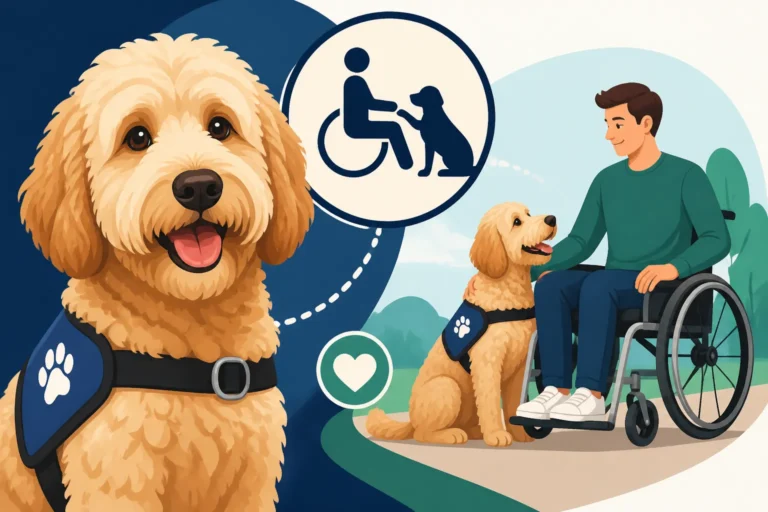
Labradoodle suitability for mobility assistance involves evaluating physical demands, temperament, size limits, and specific service tasks.
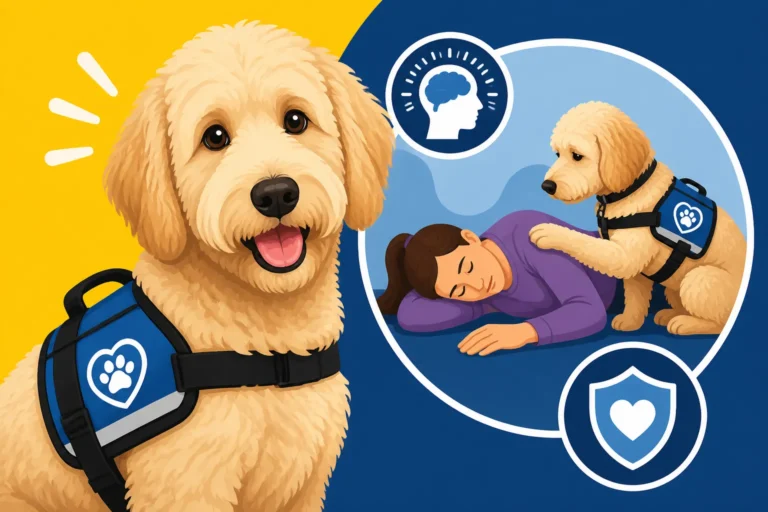
Labradoodle seizure response work requires specific traits, and this evaluation explains trained tasks and needed temperaments.
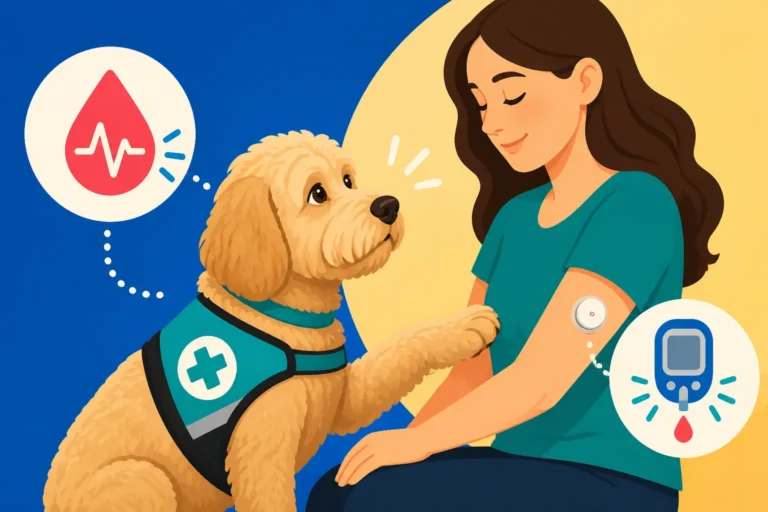
Labradoodle training for diabetic alert involves scent imprinting and rigorous preparation to detect blood sugar fluctuations.
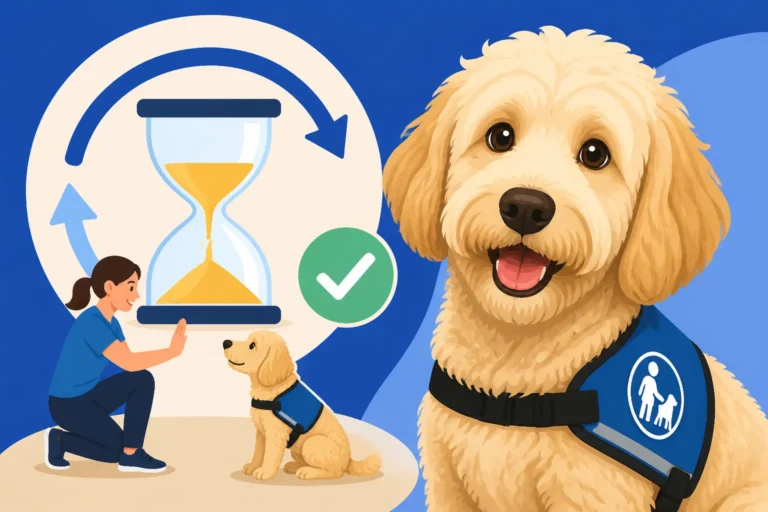
Training a service Labradoodle takes eighteen to twenty-four months, requiring rigorous early socialization and advanced obedience work.
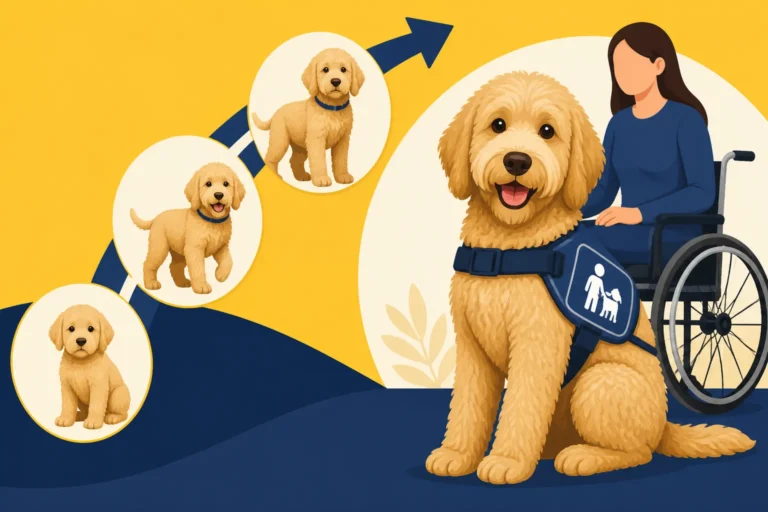
Service Labradoodle training timelines explain age ranges and milestones from puppyhood to formal work between six and eighteen months.
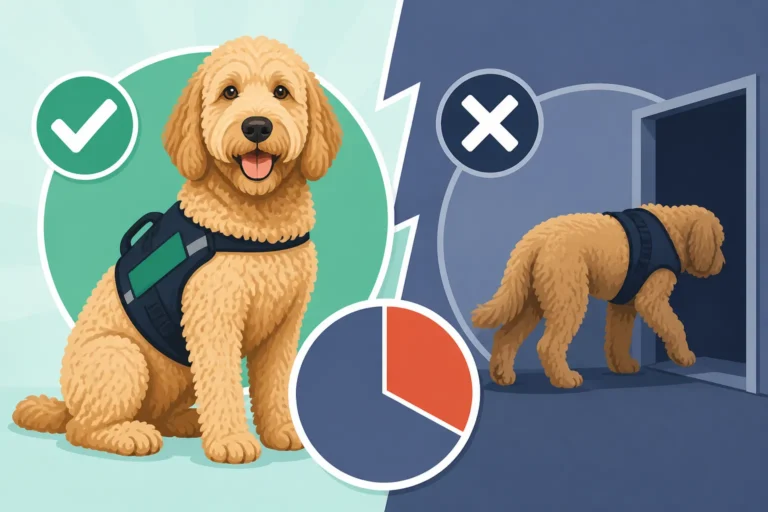
Labradoodle service dog training failure rates and the primary reasons why these animals wash out of formal programs.
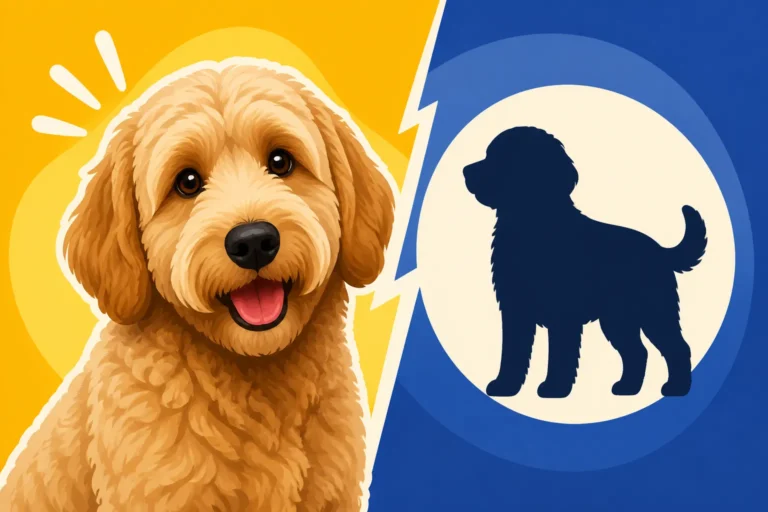
The original breeding of the first Labradoodle in 1989 involved specific guide dog traits alongside hypoallergenic coats.
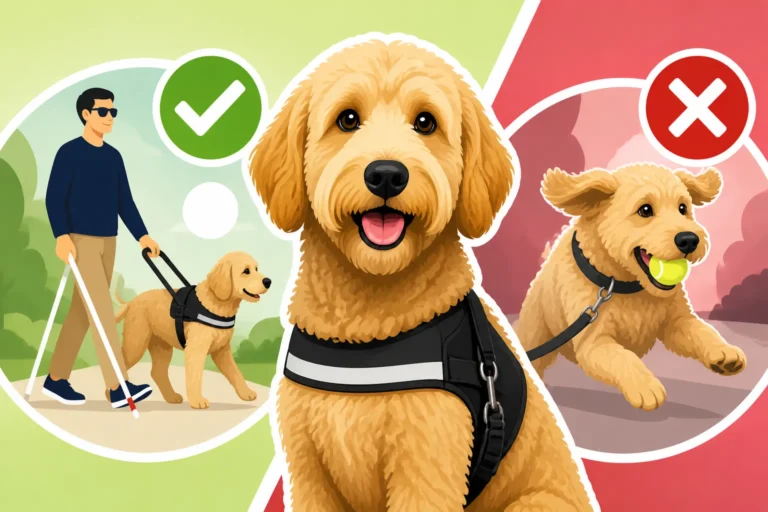
Labradoodle suitability as a seeing eye dog involves the 1989 cross by Wally Conron, genetics, and trait predictability.

Guide dog schools mostly stopped using Labradoodles due to unpredictable coats, inconsistent temperaments, and breeding challenges.
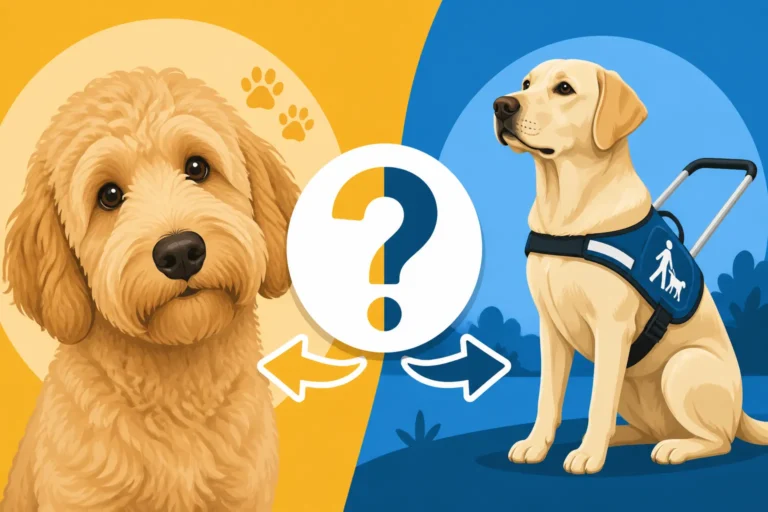
Guide Dogs Victoria no longer breeds Labradoodles because genetic unpredictability prevents consistent traits in assistance dogs.