What OFA Grades Mean on a Labradoodle
Orthopedic Foundation for Animals grades explain hip and elbow dysplasia risks in Labradoodles, helping owners evaluate breeder health claims.
Know what to watch for.
Breed-specific conditions, screening and DNA tests, what surgery actually costs, and the daily habits that stretch a healthy lifespan.
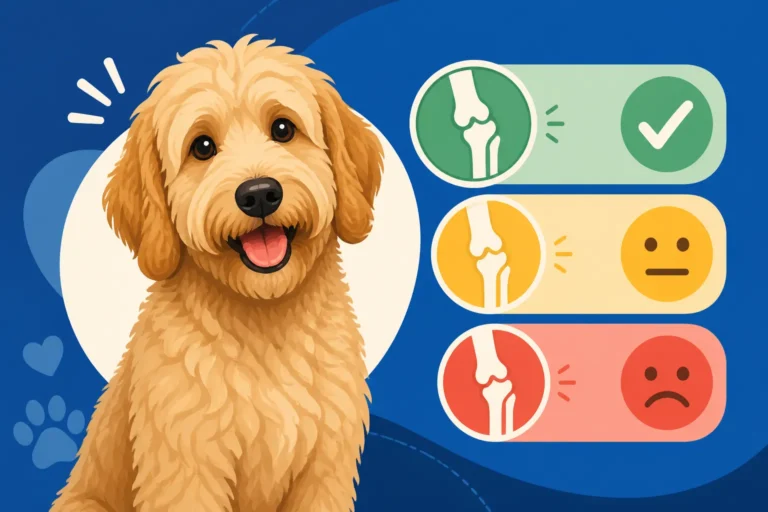
Orthopedic Foundation for Animals grades explain hip and elbow dysplasia risks in Labradoodles, helping owners evaluate breeder health claims.
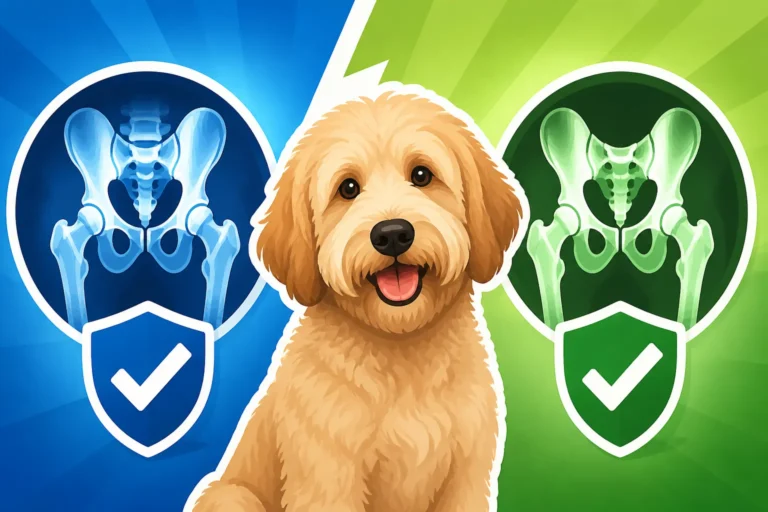
Comparing PennHIP and Orthopedic Foundation for Animals hip screenings helps Labradoodle owners choose the right joint health evaluation.
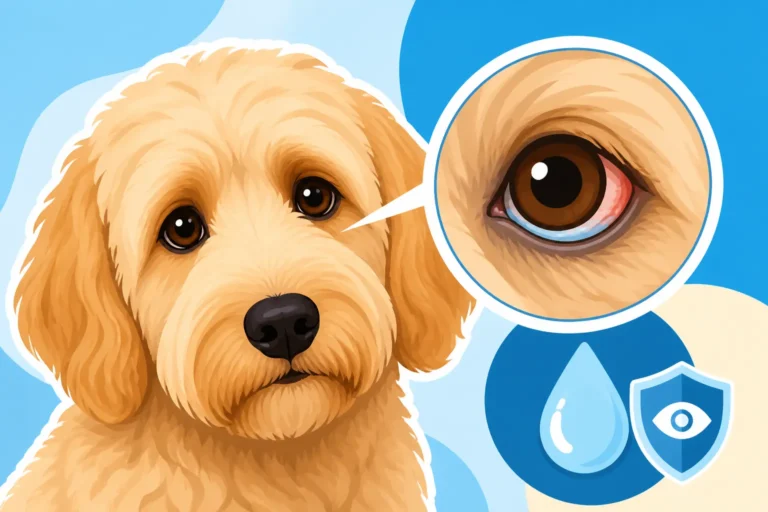
Labradoodle dry eye, or Keratoconjunctivitis Sicca, causes painful inflammation when the immune system attacks tear glands.

Labradoodle clear by parentage status means a puppy is presumed free of specific recessively inherited genetic conditions.
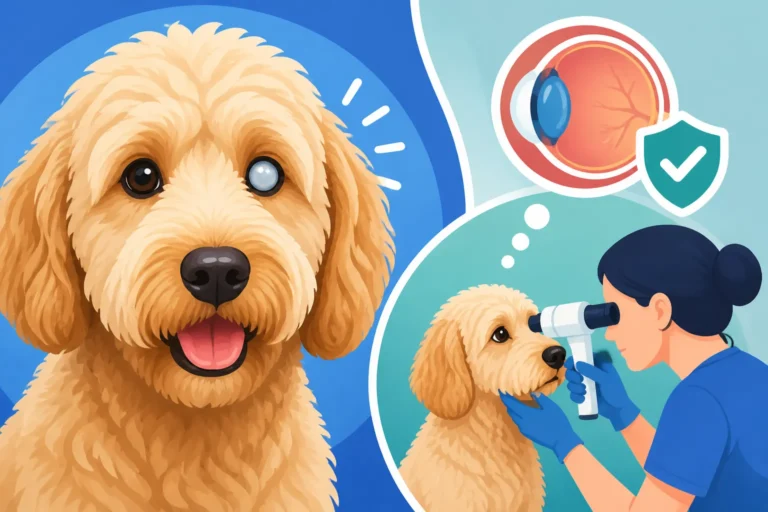
Labradoodle cataract surgery details, including genetic causes, visual signs, and recovery factors, for concerned pet owners.
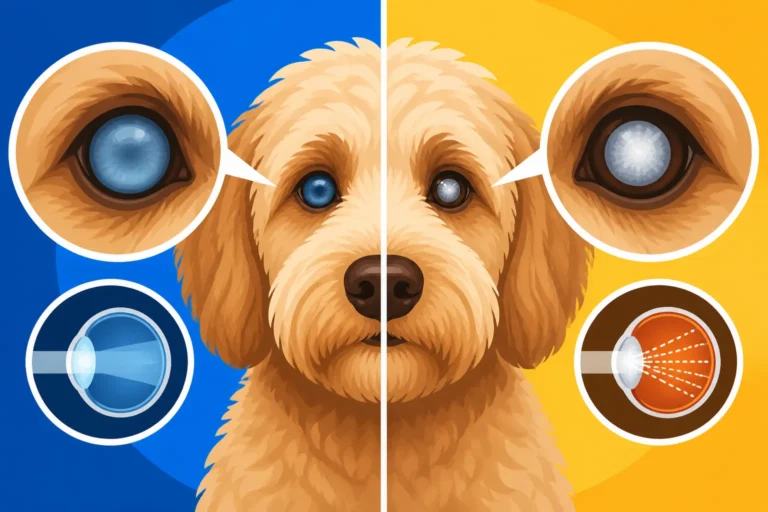
Nuclear sclerosis and cataracts in Labradoodles explained, detailing the grayish-blue haze of aging lenses and cloudy spots.
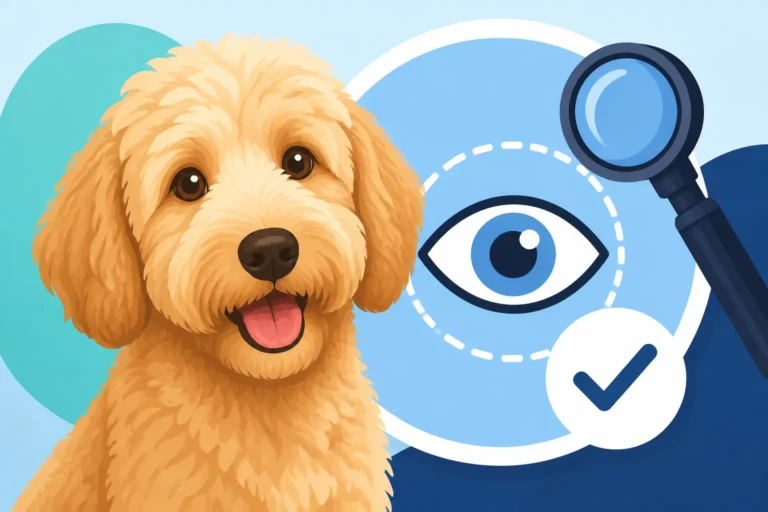
Yearly eye exams for Labradoodles detect inherited conditions like Progressive Retinal Atrophy and age-related cataracts early.

Labradoodle genetic health testing explains recessive diseases, carrier risks, and whether testing only one parent protects puppies.

Labradoodle eye certificates verify genetic health screening for inherited conditions like progressive retinal atrophy and cataracts.

Progressive rod cone degeneration is an inherited eye disease causing gradual vision loss and night blindness in Labradoodles.