Exercise for a Stiff Old Labradoodle
Senior Labradoodle exercise routines and low-impact activities help manage joint stiffness and maintain muscle mass safely.
The daily stuff, done right.
Feeding amounts by life stage, coat and skin routines, dental and nail care, exercise needs, and what changes as they age.
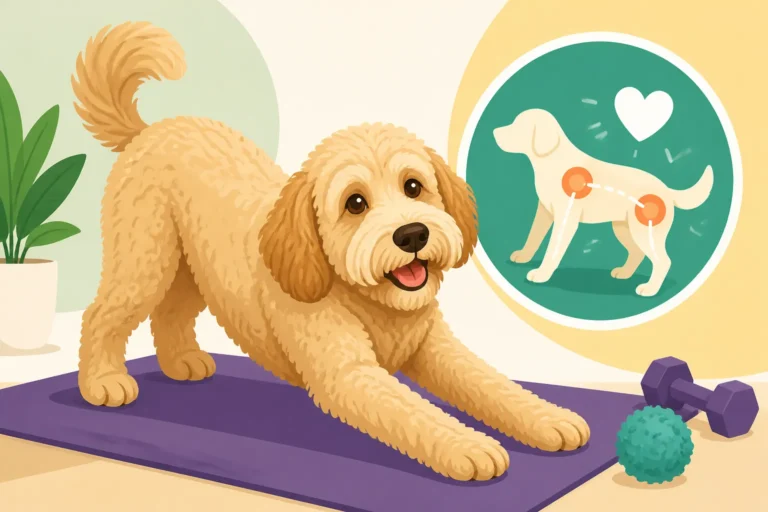
Senior Labradoodle exercise routines and low-impact activities help manage joint stiffness and maintain muscle mass safely.

Senior Labradoodle nutrition guidelines explain how to manage slower metabolism, weight gain, and joint inflammation after age ten.

Senior Labradoodle coat changes include graying muzzles, color fading, and texture shifts that signal aging and health needs.

Proper Labradoodle weight management relies on body condition scores, individual breed sizes, diet, and exercise routines.

Grain-free dog food and whether Labradoodles need this diet, addressing common misconceptions about grains and canine nutrition.

Labradoodle dietary transitions from puppy food to adult formulas depend on breed size, age timelines from nine to twenty four months, and physical maturity.

Labradoodle puppy daily feeding schedules, calorie densities, and nutrient ratios support rapid growth stages and long-term health.

Standard Labradoodle growth nutritional needs from zero to twenty four months across three distinct developmental life stages.

Labradoodle puppy nutrition requirements, including protein, calorie counts, and calcium ratios for healthy skeletal development.

Labradoodle paw hair trimming maintains proper traction, prevents painful matting, and ensures safe mobility on slick indoor floors.