Teaching a Labradoodle to Settle Under a Restaurant Table
Oh, the dream! You envision yourself enjoying a leisurely brunch, your beloved Labradoodle curled peacefully under the table, barely noticeable to anyone else. The reality, however, often involves a constant struggle under the table, a whiny interruption, or an embarrassing lunge at a dropped crumb. It's a common frustration for Labradoodle owners, but with a bit of dedicated training and understanding, that picture of canine restaurant etiquette can absolutely become your reality. This guide will walk you through building the foundation and then carefully introducing your Labradoodle to the art of polite public settling.
Understanding Why Settling is a Challenge for Labradoodles
Before we dive into training strategies, let's take a moment to understand why a Labradoodle might find settling under a restaurant table a monumental challenge. It's not about them being "naughty"; it's about their unique blend of genetics and natural instincts.
The Labrador's Eagerness and Curiosity
From their Labrador Retriever heritage, Labradoodles inherit a boundless enthusiasm for life and a keen interest in their surroundings. Think about it: a restaurant is a sensory overload! There are new smells (oh, the food!), different people walking by, clanking dishes, and fascinating sounds. A Labrador's instinct is to engage with the world, to retrieve, to investigate. Sitting still and ignoring all this stimulation goes against their very nature. They want to be part of the action, or at least sniff out what's happening. This isn't a flaw; it's what makes them such joyful companions, but it does mean we have to guide that energy.
The Poodle's Intelligence and Sensitivity
Then there's the Poodle influence. Poodles are incredibly intelligent and often quite sensitive. This intelligence means they pick up on cues quickly, but it also means they can get bored easily if not given enough mental stimulation. A Poodle might find the monotony of sitting under a table quite tedious, leading to fidgeting, whining, or trying to find their own entertainment. Their sensitivity can also mean they react more strongly to novel or slightly stressful environments, making them more prone to anxiety or over-excitement in a busy restaurant setting. It’s a double-edged sword: they’re smart enough to learn, but also smart enough to find sitting boring!
General Labradoodle Energy Levels
Let's be honest, Labradoodles, regardless of their generation or specific blend, tend to be active dogs. They thrive on exercise and mental engagement. Expecting a Labradoodle to go from zero to perfectly calm in a stimulating environment without proper preparation is like expecting a toddler to sit through a three-hour opera without any toys or snacks. Their natural zest for life needs an outlet, and if they haven't had enough physical and mental exercise before heading out, they'll have an abundance of pent-up energy that will make settling nearly impossible. This is why The Exercise a Labradoodle Needs Before It Behaves is such a crucial foundation.
Laying the Groundwork: Training at Home
You wouldn't ask your Labradoodle to perform advanced calculus without teaching them basic arithmetic, right? The same logic applies to public etiquette. You need to establish a rock-solid foundation of calm behavior at home before you even think about stepping paw inside a bustling restaurant.
Mastering the "Place" Command
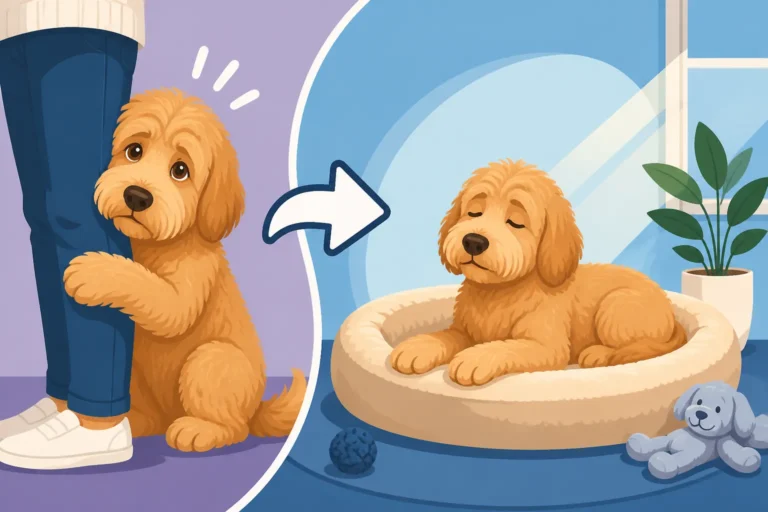
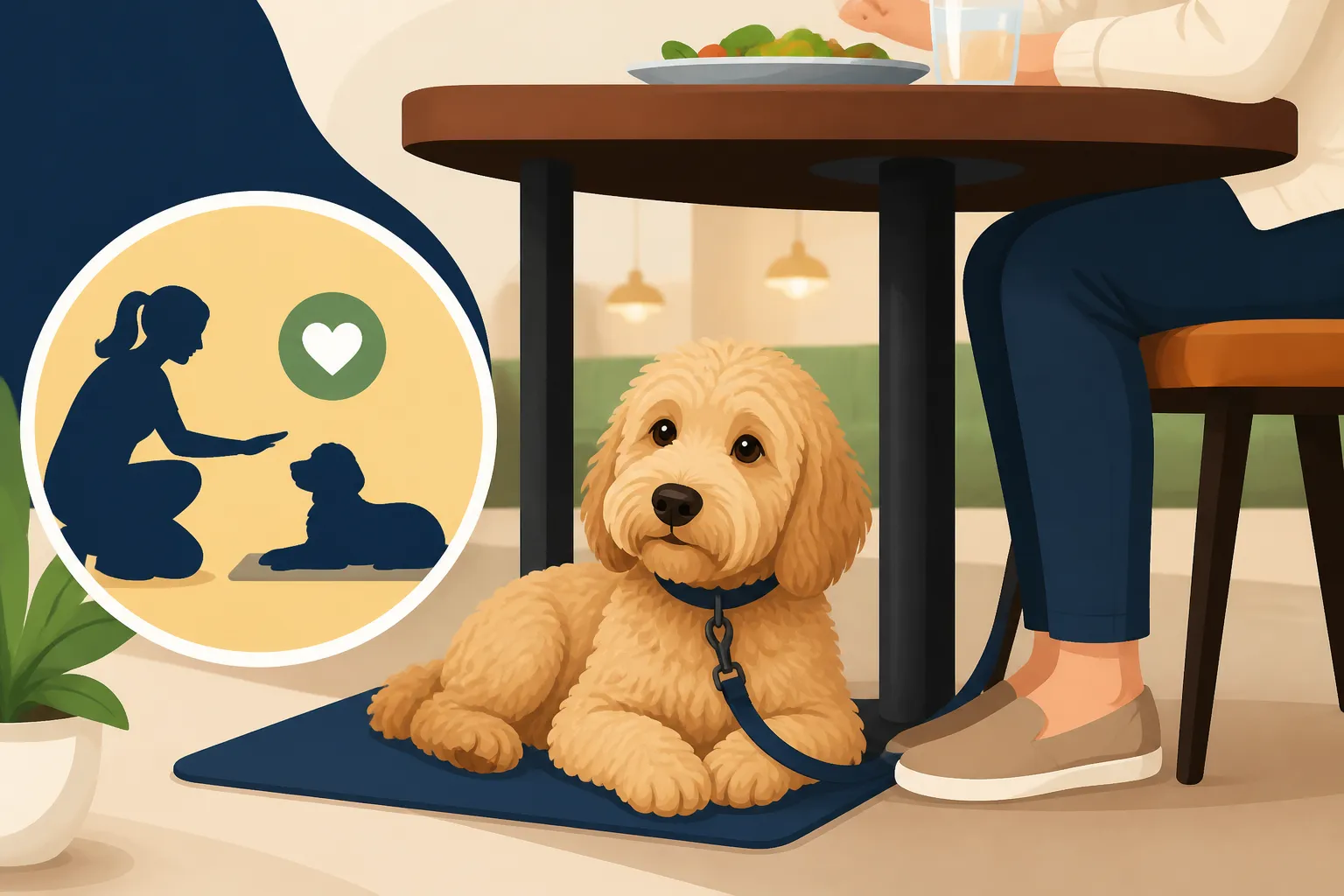
The "place" command is your absolute superpower for teaching your Labradoodle to settle. It teaches them to go to a designated spot (like a dog bed, mat, or even a towel) and stay there until released, regardless of distractions. Start small, asking them to "place" for a few seconds, then gradually build up the duration. Reward heavily for staying on their mat, especially for lying down and relaxing. Practice with increasing distractions around the house: you walking by, someone else entering the room, a dropped toy.
This command teaches self-control and provides a clear expectation for your dog. Many online training programs, like those offered by BAXTER & Bella, have excellent modules on mastering the "place" command, breaking it down into manageable steps for both you and your dog. Think of this mat as their personal, portable calm zone. When you eventually take them to a restaurant, that mat will be their familiar anchor in a new environment. This is also hugely helpful for teaching your Labradoodle to Teaching a Labradoodle to Lie Still for a Ninety Minute Groom, which requires similar patience and stillness.
Building Duration and Impulse Control
Once your Labradoodle understands "place," the next step is to extend the duration and strengthen their impulse control. Can they stay on their mat for five minutes? Ten? Thirty? Can they stay there while you eat your dinner, or while the doorbell rings? These are the real-world skills that translate directly to a restaurant setting.
- Practice "settle": Beyond "place," teach a general "settle" cue. This means relaxing wherever they are. Lure them into a down position, then reward them for simply being calm, quiet, and still. Slowly increase the time they need to remain settled before getting a reward.
- "Leave It" and "Stay": These are non-negotiable. "Leave It" is vital for ignoring dropped food, passing strangers, or other dogs. "Stay" reinforces the "place" command and ensures they don't wander off. Practice these commands frequently, gradually adding distractions. A great way to practice "Leave It" is by placing a tempting treat on the floor and only rewarding them when they ignore it and look to you. This directly addresses the common Labradoodle challenge of Teaching a Labradoodle to Ignore Food on the Floor.
- Manage their environment: Initially, set your Labradoodle up for success. If they're struggling, reduce distractions. Use a tether to keep them on their mat during training sessions. This isn't a punishment; it's a management tool to help them learn what you want.
Transitioning to Public Spaces: Step-by-Step
Now that your Labradoodle is a zen master at home, it's time to introduce them to the real world. This isn't a leap; it's a series of small, carefully planned steps. Rushing this stage is a recipe for disaster and will undo all your hard work.
Start Small and Quiet: Patios and Quiet Cafes
Don't dive straight into a bustling dinner rush at a fancy restaurant. Begin with low-stakes environments.
- Outdoor patios: Many cafes and restaurants have dog-friendly patios. Choose a time that isn't peak hours, perhaps a weekday morning or a late afternoon. The outdoor setting provides more space and fewer sensory challenges than an enclosed indoor space.
- Choose your spot wisely: When you arrive, ask for a table in a corner or against a wall, away from high-traffic areas like server stations or entrances. You want to minimize the number of people and dogs walking directly past your Labradoodle.
- Bring their comfort items: Always bring their "place" mat. This familiar scent and texture will help them feel secure. Also, pack a long-lasting, high-value chew toy (like a filled Kong or a safe chew stick you can find on Amazon) that will occupy them for a good portion of your visit. This gives them something appropriate to do instead of looking for trouble.
- Keep initial visits short: Your first few outings should be brief, even just 15-20 minutes. The goal is success, not endurance. Order a coffee, let them settle, reward, and leave before they get bored or stressed. Gradually increase the duration as they show consistent calm.
Gradually Increase Distractions and Duration
Once your Labradoodle is comfortably settling on a quiet patio, you can slowly turn up the dial.
- Vary locations: Try different dog-friendly patios or cafes. Each new environment presents new sights, sounds, and smells.
- Increase duration: Extend your stays from 20 minutes to 30, then 45, and eventually an hour or more. Remember to incorporate breaks if needed, taking them for a quick potty break and stretch.
- Introduce mild distractions: If they're doing well, try a slightly busier time, or a location with a bit more foot traffic. Continue to reinforce their calm behavior. Reward them for ignoring a passing child or another dog. This is where their "leave it" command really comes into play. If your Labradoodle is prone to being a "Velcro dog" and struggling with alone time, these public training sessions also subtly teach them that you can be present without constantly interacting, which can help with The Alone Time a Velcro Labradoodle Can Build To.
| Training Stage | Environment | Goal | Key Tools & Strategies |
|---|---|---|---|
| Foundation (Home) | Living room, kitchen, yard | Master "Place," "Settle," "Leave It," "Stay" | Mat, high-value treats, tether, consistent practice |
| Stage 1 (Low Dist.) | Quiet outdoor cafe patio | 15-20 mins calm, ignoring mild passing stimuli | Mat, chew toy, corner table, frequent small rewards |
| Stage 2 (Med. Dist.) | Busier outdoor patio, different cafes | 30-45 mins calm, ignoring moderate foot traffic | Mat, chew toy, slightly longer stays, varied locations |
| Stage 3 (High Dist.) | Indoor dog-friendly establishment, peak hours | 1+ hour calm, ignoring significant activity | Mat, tether (if needed), highest value chew, patience |
Practicing Inside Dog-Friendly Establishments
Only once your Labradoodle is consistently a star on patios should you consider moving indoors to a truly dog-friendly establishment.
- Research beforehand: Confirm the restaurant is genuinely dog-friendly indoors. Some places have specific rules or designated areas.
- Manage expectations: Indoor environments amplify sound and reduce space. Your Labradoodle might find it more challenging.
- Bring ALL your tools: Their mat, their favorite high-value chew, and a tether to secure them discreetly to your chair leg (ensure it's not a tripping hazard and doesn't allow them to wander). This prevents them from trying to greet other diners or explore.
- Be an advocate: If your dog is struggling, don't hesitate to cut the visit short. It's better to end on a slightly positive note than to push them to a meltdown. Advocate for their comfort, and don't be afraid to leave if they're clearly not enjoying it or are becoming disruptive.
Troubleshooting Common Restaurant Challenges
Even with the best preparation, you might encounter a few bumps in the road. It's how you handle them that truly matters.
Excessive Barking or Whining
This is perhaps the most common and disruptive issue. It's often a sign of over-excitement, boredom, or anxiety.
- Identify the trigger: Is it people walking by? Other dogs? You getting up? Once you know the trigger, you can anticipate it.
- Pre-empt and redirect: If you see a trigger approaching, gently redirect your Labradoodle's attention to you with a quiet cue, or offer them their high-value chew. Reward them for staying quiet.
- Teach "quiet": When your dog barks, wait for a momentary pause, then mark and reward "quiet." Repeat this until they understand. Eventually, you can use the cue "quiet" before they start barking.
- Management: If barking persists, a quick "reset" might be needed. Take them outside for a brief potty break and a few minutes of calm walking, then re-enter. If they're truly over-threshold, it's time to go home. Remember, sometimes a dog that seems to be "forgetting everything" at ten months old might just be overstimulated, as discussed in The Ten Month Old Labradoodle That Forgets Everything.
Lunging or Pulling Towards Distractions
A sudden lunge towards another dog or a delicious-smelling plate of food can be both embarrassing and dangerous.
- Reinforce "leave it": As mentioned, a rock-solid "leave it" is your best friend. Practice this heavily in various scenarios.
- Use appropriate gear: A front-clip harness or a head halter can give you more control without causing discomfort, especially if your Labradoodle is prone to pulling on a flat collar. Avoid retractable leashes, as they give too much slack and can actually encourage lunging.
- Block their view: If possible, position your Labradoodle so their view of a known trigger is obstructed by your legs or the table.
- Reward calm: The moment your Labradoodle notices a distraction but chooses to stay calm or look at you, reward them. We want to reinforce the choice to not lunge. Building a strong Building a Recall a Labradoodle Answers Off Leash is also a good habit to prevent any accidental escapes.
Counter Surfing or Begging
Labradors are known for their love of food, and this often translates to Labradoodles being quite adept at finding snacks, whether on the counter or under the table.
- "Leave It" (again!): This command is paramount. Practice it with food on the floor, on low tables, and even on your own plate.
- Keep them tethered: When under the table, keep them on a short leash, tethered to your chair. This physically prevents them from getting too close to the table or other patrons' feet.
- No human food: Be incredibly consistent. Absolutely no scraps from the table, no matter how cute those puppy dog eyes are. If you feed them from the table, you are actively teaching them to beg.
- Provide their own chew: As mentioned, their high-value chew toy is a fantastic alternative. It gives them an appropriate outlet for chewing and keeps their mind occupied. For a comprehensive guide on this particular problem, you might want to review A Labradoodle That Counter Surfs.
Restlessness and Fidgeting
Sometimes a Labradoodle isn't barking or pulling, but they're just constantly shifting, sighing, or generally unable to relax.
- Exercise before: A tired Labradoodle is a good Labradoodle. Ensure they've had a solid walk, run, or play session before you head to the restaurant. Getting their physical energy out will make mental settling much easier. Consider if The Time a Labradoodle Takes Out of a Week is sufficient to truly tire them out before such outings.
- Mental stimulation: Their chew toy serves as mental stimulation, keeping boredom at bay.
- Short breaks: If they start getting restless, take them outside for a quick, calm potty break and a moment to sniff around. Sometimes just a change of scenery for a minute or two can help them reset.
- Patience and practice: This is often a sign that they need more practice in less distracting environments or for shorter durations. Go back to basics if needed. Remember, sometimes Whether a Crate Helps a Labradoodle Switch Off at home can be a good indicator of their ability to settle in general.
Teaching your Labradoodle to be a polite restaurant companion takes time, consistency, and a huge dose of patience. But the reward—sharing meals and experiences with your well-behaved furry friend—is absolutely worth every effort.
Disclaimer
This article is for general informational purposes only and does not constitute professional advice. Laws, prices and regulations vary by location and change over time. Consult a qualified professional for guidance on your specific situation.