Teaching a Labradoodle to Stand for the Clippers
It’s a scenario many Labradoodle owners know all too well: the grooming session. You know your beloved Dood needs a good clip to keep their gorgeous coat from matting, but the moment the clippers come out, they turn into a wiggling, protesting pile of fur. Trying to get your Labradoodle to stand still, calmly and confidently, for the clippers is a monumental task that often feels impossible, leading to frustration for both you and your furry friend. This guide is here to walk you through how to teach your Labradoodle to cooperate beautifully, transforming grooming from a battle into a bonding experience.
Understanding the Labradoodle's Grooming Challenges
Let's face it, Labradoodles are stunning dogs, but their coats can be a double-edged sword. That beautiful fleece or wool often comes with high maintenance demands that many new owners underestimate. Getting them to stand still for grooming isn't just about obedience; it's about overcoming their natural instincts and the sensory overload that clipping can present.
Natural Instincts Working Against Us
Dogs, by nature, are not designed to stand perfectly still for extended periods, especially when something buzzy and vibrating is approaching their body. Their instincts tell them to move away from unfamiliar sensations, and being held in one place can feel incredibly vulnerable or even threatening. For a high-energy breed like the Labradoodle, who often inherits a playful, sometimes easily distracted nature from both the Labrador and Poodle lines, standing still can feel like an eternity. Imagine trying to explain to a toddler why they need to hold perfectly still while you trim their nails – it's a similar challenge, driven by an instinct for movement and a lack of understanding of the long-term benefit.
Moreover, the Poodle side often comes with a degree of sensitivity. They might be more prone to reacting to the noise or vibration of clippers, which can be quite intense close to their ears or sensitive skin. It’s not necessarily defiance; it’s often a genuine discomfort or fear that we, as owners, need to address with patience and positive reinforcement. Many owners find their Doods are wonderfully trainable in other areas, but grooming hits a wall because it directly conflicts with these deep-seated canine instincts.
The Complexity of the Labradoodle Coat
The Labradoodle's coat isn't just a styling choice; it's a functional aspect that requires specific care. Whether your Dood has a flowing fleece coat or a denser wool coat, both are prone to matting if not properly maintained. The Three Labradoodle Coats: Hair, Fleece and Wool dives deeper into these types. Mats aren't just cosmetic; they can pull on the skin, cause pain, hide skin infections, and even restrict movement. This means that regular, thorough clipping and brushing aren't optional – they're essential for your dog's health and comfort.
However, the very nature of these coats can make clipping challenging. Thick, dense hair can clog clipper blades, making the process longer and more uncomfortable for your dog. If the dog is already matted, clipping can be even more painful, creating a negative association with the clippers. This is why learning to Brush a Labradoodle to the Skin, Not the Surface is so critical from a young age. The sheer volume of hair also means that grooming sessions can be lengthy, demanding sustained cooperation from your Labradoodle, which is a big ask for any dog, let alone one still learning patience.
Building a Strong Foundation: Early Desensitization
The secret to a calm Labradoodle during grooming starts long before the clippers even come out for a full trim. It’s all about early, consistent, and positive desensitization, ideally starting the moment your puppy comes home. This isn't just about training a trick; it's about building a trusting relationship where your dog associates handling and grooming tools with good things.
Positive Associations from Day One
From the very first day you bring your Labradoodle puppy home, every interaction with their body and grooming tools should be overwhelmingly positive. Think of it as a game, not a chore. Start by simply touching their paws, ears, tail, and muzzle while offering high-value treats. Don't push it; just a quick touch and a delicious reward. The goal is to create a Pavlovian response: human touch, especially in potentially sensitive areas, equals yummy treats. This foundational work is crucial because it teaches them that human hands exploring their body isn't scary, it's rewarding.
Introduce a soft brush, a silent nail grinder (or even just your fingers simulating the motion), and even the clippers turned off during these sessions. Let them sniff the tools, reward them for curiosity, and briefly touch the tools to their body, always followed by a treat and praise. These initial exposures should be incredibly short – just a few seconds – and always end on a positive note. The idea is to make these tools part of their normal, happy experience, rather than something alien and intimidating. If you're struggling with basic puppy manners, many online platforms offer excellent resources. For example, BAXTER & Bella has comprehensive puppy training programs that emphasize positive reinforcement, which can be invaluable for laying this groundwork.
Gradual Introduction to Clipper Sensation
Once your Labradoodle is comfortable with the sight and touch of inactive grooming tools, it's time to introduce the sensation of the clippers. This is where patience truly comes into play. Start by turning the clippers on in another room, so the sound is muffled. As your puppy remains calm, give them a treat. Gradually, bring the clippers closer, always rewarding calmness and silence. The goal is to make the sound a non-event.
Next, turn the clippers on and hold them near your dog, but don't touch them. Reward heavily for no reaction. Then, briefly touch the side of the inactive clippers to your dog's shoulder, then the active clippers to their shoulder for just a split second, immediately followed by a super special treat. You're aiming to gradually desensitize them to the vibration and sound without causing fear. Progress slowly, over days or even weeks. If your dog shows any signs of fear (tucking tail, trying to escape, growling), you've gone too fast. Go back a step and work at a slower pace. Desensitizing a Labradoodle to the Clipper Vibration offers even more detail on this specific challenge.
Essential Tools and Grooming Environment
You wouldn't try to build a house with a screwdriver and a butter knife, right? The same logic applies to grooming your Labradoodle. Having the right tools and setting up a conducive environment are absolutely critical for success, for both your dog's comfort and your sanity.
The Right Clippers and Blades
Choosing the correct clippers for your Labradoodle's coat is paramount. Not all clippers are created equal, especially when dealing with dense, often curly, Labradoodle hair. Invest in professional-grade clippers designed for thick dog coats. Look for models that are relatively quiet and have low vibration to minimize sensory distress for your Dood. Many reputable brands offer such clippers, and you can often find a good selection on platforms like Amazon. Cordless options can offer more flexibility, but ensure they have good battery life.
Equally important are the blades. You'll need different blade sizes for various parts of the body and for different coat lengths. A #10 blade is standard for sanitary trims, while longer blades (like #4F or #5F) are often used for body work. Always ensure your blades are sharp; dull blades pull the hair, causing pain and making your dog hate the experience. Keep clipper coolant spray on hand, as blades can heat up quickly, burning your dog's skin. Overheating blades are a common reason dogs become agitated during clipping. Having a spare, cool blade ready to swap out is a game-changer for longer sessions. For more on what tools you might need, check out The Clipper, Blade and Dryer a Labradoodle Owner Buys.
Creating a Calm Grooming Station
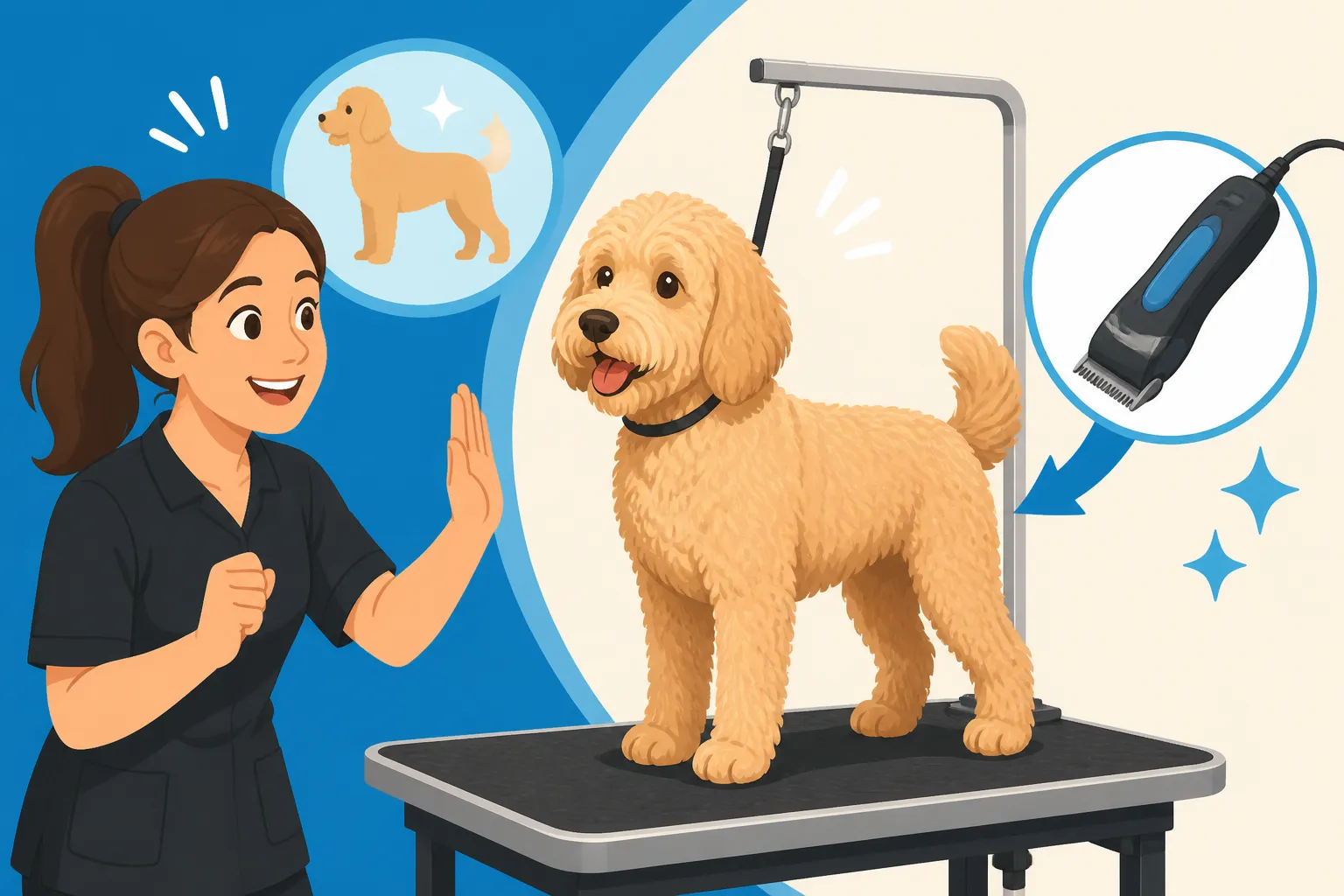
The environment where you groom your Labradoodle should be a sanctuary of calm. A dedicated grooming table is highly recommended, even if you're only doing occasional trims. A proper grooming table, often available on Amazon, elevates your dog to a comfortable working height, saving your back and helping your dog understand that this is a specific, focused activity. The non-slip surface also provides stability, which is crucial for a dog learning to stand still.
Ensure the area is quiet and free from distractions. Turn off the TV, ask family members to give you space, and secure any other pets. Have all your tools laid out and ready before you bring your dog to the table. This minimizes fumbling and wasted time, which can test your dog's patience. Good lighting is also essential so you can clearly see what you're doing, especially when working around sensitive areas. A consistent setup tells your Labradoodle, "Okay, this is grooming time," which helps them mentally prepare for the routine.
Step-by-Step Training for the Stand
Once you have your tools and your quiet space, and your Labradoodle has a basic positive association with grooming sensations, it's time to teach them the "stand for grooming" behavior itself. This isn't a quick fix; it's a gradual process built on clear communication and consistent reinforcement.
Foundation Behaviors: Stand and Stay
Before you can ask your Labradoodle to stand still for clippers, they need to master the basic "stand" and "stay" commands without any grooming tools involved. Start on flat ground, perhaps in your living room. Lure your dog into a stand position with a treat held slightly above their nose, moving it forward to encourage them to shift their weight. As soon as all four paws are on the ground and they are standing, mark the behavior with a verbal cue like "Yes!" or a clicker, and reward them. Repeat this many times in very short sessions.
Once they reliably stand, introduce the "stay" command. Ask for a "stand," then say "stay" and take one step back. If they remain standing, step back to them, mark, and reward. Gradually increase your distance and the duration of the "stay." Practice this in various locations, slowly adding mild distractions. A solid "stand-stay" is the bedrock of calm grooming, and if you need help, online resources like those from BAXTER & Bella can provide structured lessons to build these core obedience skills. Remember, this isn't just about standing; it's about holding a position with self-control, which is exactly what grooming requires.
Introducing the Clippers While Standing
With a reliable "stand-stay" in place, it's time to combine it with the desensitization work you've already done. Start with your Labradoodle on the grooming table, in a "stand-stay." Bring the inactive clippers into view. Reward. Briefly touch the inactive clippers to their body. Reward. Then, turn the clippers on away from them, then bring them closer. Reward for calmness. The crucial next step is to briefly touch the active clippers to a less sensitive area, like their shoulder or back, for literally one second. Mark and reward immediately.
The key here is duration. Don't try to clip anything. Just touch and remove, mark and reward. Repeat this multiple times in a session, gradually increasing the duration to a few seconds. If your dog gets anxious, shorten the duration and increase the rewards. Think of it as painting with a tiny brush – small, precise strokes of exposure. You want them to think, "Oh, that buzzy thing means treats!" This step is vital because it bridges the gap between simply tolerating the clippers and actively accepting them while holding a position.
Practicing the Grooming Stand
Once your Labradoodle is tolerating the active clippers for a few seconds while standing, you can start practicing a very short, actual clipping stroke. Again, pick a less sensitive area. Make one small pass with the clippers, just enough to remove a tiny bit of hair. Immediately mark and reward. Over subsequent sessions, gradually increase the area you clip and the number of strokes. Start with areas that are less sensitive, like the back or sides, before moving to the belly, legs, and face.
It's helpful to break down a full groom into smaller sections that you can tackle over several days if needed. For instance, one day might be just the back, another day the legs, and a third day the face and sanitary areas. This prevents your dog from becoming overwhelmed by a long session. Always end on a positive note, even if you only managed a small section. The goal is consistent, calm exposure, not a perfectly coiffed Dood in one sitting. Building a Labradoodle Up to a Long Grooming Session has more tips on extending their tolerance.
| Training Stage | Description | Key Goal | Required Tools | Rewards |
|---|---|---|---|---|
| Phase 1: Foundations | Positive association with touch, handling, and inactive tools. "Stand" and "Stay" commands practiced. | Dog views handling and tools positively. Reliable basic commands. | Treats, soft brush, inactive clippers | High-value treats, praise |
| Phase 2: Desensitization | Gradual exposure to clipper sound and vibration (inactive then active). Brief touch to body. | Dog tolerates clipper sensations without fear. | Quiet clippers, treats | High-value treats, praise |
| Phase 3: Standing Practice | Combining "stand-stay" with active clipper exposure. Very short clipping strokes on body. | Dog accepts brief clipping while holding a position. | Grooming table, clippers, treats | High-value treats, praise |
| Phase 4: Session Extension | Gradually increasing clipping duration and area. Incorporating full grooming routine in short bursts. | Dog comfortably endures longer, more comprehensive grooming sessions. | All grooming tools, grooming table, treats | High-value treats, praise, play |
Addressing Common Issues and Troubleshooting
Even with the best intentions and consistent training, you might run into bumps in the road. Labradoodles, like all dogs, have their quirks. It's important to recognize common problems and have strategies to overcome them without resorting to force, which can damage your dog's trust and make future grooming impossible.
Fear of Noise and Vibration
If your Labradoodle still reacts strongly to the noise or vibration of the clippers, it's a sign you need to slow down the desensitization process. This fear can manifest as cowering, trying to jump off the table, excessive panting, or even a sudden refusal of treats. The noise of clippers, especially cheaper, louder models, can be very distressing to a dog's sensitive ears.
Consider upgrading to a quieter clipper, which you can often find by looking at reviews on Amazon, specifically searching for "low noise dog clippers." If you already have quiet clippers, try wrapping a towel around your dog's ears or using dog-specific ear muffs (often called "Happy Hoodies" or similar). Revisit the initial desensitization steps: turn the clippers on far away, then gradually closer, always pairing the sound with exceptional treats. You might even consider having two sets of clippers – a very quiet, less powerful one for early training, and a stronger one for actual clipping once confidence is built. Patience is key here; rushing through this will only reinforce their fear.
Fidgeting and Refusal to Stand Still
A common complaint is a Labradoodle that just won't stop wiggling, sitting, or trying to lie down. This isn't usually fear of the clippers itself, but rather a lack of understanding or patience with the "stand-stay" command, especially when combined with a novel sensation. Go back to basics: practice "stand-stay" without any grooming tools until it's rock solid. Then, reintroduce the clippers very gradually.
Use a grooming arm with a noose or belly band on your grooming table. This isn't meant to restrain them forcefully, but to gently remind them to stay in position. It acts as a physical cue to reinforce your verbal "stay" command. Ensure it's never tight or uncomfortable. If your dog tries to sit, gently lift them back into a stand with the belly band and immediately reward them for standing for even a split second. Keep sessions incredibly short, like 5 minutes or less, and focus on success, not perfection. Ending a session while your dog is still somewhat cooperating is far better than pushing them to their limit and having them completely melt down.
Nipping or Biting During Grooming
This is a serious concern and indicates a deeper level of discomfort, fear, or possibly resource guarding (of their body). If your Labradoodle is nipping, it's a clear signal that you've pushed them too far, too fast. Stop immediately. Never punish your dog for nipping during grooming; this will only escalate the behavior and destroy trust.
Seek professional help from a certified positive reinforcement dog trainer or a veterinary behaviorist. They can assess the underlying cause of the nipping and help you develop a safe, systematic desensitization and counter-conditioning plan. For milder cases, you might be able to restart with extreme caution, going back to simply touching with your bare hands, rewarding heavily, and ensuring every single step is comfortable for your dog. Consider muzzle training for safety during grooming sessions, ensuring the muzzle is a positive experience for your dog and not just forced on them during stressful times. Remember, if you get to this point, it's an emergency, and forcing the issue will only lead to more serious behavior problems.
Maintaining Good Habits and Consistency
Training a Labradoodle to stand for clippers isn't a one-and-done deal. It's an ongoing commitment to reinforce good habits, maintain their comfort, and integrate grooming into their regular routine. Consistency is the magic ingredient here, just like with any other aspect of dog training.
Short, Frequent Sessions Are Best
Instead of waiting for your Labradoodle to be a matted mess and then subjecting them to a marathon grooming session, aim for short, frequent practice sessions. Even just 5-10 minutes a few times a week can make a huge difference. During these mini-sessions, you might only clip a small section, or simply practice turning on the clippers, touching them to their body, and rewarding. The goal is to keep the experience positive and to remind your dog that clippers are nothing to fear.
Think of it like regular exercise: consistent, moderate activity is better than sporadic, intense bursts. These regular, positive exposures prevent negative associations from building up and reinforce the idea that grooming is just a normal, often pleasant, part of their life. It also keeps their coat in better condition, making actual full grooming sessions shorter and easier when they do occur. Consider reading How Many Times a Week a Labradoodle Needs Brushing to understand the full scope of coat care.
Rewarding Calmness and Compliance
Always, always, always reward calmness and compliance. Don't just reward after a full clip; reward throughout the process. Every time your Labradoodle tolerates the clippers for a few seconds, stands still when asked, or allows you to maneuver their body, offer a high-value treat and genuine praise. This teaches them that cooperation is highly beneficial.
Vary your rewards to keep them exciting. Sometimes it's a delicious chew, other times it's a favorite toy, and sometimes it's just enthusiastic verbal praise and gentle petting. Make grooming a positive emotional experience. If you find your dog is particularly challenging, try saving their absolute favorite, most coveted treat only for grooming sessions. This elevates the value of the experience dramatically.
Professional Help and Support
Despite your best efforts, some Labradoodles might still struggle with clippers. Don't feel like a failure if you need to call in the cavalry! A professional groomer has experience with all sorts of temperaments and can often achieve what owners cannot, sometimes because dogs behave differently for strangers. However, communicate openly with your groomer about your dog's anxieties and your training efforts. A good groomer will work with you, potentially doing shorter, more frequent "cooperative grooming" sessions to build your dog's confidence.
You might also consider enrolling in a cooperative care workshop or seeking guidance from a certified professional dog trainer. These professionals can provide personalized strategies and hands-on demonstrations to help you and your Labradoodle overcome grooming hurdles. Sometimes, a fresh pair of eyes and expert techniques are all it takes to turn the corner. If you're wondering What a Groomer Does With a Labradoodle That Will Not Stand, they often employ many of the same positive reinforcement techniques, but with the added benefit of experience and specialized equipment.
Disclaimer
This article is for general informational purposes only and does not constitute professional advice. Laws, prices and regulations vary by location and change over time. Consult a qualified professional for guidance on your specific situation.