Whether a Labradoodle’s Coat Change Doubles the Grooming Bill
It's a common fear for Labradoodle owners: you've finally got a handle on that fluffy puppy coat, only for it to suddenly transform into a matting nightmare. This "coat change" often hits around the nine-month mark, leaving many wondering if their grooming expenses are about to double, or even triple. This guide will walk you through what to expect during this challenging period, how it impacts your grooming routine and budget, and how you can best prepare to keep your Labradoodle's coat healthy without breaking the bank.
Understanding the Labradoodle Coat Change
That soft, adorable puppy fluff your Labradoodle sports when they're little? It's unfortunately not built to last. Just like human babies eventually lose their fine hair and grow thicker, coarser strands, Labradoodles undergo a significant "coat change" that can catch many first-time owners completely off guard. This isn't just about shedding; it's a profound shift in the texture and density of their fur.
When the Puppy Coat Gives Way
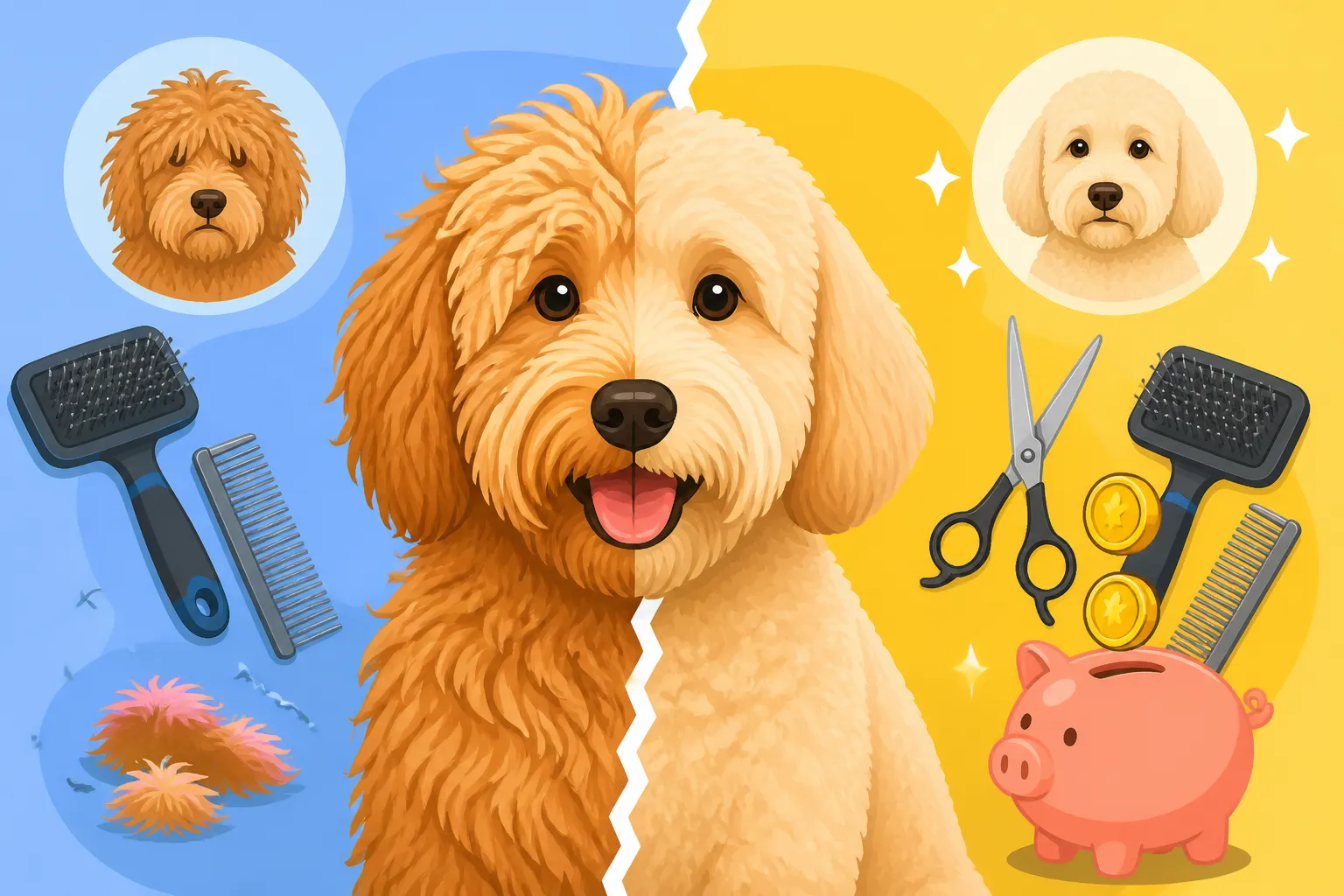
The infamous coat change typically begins around 8 to 12 months of age, though it can start a little earlier or later depending on the individual dog and their genetic makeup. Think of it as canine puberty for their fur. Your puppy's soft, often wispy coat gradually begins to be replaced by their adult coat, which can be anything from a straight hair texture to a wavy fleece or a tightly curled wool. This transition doesn't happen overnight; it's a gradual process that can take several weeks, sometimes even months, to complete. During this time, you'll notice a lot more loose hair, even in supposed "non-shedding" Labradoodles. This trapped puppy fur, combined with the emerging adult coat, creates a perfect storm for matting. It's a period where consistency is key, and understanding what's happening underneath all that fluff is crucial for preventing major coat catastrophes. You might find our post on The Coat Change That Hits a Labradoodle at Nine Months really helpful for understanding the timeline.
Why This Change Is So Tricky
The primary reason this coat change is such a headache for owners is the incredible propensity for matting. The shedding puppy coat doesn't just fall out freely; it gets tangled within the coarser, developing adult coat. Imagine trying to brush out a fine, wispy thread that's completely intertwined with a thicker, more durable one – that's what's happening on your dog's skin. These mats start small, often near the skin, and can quickly grow into dense, painful felt if not addressed promptly. The areas most affected are usually those with friction: behind the ears, under the armpits, around the collar, and on the rear end. Neglecting these early mats leads to larger ones, which then pull on the skin, cause discomfort, and can even lead to skin infections. It's a race against time, and many owners, unaware of the intensity of this period, quickly fall behind. Knowing How Long a Labradoodle's Coat Change Lasts can help you brace yourself for the duration of this intensive grooming phase.
The Direct Impact on Grooming Frequency and Effort
When your Labradoodle hits that coat change phase, your grooming routine needs a serious upgrade. What might have been a casual weekly brush-through won't cut it anymore. This is where many owners realize that the casual maintenance of puppyhood is officially over.
More Brushing, More Often
During the coat change, you absolutely must increase your brushing frequency. If you were brushing once or twice a week, you'll likely need to brush daily, sometimes even twice a day, to prevent mats from forming. This isn't just a quick surface brush either; we're talking about thorough line brushing, getting right down to the skin. The goal is to remove every bit of loose puppy coat and prevent it from tangling with the new adult fur. This extra effort requires dedication and patience. Many owners find themselves spending significantly more time on grooming, perhaps 30 minutes to an hour daily, compared to the 10-15 minutes they spent before. It's a huge time commitment, and if you can't commit, that's when the professional grooming bills can start to climb dramatically. It's worth reading Whether Daily Brushing Is Needed Through the Coat Change to understand the commitment.
The Professional Groomer's Role During the Change
This is where the "doubling the grooming bill" question really comes into play. If you're diligently brushing at home, you might be able to maintain your dog's coat and stick to your regular 6-8 week professional grooming schedule. However, if mats begin to form despite your best efforts, or if you simply can't keep up with the daily brushing, your professional groomer will have a much bigger job on their hands.
A groomer’s time is their livelihood. If they have to spend an extra hour or more dematting your Labradoodle, they will charge for that additional time. Dematting is not only time-consuming but also physically demanding for the groomer and often uncomfortable, if not painful, for the dog. Severe matting can even lead to the groomer refusing service or recommending a full shave-down, which has its own consequences and might still incur a dematting fee for the time spent assessing the coat. Instead of a standard bath and trim, you might be looking at charges for extensive dematting or even a complete shave, which are almost always more expensive than a routine groom. It’s also important to remember that some groomers will simply refuse to demat a severely matted dog for ethical reasons, as it can be too painful, leaving a shave as the only option. Our article on Whether a Groomer Refuses a Matted Labradoodle covers this in more detail.
Hidden Costs and Unexpected Challenges
The coat change isn't just about more frequent brushing or potentially higher grooming fees; it can introduce a whole host of other expenses and frustrations that many owners don't anticipate. Being prepared for these can save you a lot of grief and money down the line.
Tools and Products You'll Need
Successfully navigating the coat change at home requires the right arsenal of grooming tools. That simple pin brush you used for puppy fluff won't cut it anymore. You'll need high-quality tools that can effectively penetrate the dense adult coat and get to the skin. This typically includes a sturdy slicker brush, a metal comb (preferably with both fine and wide teeth), and potentially a dematting rake or comb if you encounter small tangles. Investing in a good quality forced-air dryer can also be a game-changer, as it helps separate the coat and dry it thoroughly after baths, preventing mats from forming in damp fur. These tools aren't cheap, but they are essential. Think of it as a one-time investment that can save you countless dollars in professional dematting fees. When browsing online at places like Chewy, make sure to read reviews specific to thick, curly coats. Our guide on The Slicker, Rake and Comb a Labradoodle Takes offers excellent advice on essential grooming tools.
Dealing with Matting and Shaving
Despite your best efforts, mats might still appear. When they do, it's a critical moment. Small, localized mats can often be carefully worked out at home using a detangling spray, a comb, and patience. However, if mats become extensive, tight, and close to the skin, attempting to remove them yourself can be painful for your dog and risky, potentially causing skin irritation or cuts. In such cases, a professional groomer is your best bet.
Sometimes, the matting is so severe that the only humane option is to shave the entire dog down. This isn't just a cosmetic decision; severe matting restricts movement, pulls on the skin, can hide parasites, and prevents air circulation, leading to skin infections. While a shave-down might seem like a simple solution, it can be more expensive than a regular groom due to the difficulty and time involved in shaving through felted fur. Furthermore, a shaved coat needs special care as it regrows. There's also the myth that a shaved coat grows back thicker or coarser, which isn't exactly true, but it can sometimes appear different due to the blunt cut. Understanding Whether a Shaved Labradoodle Comes Back Woollier can help manage expectations. If skin issues arise from matting, vet bills can add up quickly, so having a good pet insurance plan from a provider like Healthy Paws can offer peace of mind.
Strategies to Manage the Cost and Effort
Dealing with the Labradoodle coat change doesn't have to bankrupt you or consume all your free time, but it does require a proactive and informed approach. A little planning and consistent effort can make a world of difference.
Home Grooming vs. Professional Help
This is perhaps the biggest decision point for Labradoodle owners during the coat change.
| Strategy | Pros | Cons | Cost Impact |
|---|---|---|---|
| Home Grooming | Saves money on professional fees, strengthens bond, flexible schedule | High time commitment, requires skill/learning curve, need to buy tools | Low to Moderate (initial tool cost) |
| Professional Grooming | Expert care, saves owner time, better results if coat is challenging | Higher recurring cost, less flexibility, dog may need frequent visits | Moderate to High (can increase significantly with matting) |
Many owners attempt to do all the grooming themselves to save money. This is entirely possible, but it requires dedication to learning proper techniques, such as The Line Brushing a Labradoodle Coat Needs, and a significant time investment. If you're committed to home grooming, invest in quality tools and watch plenty of instructional videos. Practice makes perfect, and starting young with positive reinforcement can make your dog much more cooperative.
For those who find the task too daunting, or simply don't have the time, professional grooming is indispensable. During the coat change, you might need to schedule professional grooms more frequently – perhaps every 4-6 weeks instead of 6-8 weeks – to ensure the coat doesn't mat. While this will indeed increase your short-term grooming bill, it's often cheaper in the long run than letting the coat mat severely and incurring expensive dematting or shave-down fees. It also prevents pain and discomfort for your dog. You might find that the Yearly Grooming Total on a Standard Labradoodle ends up higher than anticipated during this crucial period.
Planning Ahead for the Inevitable
The best way to mitigate the impact of the coat change is to be prepared. This means not waiting until mats appear to take action.
- Start Early: Begin desensitizing your Labradoodle puppy to brushing, handling, and the sound of clippers and dryers from a very young age. Make it a positive experience with treats and praise. This foundational work will pay dividends when the coat change hits.
- Invest in Tools: As mentioned, good quality brushes and combs are non-negotiable. You can find excellent options on online pet supply stores like Chewy.
- Find a Reputable Groomer: Establish a relationship with a professional groomer before the coat change. They can offer advice, demonstrate proper brushing techniques, and get to know your dog's coat type. They'll be your best ally during this challenging phase.
- Budget for Increase: Mentally and financially prepare for a temporary increase in grooming frequency or costs. Acknowledge that this is a phase that will pass, but active management is required.
- Consider Nutrition: While not directly grooming-related, a healthy diet contributes to healthy skin and coat. Brands like Ollie offer fresh food options that can support overall coat health, potentially making it easier to manage.
- Regular Checks: Even with frequent brushing, make it a habit to run your fingers through your dog's coat, especially in high-friction areas, to catch any nascent mats immediately. The smaller the mat, the easier it is to remove.
The coat change is a rite of passage for many Labradoodle owners. While it certainly presents challenges, including the potential for increased grooming bills, it's a manageable period with proper preparation, diligent home care, and the support of a good professional groomer. It might feel like a double burden for a while, but with consistency, you can get through it and enjoy your Labradoodle's beautiful adult coat.
Disclaimer
This article is for general informational purposes only and does not constitute professional advice. Laws, prices and regulations vary by location and change over time. Consult a qualified professional for guidance on your specific situation.