Whether a Labradoodle Really Outlives Its Parent Breeds
It’s a common hope for many prospective dog parents that when you mix two beloved breeds, like the Labrador Retriever and the Poodle, you’ll somehow magically end up with a dog that inherits all the best traits and none of the bad ones, especially when it comes to health and how long they'll be by your side. You might even hear buzz about "hybrid vigor" suggesting these mixed breeds are inherently healthier and live longer than their purebred parents. But is this truly the case for a Labradoodle? This comprehensive guide dives deep into the realities of Labradoodle longevity, exploring the genetic landscape they inherit and the crucial factors that genuinely determine how many wonderful years you’ll share.
Understanding Labradoodle Longevity: A Look at the Parent Breeds
When we talk about whether a Labradoodle outlives its parent breeds, we first need to understand the typical lifespans and common health considerations of the Labrador Retriever and the Standard Poodle. Both are fantastic dogs, but like all breeds, they come with their own genetic blueprints that influence how long they tend to stick around and what challenges they might face along the way.
The Average Lifespan of Labrador Retrievers
Labrador Retrievers are renowned for their friendly disposition, loyalty, and boundless energy. They’re a beloved family dog, and it's heartbreaking to think about them not being around forever. On average, a Labrador Retriever typically lives between 10 to 12 years. While many factors can influence this, some common health issues in Labs can unfortunately shorten their lives or require significant care. These include conditions like hip and elbow dysplasia, which can severely impact their mobility as they age, certain cancers, and obesity, which is a widespread problem in the breed due to their often insatiable appetites and genetic predisposition to gain weight.
It's not uncommon to hear stories of Labs living to 14 or even 15, but these are often the exception rather than the rule. A big, active dog like a Labrador puts a lot of stress on its joints over a decade, and managing that wear and tear, along with other age-related issues, becomes a primary focus for owners as their pups get older. Keeping a Lab lean and active throughout its life is one of the best ways to try and push that upper limit. For more on what to expect as they age, you might find our guide on What a Labradoodle Owner Should Watch For After Eight helpful, as some of those concerns overlap.
The Average Lifespan of Standard Poodles
Poodles, especially Standard Poodles, often surprise people with their athleticism and intelligence. They're not just fancy show dogs; they're incredibly smart, active, and can be quite hardy. Standard Poodles generally enjoy a longer average lifespan than Labradors, typically living anywhere from 12 to 15 years. This longer lifespan is often attributed to their generally leaner build and a different set of genetic predispositions. However, Poodles are not immune to health challenges. They can be prone to conditions such as Addison's disease, bloat (gastric dilatation-volvulus), certain eye conditions like Progressive Retinal Atrophy (PRA), and even sebaceous adenitis, a skin condition.
These conditions can be serious and, in some cases, life-threatening. For example, bloat is an emergency situation that requires immediate veterinary intervention. Understanding these risks is crucial for any Poodle owner or potential Labradoodle owner, as these genes can certainly be passed down. Just like with Labradors, preventative care, careful breeding, and a healthy lifestyle play a huge role in helping a Poodle reach the higher end of its expected lifespan.
The Myth of "Hybrid Vigor" in Labradoodles
Now, let's address the elephant in the room: "hybrid vigor," often touted as the reason mixed breeds like Labradoodles are supposedly healthier and live longer. Hybrid vigor, or heterosis, is a real genetic phenomenon where the offspring of two genetically distinct parents show improved function compared to the parents. In theory, by mixing two different gene pools, you reduce the chances of inheriting two copies of a specific recessive disease-causing gene, thus potentially leading to healthier, more robust offspring.
However, the application of this concept to modern designer dogs like Labradoodles is often misunderstood or oversimplified. True hybrid vigor is most pronounced in the first cross (F1 generation) between two genetically diverse and healthy purebred lines. It's not a magic shield against all genetic diseases. A Labradoodle is a mix of a Labrador and a Poodle. While they are different breeds, they still share many common genetic vulnerabilities, and a Labradoodle can still inherit any of the health issues present in either parent breed. If the parent dogs themselves carry genetic markers for certain diseases, their Labradoodle offspring can still inherit these conditions, even with a broader gene pool. This is especially true as breeders move beyond F1 crosses into F1b, F2, or multi-generational Labradoodles, where the genetic diversity can start to narrow again. Our piece on Whether Hybrid Vigor Is Real in a Labradoodle delves deeper into this fascinating, yet often misconstrued, genetic principle.
Common Health Challenges and Their Impact on Labradoodle Lifespan
The reality is that a Labradoodle is a genetic lottery ticket of sorts, inheriting a blend of traits from both the Labrador and the Poodle. This means they are potentially susceptible to the hereditary conditions prevalent in both parent breeds. Understanding these potential challenges is key to providing comprehensive care and maximizing their chances of a long, healthy life.
Hereditary Conditions from the Poodle Side
From their Poodle lineage, Labradoodles can inherit a range of conditions that require careful consideration. One significant concern is Addison's Disease, an endocrine disorder where the adrenal glands don't produce enough hormones. It's often called the "great imitator" because its vague symptoms can mimic other illnesses, making diagnosis tricky. If left untreated, an Addisonian crisis can be fatal. Thankfully, with proper diagnosis and lifelong medication, dogs with Addison's can live full, happy lives. Our article, Addison's Disease a Labradoodle Inherits From the Poodle, offers a detailed look at this condition.
Another serious Poodle-related concern is bloat, or gastric dilatation-volvulus (GDV). This is a life-threatening emergency where the stomach fills with gas and can twist, cutting off blood supply. Poodles, particularly Standard Poodles, are a deep-chested breed, making them more prone to bloat. Given that many Labradoodles also inherit this deep chest conformation, they too can be at significant risk. This is why discussions about preventive measures like gastropexy, which tacks the stomach to the abdominal wall, are so important for some owners. You can learn more about this in our discussion on Bloat Risk in a Standard Poodle Bred Labradoodle. Beyond these, Poodles can also pass on eye conditions like progressive retinal atrophy (PRA), which can lead to blindness, and certain types of epilepsy.
Genetic Predispositions from the Labrador Side
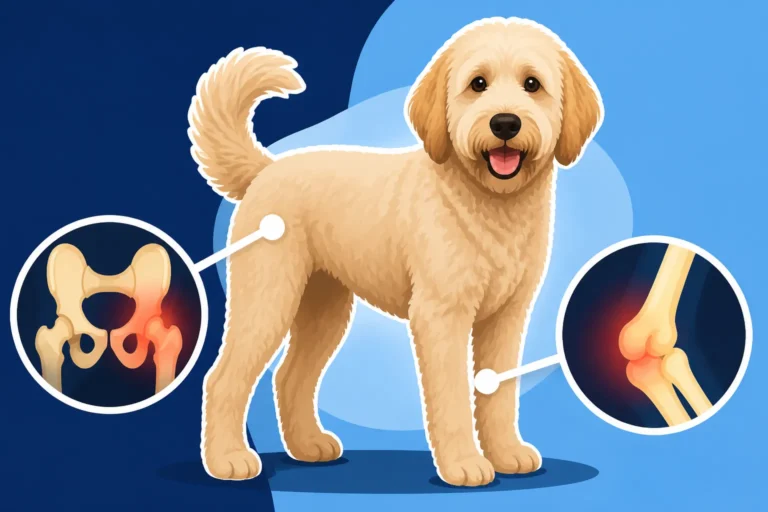
The Labrador Retriever side of the Labradoodle equation also contributes its own set of potential genetic hurdles. Hip and elbow dysplasia are unfortunately common orthopedic issues in Labradors. These conditions involve malformation of the joints, leading to pain, arthritis, and reduced mobility, often requiring expensive treatments or surgeries. A Labradoodle, especially a standard-sized one, inheriting that Labrador build and activity level, needs careful attention to joint health throughout its life. It's why many breeders focus on testing parents for these conditions. For more detailed information, consider reading Hips and Elbows in a Sixty Pound Labradoodle.
Another condition sometimes seen in the Labrador line is Exercise-Induced Collapse (EIC), a genetic neuromuscular disorder that causes affected dogs to collapse during strenuous exercise. While not typically life-threatening if managed, it can be distressing for owners to witness. Eye conditions, including some forms of cataracts and retinal diseases, can also be passed down. It's a lot to consider, and it underscores the importance of a transparent and responsible breeder who screens their breeding stock for these known issues.
The Role of Responsible Breeding and Health Testing
This brings us to one of the most critical factors influencing a Labradoodle's potential lifespan and quality of life: responsible breeding. A breeder who truly prioritizes the health of their puppies will conduct extensive genetic health testing on both parent dogs. This isn't just a casual vet check-up; it involves specific DNA tests for conditions like prcd-PRA, EIC, and Von Willebrand’s Disease, as well as OFA (Orthopedic Foundation for Animals) or PennHIP evaluations for hips and elbows. They should be able to provide clear documentation of these results.
Without these health clearances, you are essentially gambling with your puppy's future health. A puppy from untested parents has a much higher chance of developing a debilitating or life-shortening genetic disease. While no breeder can guarantee a dog will never get sick, health testing significantly stacks the odds in favor of a healthier outcome. Don't be shy about asking your potential breeder for these documents. A reputable breeder will be proud to show them to you. In fact, many believe that Whether Health Tested Parents Add Years to a Labradoodle isn't just a question, but a fundamental truth. Pet insurance providers, like Healthy Paws, often have specific coverage policies, and understanding how pre-existing conditions (which could arise from poor breeding) are handled is vital.
Factors That Truly Influence a Labradoodle's Lifespan
Beyond genetics, there are numerous practical and daily care factors that you, as a Labradoodle owner, have significant control over. These aspects of care contribute enormously to not just the length of your dog's life, but also its overall quality and happiness.
Diet, Exercise, and Weight Management
One of the most profound impacts you can have on your Labradoodle's lifespan is through careful management of their diet, exercise, and weight. Obesity is a silent killer in dogs, leading to a myriad of health problems including increased risk of joint issues (aggravating existing hip or elbow dysplasia), diabetes, heart disease, and even certain cancers. Labradors are notoriously food-motivated, and this trait can certainly be passed to a Labradoodle, making weight management a constant battle for many owners.
Providing a high-quality, balanced diet appropriate for your dog's age, size, and activity level is paramount. Avoid overfeeding and limit treats, ensuring they make up no more than 10% of their daily caloric intake. Regular, appropriate exercise is equally important. Labradoodles are intelligent and energetic dogs; they need physical activity to burn off energy and maintain a healthy weight, but also mental stimulation to keep their Poodle brains engaged. This could mean daily walks, games of fetch, swimming, or even dog sports. However, be mindful of over-exercising young puppies, as this can harm developing joints. Monitoring your Labradoodle’s body condition score regularly is crucial to catch weight gain early. We talk more about this in The Weight a Labradoodle Puts On Without Anyone Noticing.
Regular Veterinary Care and Preventative Measures
Never underestimate the power of consistent, high-quality veterinary care. This isn't just about rushing to the vet when something is wrong; it's about preventative medicine that keeps problems from escalating. Regular check-ups, typically once a year for adult dogs and more frequently for puppies and seniors, allow your vet to catch potential issues early, maintain vaccinations, and administer parasite prevention. These routine visits can also include dental check-ups, as dental disease can lead to serious systemic health problems if left untreated.
Beyond routine care, specific preventative measures can add years to a Labradoodle's life. This includes things like spaying or neutering (with careful consideration of timing, as early alteration can have its own health implications, particularly for larger breeds), and for deep-chested Labradoodles, discussing a preventive gastropexy to reduce bloat risk. Investing in a good pet insurance plan, like those offered by Healthy Paws, can provide immense peace of mind, ensuring you can afford the best care if an unexpected illness or injury arises, without having to make difficult financial decisions during a crisis. Early diagnosis and treatment, often facilitated by robust insurance, can make all the difference. For more insights into necessary screenings, consider our article on The Yearly Screening a Labradoodle Should Get.
Environmental and Lifestyle Considerations
Finally, a Labradoodle's environment and daily lifestyle also play a significant role in their overall health and longevity. A stimulating and loving home environment reduces stress, which can positively impact immune function and overall well-being. Ensuring your Labradoodle has a safe space, plenty of social interaction, and mental enrichment (puzzles, training sessions, new experiences) contributes to a happy, healthy mind and body.
Protection from environmental hazards, such as toxic plants, household chemicals, and extreme weather, is also vital. For example, ensuring your Labradoodle has access to shade and water in hot weather prevents heatstroke, which can be particularly dangerous for dogs with thick coats. Providing comfortable bedding, especially as they age, can help with joint health. Ultimately, a dog that feels loved, safe, and engaged is more likely to thrive and enjoy a longer, more fulfilling life. By focusing on these elements, you can significantly contribute to Keeping a Labradoodle Sound Into Its Teens.
Ultimately, while the concept of "hybrid vigor" offers a glimmer of hope for increased longevity, the reality for Labradoodles is more nuanced. They are not inherently guaranteed to outlive their parent breeds. Their lifespan, like any dog's, is a complex interplay of inherited genetics and the quality of care they receive throughout their lives. By choosing a responsible breeder, providing excellent nutrition and exercise, ensuring regular veterinary care (potentially supported by a plan from Healthy Paws), and offering a loving, stimulating home, you give your Labradoodle the very best chance to live a long, vibrant, and happy life.
| Factor | Labrador Retriever (Average) | Standard Poodle (Average) | Labradoodle (Potential Range) | Key Health Concerns |
|---|---|---|---|---|
| Average Lifespan | 10-12 years | 12-15 years | 10-15 years | Hip/Elbow Dysplasia, EIC (Lab); Addison's Disease, Bloat, PRA (Poodle); All combined in Labradoodles. |
| Weight Management Tendency | Prone to obesity | Generally leaner | Varies, can be prone to obesity | Increased strain on joints, higher risk of diabetes and heart disease. |
| Major Genetic Risks | Joint issues, EIC, some cancers | Addison's, Bloat, PRA, SA | All of the above, depending on breeding lines and generation. | |
| Impact of Hybrid Vigor | N/A (purebred) | N/A (purebred) | Most effective in F1 generation; less predictable in later generations. Does not negate need for health testing. | |
| Preventative Care Focus | Joint health, weight control | Emergency bloat awareness, endocrine monitoring | Comprehensive approach covering both parent breeds' predispositions. |
Disclaimer
This article is for general informational purposes only and does not constitute professional advice. Laws, prices and regulations vary by location and change over time. Consult a qualified professional for guidance on your specific situation.