Whether a Labradoodle Is a Breed or a Cross
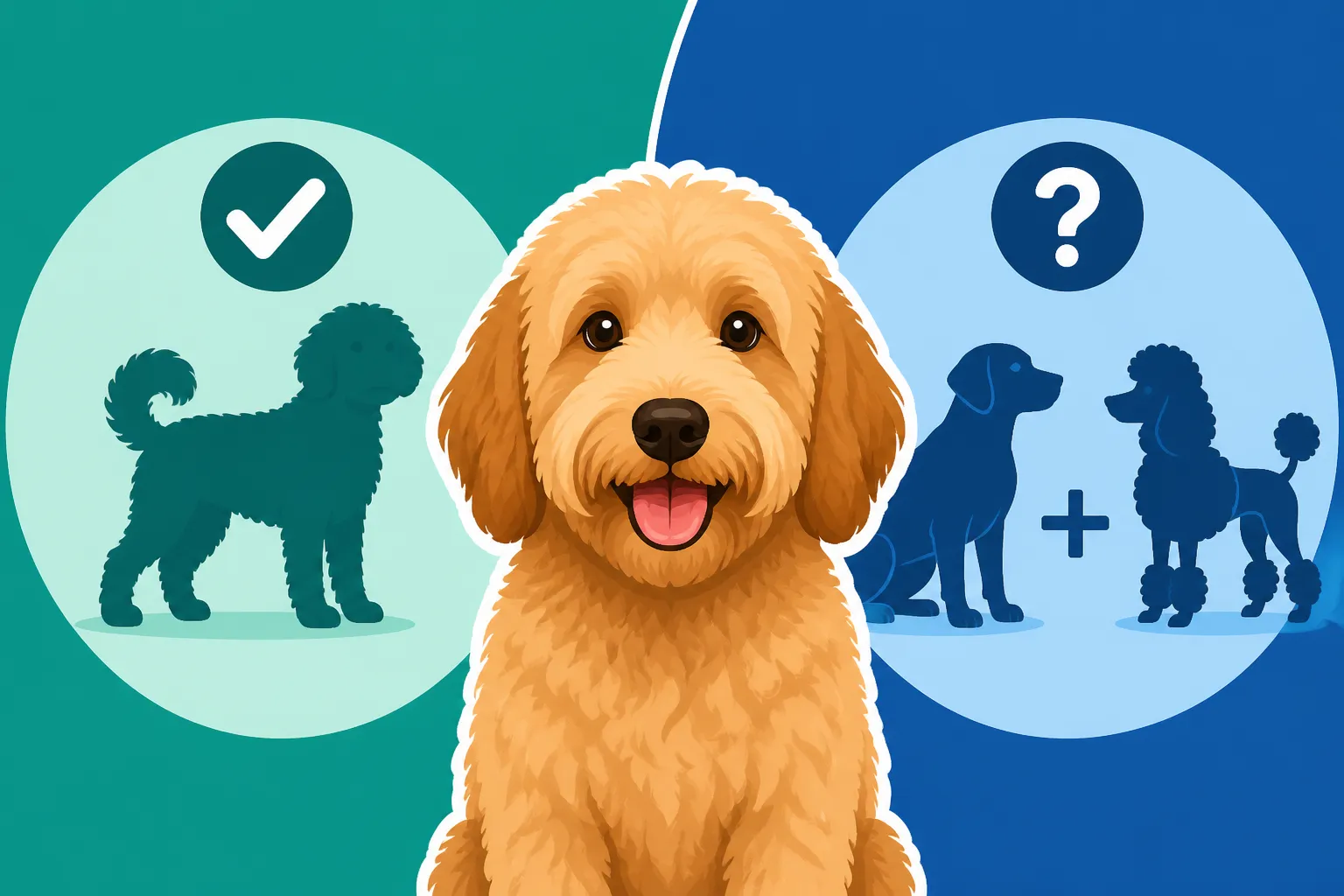
A Labradoodle is a cross between a Labrador Retriever and a Poodle, not a breed recognized by major kennel clubs as a standardized purebred. That distinction affects how predictable a puppy’s size, coat, and temperament may be. This guide explains what “breed” and “cross” mean, how Labradoodle generations and registries fit in, and what to check before choosing a puppy.
Is a Labradoodle a breed or a cross
A Labradoodle is a crossbreed: it comes from Labrador Retriever and Poodle ancestry. The name describes a type of dog rather than a single, universally standardized breed with one agreed set of physical and behavioral traits.
That does not make a Labradoodle less lovable or less suitable as a companion. It simply means that the word alone cannot guarantee what an individual dog will look like or how it will behave. Two Labradoodles can differ noticeably, even when they share the same generation label.
What people mean by a dog breed
A formally established breed usually has a defined standard describing its appearance, size, coat, and other traits. Breed organizations also tend to have rules for registration and breeding records. Over generations, breeders select dogs toward consistent characteristics, although individual dogs within any breed still vary.
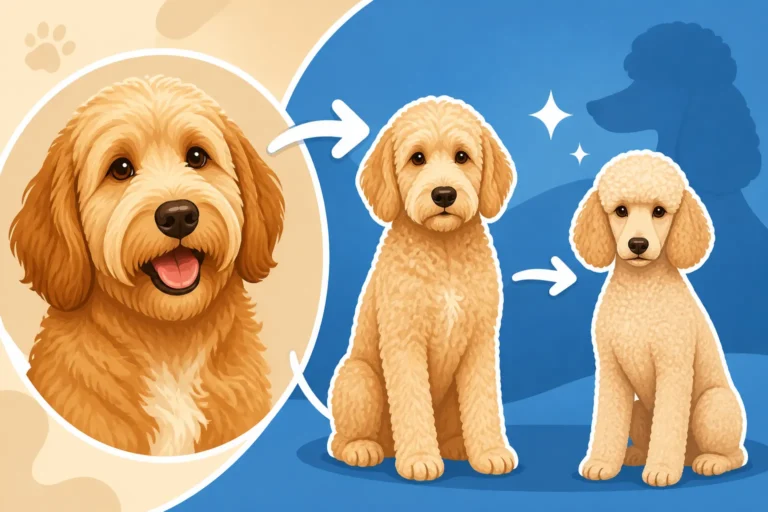
A cross is produced by combining dogs from different breeds. In a Labradoodle’s case, the original cross was between a Labrador Retriever and a Poodle. Breeders may then mate Labradoodles with Poodles, Labradors, or other Labradoodles, so the dogs being sold under the same general name may have different ancestry and breeding histories.
This is why “Labradoodle” does not, by itself, tell you exactly what you are getting. One puppy may inherit a curlier coat and a more Poodle-like frame; a littermate may have a looser coat and a sturdier build. The breed history behind the name is covered in The 1989 Cross That Made the First Labradoodle.
What kennel club recognition does and does not mean
Major kennel clubs maintain official breed standards and registration systems for recognized breeds. The Labradoodle is not recognized as a standardized breed by the American Kennel Club. That is different from saying a Labradoodle cannot be registered anywhere or take part in any organized dog activity. Some organizations keep records of mixed-breed dogs, and eligible dogs may participate in certain events under the rules of the organization hosting them.
A private registry can record a dog’s pedigree or a breeder’s program without making the dog a kennel-club-recognized breed. In other words, registration may help document ancestry, but it does not automatically mean every dog in that registry will have the same predictable traits.
The distinction can be confusing when a breeder presents papers as proof that a dog is “officially” a breed. Ask what the paperwork actually records: parentage, a breeder’s membership, a litter, or a formal breed registration. For more context, see Why No Kennel Club Registers the Labradoodle and The Registries That Do Record Labradoodles.
Why Labradoodles vary so much
Labradoodles can differ in size, coat texture, shedding, and temperament because they inherit traits from two breeds, and because breeders use different mating plans. Even puppies from the same litter can inherit different combinations of their parents’ traits.
A generation label can give you a rough description of ancestry, but it is not a promise about a puppy’s adult appearance or behavior. The parents’ characteristics, their health and temperament, and the breeder’s selection choices all matter.
How F1, F1b, and multigenerational labels work
An F1 Labradoodle is generally described as a first-generation cross between a Labrador Retriever and a Poodle. An F1b is often a Labradoodle crossed back to one of its parent breeds, frequently a Poodle. “Multigen” is commonly used for Labradoodles whose parents are themselves Labradoodles across multiple generations.
Breeders do not always use these labels in exactly the same way, so it is worth asking for a clear family tree rather than relying on a short code. Ask which breeds are in the puppy’s recent ancestry, how the parents are related to the original breeds, and what the breeder means by the specific generation label. What F1 Means on a Labradoodle and What Multigen Means on a Labradoodle explain these terms in more detail.
Even when the label is accurate, it cannot tell you with certainty how much a puppy will shed, how tight its curls will be, or whether it will suit someone with allergies. A coat that looks soft and low-shedding as a young puppy may change as the adult coat develops. If coat expectations are central to your decision, ask to meet adult dogs from the same line and read Whether an F1 Labradoodle's Coat Is a Gamble.
Australian Labradoodle is a related but distinct label
The term “Australian Labradoodle” is often used for dogs from longer-running breeding programs, including multigenerational lines. Those programs may include ancestry from breeds beyond the Labrador Retriever and Poodle. The exact history and breeding choices vary by program, so the label does not mean every Australian Labradoodle has an identical pedigree.
Some programs aim for greater consistency in coat and appearance by selecting dogs across generations. That goal may be useful to a buyer, but it does not turn a marketing label into a guarantee. Look at the actual pedigree, the dogs in the program, and the breeder’s health and temperament practices. The Four Breeds Inside an Australian Labradoodle provides further background on the terminology.
It also helps to separate a dog’s label from its individual needs. An Australian Labradoodle, an F1 Labradoodle, and a multigen Labradoodle all need ordinary care tailored to the dog in front of you: appropriate food, exercise, grooming, training, and veterinary care. A good brush and comb can help owners keep a curly or fleece-like coat from tangling; if you are comparing tools, retailers such as Chewy carry a range of pet grooming supplies, but the right choice depends on coat type and how your dog tolerates brushing.
What the crossbreed label means for a future owner
Knowing a Labradoodle is a cross helps set realistic expectations. It does not mean the dog will be unhealthy, unpredictable in every respect, or unsuitable for a particular home. It means you should assess the puppy and its parents rather than assuming that the name guarantees a particular size, coat, temperament, or level of shedding.
Coat and allergy expectations need a reality check
Labradoodles are sometimes described as hypoallergenic, but no dog can be guaranteed not to trigger allergies. People may react to proteins in a dog’s dander, saliva, or urine, not simply to visible shedding. Coat type and shedding can also vary between individual Labradoodles, including dogs from the same litter.
If allergies are a concern, spend time around adult dogs from the line you are considering before committing. Notice how you feel after more than a brief visit, and talk with a medical professional if you need advice about allergy management. A breeder’s description such as “low-shedding” is not a substitute for meeting the dogs or understanding that a puppy’s coat can change.
Grooming is another practical consideration. A coat that sheds less may still need frequent brushing and regular professional grooming to prevent painful mats. Chewy may be one place to compare basic grooming supplies, but no tool can replace patient handling or a realistic grooming routine. Read The Three Labradoodle Coats: Hair, Fleece and Wool to understand why two dogs with the same broad label can have quite different coat-care needs.
Health testing matters more than the label
Being a cross does not automatically protect a Labradoodle from inherited conditions. Labradors and Poodles each have health concerns that responsible breeders should consider, and Labradoodles may inherit risks from either side. A breeder should be willing to explain which health screenings were performed on both parents and provide records you can review.
Ask about the specific tests relevant to the parents, not just a broad claim that the dogs are “vet checked” or “health tested.” A routine veterinary exam is useful, but it is not the same as breed-relevant screening. The questions to ask are covered in The Health Tests a Labradoodle Breeder Should Show and Whether Health Tested Parents Add Years to a Labradoodle.
Also ask how the breeder evaluates temperament and what support is available if the puppy develops a health or behavior concern. Good records, candid answers, and a willingness to discuss limitations are more meaningful than claims that every puppy will be perfect. A puppy’s parents and close relatives can offer clues, but no screening can guarantee a particular outcome.
How to assess a Labradoodle breeder and puppy
Because “Labradoodle” does not function as a single standardized breed label, careful questions are especially useful. A trustworthy breeder should be able to describe the dogs in the breeding program, explain the puppy’s ancestry, and show relevant health information without relying only on attractive photos or broad promises.
Questions worth asking before you choose
Ask to see information about both parents, including their health screening, temperament, adult size, and coat. If the breeder uses generation labels, ask them to explain the puppy’s family tree in plain language. A clear answer should help you understand what the label means in that particular program.
Ask what the breeder expects the puppy to need as it grows. This includes likely adult size, grooming frequency, exercise, training, and how the breeder supports early socialization. Treat estimates as estimates, not guarantees. Even experienced breeders cannot perfectly predict every trait in a crossbred puppy.
Finally, notice whether the breeder asks you questions too. A careful breeder will want to understand your household, schedule, experience, and ability to manage coat care and training. If you are comparing breeders, What Nobody Tells a First Time Labradoodle Buyer can help you think through the practical responsibilities beyond the puppy’s appearance.
A quick comparison of common terms
| Term | What it usually describes | What it does not guarantee |
|---|---|---|
| Labradoodle | A dog with Labrador Retriever and Poodle ancestry, or a dog from a related breeding program | A single standardized size, coat, or temperament |
| F1 | A first-generation Labrador and Poodle cross | A predictable coat or allergy-friendly result |
| F1b | Commonly a Labradoodle crossed back to a parent breed, often a Poodle | That every puppy will be low-shedding or have a particular coat |
| Multigen | Labradoodles bred across multiple generations | That all breeding programs use identical standards |
| Australian Labradoodle | A label used for dogs from specific multigenerational programs, which may include additional ancestry | That every dog has the same pedigree or is kennel-club recognized |
Disclaimer
This article is for general informational purposes only and does not constitute professional advice. Laws, prices and regulations vary by location and change over time. Consult a qualified professional for guidance on your specific situation.