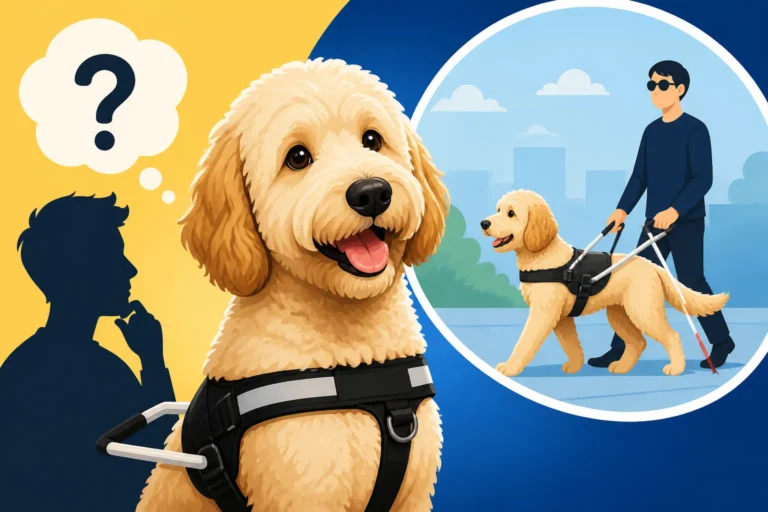
Whether the First Labradoodle Owner Was Blind
There's a persistent misconception floating around that the very first Labradoodle was bred specifically for a blind owner who also suffered from allergies. While the allergy part is absolutely spot-on and crucial to the breed's origins, the specific detail about the owner being blind isn't quite right. This guide will delve into the true story behind the Labradoodle's creation, uncovering the real client and the unique challenge that led to this now-iconic breed.
The Origin Story of the Labradoodle: A Search for a Specific Solution
The story of the Labradoodle is a fascinating one, born out of a very real, very pressing need within the assistance dog community. It wasn't just about combining two popular breeds; it was about solving a specific problem that was preventing a person from getting the help they desperately needed. Understanding this foundational intent helps us appreciate the breed's initial purpose, even as its popularity has blossomed in new directions.
The Need for an Allergy-Friendly Guide Dog
Back in the late 1980s, Guide Dogs Victoria in Australia faced a unique dilemma. They had a client who was visually impaired, and they needed a suitable guide dog for her. This in itself was a standard request, one that they fulfilled regularly with their highly trained Labradors and Golden Retrievers. However, this particular client's husband suffered from severe allergies to dog hair. This threw a significant wrench in the works. How could a visually impaired person receive the life-changing assistance of a guide dog if their spouse couldn't even be in the same room as the animal without suffering an allergic reaction? This wasn't just an inconvenience; it was a barrier to independence and companionship.
The conventional wisdom at the time was that a guide dog had to be a Labrador or a Golden Retriever – breeds known for their intelligence, trainability, and calm temperaments. But these breeds are also known for their shedding, and unfortunately, their dander is a common allergen. The search for a "hypoallergenic" guide dog, while maintaining all the necessary working traits, seemed almost impossible. This specific challenge became the driving force behind the creation of an entirely new crossbreed. The team at Guide Dogs Victoria knew they needed to think outside the box, to find a dog that could serve as a guide without triggering an allergic response in the household. It wasn't about the client's allergies directly, but the allergies of a key person in her support system, highlighting the interconnectedness of human and canine lives. This desperate need to bridge the gap between necessary assistance and allergic reactions is truly the cornerstone of the Labradoodle's initial development. You can learn more about Why a Guide Dog Had to Be Allergy Friendly.
Wally Conron's Challenge and the First Cross
Enter Wally Conron, the breeding manager for Guide Dogs Victoria at the time. He was tasked with this seemingly insurmountable problem. He tried many avenues, even collecting hair and saliva samples from different dog breeds and sending them to the client in Hawaii for testing with her husband. None of them worked. He considered other low-shedding breeds like the Standard Poodle, but worried about their perceived temperament and working drive compared to the steadfast Labrador. It was a true head-scratcher.
After much deliberation and experimentation, Conron came to a bold conclusion: he needed to cross a Labrador Retriever with a Standard Poodle. The Labrador would bring its renowned calm disposition, trainability, and strong guide dog lineage, while the Standard Poodle would contribute its intelligence and, crucially, its low-shedding, allergy-friendlier coat. The idea was to combine the best traits of both breeds to create the ultimate assistance dog for this specific situation. This pivotal decision in 1989 marked the beginning of the Labradoodle. The first litter from this cross produced three puppies, and it was one of these puppies that would go on to make history and solve the client's dilemma. This moment wasn't about creating a fashionable pet; it was about addressing a serious functional need for a real person. The 1989 Cross That Made the First Labradoodle details this groundbreaking moment in canine history.
The Client Behind the Innovation: Who Was She?
The story often gets muddled, with the "blind owner" becoming conflated with the "allergic husband." It's an easy mistake to make, especially when summarizing a complex origin story. However, clarifying this point is key to truly understanding the Labradoodle's initial purpose and the human element that drove its creation.
Addressing the "Blind Owner" Misconception Directly
Let's clear this up right away: the first client for whom the Labradoodle was specifically bred was indeed visually impaired and required a guide dog. However, she was not the one who suffered from the debilitating allergies. This is a common misrepresentation that, while understandable, shifts the focus from the true catalyst for the breed's existence. Her need was for guidance; her husband's need was for a home free of allergens. Both needs had to be met simultaneously for the dog to be a successful placement.
The client's story is one of seeking independence while navigating the very real constraints of her family's health needs. She needed a dog that could provide navigation and companionship, tasks typically performed by Guide Dogs Victoria's existing pool of Retrievers. The challenge wasn't her ability to care for the dog or her aptitude for handling a guide dog; it was the environmental barrier that existed in her home due to her husband's severe allergic reactions. Without addressing this crucial factor, no guide dog, however well-trained, would have been able to integrate successfully into her life and household.
The Husband's Allergies: The Crucial Factor
It was the client's husband's severe allergy to dog dander that was the absolute driving force behind the creation of the Labradoodle. He couldn't be near shedding dogs without experiencing significant allergic reactions, making a traditional guide dog placement impossible for his wife. This wasn't a minor sniffle; it was a serious health concern that impacted their shared living space and quality of life. The problem wasn't a lack of suitable guide dogs for the visually impaired; it was the lack of an allergy-friendly guide dog.
Wally Conron's mandate was explicitly to find a dog that would not trigger these allergies, while still possessing the temperament and intelligence required for guide work. The Poodle, with its tightly curled, low-shedding coat, was known for being a better fit for people with allergies. By crossing it with the proven Labrador, the hope was to inherit the Poodle's coat characteristics while retaining the Labrador's ideal working dog traits. This focus on the husband's allergies truly highlights the innovative and empathetic approach taken by Guide Dogs Victoria to ensure their client received the assistance she needed without compromising the health of her loved ones. The success of this endeavor demonstrated that the comfort and health of all household members are vital considerations in placement.
Sultan's Role and the Program's Legacy
The progeny of that initial cross quickly proved their worth, and one pup in particular, named Sultan, became the poster child for the experiment. His journey from an experimental cross to a successful guide dog cemented the Labradoodle's place in history, even as the path forward for the breed became more complex than originally envisioned.
The Impact of Sultan's Success
Sultan was the specific puppy from Wally Conron's first litter that was ultimately placed with the visually impaired client in Hawaii. He became the living proof that the audacious crossbreeding experiment had worked. Not only did Sultan demonstrate the calm demeanor and trainability essential for a guide dog, but, crucially, he did not trigger the husband's allergies. This was a monumental success, a breakthrough that offered a solution where none had seemed possible before. Sultan's quiet dedication and his ability to integrate seamlessly into a household with severe allergy concerns showcased the potential of this new "designer" dog. His success was celebrated within Guide Dogs Victoria as a triumph of innovative breeding, opening doors for other individuals facing similar challenges.
The positive outcome with Sultan immediately sparked interest, both within the assistance dog community and, perhaps unexpectedly, with the general public. Suddenly, there was a dog that combined the best of both worlds: the working aptitude of a retriever and the allergy-friendlier coat of a poodle. This initial success laid the groundwork for the Labradoodle's burgeoning popularity. Sultan proved that a guide dog didn't have to fit a traditional mold; it could be a hybrid, meticulously bred for a specific, vital purpose. Sultan, the Labradoodle That Proved the Idea is a compelling read about this pioneering canine.
The Evolution of Assistance Dog Breeding
While Sultan's success was undeniable, the long-term role of the Labradoodle in formal assistance dog programs evolved differently than many might expect. Initially, the hope was that the Labradoodle would become a staple in guide dog training, offering an allergy-friendly option. However, achieving consistent results across multiple generations of crossbreeds proved to be more challenging than anticipated. Coat types, temperaments, and health clearances varied, making it difficult to predict outcomes reliably for every puppy. The genetics of crossbreeding, especially in the early generations (F1, F1b, F2), are inherently less predictable than breeding within a purebred line that has been established for generations.
As a result, while some individual Labradoodles certainly went on to become fantastic assistance dogs, many formal programs eventually scaled back or moved away from breeding them specifically for guide work. They often found it more efficient and predictable to work with established purebred lines or to develop their own carefully managed multi-generational crosses with clearer breeding goals. This isn't a knock on the Labradoodle's capabilities, but rather a reflection of the rigorous standards and consistency required for large-scale assistance dog programs. Despite this shift, the Labradoodle's origin story ignited a passion for exploring crossbreeds in the assistance world, demonstrating that the right mix could truly change lives. Many programs now focus on other low-shedding purebreds or carefully managed multi-generational crosses. To understand the bigger picture, you might find Why Assistance Programs Moved Away From the Labradoodle insightful.
Beyond the First Owner: What the Labradoodle Became
The tale of the Labradoodle began with a specific, noble purpose: to serve a visually impaired client whose husband had severe allergies. Yet, like many groundbreaking innovations, its journey extended far beyond its initial intention, transforming into something much larger and, at times, more complicated. From a highly specialized assistance dog, the Labradoodle rapidly transitioned into a highly sought-after family companion, redefining what many people looked for in a pet.
From Assistance Dog to Family Companion
The story of Sultan, the first successful Labradoodle guide dog, quickly captured public imagination. The idea of an intelligent, friendly, and potentially allergy-friendly dog was a powerful draw. People who had always wanted a dog but couldn't due to allergies or simply admired the Labrador's temperament without wanting the shedding, flocked to the idea of the Labradoodle. This surge in demand, unfortunately, also meant that many breeders, some less reputable, started producing Labradoodles without the same meticulous health testing or temperament screening that Guide Dogs Victoria had initially prioritized. The focus shifted from a working dog with specific traits to a "designer dog" status, primarily valued for its perceived hypoallergenic coat and endearing "teddy bear" appearance.
This rapid transition from a highly specialized working dog to a popular family pet brought both benefits and challenges. On one hand, it allowed many families to welcome a dog into their home who might otherwise have been unable to. On the other hand, it led to a proliferation of dogs that didn't always meet the high standards of health or temperament that the original breeders had aimed for. Owners, often first-timers drawn in by the allure of a "perfect" dog, sometimes found themselves unprepared for the grooming demands of the various coat types or the significant exercise needs of a cross between two active breeds. The Labradoodle's reputation for being an easy, friendly family dog, while often true, also masked the reality that they require considerable commitment, training, and care. Many owners attest to the joys of owning these dogs, often relying on trusted resources like Chewy for their food, toys, and grooming supplies, ensuring their beloved companions are well-cared for.
Understanding the Breed's Modern Reputation
Today, the Labradoodle's reputation is a fascinating blend of its humble, purposeful origins and its meteoric rise to pet stardom. Many still seek them out for their intelligence, affectionate nature, and yes, the hope of a lower-shedding coat. The challenge, however, lies in the variability inherent in a crossbreed. Unlike purebred dogs with established breed standards, Labradoodles can inherit a wide range of traits from their Labrador and Poodle parents, leading to diversity in size, coat type (from hair-like to fleece or wool), and even temperament. This unpredictability means that not every Labradoodle will be the "perfect" dog some owners envision.
Modern Labradoodle owners often recount stories of energetic, playful companions who thrive on activity and human interaction. They are dogs that often possess a wonderful zest for life, but this also means they require consistent training, socialization, and plenty of mental and physical stimulation to prevent boredom and destructive behaviors. The "Velcro dog" trait, inherited from both parent breeds, means they often form strong bonds with their families and prefer to be involved in household activities. This means they are not dogs to be left alone for extended periods without proper training and preparation. For many, owning a Labradoodle is an incredibly rewarding experience, but it’s crucial to go into it with realistic expectations, understanding that while their origins were noble, their modern reality is as diverse as the dogs themselves. Why So Many Labradoodles Go to First Time Owners offers further insight into this phenomenon.
Here's a quick summary of the key aspects of the first Labradoodle's creation:
| Aspect | Detail |
|---|---|
| Year of Creation | 1989 |
| Creator | Wally Conron, Breeding Manager at Guide Dogs Victoria |
| Parent Breeds | Labrador Retriever x Standard Poodle |
| Client's Need | Visually impaired guide dog recipient |
| Key Challenge Addressed | Husband's severe allergies to dog dander |
| First Successful Dog | Sultan |
| Initial Program Outcome | Successful for the specific client, but challenges for widespread program use |
| Public Impact | Became a highly popular family pet, sparking the "designer dog" trend |
In conclusion, the fascinating history of the Labradoodle began not just with a blind owner, but with a complex family dynamic where the visually impaired client needed a guide dog, and her husband needed to live free from allergies. This specific challenge sparked an innovative breeding solution, leading to the creation of a dog that would not only transform one family's life but also profoundly impact the world of companion animals forever.
Disclaimer
This article is for general informational purposes only and does not constitute professional advice. Laws, prices and regulations vary by location and change over time. Consult a qualified professional for guidance on your specific situation.