The Labradoodle Against a Standard Poodle
It’s a common scenario: you’re dreaming of adding a furry family member, and two breeds keep popping up on your radar – the charming, often misjudged Labradoodle and the regal, surprisingly athletic Standard Poodle. People often find themselves scratching their heads, wondering what truly sets these two apart beyond the obvious "doodle" label. This guide will walk you through the nuances, helping you understand the distinct traits, needs, and personalities of each, so you can make the best decision for your home and heart.
Origins and Breed Purpose – A Tale of Two Histories
Understanding where each of these magnificent dogs comes from really sets the stage for appreciating their differences. They might share a Poodle lineage, but their journeys to becoming beloved companions are quite distinct.
The Intent Behind the Labradoodle
The Labradoodle, as many know, has a relatively recent and rather unique origin story. It wasn't about creating a new show breed, but rather addressing a very specific, compassionate need. In 1989, a gentleman named Wally Conron, working for the Royal Guide Dogs Association of Australia, was tasked with finding a guide dog for a visually impaired woman whose husband was allergic to dogs. His solution was to cross a Standard Poodle, known for its intelligence and low-shedding coat, with a Labrador Retriever, famous for its trainability and gentle temperament as a guide dog.
The goal was noble: to combine the best traits of both breeds to create an allergy-friendly guide dog. While the initial result, a dog named Sultan, was a success, Mr. Conron later expressed regret over the "designer dog" craze that followed. Nevertheless, the intent was clear: a functional, intelligent, and potentially hypoallergenic working companion. The breed has since evolved, with many breeders working to stabilize desired traits across generations, moving beyond the initial F1 cross to create more predictable temperaments and coats. You can learn more about the initial spark in The 1989 Cross That Made the First Labradoodle.
The Ancient Lineage of the Standard Poodle
In stark contrast to the Labradoodle's modern inception, the Standard Poodle boasts a history stretching back centuries. Originating in Germany, not France as many assume, the Poodle was initially bred as a water retriever, specifically for hunting waterfowl. Their distinctive haircuts, often seen as fashionable today, were actually functional in their early days, designed to protect vital organs from cold water while allowing free movement for swimming.
These dogs were valued not just for their retrieving prowess but also for their sharp intelligence and robust constitution. They were working dogs through and through, capable of complex tasks and highly trainable. Their elegance and distinctive appearance eventually caught the eye of European nobility, elevating them from marsh hunter to sophisticated companion. This long-standing history as a dedicated working breed has deeply imprinted their intelligence, athleticism, and eagerness to please into their very DNA.
Temperament and Personality – More Than Just "Doodle" Charm
When you're choosing a dog, personality is paramount. Both Labradoodles and Standard Poodles are renowned for their intelligence, but how that intelligence manifests, and what other traits come to the forefront, can be quite different.
The Labradoodle's Affectionate and Energetic Nature
A Labradoodle typically embodies a delightful blend of its parent breeds. From the Labrador side, you often get that famously friendly, outgoing, and eager-to-please disposition. They tend to be very social, often acting like furry extroverts who want to be part of everything you do. This sociability makes them wonderful family dogs, usually patient and playful with children, and generally amiable with other pets.
On the Poodle side, they inherit remarkable intelligence, which means they are quick learners but can also be prone to boredom if not adequately stimulated. They thrive on companionship and can sometimes develop a "Velcro dog" tendency, preferring to be right by your side. This isn't necessarily a bad thing, especially if you're looking for a constant shadow, but it does mean they aren't typically suited for prolonged periods of solitude. They possess a good deal of energy, particularly in their younger years, and require consistent exercise and mental engagement to prevent boredom-driven behaviors. They often have a zest for life that's truly infectious, making every day an adventure. The Household a Labradoodle Actually Suits gives a good overview of the type of family that gels well with this breed.
The Standard Poodle's Dignified Intelligence and Trainability
The Standard Poodle often carries a reputation for being aloof or overly dainty, but nothing could be further from the truth. These are highly intelligent, surprisingly athletic, and incredibly versatile dogs. Their intelligence is profound, making them exceptionally trainable and keen to learn. They excel in obedience, agility, and even scent work, often outshining many other breeds in competitive dog sports.
While they can possess a dignified air, they are also playful, loyal, and capable of forming deep bonds with their families. They are not typically as overtly boisterous as some Labradoodles might be, often displaying a more reserved initial greeting, but once comfortable, they are affectionate and engaged. Their temperament is characterized by a strong desire to please and a quick grasp of new concepts. This can be a double-edged sword: they learn good habits quickly, but also bad ones if not given clear direction and consistent training. They are sensitive dogs who respond best to positive reinforcement and appreciate having a "job" or purpose, whether that's learning complex tricks or being a dedicated walking buddy.
Coat Type and Grooming Needs – The Great "Hypoallergenic" Debate
This is perhaps the biggest differentiator and a critical point for many prospective owners, especially those dealing with allergies. The coats of these two breeds couldn't be more distinct in terms of predictability and maintenance.
The Labradoodle's Variable Coat Challenge
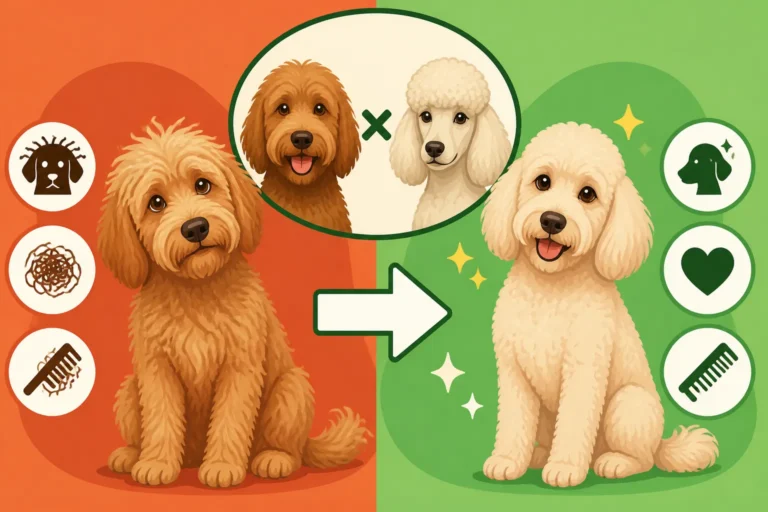
Here's where the "doodle" often presents a fascinating, yet sometimes frustrating, lottery. Labradoodles can have three main coat types: hair, fleece, and wool.
- Hair coats are closest to a Labrador's, shedding more and often less allergy-friendly.
- Fleece coats are typically soft, wavy, or curly, with a silky texture. These are generally low-shedding and preferred by many.
- Wool coats are dense and curly, similar to a Poodle's, and are typically the most allergy-friendly.
The challenge, especially in earlier generations like F1 (first cross), is the unpredictability. You might not know exactly what coat type your puppy will develop until they mature, which can be a real concern for allergy sufferers. Regardless of type, all Labradoodle coats require significant grooming to prevent matting. They are notorious for it, especially during their "coat change" phase around 9-12 months. This isn't just a cosmetic issue; severe matting can be painful, restricting movement and causing skin problems.
Regular brushing, often daily for fleece or wool coats, is non-negotiable, and professional grooming every 6-8 weeks is essential. Many owners are surprised by the sheer volume of grooming required. It's not just a quick brush-over; you need to get Brushing a Labradoodle to the Skin, Not the Surface to prevent hidden mats. For supplies like detangling sprays, brushes, and specialized combs, sites like Chewy offer a wide array of options to help manage these demanding coats. For more on coat types, check out The Three Labradoodle Coats: Hair, Fleece and Wool.
The Standard Poodle's Consistent, High-Maintenance Coat
A Standard Poodle's coat, while also demanding, is far more predictable. It's a single coat, dense, curly, and continuously growing, much like human hair. This means it sheds minimally, trapping loose hair within its curls, which makes it an excellent choice for many allergy sufferers. However, "minimal shedding" does not equate to "minimal grooming." In fact, it means the opposite.
Because the hair doesn't fall out, it continues to grow and will quickly mat if not regularly brushed and trimmed. Professional grooming every 4-6 weeks is absolutely essential for a Standard Poodle to keep their coat healthy, clean, and mat-free. This involves bathing, drying, brushing, and clipping. Many Poodle owners learn to do some home grooming to reduce professional costs, but it requires dedication and the right tools. Different clips, from the classic show cuts to more practical kennel clips, all require skill and commitment. The consistency of the Poodle's coat, while high-maintenance, means you know exactly what you're signing up for, which can be a huge relief compared to the Labradoodle's coat gamble.
Here's a quick comparison of their typical grooming needs:
| Feature | Labradoodle (Fleece/Wool) | Standard Poodle |
|---|---|---|
| Shedding | Low to moderate (depends on coat type/generation) | Very low to almost non-existent |
| Allergy-friendliness | Variable (best with wool/fleece, but not guaranteed) | Generally excellent for allergy sufferers |
| Brushing Frequency | Daily to every other day | Daily to every other day |
| Professional Grooming | Every 6-8 weeks, sometimes more | Every 4-6 weeks |
| Matting Risk | Extremely high, especially during coat change | High if not regularly brushed/clipped |
| Coat Texture | Wavy, curly, woolly, or sometimes straight | Dense, distinctly curly, coarse to touch |
Health and Lifespan – What to Expect Down the Road
When you welcome a dog into your life, you’re committing to their health and well-being for many years. Both Labradoodles and Standard Poodles are generally robust breeds, but like all dogs, they come with their own set of potential health predispositions. Understanding these can help you choose a responsible breeder and prepare for their care.
Labradoodle Health Considerations
As a crossbreed, the Labradoodle can inherit health conditions from both the Labrador Retriever and the Standard Poodle. This means responsible breeding is absolutely crucial. Common concerns for Labradoodles include hip and elbow dysplasia, progressive retinal atrophy (PRA), and certain heart conditions from the Labrador side. From the Poodle side, they can be predisposed to Addison's disease, bloat (Gastric Dilatation-Volvulus), and sebaceous adenitis. It’s a lot to consider, and the idea of "hybrid vigor" – the notion that crossbreeds are inherently healthier – isn't always a guaranteed shield against these genetic issues. While some studies suggest hybrid vigor can reduce the incidence of certain common conditions, it doesn't eliminate the risk entirely, especially if both parent breeds carry similar genetic vulnerabilities.
A reputable Labradoodle breeder will perform extensive health testing on their breeding stock for these conditions, including hip and elbow evaluations, eye certifications, and genetic tests for conditions like PRA and Von Willebrand's Disease. They should be transparent about these results. It’s also vital to be aware of Bloat Risk in a Standard Poodle Bred Labradoodle, as this life-threatening condition requires immediate veterinary attention. Understanding What a Labradoodle Owner Should Watch For After Eight can also help you prepare for the specific health needs that might arise as your dog ages.
Standard Poodle Health Concerns
Standard Poodles, as a purebred, have well-documented health predispositions that responsible breeders actively screen for. They are generally considered a healthy breed with a good lifespan when bred conscientiously. Key health concerns for Standard Poodles include:
- Addison's Disease: A serious endocrine disorder where the adrenal glands don't produce enough hormones. Symptoms can be vague and mimic other illnesses. Addison's Disease a Labradoodle Inherits From the Poodle is a highly relevant read here.
- Gastric Dilatation-Volvulus (Bloat): Like many deep-chested breeds, Poodles are at a higher risk for this acute, life-threatening condition where the stomach twists.
- Hip Dysplasia: Though less common than in some other large breeds, it can occur.
- Sebaceous Adenitis: An inflammatory skin disease that affects the sebaceous glands, leading to hair loss and skin issues.
- Eye Conditions: Such as Progressive Retinal Atrophy (PRA) and cataracts.
- Thyroid Issues: Hypothyroidism is a concern in the breed.
Again, reputable breeders will conduct rigorous health screenings, including OFA or PennHIP evaluations for hips, ophthalmologist exams for eyes, and genetic tests for conditions like PRA and Von Willebrand's disease, as well as blood panels to screen for Addison's and thyroid issues. Asking for proof of these health clearances for both parents is non-negotiable when seeking a Poodle puppy.
Exercise and Training Requirements – Beyond the Pretty Face
Both Labradoodles and Standard Poodles are intelligent and active dogs, but their energy levels and how they respond to training can have subtle differences. This can greatly impact how well they fit into your daily routine.
Keeping a Labradoodle Active and Engaged
Labradoodles are generally high-energy dogs, inheriting a good working drive from both sides of their lineage. They need a significant amount of daily exercise to stay happy, healthy, and out of trouble. This isn't just about a quick walk around the block; it means vigorous activity like long walks, running, hiking, or extended playtime in a securely fenced yard. Without sufficient exercise, a Labradoodle can become bored, destructive, or even anxious.
Their intelligence makes them highly trainable, but also means they need mental stimulation to complement their physical exertion. Puzzle toys, interactive games, and learning new tricks are excellent ways to keep their minds sharp. However, that intelligence can also manifest as cleverness, and sometimes a mischievous streak, especially during adolescence. Owners might find that The Ten Month Old Labradoodle That Forgets Everything rings true, as puppy training seems to vanish overnight! Consistent, positive reinforcement-based training is key to channeling their energy and intelligence into desirable behaviors. They thrive on having a routine and feeling like a valued member of the family team.
The Standard Poodle's Drive for Work and Play
Standard Poodles are not just intelligent; they are highly intelligent and possess a strong desire to have a "job" or purpose. Their history as working water retrievers means they have a natural athleticism and problem-solving ability. They excel in almost any canine sport or activity you can imagine, from competitive obedience and agility to rally, dock diving, and even advanced trick training.
Like Labradoodles, Standard Poodles require consistent daily exercise, but their needs often lean more towards mentally engaging activities in addition to physical ones. A bored Poodle is an unhappy Poodle, and their intelligence can lead them to invent their own (often undesirable) entertainment if left to their own devices. They respond exceptionally well to training, often picking up commands with surprising speed and accuracy. They are sensitive and thrive on positive reinforcement, praise, and a strong bond with their handler. An owner who enjoys training and wants to engage in activities like dog sports will find a Standard Poodle to be an incredibly rewarding partner, always ready for the next challenge.
Suitability for Different Lifestyles – Finding Your Perfect Match
Choosing between a Labradoodle and a Standard Poodle really comes down to what you're looking for in a canine companion and what kind of lifestyle you can offer. Both are amazing dogs, but they thrive in slightly different environments and with different types of owners.
Who Thrives with a Labradoodle?
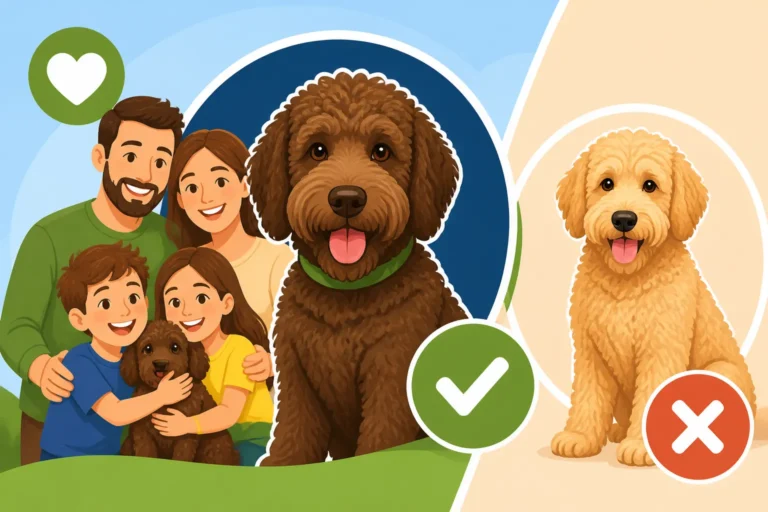
A Labradoodle is often an excellent fit for active families or individuals who are looking for a highly affectionate, energetic, and engaging companion. If you love to spend time outdoors, whether it's hiking, running, or playing fetch in the park, a Labradoodle will likely be right there with you, tail wagging. They thrive in homes where they receive plenty of attention and aren't left alone for excessively long periods, as their "Velcro dog" tendencies can lead to separation anxiety if not managed.
Owners who are prepared for a significant grooming commitment, either by regularly visiting a professional groomer or dedicating time to diligent home grooming, will be much happier. Their often outgoing and friendly nature makes them excellent candidates for homes with children and other pets, provided they are properly socialized from a young age. First-time dog owners can succeed with a Labradoodle, but they need to be realistic about the time commitment for training, exercise, and especially grooming. Having a good resource like Chewy for all their supplies, from durable toys to specialized grooming tools, can make the journey smoother.
Who is a Standard Poodle Best For?
The Standard Poodle is an ideal choice for someone who appreciates a highly intelligent, elegant, yet athletic dog. They are wonderfully versatile and can adapt to various living situations, including apartments, as long as their significant exercise and mental stimulation needs are consistently met. They are excellent partners for owners who enjoy dog sports, advanced obedience training, or simply engaging their dog's sharp mind with puzzle toys and learning new tricks.
Owners of Standard Poodles must be absolutely committed to their grooming routine. This isn't a "sometimes" activity; it's a non-negotiable part of Poodle ownership. Those looking for a truly low-shedding, allergy-friendly dog will find the Poodle's consistent coat a major advantage over the variable Labradoodle. They thrive with owners who are confident and consistent in their training, as their intelligence means they need clear boundaries and direction. While they are affectionate with their families, they can sometimes be a bit more reserved with strangers initially compared to some Labradoodles, making them a good fit for those who appreciate a dog with a touch more poise.
Disclaimer
This article is for general informational purposes only and does not constitute professional advice. Laws, prices and regulations vary by location and change over time. Consult a qualified professional for guidance on your specific situation.