The Irish Water Spaniel in the Australian Labradoodle
It can be incredibly confusing trying to understand the different types of Labradoodles out there, especially when you start hearing about additional breeds like the Irish Water Spaniel being mixed in. Many of us just want a happy, healthy companion, and the intricate history of how these wonderful dogs came to be can feel like a labyrinth. This guide is here to shed light on exactly why and how the Irish Water Spaniel played a pivotal role in shaping the Australian Labradoodle into the distinct breed we know and love today, helping you understand its unique characteristics and lineage.
Understanding the Genesis: Why the Australian Labradoodle Diverged
When the concept of the Labradoodle first emerged from Wally Conron at Guide Dogs Victoria in the late 1980s, the goal was clear: a guide dog that was suitable for people with allergies. The initial crosses between Labradors and Standard Poodles yielded promising results, but as is often the case with first-generation crosses (F1 Labradoodles), there was an inherent unpredictability in traits. Owners and breeders quickly realized that while some puppies inherited the desired non-shedding coat and gentle temperament, others did not, leading to a mixed bag of results that made consistent breeding challenging.
The Initial Labradoodle Vision and Its Challenges
The original idea was brilliant in its simplicity: combine the Poodle's low-shedding coat with the Labrador's trainability and amiable disposition. The first successful pairing, resulting in Sultan, was hailed as a breakthrough. However, what worked for a single dog didn't necessarily translate perfectly across an entire breeding program. Litters often produced puppies with wildly varying coats – some genuinely low-shedding, others shedding almost as much as a Labrador. Temperaments, while generally good, also lacked the consistent, predictable nature essential for working guide dogs. This meant that the "first cross" Labradoodle, while charming, wasn't always the reliable, uniform solution many had hoped for. Breeders aiming for consistency faced a significant hurdle. The 1989 Cross That Made the First Labradoodle delves deeper into this initial phase.
Imagine you're investing your hopes (and a significant amount of money) into a puppy, specifically seeking an allergy-friendly dog, only to find six months later that your adorable F1 Labradoodle is shedding tumbleweeds of hair and triggering your allergies. This was a very real frustration for many early adopters. The variability in coat type, ranging from wiry to fluffy, meant that the promise of a truly hypoallergenic dog was often hit-or-miss. Beyond the coat, the blend of temperaments could be equally unpredictable; while most were lovely, the consistency needed for specialized work, like guide dog roles, was hard to guarantee without multiple generations of careful selection.
The Drive for Greater Consistency and Predictability
To move beyond the "lucky dip" of the F1 generation, a dedicated group of Australian breeders recognized the need for a more stable and predictable outcome. Their vision was to establish a genuine breed, one that would consistently produce puppies with the desired temperament, coat quality, and physical characteristics. This meant moving away from simple first-generation crosses and embarking on a multi-generational breeding program, introducing carefully selected additional breeds to solidify these traits. This effort aimed to create a dog that reliably met specific standards, rather than hoping for the best with each litter. Why an Australian Labradoodle Is Not a Labradoodle provides more context on this distinction.
This wasn't just about appearance; it was about health and temperament too. An inconsistent genetic pool could also lead to a higher likelihood of certain health issues appearing unexpectedly. Breeders wanted to minimize guesswork and maximize the positive traits, ensuring that families bringing an Australian Labradoodle into their home could trust that they were getting a dog with a stable, friendly disposition and a truly low-shedding coat. This proactive approach aimed to refine the Labradoodle into a more predictable and reliable companion.
The Need for a More Stable Genetic Foundation
The challenge with any first-generation cross is the wide range of genetic possibilities. Each puppy can inherit a different mix of genes from its two purebred parents. To overcome this, breeders aiming for the Australian Labradoodle sought to expand the genetic foundation, carefully integrating other breeds known for complementary traits. This wasn't about simply adding more randomness; it was a strategic move to introduce specific genes that could enhance coat quality, temperament, health, and overall consistency. The goal was to create a more robust gene pool from which to select, allowing for the gradual stabilization of desirable characteristics across generations.
The breeds chosen for this infusion had to contribute specific qualities. They needed to align with the core vision of a family-friendly, intelligent, and allergy-friendly companion. The idea was to gently nudge the genetic blueprint towards greater uniformity, creating a dog that, regardless of the parents, would consistently produce offspring true to the emerging Australian Labradoodle "type." This meant meticulously tracking lineages and focusing on dogs that reliably passed on the desired attributes, whether that was a particular curl pattern in the coat or a calm, empathetic nature. This complex process laid the groundwork for the modern Australian Labradoodle we see today.
The Irish Water Spaniel: A Deep Dive into its Core Characteristics
Among the various breeds considered for the Australian Labradoodle's foundational genetic pool, the Irish Water Spaniel (IWS) emerged as a particularly influential choice. This ancient and distinctive breed brought a unique set of traits to the table, making it a valuable contributor to the developing Australian Labradoodle. To truly appreciate its impact, it's helpful to understand the IWS on its own terms, appreciating its history, physical characteristics, and temperament.
A Historical Look at the IWS as a Working Dog
The Irish Water Spaniel is one of the oldest and most striking of the Spaniel breeds, with a history believed to stretch back centuries in Ireland. Originally bred for flushing and retrieving waterfowl from icy bogs and lakes, these dogs are quintessential working dogs. Their entire physical and mental makeup is geared towards their job: an incredibly dense, oily, waterproof coat; powerful swimming ability; and an intelligent, eager-to-please nature that makes them highly trainable. They were expected to work tirelessly, often in harsh conditions, alongside their human companions, demonstrating remarkable stamina and a keen retrieving drive.
Their heritage as working dogs has instilled in them a unique blend of athleticism and intellectual curiosity. They are not merely pretty faces; they possess a problem-solving mind and a deep desire to engage. This background is crucial when considering their contribution to the Australian Labradoodle, as they brought centuries of selective breeding for performance, resilience, and a cooperative spirit. This is a dog that thrives on purpose and partnership, which are valuable qualities for any companion, especially those intended for therapy or assistance roles.
Defining Physical Traits and the Unique Coat
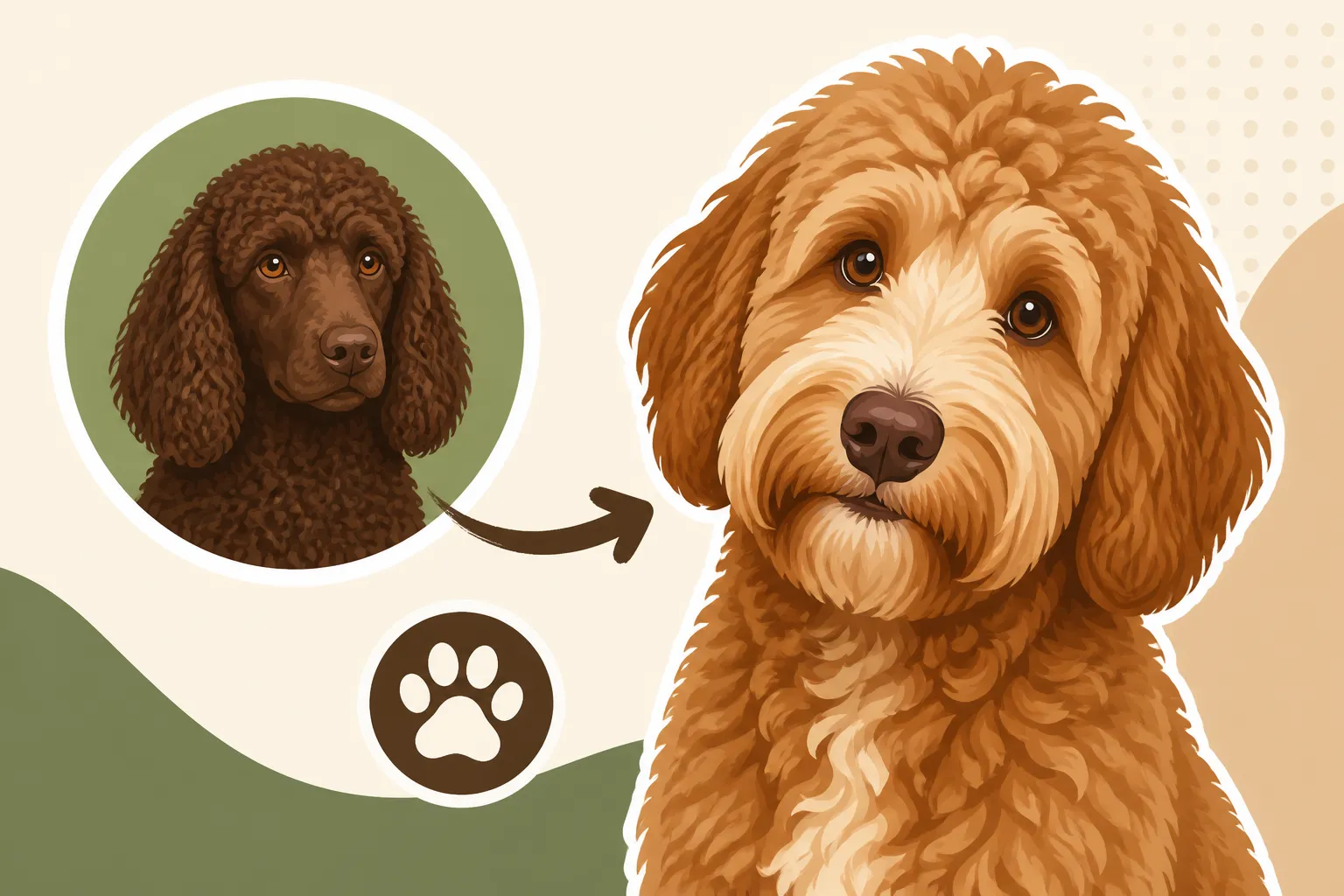
The Irish Water Spaniel is instantly recognizable by its distinctive appearance. They are often described as the "clown of the Spaniel family" due to their comical topknot, rat-like tail (often referred to as a "rat tail" because it's smooth and tapers to a point, completely devoid of feathering), and smooth "face" and front legs, which contrast sharply with their curly, dense body coat. Their most defining physical characteristic, however, is their coat. It's a dense, tight curl or ringlets of liver-colored hair, completely waterproof and designed for insulating them in frigid water. This unique coat is what makes them notably low-shedding, a highly desirable trait for the Australian Labradoodle program.
The coat requires regular grooming, as those tight curls can easily mat if not properly cared for. Why a Wool Coated Labradoodle Costs More to Groom covers similar challenges. Unlike many other Spaniels, their coat isn't long and flowing; it's robust and functional. Their size typically ranges from medium to large, with a sturdy, muscular build befitting their active lifestyle. These physical attributes – particularly the unique non-shedding, curly coat – were precisely what breeders of the Australian Labradoodle were looking to incorporate and stabilize.
Temperament: Intelligence, Playfulness, and Independent Spirit
Beyond their striking looks, the Irish Water Spaniel boasts a fascinating temperament. They are renowned for their high intelligence, often ranking among the most clever breeds. This intelligence, combined with a playful and mischievous streak, makes them engaging companions. They are often described as having a good sense of humor, enjoying playful antics and often making their owners laugh. However, their intelligence also means they need mental stimulation to prevent boredom, and they can possess an independent streak that requires consistent training and early socialization.
While generally good-natured and loyal to their families, IWS can sometimes be reserved with strangers, a trait that careful breeding selection aimed to temper in the Australian Labradoodle. They thrive on activity and engagement, and a bored IWS can quickly become a destructive one. Their drive and smarts made them an excellent choice for contributing to the Australian Labradoodle's intelligence and trainability, while careful selection in breeding helped ensure the outgoing, friendly nature of the Labrador and Poodle remained dominant. What Nobody Tells a First Time Labradoodle Buyer often touches on the challenges of highly intelligent breeds.
Pinpointing the Irish Water Spaniel's Specific Contributions to the Australian Labradoodle
The deliberate inclusion of the Irish Water Spaniel into the Australian Labradoodle lines was a strategic move aimed at enhancing specific traits that were proving inconsistent in earlier Labradoodle generations. Its unique characteristics, honed over centuries as a working retriever, offered valuable genetic material that significantly influenced the modern Australian Labradoodle's appearance, temperament, and health profile.
Refining the Hypoallergenic Coat: Texture and Shedding Reduction
One of the primary reasons for introducing the Irish Water Spaniel was its unique coat. The IWS boasts a dense, tightly curled coat that is naturally waterproof and, crucially, very low-shedding. This was a game-changer for the Australian Labradoodle program, which desperately sought to stabilize the "hypoallergenic" quality that was so variable in early F1 and F1b Labradoodles. The IWS genes helped solidify the desired fleece and wool coat types, ensuring a more consistent and predictable outcome for puppies. The Three Labradoodle Coats: Hair, Fleece and Wool provides a great overview of these coat types.
The IWS coat texture contributed to the soft, curly, or wavy feel that many people associate with the Australian Labradoodle today. This wasn't just about reducing shedding; it was also about achieving a more uniform and appealing coat texture that was easier to manage for owners, provided it received regular brushing. Breeders found that incorporating IWS lines helped them move away from the "hair" coats (which shed more) and the unpredictable "improper coats" that sometimes appeared, firmly establishing the consistent, low-shedding fleece and wool characteristics. For owners, this meant a much higher chance of getting a dog that genuinely didn't trigger allergies, a critical factor for many families. Ensuring you have the right grooming tools, often available on sites like Chewy, is essential for maintaining these magnificent coats.
Shaping Temperament: Adding Wit and a Touch of Mischief
Beyond the coat, the Irish Water Spaniel brought a distinctive temperamental influence to the Australian Labradoodle. Known for their intelligence, playfulness, and sometimes mischievous nature, IWS dogs enriched the mental landscape of the developing breed. While the Labrador contributed its eager-to-please enthusiasm and the Poodle its sharp intellect, the IWS added another layer of wit, resilience, and an independent problem-solving ability. This combination resulted in Australian Labradoodles that are not just smart, but often possess a charming, almost comical personality, making them incredibly engaging companions.
This blend of intelligence and a slight independent streak means that Australian Labradoodles with a strong IWS influence can be highly trainable, but they also thrive on mental stimulation and can sometimes be a bit clever for their own good! They need owners who appreciate their braininess and engage them in activities that challenge them, like puzzle toys or obedience training. The IWS helped solidify a balanced temperament, ensuring the dogs were capable of learning complex tasks while maintaining a joyful, companionable spirit. For those considering an Australian Labradoodle for service or therapy work, this unique blend of intelligence and character can be particularly beneficial.
Bolstering Genetic Diversity and Inherited Health Traits
Another crucial, albeit less visible, contribution of the Irish Water Spaniel was the expansion of the Australian Labradoodle's genetic diversity. Relying on just two parent breeds (Labrador and Poodle) for multiple generations can sometimes lead to a narrowing of the gene pool, potentially concentrating certain hereditary health issues. By introducing the IWS, breeders brought in fresh genetic lines, which can help mitigate the risk of specific inherited diseases that might be prevalent in the Labrador or Poodle lines. This was a proactive step towards building a healthier, more robust breed in the long term.
While IWS dogs have their own set of breed-specific health concerns, their introduction allowed for a broader genetic canvas, offering more options for selective breeding. For example, certain eye conditions or joint issues that might be more common in Poodles or Labradors could potentially be diluted or avoided by introducing genes from a breed with a different genetic health profile. This strategic diversification was a hallmark of the Australian Labradoodle's development, aiming to create a healthier foundation for future generations. Responsible breeders still conduct extensive health testing to ensure the well-being of their litters, a practice crucial for any breed. Whether Health Tested Parents Add Years to a Labradoodle is a valuable resource on this topic.
| Characteristic | Original Labradoodle (F1) | Irish Water Spaniel (IWS) | Australian Labradoodle (with IWS influence) |
|---|---|---|---|
| Coat Type | Variable (hair, fleece, wool) | Dense, tight curls (wool-like) | Consistently fleece or wool, low-shedding |
| Shedding | Variable (low to moderate) | Very low to non-shedding | Very low to non-shedding, allergy-friendly |
| Coat Texture | Range from straight to curly | Coarse, oily, tightly curled | Soft, wavy to curly (fleece/wool) |
| Temperament | Friendly, eager, sometimes bouncy | Intelligent, playful, sometimes reserved, independent | Intelligent, joyful, adaptable, social |
| Trainability | Good, but can be inconsistent | High, but can be independent | High, eager to please, good for various roles |
| Genetic Diversity | Limited (2 parent breeds) | Contributes unique lines | Enhanced, broader gene pool |
| Energy Level | Moderate to High | High, working drive | Moderate to High, thrives on activity |
Tracing the IWS Legacy in Contemporary Australian Labradoodles
The influence of the Irish Water Spaniel, alongside other foundation breeds like the Cocker Spaniel, is firmly embedded in the genetic makeup of the Australian Labradoodle. While the degree of IWS contribution might vary slightly between specific lines and breeders, its legacy is evident in the breed's stable characteristics, from its signature coat to its intelligent and engaging personality. Understanding this ongoing influence helps owners appreciate the rich history behind their beloved pets.
How Widely the Irish Water Spaniel Lines Are Still Utilized
Today, the Australian Labradoodle is a multi-generational cross, and breeders work within established lines that trace back to the initial infusions of breeds like the Irish Water Spaniel. While direct "first-crosses" with an IWS are no longer standard practice (as the breed has been largely stabilized), the genetic contributions of those early IWS ancestors continue to cycle through the gene pool. Reputable breeders meticulously track their pedigrees to maintain the desired characteristics and ensure genetic health. This means that while your Australian Labradoodle might not have an IWS parent, it certainly has IWS ancestors that contributed to its traits.
The ongoing focus is on maintaining the consistency and predictability that the IWS helped establish. Breeders strive for dogs that reliably produce the ideal fleece or wool coats, the balanced temperament, and the robust health profile that defines the Australian Labradoodle. This commitment to maintaining the breed standard means that the historical genetic infusions, including that of the IWS, are still vital components of the breed's identity, even if they are many generations removed. What a WALA Labradoodle Pedigree Costs and Proves can offer insights into how these lineages are documented.
Recognizing Subtle Irish Water Spaniel Characteristics in Your Dog
While the Australian Labradoodle is a distinct breed with its own unique "look," owners might still observe subtle traits that nod to its IWS ancestry. One of the most obvious would be in the coat: a particularly tight, dense curl that leans more towards a "wool" texture could show a stronger IWS influence. The rat tail, however, is not a typical characteristic of the modern Australian Labradoodle, as breeders selectively bred away from this distinctive IWS trait in favor of a more Poodle-like plume or a feathered Labrador tail. The Australian Labradoodle generally has a tail that is feathered, usually carried saber-like, or in a gentle curve over the back, but never bald like the IWS.
Beyond appearance, you might notice a certain intelligence or a playful, almost mischievous spark in your Australian Labradoodle's eyes and behavior. Their problem-solving abilities, combined with an energetic and sometimes independent spirit, can also be a subtle nod to their IWS heritage. They might display a particular fondness for water, a strong retrieving instinct, or a curious nature that loves to explore and figure things out. Observing these traits can be a fun way to connect your dog to its fascinating ancestral roots, understanding how the blend of different breeds created such a unique companion. For engaging these intelligent dogs, consider interactive toys and training treats available on Chewy.
The Lasting Impact on Breed Standard and Desired Qualities
The Irish Water Spaniel's contribution has left an indelible mark on the Australian Labradoodle breed standard, influencing the desired coat types, temperament, and overall health goals. The consistent, low-shedding fleece and wool coats are directly attributable to the genetic infusions, including that of the IWS, ensuring that the breed fulfills its original promise of being more allergy-friendly. This coat consistency is a cornerstone of the Australian Labradoodle's appeal and is a direct result of the meticulous breeding efforts that involved breeds like the IWS.
Furthermore, the balanced and intelligent temperament of the Australian Labradoodle, combining the Labrador's friendliness, the Poodle's intellect, and the IWS's playful wit and trainability, is a highly desired quality. This blend creates a versatile dog capable of excelling as a family pet, therapy dog, or even in some assistance roles. The commitment to a broader genetic base also contributes to the breed's overall health and longevity, a long-term benefit for owners. The IWS played a vital role in establishing these foundational characteristics, making the Australian Labradoodle a stable and predictable breed that consistently delivers on its promises. Whether an Australian Labradoodle Is More Predictable explores this topic further.
Navigating the Nuances: What This Means for Prospective Owners
Understanding the complex lineage of the Australian Labradoodle, particularly the inclusion of breeds like the Irish Water Spaniel, is incredibly valuable for prospective owners. It moves beyond the simple "designer dog" label and reveals a history of thoughtful breeding decisions aimed at creating a consistent, healthy, and predictable companion. This knowledge empowers you to make informed choices and appreciate the unique qualities of your future furry family member.
Dispelling Misconceptions About Multi-Breed Crosses
One common misconception is that adding more breeds to a cross just makes it more "mixed" or unpredictable. In the case of the Australian Labradoodle, the opposite is true. The strategic infusion of breeds like the Irish Water Spaniel was a deliberate effort to stabilize traits and increase predictability, moving the breed away from the inherent variability of a first-generation cross. It wasn't about creating a hodgepodge but about carefully selecting specific genes to achieve a consistent "type." This makes the Australian Labradoodle different from a generic "doodle" that might simply be a two-breed cross.
This rigorous approach to breeding means that reputable Australian Labradoodle breeders are striving for specific outcomes in terms of coat, temperament, and health. They are working with established lines and pedigrees that reflect these multi-generational efforts, ensuring that each puppy has a higher probability of inheriting the desired characteristics. Therefore, understanding the multi-breed foundation isn't a cause for concern; it's a testament to the dedication behind creating a stable and beloved companion dog.
The Importance of Responsible Breeding and Health Testing
Given the multi-faceted genetic background, choosing a responsible breeder is paramount when considering an Australian Labradoodle. A reputable breeder will be transparent about their lines, their health testing protocols, and their breeding goals. They should be able to discuss the health clearances of the parent dogs, which typically include screenings for hip and elbow dysplasia, eye diseases (like PRA, where the IWS contribution is relevant), and other genetic conditions common to the foundational breeds. The Health Tests a Labradoodle Breeder Should Show provides a comprehensive list.
Don't hesitate to ask questions about the ancestors, the genetic tests performed, and what traits the breeder is prioritizing. A good breeder is a wealth of information and is passionate about the health and temperament of their puppies. They will be able to explain how the various breed contributions, including the Irish Water Spaniel, have shaped their specific lines. This due diligence ensures you're supporting ethical breeding practices and increasing your chances of bringing home a healthy, well-socialized puppy with the traits you desire. Products like joint supplements and high-quality food, often found on Chewy, are important for a healthy start.
Ensuring Your Labradoodle is a True Australian Labradoodle
The term "Australian Labradoodle" is sometimes used loosely, so it's important for prospective owners to understand what truly defines one. A true Australian Labradoodle is the result of a multi-generational breeding program that meticulously combines the Labrador Retriever, Poodle, Irish Water Spaniel, Cocker Spaniel, and sometimes the English Cocker Spaniel. It's not simply an F1 Labradoodle bred in Australia. It's about the established lines and the consistency of traits.
When speaking with breeders, inquire about their registration with organizations such as the Australian Labradoodle Association of America (ALAA) or the Worldwide Australian Labradoodle Association (WALA), which maintain pedigrees and uphold breed standards. These organizations help ensure that breeders are adhering to the established development of the Australian Labradoodle, which includes the historical genetic contributions of breeds like the Irish Water Spaniel. This level of oversight helps distinguish a true Australian Labradoodle from other doodle crosses, giving you confidence in your choice. What ALAA Membership Requires of a Labradoodle Breeder provides more information on this.
Disclaimer
This article is for general informational purposes only and does not constitute professional advice. Laws, prices and regulations vary by location and change over time. Consult a qualified professional for guidance on your specific situation.