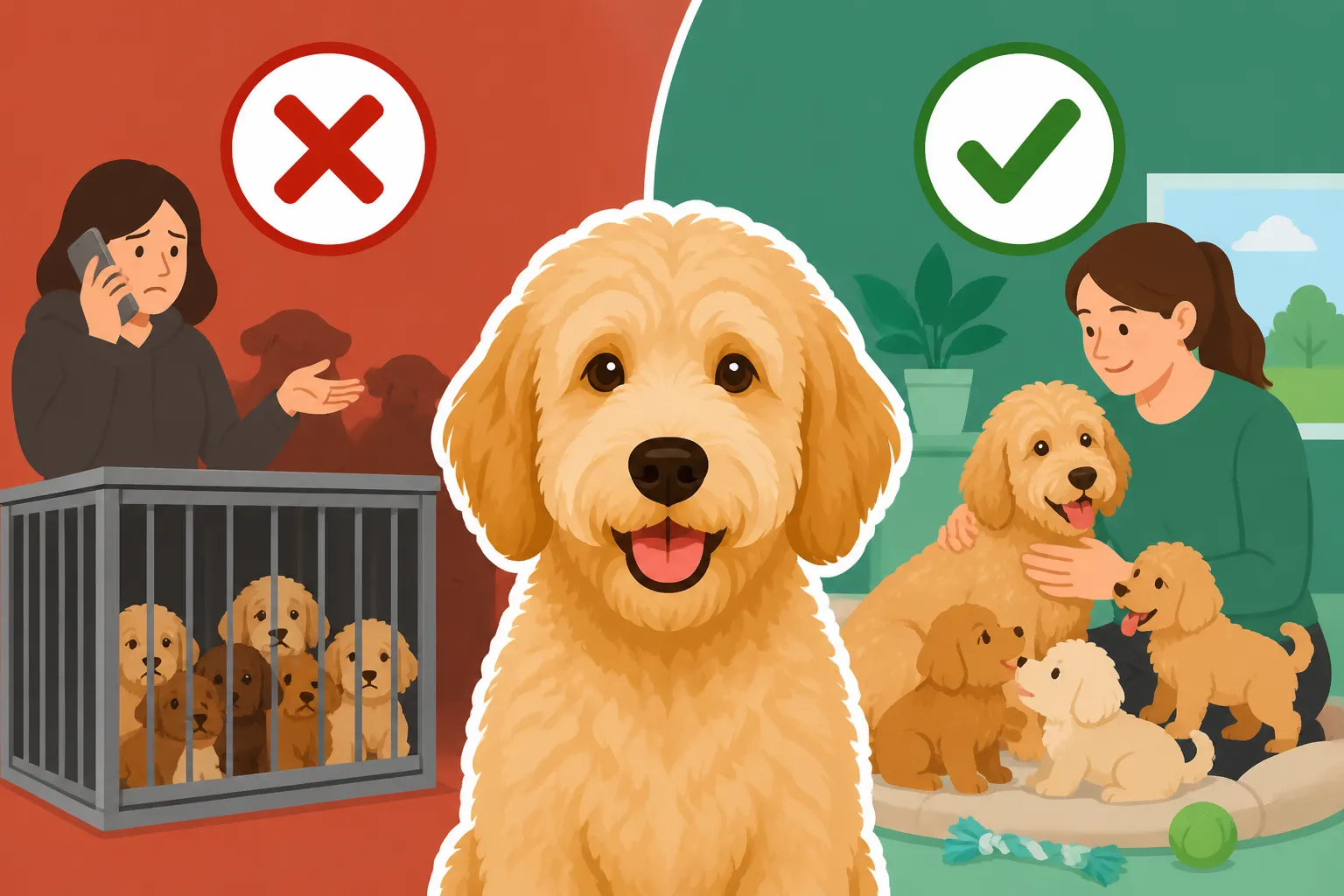
Telling a Labradoodle Broker From a Breeder
The journey to bringing a Labradoodle puppy home is often filled with excitement, but it can quickly become overwhelming when you're trying to navigate the confusing landscape of breeders and brokers. It's incredibly frustrating to pour your heart into finding the right companion, only to realize that not everyone has your puppy's best interests at heart. This guide will help you understand the crucial differences between a responsible Labradoodle breeder and a mere broker, so you can make an informed decision for your future furry family member.
The Core Difference: Production vs. Connection
When you're searching for a Labradoodle, the biggest distinction you need to wrap your head around is whether you're dealing with someone who is genuinely invested in the well-being and future of their dogs (a breeder), or someone whose primary goal is moving puppies for profit (a broker). This isn't just semantics; it fundamentally impacts the health, temperament, and overall start to life your puppy will receive.
What a Reputable Labradoodle Breeder Looks Like
A reputable Labradoodle breeder isn't just in the business of creating puppies; they are passionately dedicated to improving their specific lines and ensuring every puppy they produce is healthy, well-socialized, and a wonderful ambassador for the breed. These individuals often pour countless hours, energy, and financial resources into their breeding program. They'll have a deep, almost encyclopedic knowledge of their parent dogs, their pedigrees, and the specific traits they hope to achieve in their litters. You should expect them to conduct comprehensive health testing on both parent dogs, going beyond the bare minimum. They might discuss in detail genetic conditions like Exercise Induced Collapse and the Labradoodle's Labrador Half or Addison's Disease a Labradoodle Inherits From the Poodle, explaining how they screen to prevent these issues.
You'll find that a good breeder keeps their dogs as cherished family members, not just breeding stock. The parent dogs should be visible, happy, and well-cared for, living in a clean, stimulating home environment. When you inquire about a puppy, they'll likely put you through a rigorous interview process, asking about your lifestyle, experience with dogs, and what you expect from a Labradoodle. This isn't them being nosy; it's them making sure their puppies go to suitable, loving homes. They care deeply about the match, often having extensive questionnaires and even home visits. They typically focus on a limited number of breeds, or even just one, allowing them to specialize and truly understand the intricacies of their chosen dogs. They'll be transparent, happy to answer all your questions, and eager to show you around their facilities (or introduce you virtually if distance is a factor, though an in-person visit is always best).
How a Labradoodle Broker Operates
On the flip side, a Labradoodle broker acts as a middleman, facilitating the sale of puppies they often haven't bred themselves. Think of them as a storefront, whether physical or online, that sources puppies from various breeders – sometimes good, but often from less-than-reputable operations like puppy mills or backyard breeders. Their primary motivation is volume and profit, not the careful genetic selection or early socialization that defines responsible breeding. When you ask to see the parent dogs, a broker will almost always have an excuse: "They're at another facility," "The breeder is out of state," or simply "We don't allow visitors to meet the parents." This inability to connect you with the dam and sire, or to show you the actual environment where the puppies were whelped and raised, is a massive red flag.
Brokers tend to have a generic approach. They might offer multiple breeds, or several different "doodle" crosses, without demonstrating specific expertise in any one of them. Their answers to your questions might be vague, copied from general breed information, and lack the nuanced understanding a dedicated breeder possesses about their specific lines. The focus quickly shifts to payment and pickup, with little concern for whether your home is genuinely the right fit for a Labradoodle. They might even try to pressure you into a quick decision, stating that many others are interested. You'll also notice a stark difference in paperwork; while a reputable breeder provides comprehensive health records, pedigree information (if applicable, like with an Australian Labradoodle), and a robust health guarantee, a broker's paperwork might be minimal, vague, or simply missing vital details. This transactional model, disconnected from the actual breeding process, carries significant risks for the unsuspecting buyer.
Red Flags to Watch For When Buying a Labradoodle Puppy
Spotting the difference between a legitimate breeder and a broker isn't always obvious at first glance. Both can have attractive websites, but if you know what to look for, the red flags become clear indicators that you might be dealing with a broker who is simply trying to sell you a product, rather than a living, breathing family member.
The Online Presence and Communication Style
When you first start your search, you'll likely encounter breeders and brokers through their online presence. A reputable breeder's website will typically be informative, showcasing their individual dogs, detailing their health testing protocols (like discussing the prcd-PRA Test Both Labradoodle Parents Need), often featuring photos and videos of their current litters and past puppies growing up. Their communication will be personal, responsive, and genuinely interested in you. They'll often provide detailed information about their specific breeding philosophy, their approach to early neurological stimulation, and how they prepare their puppies for new homes. They might even have a blog where they share insights into Raising a Labradoodle Through Its First Year or advice on feeding, perhaps even mentioning brands like Chewy where you can find quality food options.
Brokers, however, often rely on generic, mass-produced websites. You might see stock photos or images that appear too perfect, without specific details about the individual puppies for sale. There will be a noticeable lack of information about the actual parents, their living conditions, or their health clearances. Communication might be impersonal, handled by sales representatives rather than the person who bred the litter. They might push for quick deposits or offer "deals," rather than taking the time to match a puppy to your family. If your detailed questions about the puppy's lineage, socialization, or health history are met with evasive answers or a sales pitch, it's a huge warning sign. They're trying to sell you a puppy, not educate you about their specific line.
Inability to See the Parents or the Environment
This is perhaps the biggest, most undeniable red flag of all. A responsible breeder will insist that you meet the puppy's mother (and often the father, if he lives on-site or nearby) and see the environment where the puppies have been raised. They want you to witness the care and love their dogs receive. If a "breeder" refuses to let you visit their facility, meet the parents, or even see the actual living conditions of the puppies, run, don't walk, in the opposite direction. Common excuses include "for the health of the puppies" (while a good breeder will have strict biosecurity, they'll still facilitate visits), "we're too busy," or "the parents are off-site." These are almost always tactics used by brokers or puppy mills to hide unsanitary conditions, poor socialization, and unhappy parent dogs.
Meeting the mother gives you a vital glimpse into the potential temperament of your future puppy. If she's shy, fearful, or aggressive, her puppies are more likely to inherit or learn those traits. Furthermore, observing the puppies' environment tells you a lot about their early socialization. Were they raised in a stimulating home environment, exposed to household sounds, and handled regularly? Or were they kept in kennels with minimal human interaction? This early exposure is critical for a Labradoodle's development, and its absence can lead to behavioral challenges down the road. If you find yourself considering a puppy from such a source, it might be wise to also consider pet insurance from a provider like Healthy Paws, as the unknown health history could lead to unexpected vet bills.
The Price and Paperwork Discrepancy
While a higher price doesn't automatically guarantee a good breeder, a suspiciously low price for a Labradoodle should always raise concerns. Raising healthy, well-socialized puppies with proper health clearances for the parents is an expensive endeavor. This includes vet check-ups, high-quality food, health testing, stud fees, whelping supplies, and countless hours of care. A legitimate breeder's price reflects these significant investments, along with their expertise and commitment. If someone is advertising a Labradoodle for a fraction of what most reputable breeders charge, it's highly probable they're cutting corners on health, care, or both. This is often where you'll see a Labradoodle Sold Through a Puppy Broker or from a backyard breeder.
Beyond the price, scrutinize the paperwork. A reputable breeder will provide a comprehensive contract that outlines their health guarantee, usually for genetic conditions like Hips and Elbows in a Sixty Pound Labradoodle or the The Progressive Retinal Atrophy Labradoodles Are Tested For. They will offer verifiable proof of parentage health clearances (OFA, PennHIP, CERF, DNA tests for common breed-specific conditions), vaccination records, deworming schedules, and often microchip registration. They should be transparent about their policies and eager to provide you with all necessary documentation. Brokers, on the other hand, might offer vague "health guarantees" that are difficult to enforce, or they may present incomplete records. They might not be able to provide details on when to take a Labradoodle off large breed puppy food or even how much a Labradoodle puppy should eat daily because they simply don't have that personal connection to the puppies' upbringing. Always look for thorough, verifiable documentation; if it's lacking, you're likely dealing with a broker.
Why This Distinction Matters for Your Future Labradoodle
The decision between a breeder and a broker goes far beyond a simple transaction; it's about the very foundation of your dog's life and your relationship with them. This choice impacts everything from your puppy's physical well-being to their emotional stability and potential lifespan.
Health and Temperament Implications
The most critical reason to distinguish between a breeder and a broker lies in the profound impact on your Labradoodle's health and temperament. Puppies from reputable breeders benefit from parents who have undergone extensive health screening, reducing the likelihood of inheriting genetic diseases. Breeders actively work to minimize the risk of conditions like hip and elbow dysplasia, certain eye diseases, and other hereditary issues prevalent in Labradors and Poodles. This responsible approach means your puppy has a much better chance at a long, healthy life. You can refer to resources like The Health Tests a Labradoodle Breeder Should Show for guidance on what to expect.
Conversely, puppies sourced through brokers often come from environments where health testing is neglected. Puppy mills prioritize quantity over quality, leading to puppies with a higher risk of congenital defects, chronic health problems, and weakened immune systems. These hidden issues can lead to heartbreaking vet visits, significant financial strain, and a shorter, less comfortable life for your dog. Beyond physical health, the early environment dictates much of a puppy's temperament. Puppies from brokers or mills often lack adequate socialization during their crucial early weeks. They might be raised in isolation, exposed to minimal human interaction, or deprived of diverse sensory experiences. This can result in fear, anxiety, aggression, and significant behavioral challenges that can be incredibly difficult to overcome, often leading to dogs being surrendered to shelters. It's truly what What Labradoodle Owners Say They Were Not Warned About often points to, leading to dogs that are poorly adjusted.
Ethical Considerations and Supporting Responsible Breeding
Choosing a responsible breeder isn't just about protecting yourself; it's about supporting ethical practices in the animal world. When you buy from a reputable breeder, you are directly contributing to a system that prioritizes the welfare of breeding dogs, ensures puppies are raised in loving environments, and strives to produce healthy, well-adjusted companions. You're supporting individuals who dedicate their lives to their dogs, invest heavily in veterinary care, proper nutrition (perhaps even feeding them high-quality fresh food like Ollie), and early socialization. This choice helps to perpetuate a cycle of responsible breeding that benefits the entire breed and dog community.
On the other hand, purchasing a puppy from a broker, especially one who cannot provide transparent information about their sources, directly contributes to the demand for puppy mills and irresponsible breeding operations. These operations often subject parent dogs to deplorable conditions, keeping them in cramped, unsanitary cages with little to no veterinary care or human interaction. The female dogs are bred relentlessly until they are no longer useful, then discarded. The puppies are often taken from their mothers too early, shipped long distances, and arrive stressed and sickly. By choosing to bypass brokers and work directly with ethical breeders, you are actively choosing to not support this cruel industry. Your choice has a ripple effect, encouraging responsible practices and helping to break the cycle of suffering for countless dogs. It provides peace of mind, knowing that your beloved Labradoodle has come from a place of care and ethical consideration.
Here’s a quick comparison to help you tell the difference:
| Feature | Reputable Breeder | Labradoodle Broker (or Puppy Mill Front) |
|---|---|---|
| Primary Goal | Improve breed, produce healthy, well-adjusted companions | Volume sales, profit |
| Parent Dogs | Visible, on-site, well-cared for, part of the family | Rarely seen, "off-site," various excuses |
| Environment | Clean, stimulating home environment, puppy nursery | Unknown, likely commercial kennel, possibly unsanitary |
| Health Testing | Extensive genetic screening for parents, verifiable results | Little to no testing, vague or absent health claims |
| Transparency | Open, willing to answer all questions, provide tours | Evasive, generic answers, resists visits |
| Contract/Guarantee | Detailed, comprehensive health guarantee, clear terms | Vague, limited, or non-existent guarantee, difficult to enforce |
| Application Process | Thorough interview, detailed questionnaire, good match focus | Quick sale, minimal questions, pressure to buy now |
| Knowledge of Dogs | Deep, specific knowledge of lines, parents, puppy needs | Generic, superficial information |
| Puppy Socialization | Intentional early neurological stimulation, household exposure | Minimal, often neglected, leads to fear/anxiety |
| After-Sale Support | Lifelong resource, takes back dog if needed | Limited or no follow-up, no long-term commitment |
Disclaimer
This article is for general informational purposes only and does not constitute professional advice. Laws, prices and regulations vary by location and change over time. Consult a qualified professional for guidance on your specific situation.