Drying a Labradoodle’s Ears Properly
Proper drying methods for floppy Labradoodle ears prevent painful infections caused by trapped moisture and dense inner hair.
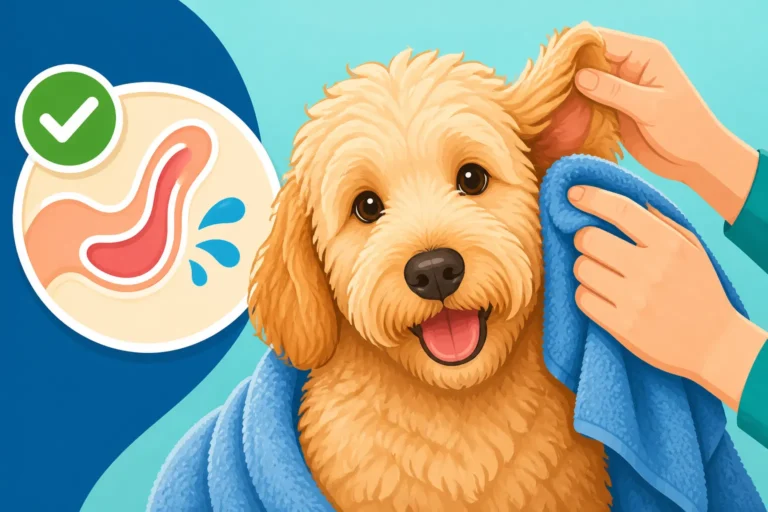
Proper drying methods for floppy Labradoodle ears prevent painful infections caused by trapped moisture and dense inner hair.
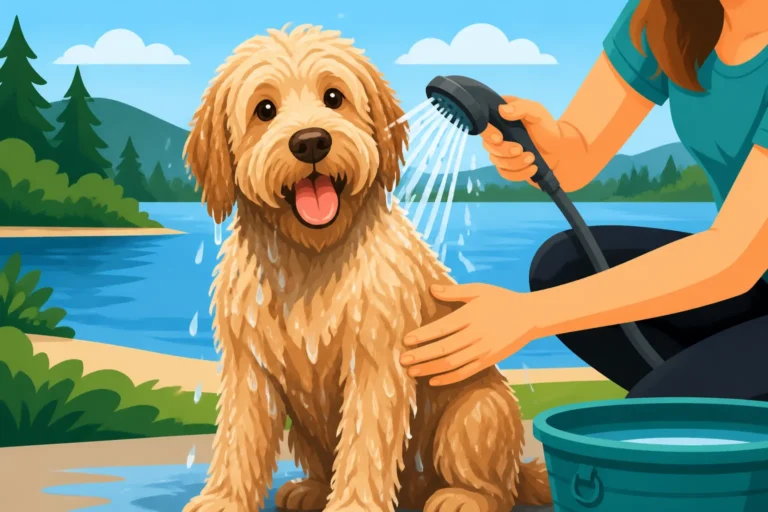
Proper rinsing and coat care remove lake water, algae, bacteria, and debris from a Labradoodle to prevent painful mats and skin issues.
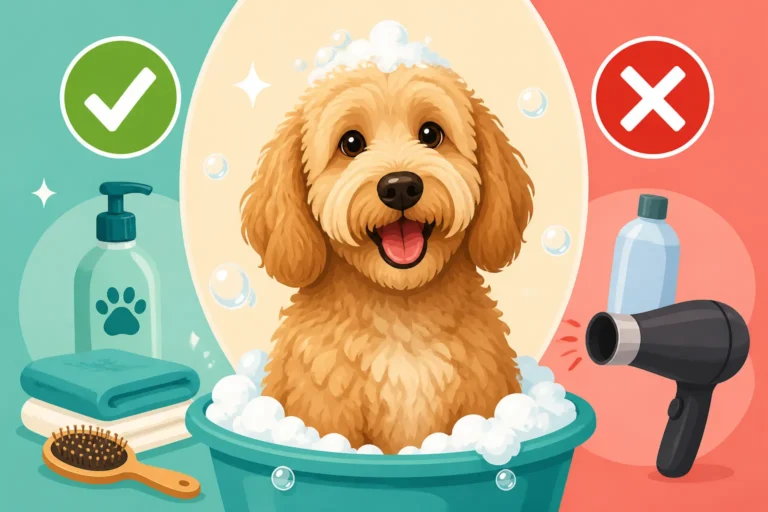
Washing hair, fleece, and wool Labradoodle coat types without proper preparation creates painful matting and skin infections.
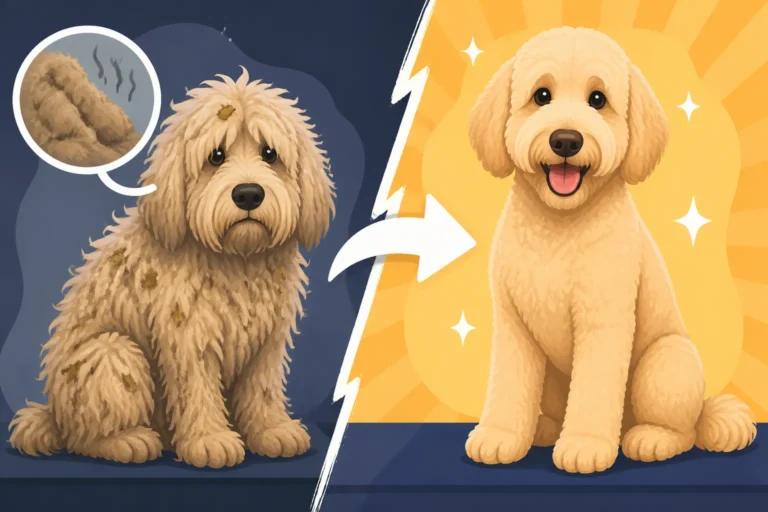
A kennel clip for severely matted Labradoodles removes painful tangles, skin infections, and trapped moisture while helping coats grow back.
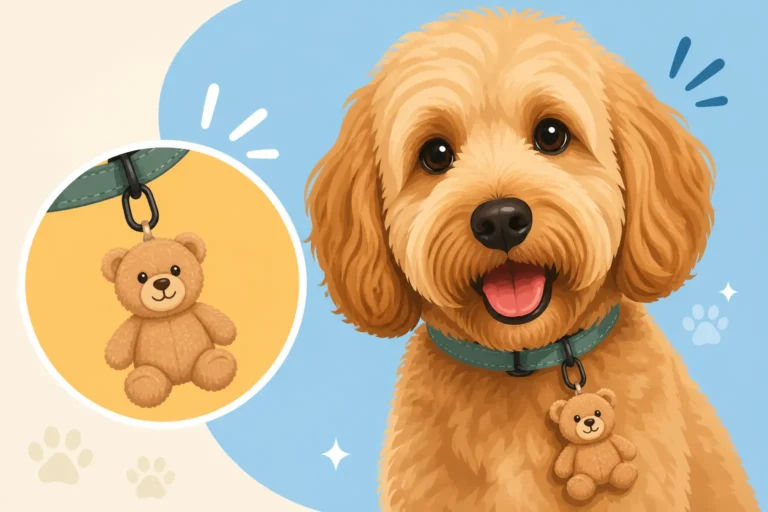
The Labradoodle teddy bear clip creates a fluffy, rounded look with uniform coat length and daily brushing requirements.
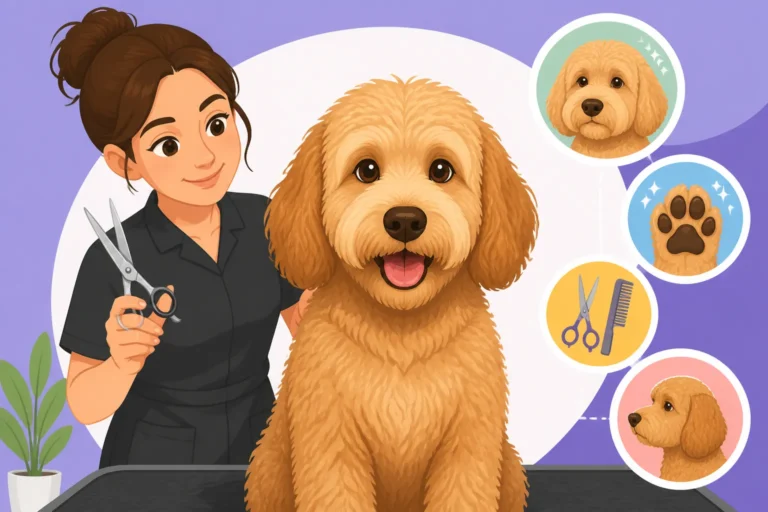
Labradoodle coat types, including hair, fleece, and wool, determine grooming styles, frequencies, and necessary maintenance routines.
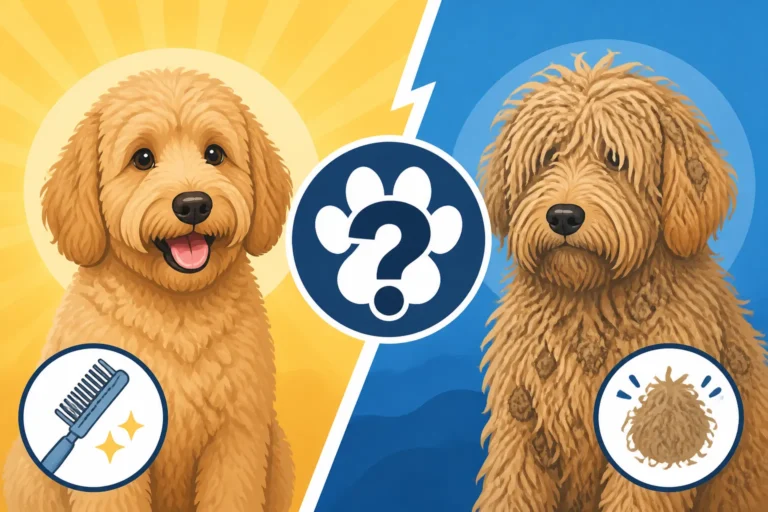
Labradoodle adult coat transitions between six and eighteen months cause dense fleece and wool hair to develop tangles and mats.
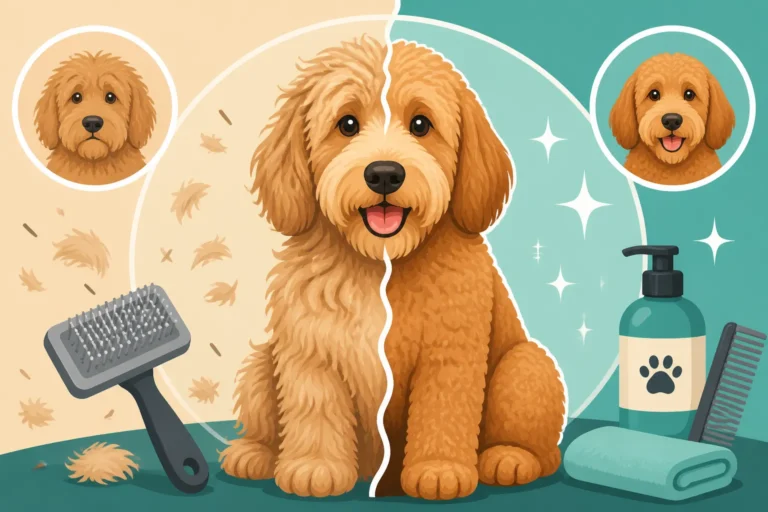
Labradoodle coat change transitions puppy fur into adult fleece or wool, trapping shedding hair and causing painful matting behind the ears and armpits.
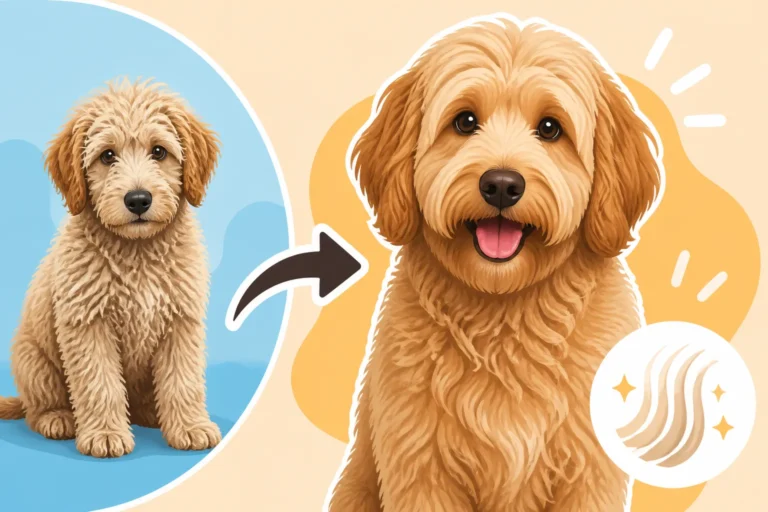
Labradoodle puppy fur changes at nine months as adult hair emerges, causing matting when two different textures tangle together.
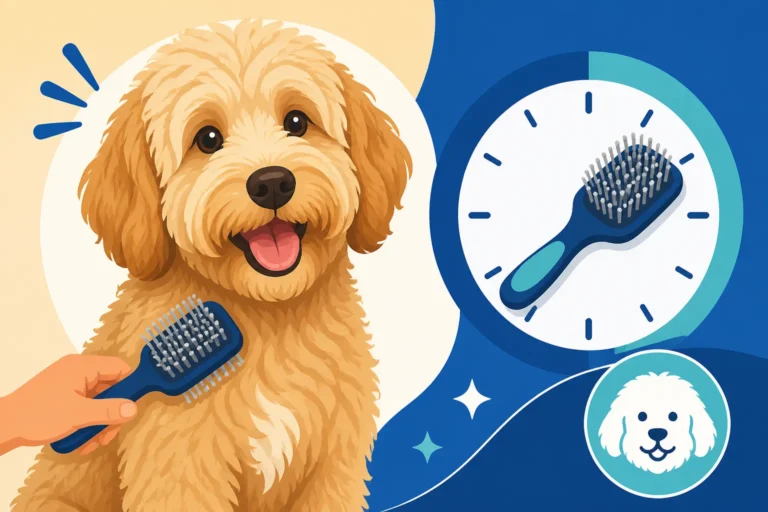
Labradoodle weekly brushing time requires thirty to sixty minutes across multiple sessions to prevent painful mats from forming.