Whether a Second Dog Settles an Anxious Labradoodle
Adding a second dog to calm a pacing Labradoodle and whether another pet solves separation panic or worsens household distress.
Work with the temperament you have.
House-training and crate work, recall, leash manners, separation anxiety, and the behaviors this breed is wired for.

Adding a second dog to calm a pacing Labradoodle and whether another pet solves separation panic or worsens household distress.

Labradoodle destructive behavior and chewing stem from separation anxiety, boredom, or inherited drives when left alone.
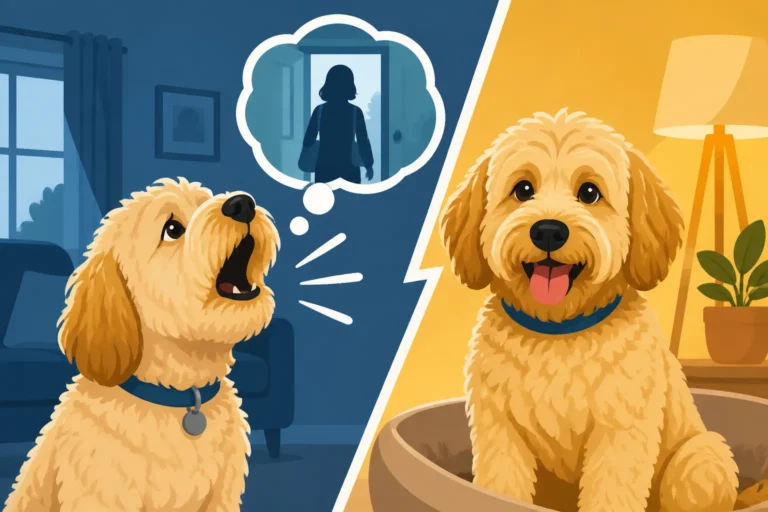
Labradoodle barking behavior when left alone stems from anxiety, boredom, and external stimuli, requiring practical strategies.
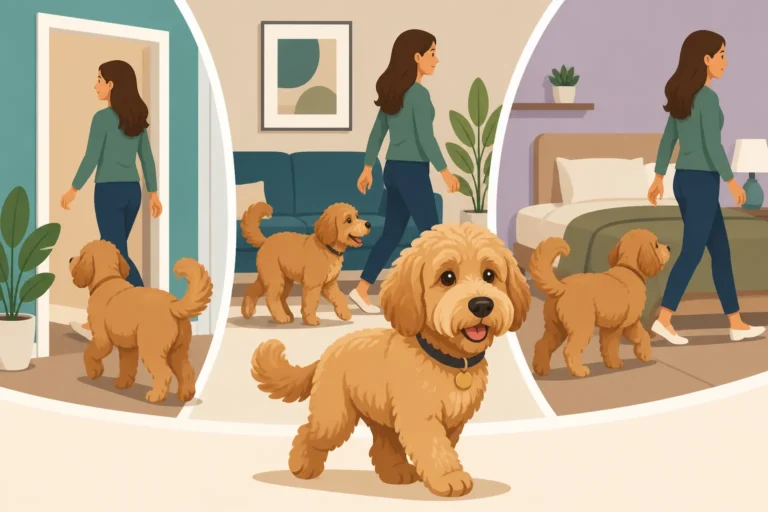
Labradoodle room-to-room following behavior stems from the loyal and intelligent traits inherited from Labrador Retriever and Poodle parent breeds.
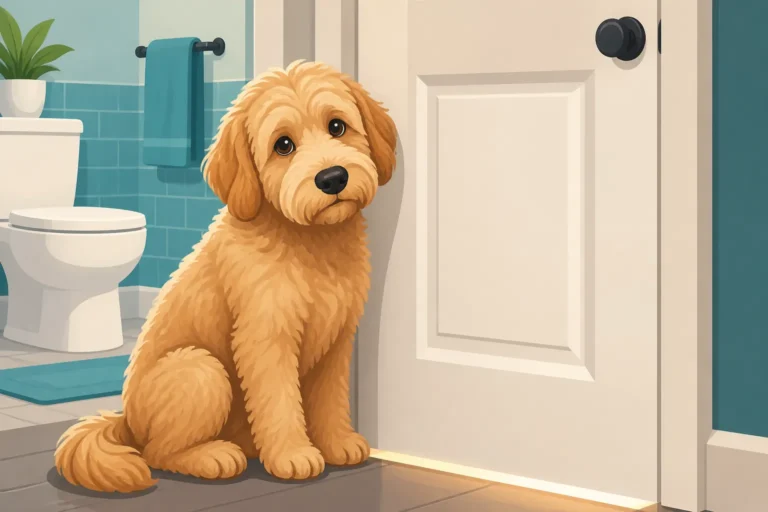
Labradoodle bathroom door habits and Velcro dog tendencies explained, with practical training strategies to foster gentle independence.
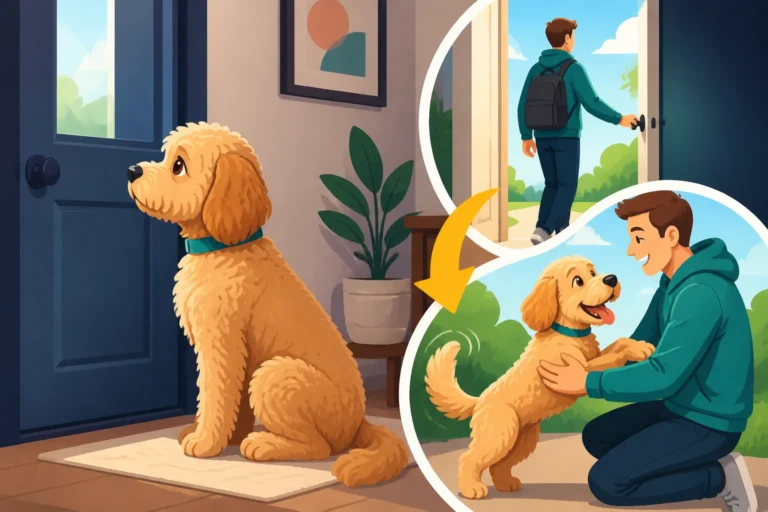
Labradoodle separation anxiety training helps dogs build confidence and remain calm when left alone for short intervals.
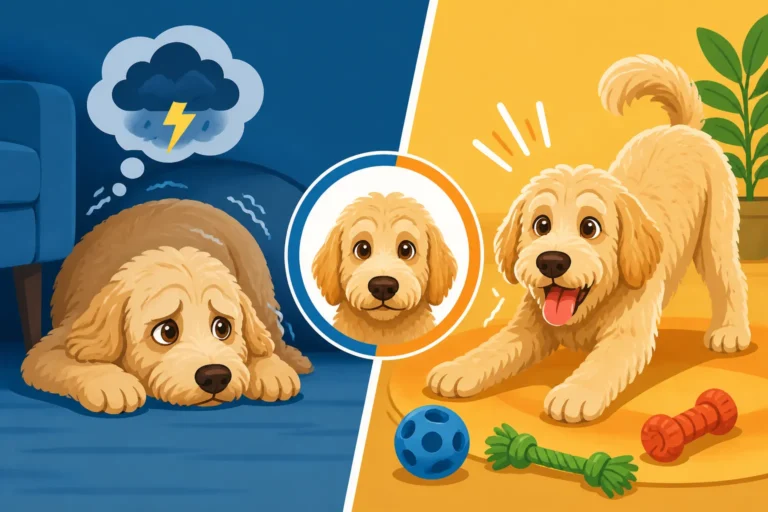
Labradoodle destructive chewing and incessant barking stem from anxiety or unspent physical and mental energy.
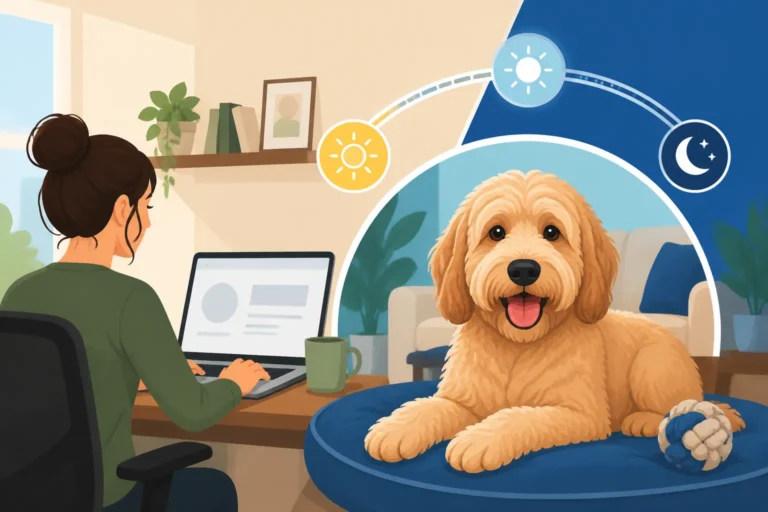
Labradoodle alone time coping strategies help intelligent dogs handle full workdays without developing destructive habits.

Labradoodle sedation during grooming and coat maintenance challenges explained to keep your dog comfortable and healthy.
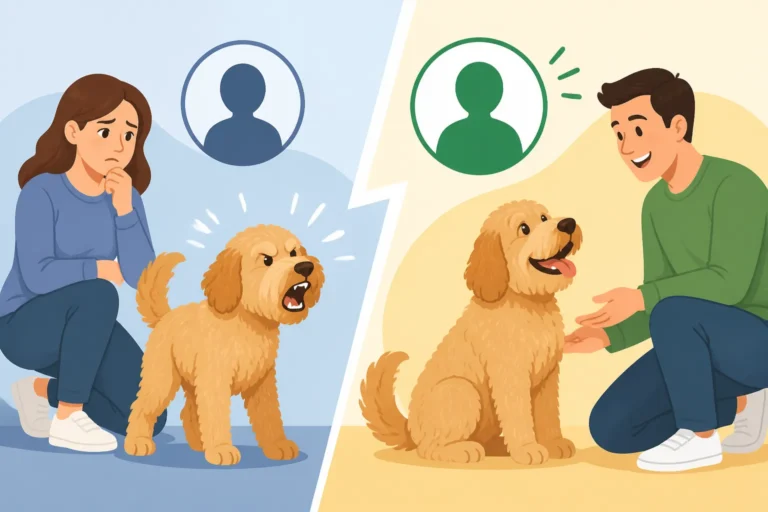
Labradoodle behavior differences between owners and strangers explain why dogs listen better to new handlers than primary caregivers.