Whether a Labradoodle’s Coat Grows Back the Same
Labradoodle coat regrowth after a shave and the characteristics of hair, fleece, and wool types are explained.
The daily stuff, done right.
Feeding amounts by life stage, coat and skin routines, dental and nail care, exercise needs, and what changes as they age.
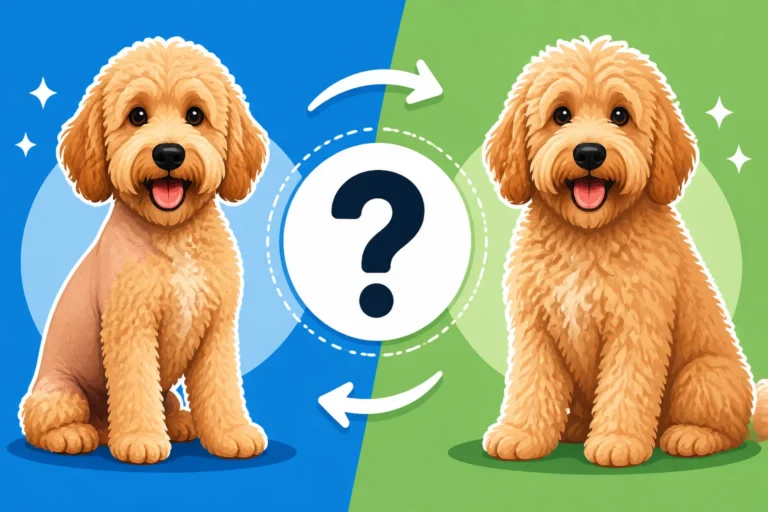
Labradoodle coat regrowth after a shave and the characteristics of hair, fleece, and wool types are explained.
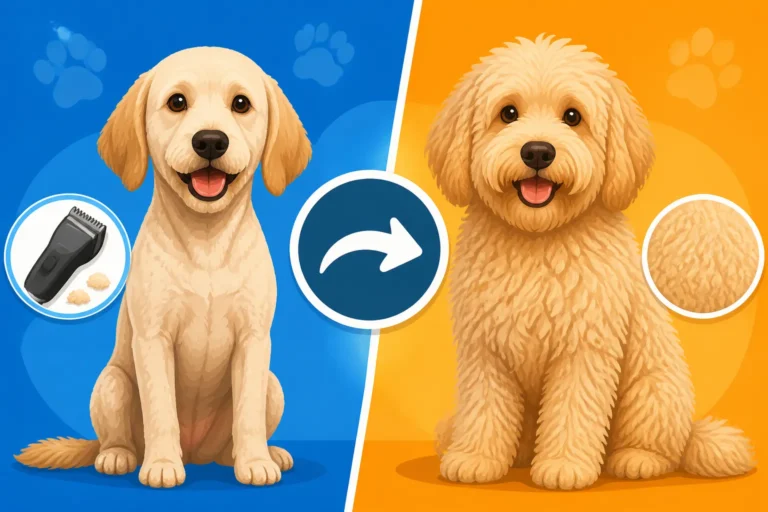
Shaved Labradoodle coats grow back differently depending on whether the hybrid dog inherits a hair, fleece, or wool type.
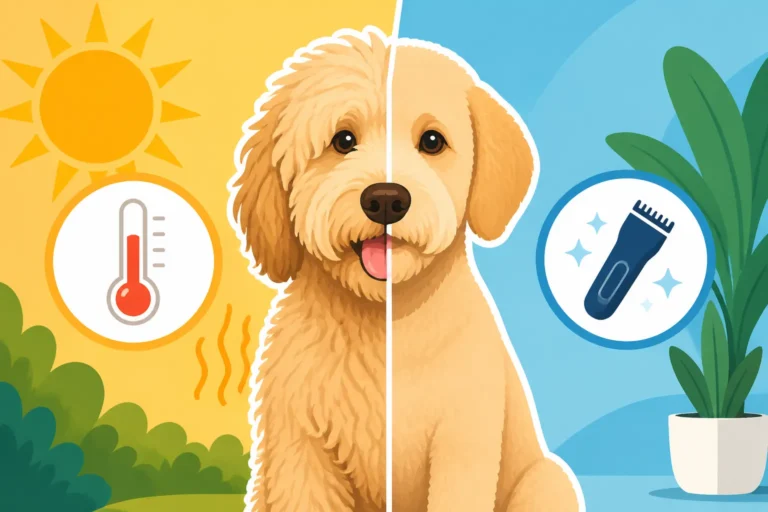
Labradoodle summer clipping decisions require understanding hair, fleece, and wool coat functions and temperature regulation risks.
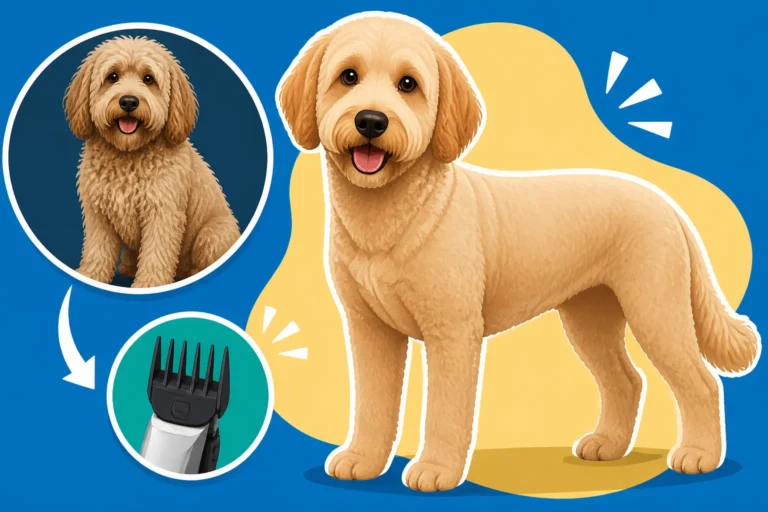
A Labradoodle one-inch clip leaves one inch of hair on the body, balancing a fluffy look with easy maintenance.
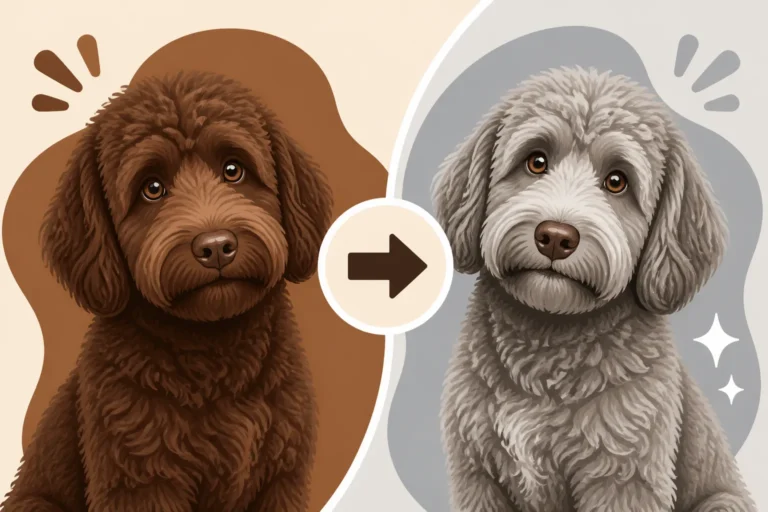
Chocolate Labradoodle coat genetics and the G locus gene explain why a deep brown puppy fades to silver over time.
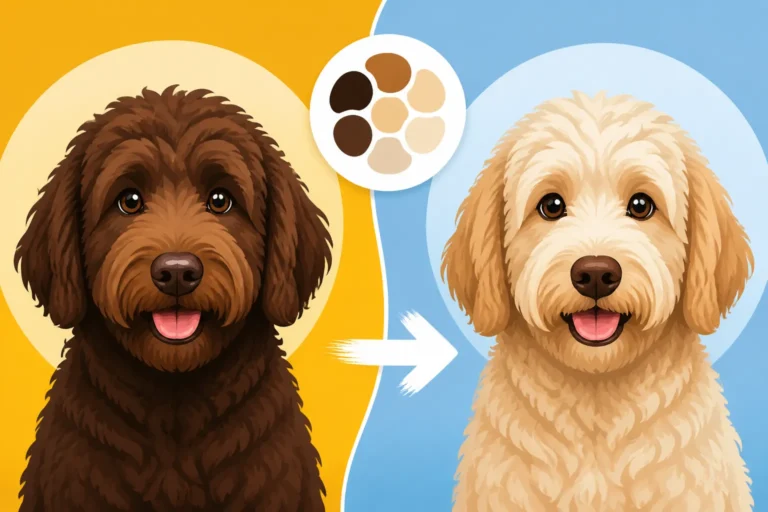
Labradoodle coat color changes explain how genetics, aging, and the nine-month transition cause puppy hair to lighten into silver or café.
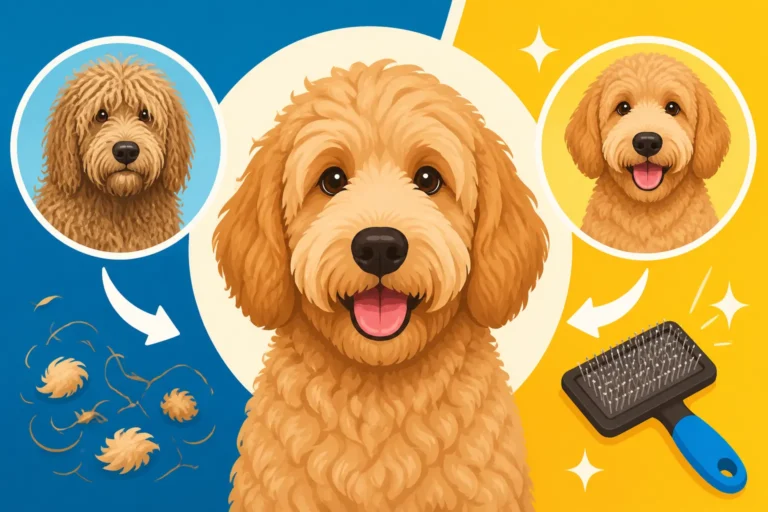
Daily brushing during the Labradoodle coat change prevents severe matting by removing trapped puppy hair from fleece and wool coats.
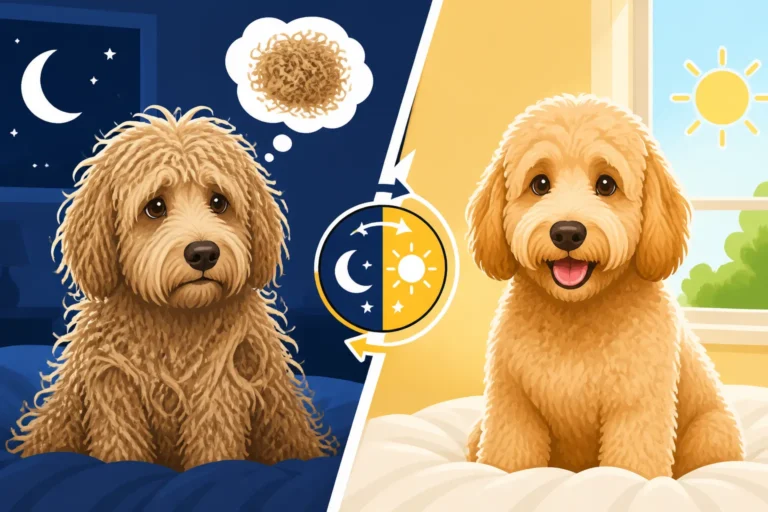
Labradoodle coat changes cause trapped shedding puppy hair and fast overnight matting during the adult transition.
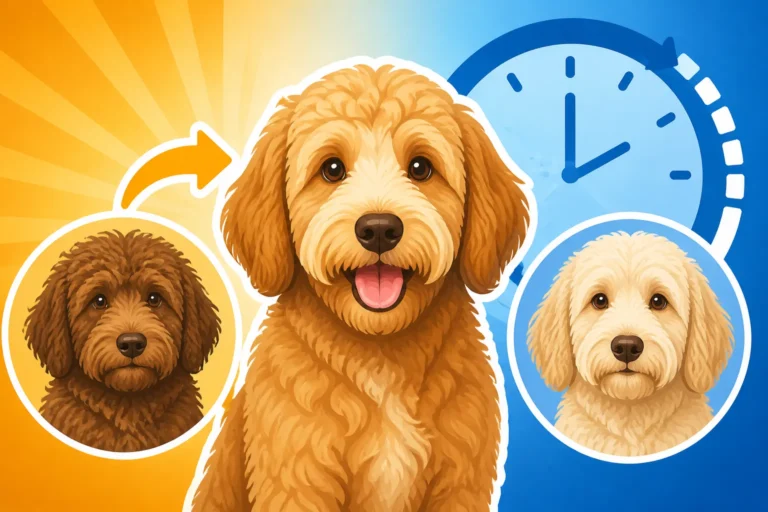
Labradoodle coat change duration during adolescence, including adult fleece and wool coat types and matting prevention.
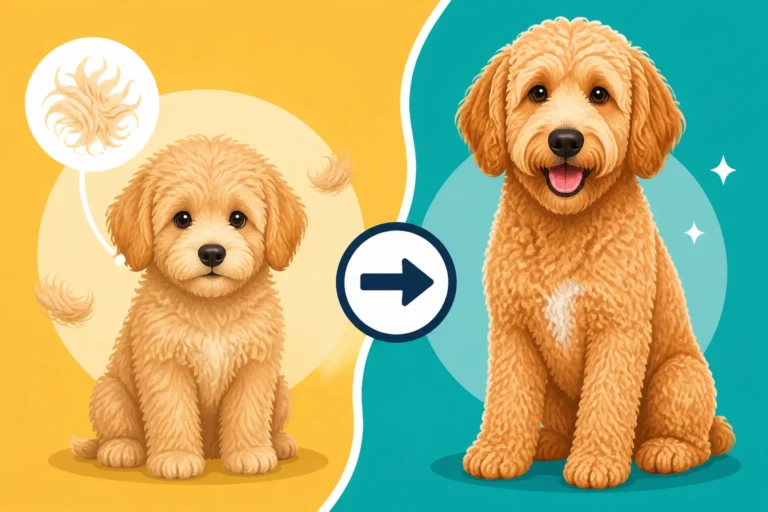
The Labradoodle coat blow timeline and specific grooming strategies explain how to keep the emerging adult coat mat-free.