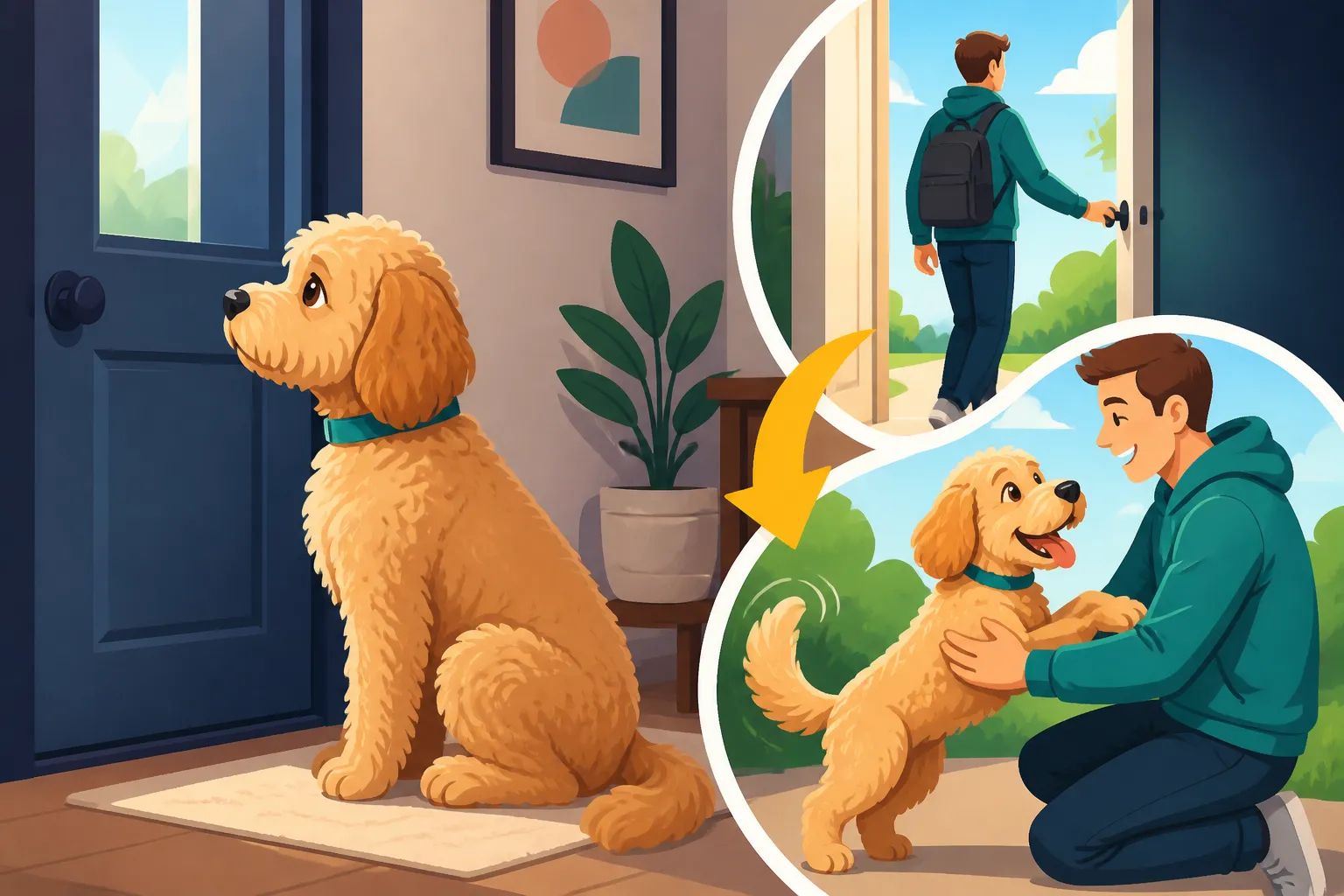
Teaching a Labradoodle That You Come Back
Oh, the Labradoodle love! They stick to you like velcro, which is absolutely adorable… until you realize you can't even go to the bathroom alone without a sad puppy sigh or a gentle nose nudging the door. That heart-wrenching whine, the frantic pacing, or even destructive chewing when you leave can make even a quick trip to the grocery store feel like an agonizing betrayal. This guide is all about helping your beloved Labradoodle understand that your departure isn't permanent, building their confidence in your inevitable return, and ultimately fostering a sense of calm independence, so both of you can enjoy your time, together and apart.
Decoding the Labradoodle's Need for Proximity
It’s easy to feel guilty when your Labradoodle looks at you with those big, soulful eyes as you grab your keys. But understanding why they might struggle with being left alone is the first step to helping them. It’s not just about being clingy; it often stems from deep-seated breed traits and, sometimes, genuine anxiety.
Why Labradoodles Struggle with Being Left Alone
Labradoodles were originally bred to be companion dogs, often destined for roles as assistance animals. This means they were intentionally developed to be highly intelligent, sensitive, and profoundly bonded to their human families. They crave interaction and have a strong desire to be involved in whatever you're doing. Think about their parent breeds: the Labrador, a devoted family dog known for its eager-to-please nature, and the Poodle, highly intelligent and often very people-oriented. These traits combine to create a dog that truly thrives on human companionship. When that companionship is suddenly absent, it can feel like a profound loss or an unsettling change to their routine. It's not personal defiance; it's often a genuine struggle with being alone, especially if they haven't been taught how to cope. For a deeper dive into their natural attachment, you might find The Velcro Labradoodle That Cannot Be Left an insightful read.
Recognizing the Signs of Anxiety, Not Just Attachment
While some Labradoodles are simply attached, others exhibit signs of true separation anxiety, which is a more serious behavioral issue. It’s important to differentiate between a dog who misses you for a bit and then settles, and one who genuinely panics. A dog with mild attachment issues might whine for a few minutes, then curl up and nap. A dog with separation anxiety, however, might start drooling excessively, pacing frantically, barking relentlessly, or engaging in destructive behaviors like chewing door frames or digging at carpets within minutes of your departure. They might even have accidents indoors, even if they are perfectly house-trained. These behaviors aren't out of spite; they are a manifestation of extreme stress and fear. If your Labradoodle is exhibiting these intense symptoms, it's crucial to address it systematically. Consider reading What a Labradoodle Destroys When Left Alone for more insights into destructive behaviors stemming from anxiety.
The Baby Steps to Building Solo Confidence
Teaching your Labradoodle to be comfortable alone isn't about ignoring their needs; it's about gradually building their confidence and providing them with the tools to self-soothe. Like any good training, it starts small, right within the comfort of your own home.
The Crate as a Safe Haven
Many people view crates as cages, but for a dog, a properly introduced crate can become a den – a safe, cozy, personal space where they feel secure. For a Labradoodle, who can sometimes feel overwhelmed in a big, empty house, a crate can provide a sense of security and containment. It's not a punishment tool; it's a quiet retreat. Start by making the crate a positive place. Feed them meals in there, toss in high-value treats and favorite toys. Leave the door open initially. Once they're comfortable going in and out, close the door for very short periods while you're still in the room, gradually increasing the time. Never force them in or use the crate as a penalty. The goal is for them to associate it with peace and relaxation. A good, durable crate can be easily found on Amazon, along with cozy beds to make it more inviting. For more details, explore Whether a Crate Helps a Labradoodle Switch Off.
"Puppy Push-ups" for Mental Independence
This isn't about physical exercise, but mental. The idea is to teach your Labradoodle to be okay with you not always being right there. Throughout your day, periodically ask your dog to go to their bed or mat and stay there for a short period while you move around the house. Start with just a few seconds, then release them with praise. Slowly increase the duration and the distance you move away. This teaches them to settle even when you're not within arm's reach. It's a foundational exercise for building an "off switch" and proving that good things happen when they settle. This also helps break the habit of constant shadow-following.
The Two-Minute Drill: First Steps to Absence
Once your Labradoodle is comfortable in their crate or on their "place" for short periods while you're visible, it's time to introduce actual absence. The key here is brevity and no fanfare. Put them in their crate or designated safe spot with a special, long-lasting chew toy (like a stuffed Kong). Walk out of the room, close the door, and immediately come back in after just a few seconds – literally 30 seconds to a minute. Don't make a big deal of your return. If they're calm, quietly reward them with a treat, then release them. Repeat this multiple times a day. The goal is to accumulate many successful short absences, reinforcing the idea that you always return. Gradually extend these times by tiny increments – from 30 seconds to 1 minute, then 2, then 5. The rule of thumb is to return before they start to get anxious, so they never practice panicking.
Gradually Increasing Alone Time and Distance
Once your Labradoodle has mastered the short-duration, in-house absences, it's time to slowly expand their comfort zone to longer periods and different environments. Patience and consistency are your best friends here.
Extending Your Absence: From Room to House
After successfully completing the "two-minute drill" within the same room or just outside the door, you can begin to extend the distance and duration more purposefully. Place your Labradoodle in their comfortable space with a high-value, distracting chew or puzzle toy. This is where tools found on Amazon, like a sturdy Lick Mat or a durable puzzle feeder, become invaluable. Quietly leave the room, closing the door behind you. Go to another part of the house where they can't see or hear you easily. Start with 5-10 minutes. If they remain calm, return just as quietly. Remember, you want to return before they become distressed. If they show signs of anxiety, you've gone too far, too fast; scale back to the last successful duration. As they get more comfortable, you can move around the house, making little noises, letting them know you're still there but not with them. This helps them understand that your presence doesn't always mean direct interaction. For strategies on building longer periods of solitude, consider exploring The Alone Time a Velcro Labradoodle Can Build To.
Leaving the House: Baby Steps to Longer Stays
Once they are consistently calm when you're in another room for 15-30 minutes, you can start leaving the actual house. This is a significant step, so approach it with the same gentle increments. First, perform your usual departure routine – grab keys, coat, whatever you typically do – but then simply step outside for 30 seconds, close the door, and immediately come back in. Don't interact with your dog if they're excited; wait for them to settle before acknowledging them. Repeat this until they barely react to your departure. Then, extend it to 1 minute, then 2, and so on.
A pet camera can be incredibly helpful here. You can monitor your Labradoodle's behavior in real-time and know precisely when to return, or if you need to scale back. Many modern pet cameras allow two-way audio, but be cautious with this; sometimes hearing your voice without your presence can increase anxiety. Focus on observing their behavior. You're aiming for calm chewing on their puzzle toy, perhaps a little nap, or simply resting. This structured approach helps prevent them from learning that panicking eventually brings you back.
Making Your Departures and Returns Low-Key
Our human emotions can sometimes unintentionally fuel our Labradoodle's anxiety. By making our comings and goings as uneventful as possible, we reduce the drama and signal to our dogs that these are normal, everyday occurrences, not major events.
The Calm Exit Strategy
Think about what you do when you leave: Do you give a big, emotional goodbye? "Oh, my poor baby, I'll miss you so much! Be a good boy/girl!" While this feels natural to us, it can actually heighten your Labradoodle's anxiety. It tells them that your departure is a big deal, something to be sad or worried about. Instead, aim for a calm exit. About 15-20 minutes before you plan to leave, settle your Labradoodle with their special long-lasting treat or puzzle toy. Ignore them during this pre-departure window. When it's time to go, simply walk out. No eye contact, no speaking, no touching. Just a quiet exit. This helps detach your departure from any heightened emotion. It might feel strange at first, but it teaches your dog that your leaving is a non-event, a routine part of the day.
The Unemotional Return Protocol
Just as your departures should be low-key, so too should your returns. When you walk back in the door, resist the urge to immediately greet your excited Labradoodle with a flurry of affection. This, again, signals that your return is a huge, dramatic event, reinforcing the idea that your absence was something to be anxious about. Instead, walk in, put your things down, and ignore your dog for the first few minutes, or until they have settled down. Once they are calm – perhaps lying down, sitting quietly, or just not bouncing off the walls – then you can offer a calm, quiet greeting and some affection. This teaches them that your return is also a normal part of the day, and that calm behavior is what gets them attention. Consistency with both your departure and return protocols is key to reinforcing this new, healthier routine.
Troubleshooting and Advanced Strategies
Even with the best intentions and consistent training, there might be bumps in the road. It’s important to know when to adjust your approach, introduce new elements, or seek professional guidance.
When Your Labradoodle Still Panics
If your Labradoodle continues to exhibit distress despite your careful, gradual training, it's a sign that you might be pushing too fast, or that the anxiety is deeper than typical attachment. First, reassess your current training stage. Are you consistently returning before they show signs of anxiety? If not, you need to go back to shorter durations. It's better to have many successful 5-minute absences than one failed 30-minute one. Ensure they have adequate exercise before you leave; a tired Labradoodle is a calmer Labradoodle. A good walk or a vigorous play session can make a huge difference in their ability to settle. The Exercise a Labradoodle Needs Before It Behaves provides excellent guidance on managing their energy.
Consider adding calming aids. Pheromone diffusers, calming supplements, or even a white noise machine can sometimes help create a more serene environment. Some owners find that leaving a worn piece of their clothing with their scent can be reassuring. For persistent issues, online resources like those from BAXTER & Bella can offer comprehensive, step-by-step training programs that specifically address separation related behaviors, providing a structured approach you can follow from home.
Enrichment and Mental Stimulation
A bored Labradoodle is often a mischievous or anxious Labradoodle. Providing ample mental stimulation is just as important as physical exercise, especially when they're alone. Before you leave, set up a few enrichment activities. A frozen Kong stuffed with peanut butter or wet food can keep them occupied for a good chunk of time. Puzzle feeders make them work for their meal, engaging their brains. Chewing is a natural stress reliever for dogs, so providing appropriate, durable chew toys can be very beneficial. You can find a fantastic array of puzzle toys and long-lasting chews on Amazon, ensuring you have a rotating supply to keep things interesting. Rotating toys also keeps them novel and exciting. This mental engagement helps shift their focus from your absence to a rewarding task.
Considering Professional Help
Sometimes, despite your best efforts, separation anxiety can be incredibly challenging to manage on your own. If your Labradoodle's anxiety is severe – leading to self-harm, extreme destruction, or constant vocalization – it's time to consult a professional. This might be a certified professional dog trainer specializing in separation anxiety, a veterinary behaviorist, or your regular vet. They can help rule out underlying medical conditions, assess the severity of the anxiety, and develop a tailored behavior modification plan, which might include medication in severe cases. There's no shame in seeking expert help; it shows you're committed to your Labradoodle's well-being. Early intervention can often prevent the anxiety from escalating into more severe and entrenched behaviors. Don't wait until the problem feels insurmountable.
Here’s a simplified breakdown of the progression for building alone time:
| Stage of Training | Goal | Duration of Absence | Location of Owner | Key Tactics & Focus |
|---|---|---|---|---|
| Foundation Building | Positive association with "alone space" | 1-5 minutes | Within the same room/sightline | Crate games, "place" command, high-value treats. |
| Short Absences | Understanding owner always returns quickly | 30 seconds – 5 minutes | Out of sight, in another room | Quiet departures/returns, return before anxiety starts. |
| Moderate Absences | Comfort with brief periods alone in the house | 5 – 30 minutes | Leave house, close door | Monitor with pet camera, provide enrichment. |
| Extended Absences | Coping with longer periods alone | 30 minutes – 2-3 hours | Errands outside the home | Consistent routine, pre-departure exercise, varied enrichment. |
| Maintenance & Beyond | Independent confidence for typical workday | 3-6 hours (or more) | Regular daily absences | Continue enrichment, regular exercise, calm interactions. |
Remember, every Labradoodle is an individual, and some will pick this up faster than others. The key is to celebrate small victories, stay consistent, and always be patient and empathetic with your furry best friend. You’re teaching them a vital life skill: that even when you’re not there, they are safe, loved, and you will always come back.
Disclaimer
This article is for general informational purposes only and does not constitute professional advice. Laws, prices and regulations vary by location and change over time. Consult a qualified professional for guidance on your specific situation.