Whether a Head Halter Suits a Labradoodle
For many of us Labradoodle owners, the dream of a leisurely stroll with our happy, well-behaved companion can quickly turn into a frustrating tug-of-war. That joyful, bouncy energy we adore in our Doodles often translates into an incredible pulling power on the leash, making walks feel more like a workout than a relaxing outing. If you've found yourself with a sore shoulder and a strained arm after just a block, you're not alone, and you've likely started exploring solutions to make walks enjoyable again. This guide will dive deep into whether a head halter might be the answer for your spirited Labradoodle, exploring how it works, its advantages, potential drawbacks, and how to introduce it correctly.
Understanding the Head Halter and Its Mechanics for a Labradoodle
When you're constantly bracing against a lunging Labradoodle, it’s easy to feel like you've tried everything. Traditional collars can be ineffective, even harmful if your dog is choking itself trying to pull. This is where tools like head halters come into play, offering a different approach to leash control that many owners find revolutionary, especially with strong, enthusiastic breeds like ours.
How a Head Halter Works on a Dog's Anatomy
A head halter, sometimes called a head collar, works on a simple principle: where the head goes, the body follows. Think of it like a halter on a horse; a gentle redirection of the head offers a surprising amount of control over the entire animal. For a dog, this usually involves two main loops: one that goes around your Labradoodle's muzzle and another that sits comfortably behind its ears, at the top of the neck. The leash then clips to a ring, often located under the chin.
When your Labradoodle pulls forward, the leash applies gentle pressure to the muzzle loop, which naturally encourages their head to turn slightly to the side or downwards. This redirection makes it difficult for them to brace and pull with their full body weight. It's not about pain or discomfort; it's about leveraging their natural anatomy. The pressure is distributed more evenly and strategically than a choke chain or prong collar, aiming to guide rather than inflict discomfort. This subtle shift in how pressure is applied can instantly reduce pulling force, making walks much more manageable for both you and your strong Doodle.
Differences from Other Leash Control Tools
It's crucial to understand that a head halter is fundamentally different from other common leash-control devices you might have tried. It's not a muzzle, though it might look similar to an untrained eye. A muzzle is designed to prevent biting, while a head halter allows your Labradoodle to open its mouth fully to pant, drink, and even take treats. The purpose is control, not restriction of jaw movement.
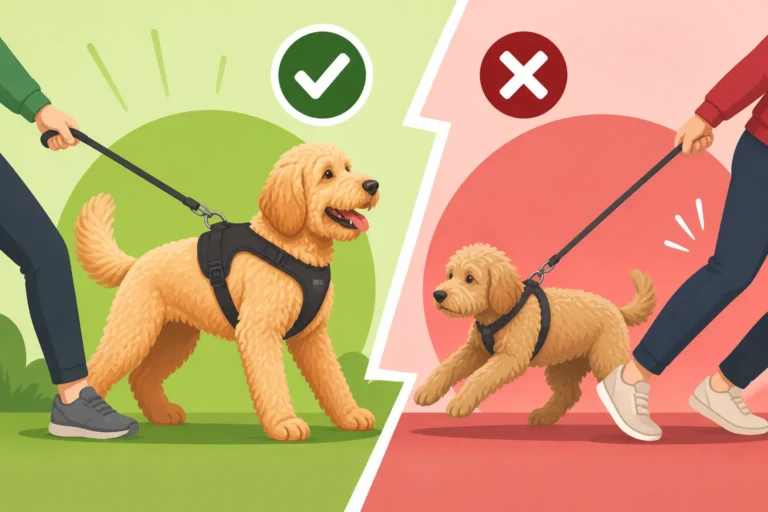
Compared to a traditional flat collar or slip lead, a head halter distributes pressure differently. A flat collar puts all the pressure on your dog's trachea and neck, which can lead to coughing, gagging, and even long-term damage if your Labradoodle is a consistent puller. Front-clip harnesses, which are another popular option, clip at the dog's chest and redirect them to the side when they pull. While effective for many dogs, they still rely on chest pressure and can sometimes cause gait changes or rub in the armpit area, especially with vigorous movement. A back-clip harness, while comfortable, often provides your Labradoodle with more leverage to pull, essentially turning them into a sled dog. The head halter's unique advantage lies in its ability to control the head, which is the most effective way to influence the direction and momentum of the entire dog, offering a gentle yet firm alternative to tools that rely on neck or chest pressure.
The Benefits and Challenges of Using a Head Halter with Your Labradoodle
Deciding on the right training tool for your Labradoodle can feel overwhelming, especially when there are so many options and opinions out there. A head halter offers a distinct set of advantages, particularly for dogs with significant pulling habits, but it also comes with its own considerations that every owner should be aware of.
Why a Head Halter Can Be Effective for Strong Pullers
For Labradoodle owners grappling with a dog that pulls like a freight train, a head halter can be nothing short of a revelation. One of its most immediate benefits is the sheer reduction in physical strain on the owner. You know that feeling of your shoulder being wrenched or your arm feeling like it's about to be pulled out of its socket? A head halter can drastically mitigate that. By controlling your Labradoodle's head, you effectively reduce their leverage, making even a powerful, 60-pound Labradoodle much easier to manage. This newfound control means walks can become enjoyable again, rather than a dreaded chore.
Beyond just pulling, a head halter can be beneficial for Labradoodles who are easily distracted or reactive to their environment. If your Doodle suddenly lunges at a squirrel, another dog, or a passing person, the head halter allows for much quicker and more precise redirection of their focus. A gentle turn of the head is often enough to break their concentration on the distraction and bring their attention back to you. This can be invaluable for training a dog that is still learning how to navigate the busy world around them calmly. It's a tool that provides immediate feedback to your dog without harsh corrections, teaching them that pulling simply doesn't get them where they want to go. Teaching a Sixty Pound Labradoodle Not to Pull becomes a much more achievable goal when you have a tool that helps communicate directly to their line of sight.
Potential Drawbacks and Considerations
While the benefits are clear, it's equally important to consider the potential downsides of using a head halter with your Labradoodle. The most common initial challenge is your dog's reaction to wearing it. Many dogs, including sensitive Labradoodles, find the sensation of something around their muzzle quite unusual, even alarming, at first. They might try to paw at it, rub their face on the ground, or even try to remove it with their paws. This isn't necessarily discomfort or pain, but rather a novel sensation that can take some getting used to. If introduced incorrectly, this initial aversion can turn into a negative association, making future use difficult.
Another consideration is the potential for injury if the head halter is used improperly. If your Labradoodle lunges violently while wearing the halter and you yank back forcefully on the leash, there's a risk of jerking their head and neck, potentially causing strain or injury. It's a tool for guidance, not for harsh correction. The goal is gentle redirection, not snapping their head around. Furthermore, some people express concern about the "muzzled" appearance, which can sometimes lead to unfair judgments from strangers who might mistakenly believe your dog is aggressive or dangerous. It requires a commitment to patient, positive training to help your Labradoodle accept and tolerate the head halter as a regular part of their walking gear.
Specific Considerations for the Labradoodle Breed
Labradoodles, with their intelligent Poodle lineage and enthusiastic Labrador side, bring a unique blend of traits to the table when considering a head halter. Their intelligence often means they can quickly learn how to work with (or against!) new equipment. If introduced positively, a Labradoodle can adapt to a head halter quite well. However, their sensitive nature, particularly from the Poodle side, means that a heavy-handed approach will likely backfire. If the initial introduction is forced or unpleasant, your Labradoodle might develop a strong aversion to the halter, making training much harder.
Their inherent exuberance and strong retrieving drive, often inherited from the Labrador, means they can be highly motivated to pull towards interesting sights, smells, or objects. A head halter can be very effective in managing this drive by giving you the ability to gently turn their head away from distractions. However, it's vital to remember that the head halter is a management tool, not a substitute for training. It won't magically teach your Labradoodle loose-leash walking on its own. You'll still need to put in the work, rewarding good behavior and using the halter to facilitate that training. Understanding your Labradoodle's blend of sensitivity and enthusiasm is key to a successful introduction and long-term use of a head halter. They are generally eager to please, and once they understand what's expected, they can thrive with this type of gentle guidance.
| Leash Control Tool | Primary Mechanism | Advantages for Labradoodles | Disadvantages for Labradoodles |
|---|---|---|---|
| Flat Collar | Pressure on neck/throat | Easy to put on, widely available | Can cause choking/gagging if pulling, provides leverage for pulling, potential for neck injury |
| Back-Clip Harness | Pressure on chest/back | Comfortable, good for small dogs/non-pullers, avoids neck pressure | Offers dog more leverage to pull, less control for strong pullers, can rub under armpits |
| Front-Clip Harness | Redirects dog to the side from chest | Reduces pulling without neck pressure, often comfortable, good for moderate pullers | Can sometimes restrict shoulder movement, may mat the coat in chest area (Whether a Front Clip Harness Mats a Labradoodle), still allows some pulling |
| Head Halter | Pressure on muzzle/back of head | Excellent control over strong pullers, prevents lunging, redirects focus, no neck pressure | Requires careful introduction, can be rejected initially, stigma of looking like a muzzle, potential for neck strain if misused |
Introducing and Training Your Labradoodle with a Head Halter
The success of a head halter largely hinges on how you introduce it to your Labradoodle. Rushing this process can create a negative association that’s incredibly hard to overcome. Patience and positive reinforcement are your best friends here.
The Importance of Positive Association
Imagine someone strapping something unfamiliar to your face and then immediately dragging you around. You wouldn't be thrilled, right? Your Labradoodle feels much the same about a head halter if it's forced upon them. The key is to make the head halter a super positive thing, something that predicts good stuff happening. This means associating it with treats, praise, and fun activities from the very beginning. Never just clip it on and head out the door hoping for the best.
Start by simply having the head halter visible during happy times, like meal prep or before a play session. Let your Labradoodle sniff it, and immediately offer a high-value treat. You want them to think, "Oh, that thing means good food!" Many online training programs, like those offered by BAXTER & Bella, emphasize these foundational positive association techniques for all new equipment. This gentle, positive conditioning lays the groundwork for acceptance, rather than resistance, making the entire training process smoother and less stressful for both of you.
Step-by-Step Introduction Process
Introducing a head halter should be a gradual process, broken down into tiny, manageable steps. If at any point your Labradoodle shows stress, take a step back and make it easier.
- Familiarization and Treats: Place the head halter on the floor and scatter treats around it. Let your Labradoodle investigate it on their own terms. Praise them for simply being near it. You can find many popular head halter brands available on Amazon, making it easy to acquire the right size for your Labradoodle.
- Touch and Reward: Hold the halter and present the nose loop. As soon as your Labradoodle's nose touches the loop, mark the behavior with a verbal cue like "yes!" or a clicker, and immediately give a treat. Repeat this several times.
- Nose Through Loop: Lure your Labradoodle's nose through the loop with a treat. Keep it on for just a second, then remove it and give a jackpot of treats. Gradually increase the time the nose is in the loop.
- Buckle It Up (Briefly): Once your Labradoodle is comfortable with their nose in the loop, try to buckle the neck strap. Again, keep it on for only a few seconds, then remove and reward generously. Repeat, slowly increasing the duration. The goal is for them to wear it for 30 seconds, then a minute, then five, all while doing enjoyable things like eating a meal or playing a game indoors.
- Indoor Practice: Once your Labradoodle tolerates wearing the halter for a few minutes, attach the leash and practice walking around your house. Reward loose-leash walking even in this low-distraction environment.
- First Short Walks: When your Labradoodle is comfortable wearing the halter and walking on a loose leash indoors, take them outside for very short, highly successful walks in a low-distraction area. Keep these initial outdoor sessions brief and end on a positive note. Build up duration and distraction levels slowly over days or weeks. This method helps prevent your Labradoodle from associating the halter with negative feelings, allowing them to accept it as a normal part of their routine.
Common Mistakes to Avoid
The biggest pitfall when introducing a head halter is rushing the process or using it incorrectly. Never force the head halter onto your Labradoodle. If they are resisting, pawing at their face, or looking distressed, you've gone too fast. Forcing it will only teach them to hate the halter, associating it with unpleasant experiences, and making future attempts even harder.
Another common mistake is using the head halter for punishment. It is not designed to yank or snap your dog's head around. Instead, it's a gentle guiding tool. If your Labradoodle lunges, a calm, steady pressure on the leash, followed by a redirection of their head, is all that's needed. Avoid sudden, sharp tugs, as these can cause discomfort or even injury to your dog's neck. Remember, the goal is to teach your Labradoodle to walk politely, not to suppress their natural instincts through force. Consistency in positive reinforcement and patient progression through the steps are far more effective than trying to shortcut the process. Over time, your Labradoodle will learn to ignore the halter, and you'll both enjoy walks a lot more. The Ten Month Old Labradoodle That Forgets Everything reminds us that consistency is key for training Doodles, especially during their adolescent phases.
Exploring Alternatives for Leash Training Your Labradoodle
While head halters can be incredibly effective, they aren't the only solution for leash pulling, and they might not be the right fit for every Labradoodle or every owner. It's always good to be aware of other options and to understand that a multi-faceted approach, combining tools with solid training, often yields the best results.
Front-Clip Harnesses and Their Role
For many Labradoodle owners, a front-clip harness offers an excellent compromise between control and comfort. Unlike back-clip harnesses that often give your dog more leverage to pull, a front-clip harness has the leash attachment point on the dog's chest. When your Labradoodle pulls forward, the leash applies pressure to the chest, gently turning them to the side and redirecting their forward momentum. This breaks their ability to pull straight ahead with their full body weight, making it much harder to drag you down the street.
Front-clip harnesses are often more readily accepted by dogs than head halters, as there's nothing on their muzzle. They can be a great option for Labradoodles who are moderate pullers or those who simply cannot tolerate a head halter. However, it's worth noting that some Labradoodles, especially those with thicker or coarser coats, might experience matting or rubbing in the armpit area with certain harness designs, particularly if they are very active. Whether a Front Clip Harness Mats a Labradoodle is a common concern. Always ensure a proper fit and check for any signs of chafing regularly. Many brands are available through online retailers like Amazon, offering a variety of styles and sizes.
The Power of Positive Reinforcement Training
No matter what equipment you choose, the most powerful tool in your arsenal is positive reinforcement training. Equipment helps manage the pulling, but training teaches your Labradoodle not to pull in the first place. This involves rewarding your dog lavishly every time they walk with a loose leash. Start in a low-distraction environment, like your backyard, and gradually increase distractions as your Labradoodle improves.
Carry high-value treats and reward frequently, even for just a few steps of loose-leash walking. When your Labradoodle starts to pull, stop walking immediately. Don't move forward again until the leash slackens. This teaches them that pulling gets them nowhere, while a loose leash means forward progress and rewards. Combine this with exercises like "auto-sits" whenever you stop, teaching them that stopping means looking at you for a treat, rather than straining against the leash. Building a strong foundation of positive training is critical not just for loose-leash walking, but for overall manners and building a strong bond with your Labradoodle. You can also work on building a strong Building a Recall a Labradoodle Answers Off Leash to ensure you have control in various situations.
Professional Guidance and Puppy Classes
Sometimes, despite our best efforts, we need a little extra help. Professional dog trainers specialize in teaching loose-leash walking and can offer personalized strategies tailored to your Labradoodle's specific personality and challenges. They can observe your dog's behavior and your handling, pinpointing areas for improvement that you might not notice yourself. Group puppy classes or obedience courses are also fantastic for building good leash manners in a controlled, distracting environment.
These classes not only teach your Labradoodle how to walk politely around other dogs and people but also provide valuable socialization opportunities. A good trainer will often guide you through various equipment options, including head halters, and show you how to introduce them correctly. If you're feeling overwhelmed or like you're not making progress, don't hesitate to seek out a certified professional. It's an investment in a more peaceful future with your Labradoodle. After all, Whether a Labradoodle Needs a Trainer or a Class is a question many owners face, and often, the answer is yes, especially for challenging behaviors like persistent pulling. Many programs, including BAXTER & Bella, provide virtual guidance and support that can be a game-changer for busy owners.
Disclaimer
This article is for general informational purposes only and does not constitute professional advice. Laws, prices and regulations vary by location and change over time. Consult a qualified professional for guidance on your specific situation.