Whether Buyers Can Verify an Australian Labradoodle Pedigree
Bringing a new Labradoodle into your home is incredibly exciting, but the journey to finding the right puppy can feel like navigating a maze, especially when it comes to understanding lineage and breed claims. Many prospective owners are told they are getting an "Australian Labradoodle" but worry about how to truly confirm the dog's heritage and the breeder's assertions. This comprehensive guide will pull back the curtain on verifying an Australian Labradoodle's pedigree, empowering you to make an informed and confident choice.
Understanding the Australian Labradoodle's Unique History
When we talk about Australian Labradoodles, it's easy to assume they're just another variation of the popular Labrador Retriever and Poodle cross. However, the truth is far more nuanced, and understanding this distinction is key to appreciating why pedigree verification for this particular doodle is so crucial. It’s not simply a matter of two parent breeds; it's a carefully developed lineage.
More Than Just a Crossbreed
Unlike a first-generation (F1) Labradoodle, which is a direct cross between a Labrador Retriever and a Standard Poodle, the Australian Labradoodle has a much richer and more complex genetic background. The initial intention for the Labradoodle was to create a low-shedding guide dog for a visually impaired woman in Hawaii, but the Australian Labradoodle program evolved significantly from that starting point. It's a distinct line that has been carefully bred for specific traits over many generations.
Over time, dedicated breeders in Australia, striving for greater consistency in temperament, coat, and health, decided to infuse other breeds into the mix. This wasn't done haphazardly; it was a deliberate effort to solidify desired characteristics and move away from the unpredictability that can sometimes be present in early-generation crosses. You might be surprised to learn that The Four Breeds Inside an Australian Labradoodle actually form its genetic tapestry, making it a "multi-generational" cross with a far more intricate history than its name might initially suggest. This complexity is precisely why a verifiable pedigree is so much more valuable for an Australian Labradoodle than for a simpler F1 Labradoodle, where the parentage is usually self-evident by the simple pairing of a Labrador and a Poodle.
The Drive for Consistency
The fundamental reason behind the development of the Australian Labradoodle was a passionate pursuit of consistency. Early Labradoodle crosses, while often delightful, could be a bit of a genetic lottery when it came to their coats, temperaments, and even their health profiles. Some shed, some had challenging coats to manage, and others didn't quite hit the desired temperament marks for assistance work. This variability made it difficult for programs and families seeking specific traits.
Breeders committed to the Australian Labradoodle vision wanted to create a dog that reliably produced puppies with the characteristic low-shedding, allergy-friendly fleece or wool coats, along with the intelligent, gentle, and social disposition they envisioned. This quest for predictability led to the establishment of breed associations and registries whose primary goal was to document and guide the breeding process. These organizations became the gatekeepers of the "Australian Labradoodle" name, ensuring that dogs marketed under this label met specific standards of ancestry and health testing. Without this careful, multi-generational approach, the Australian Labradoodle would simply be another charming "doodle" rather than a developing breed with a specific vision. This is Why an Australian Labradoodle Is Not a Labradoodle in the traditional sense, but rather a more defined genetic program.
The Role of Registries in Pedigree Verification
When you're looking at purchasing an Australian Labradoodle, the term "pedigree" isn't just a fancy word; it's the verifiable blueprint of your puppy's family tree. For purebred dogs, national kennel clubs maintain these records. For Australian Labradoodles, it falls to dedicated breed-specific associations to uphold the integrity of the lineage. These registries are the backbone of pedigree verification, offering a crucial layer of transparency and accountability that helps distinguish responsible breeders from those simply riding the "doodle" trend.
Key Australian Labradoodle Associations
In the world of Australian Labradoodles, several prominent organizations have taken on the vital role of overseeing breeding practices and maintaining official pedigrees. The most widely recognized include the Australian Labradoodle Association of America (ALAA) and the Worldwide Australian Labradoodle Association (WALA). These groups are more than just membership clubs; they serve as central databases where breeders register their breeding dogs and their litters, meticulously documenting each generation.
These associations establish strict rules that member breeders must follow, covering everything from health testing requirements for breeding dogs to ethical breeding practices. For instance, What an ALAA Labradoodle Breeder Must Prove extends beyond just identifying the parents; it often includes verifying health clearances for hips, elbows, eyes, and genetic diseases relevant to the foundational breeds. This means that a pedigree from one of these reputable registries isn't just a piece of paper listing names; it's a testament to a long line of dogs bred with a commitment to health and sound temperament.
How Registries Track Lineage
The process by which these registries track and verify a dog's lineage is quite rigorous and is designed to ensure accuracy and prevent fraudulent claims. When a responsible Australian Labradoodle breeder plans a litter, they must typically submit information about both parent dogs, including their individual registration numbers and proof of their required health clearances. Once the puppies are born, the breeder registers the entire litter, providing details like birth dates, colors, and often microchip numbers for each puppy.
A crucial component of this process, particularly for multi-generational breeds like the Australian Labradoodle, is DNA verification. Many reputable registries now require DNA profiling of breeding dogs to confirm parentage, ensuring that the documented sire and dam are indeed the biological parents of the litter. This scientific approach adds an undeniable layer of certainty to the pedigree. The result is a comprehensive family tree that often extends back many generations, outlining registered names, birth dates, and other vital statistics for each ancestor. This meticulous record-keeping is what makes a pedigree truly verifiable, allowing you to trace your puppy's roots with confidence. It’s also why What a WALA Labradoodle Pedigree Costs and Proves is more than just a certificate; it’s a commitment to transparency and health.
What a Pedigree Certificate Tells You (and Doesn't)
Receiving a pedigree certificate for your Australian Labradoodle puppy can feel like holding a piece of history in your hands. It's a formal document that offers a glimpse into your dog's ancestral background, but it's important to understand precisely what information it conveys and, equally important, what it doesn't. Knowing how to interpret this document correctly is vital for any discerning buyer.
Information Found on a Pedigree
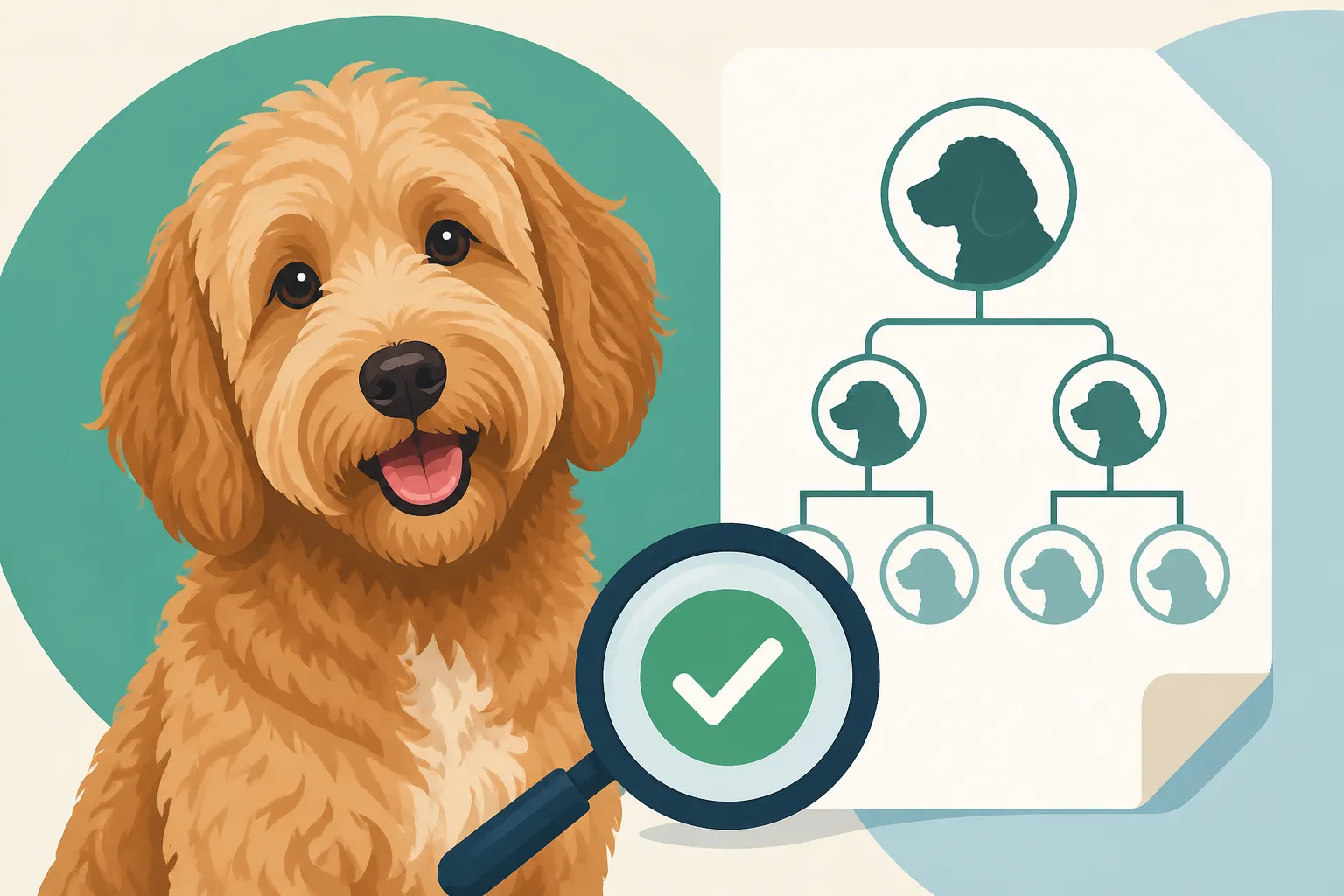
A well-documented Australian Labradoodle pedigree certificate is essentially a detailed family tree for your puppy. It typically lists your puppy's official registered name, its birth date, and its unique registration number within the association. More importantly, it clearly outlines the names of the sire (father) and dam (mother), along with their own registration numbers. A comprehensive pedigree will often extend back several generations, including the grandparents and even great-grandparents, providing their registered names and numbers as well.
Beyond just names, these certificates often include information about the breeder, which can be valuable for confirming the source of your puppy. Some pedigrees might also indicate coat type, color, or even the size category of the ancestors, though the primary focus remains on lineage. This intricate web of documented ancestry is what gives you confidence in the breeder's claims about their dogs' heritage. It's a roadmap that shows you the specific lines and dogs that contributed to your puppy's genetic makeup, solidifying the idea that this isn't just a random mix, but a thoughtfully bred animal.
Health Clearances and Pedigrees
This is perhaps one of the most crucial aspects of an Australian Labradoodle pedigree, and also one where misconceptions can arise. Many reputable Australian Labradoodle registries require breeding dogs to undergo specific health clearances before their offspring can be registered. This is a huge step toward improving the breed's overall health, as it ensures breeders are actively screening for genetic conditions common in Poodles, Labradors, and the other foundational breeds. For instance, The Health Tests a Labradoodle Breeder Should Show for hips, elbows, eyes, and genetic diseases like von Willebrand's or PRA are often mandatory.
However, it's vital to understand a key distinction: the pedigree itself doesn't guarantee your puppy's health, nor does it typically list the results of the health tests. What it signifies is that the parents (and often previous generations) were tested and met the minimum requirements set by the registry to be bred. As a buyer, your job is to ask the breeder for the actual health clearance certificates for both parents, showing the specific results (e.g., "OFA Good" hips, "normal" elbows, "clear" DNA tests). A pedigree proves lineage and eligibility to be bred under association rules, but the actual health reports confirm the specific screening outcomes. Think of it this way: the pedigree says they took the test, the health certificate shows their score.
Steps for Buyers to Verify a Pedigree
As a prospective puppy owner, you hold the power to ensure you're making a responsible choice. Verifying an Australian Labradoodle's pedigree isn't about being overly suspicious; it's about being diligent and protecting your investment, both emotional and financial, in a healthy, well-bred companion. Taking proactive steps can save you a lot of heartache down the road.
Requesting Documentation from the Breeder
Your first and most important step is to directly ask the breeder for all relevant documentation. A reputable breeder who is proud of their lines and adheres to strict breeding standards will be more than happy to provide you with copies of their dogs' pedigrees and health clearances. They understand that you, as an informed buyer, want proof, and they welcome the transparency.
Specifically, you should request to see:
- The Australian Labradoodle pedigree certificate for both the sire and the dam of your prospective puppy. This should be issued by a recognized association like ALAA or WALA.
- Individual health clearance certificates for both parents. This means documents from organizations like OFA (Orthopedic Foundation for Animals) for hips and elbows, CERF/CAER eye exams, and DNA test results for genetic diseases relevant to the breed. Remember, the pedigree proves lineage, but these specific certificates prove the actual health screening results.
- Registration papers for the litter. This shows that the entire litter has been registered with the association and confirms their birth date and parentage.
If a breeder seems hesitant, makes excuses, or becomes defensive when you ask for these documents, consider it a significant red flag. A transparent breeder wants you to feel confident in your decision. It’s a good sign when they eagerly share information and are prepared to discuss the health and lineage of their dogs in detail. Once you've done your due diligence and found a reputable breeder, you can start excitedly planning for your new family member, perhaps even browsing for premium kibble or durable toys on sites like Chewy.
Contacting the Registry Directly
Beyond simply trusting the documents a breeder provides, you have the option to take your verification a step further by contacting the relevant registry directly. This independent check provides an invaluable layer of assurance and peace of mind, allowing you to confirm that the information you've received is accurate and officially recorded.
Most reputable Australian Labradoodle associations, such as ALAA and WALA, maintain online databases that allow the public to search for registered dogs. You can typically use the parent dogs' registered names or registration numbers (which should be on the pedigrees provided by the breeder) to look them up. These databases often confirm the dog's registered name, birth date, registered owners, and crucially, list their verified health clearances that are on file with the association. If a breeder is claiming a specific health clearance, but it's not listed on the official registry's public database, that's a discrepancy you'll want to address.
Additionally, if you encounter any difficulties or have specific questions, you can usually reach out to the registry directly via email or phone. Their staff are there to assist with verification inquiries and can clarify their registration requirements. This step empowers you to independently confirm the legitimacy of your puppy's lineage, providing the ultimate verification that the breeder is indeed part of a recognized, responsible breeding program. This attention to detail extends to things like choosing the right food, something you'll likely be thinking about as you browse options on Chewy or other pet supply sites for your soon-to-be family member.
Challenges and Misconceptions
The popularity of the Labradoodle and especially the Australian Labradoodle has, unfortunately, led to some confusion and misrepresentation in the market. As a buyer, being aware of common challenges and misconceptions is just as important as knowing how to verify a legitimate pedigree. It’s about navigating the landscape wisely to ensure you get what you’re truly paying for.
"Papers" vs. True Pedigree
One of the biggest pitfalls for new buyers is confusing generic "papers" with a true, verifiable pedigree from a recognized Australian Labradoodle association. Sadly, some breeders will offer "papers" that are nothing more than a bill of sale, a generic registration from an obscure "designer dog" registry that has no health testing requirements, or even just a homemade certificate. These kinds of "papers" carry little to no weight in terms of verifying the dog's true ancestry, health, or adherence to ethical breeding standards.
A legitimate Australian Labradoodle pedigree, as discussed, comes from an organization like ALAA or WALA, which rigorously tracks lineage, often requires DNA verification, and mandates specific health clearances for breeding dogs. Without this official backing, any "papers" are essentially meaningless. This distinction is incredibly important, as a dog marketed as an Australian Labradoodle with vague or unofficial "papers" may lack the genetic consistency and health screening history that define the true Australian Labradoodle. It's a key factor in understanding Whether a Labradoodle Without Papers Is Cheaper for a Reason, because those "reasons" often involve skipped health testing or uncertain lineage.
The "Australian Labradoodle" Label
Another significant challenge stems from the often-loose application of the "Australian Labradoodle" label. Because the breed is not recognized by major kennel clubs like the AKC, there's no legally protected definition, allowing less scrupulous breeders to use the term broadly. You might encounter breeders advertising "Australian Labradoodles" that are simply multi-generational Labradoodles (Labrador x Poodle crosses bred over several generations) but have not incorporated the additional foundational breeds or adhered to the strict breeding standards of the established Australian Labradoodle programs.
Without verifiable registry documentation, a dog marketed as an "Australian Labradoodle" might not carry the specific genetic traits, health testing history, or consistent temperament that the true Australian Labradoodle programs have worked so hard to develop. This can lead to disappointment for buyers expecting the specific characteristics associated with the breed. It underscores why a thorough pedigree check isn't just a formality but a critical step in ensuring you're getting an authentic Australian Labradoodle from lines dedicated to the breed's integrity, rather than just a cleverly branded crossbreed. It directly relates to the question of Whether an Australian Labradoodle Is Just a Marketing Label without proper verification.
| Pedigree Type | Issuer | What it Verifies | Key Benefits | Potential Risks (Without Verification) |
|---|---|---|---|---|
| Official ALAA/WALA | Recognized Australian Labradoodle Assoc. | Multi-generational lineage, health clearances | Consistency in traits, health efforts, ethical breeding | None, if verified with the registry. |
| Generic Registry | Online "Designer Dog" Registries | Parentage (sometimes), basic identification | Limited. Mainly ID; lacks health/breed consistency. | False claims about health, temperament, coat type. |
| Breeder's Own Cert. | Individual Breeder | Breeder's word, names of parents | Direct communication with breeder (if reputable) | No independent verification, potential for misrepresentation. |
| No Papers | N/A | Nothing beyond visual appearance | Often lower initial cost. | Complete unknown lineage, health risks, unpredictable traits. |
Conclusion
The excitement of bringing home an Australian Labradoodle is truly wonderful, and ensuring you're getting a well-bred, healthy puppy from responsible lines is a critical part of that joy. While the path to verifying an Australian Labradoodle pedigree might seem a bit intricate at first glance, it is an incredibly empowering process for any prospective owner. By understanding the unique history of the breed, recognizing the vital role of dedicated registries, and knowing exactly what documentation to ask for and how to verify it independently, you equip yourself with the tools to make a truly informed decision. Don't be shy about asking questions and demanding transparency; a reputable breeder will welcome your diligence. Ultimately, taking the time to verify your puppy's pedigree isn't just about a piece of paper; it's about protecting your future companion and building a foundation of trust for years to come.
Disclaimer
This article is for general informational purposes only and does not constitute professional advice. Laws, prices and regulations vary by location and change over time. Consult a qualified professional for guidance on your specific situation.