Whether an Australian Labradoodle Sheds Less
It’s a common and incredibly frustrating scenario for so many prospective Labradoodle owners: you’re drawn to this charming, intelligent breed with the promise of a low-shedding coat, perhaps even for allergy reasons, only to find conflicting information and hear stories of Labradoodles shedding like nobody’s business. This guide will dive deep into the specific characteristics of the Australian Labradoodle's coat, examining why they are generally considered to shed less than many other Labradoodle generations, and what that truly means for you and your home.
Understanding Labradoodle Coat Types and Shedding
When we talk about Labradoodles, it’s easy to think of them as one homogenous group, but the reality, especially concerning their coats, is far more complex. The amount a Labradoodle sheds is a huge concern for many, particularly those with allergies or simply a desire for a cleaner home.
The Nuances of the Labradoodle Coat
The Labradoodle, being a crossbreed, inherits a mix of traits from its Labrador Retriever and Poodle parents. The Labrador is a notorious shedder, with a dense double coat designed for water work, constantly releasing hair. The Poodle, on the other hand, has a single coat that grows continuously, much like human hair, and sheds minimally, with loose hairs generally getting caught in its curls rather than falling out.
This genetic lottery means that early-generation Labradoodles, like an F1 (first cross between a Labrador and a Poodle), can have highly unpredictable coats. You might get a beautiful fleece coat, a tighter wool coat, or even a straighter "hair" coat that sheds quite a bit, much like a Labrador. Some F1 Labradoodles might shed moderately, while others can be surprisingly heavy shedders, leaving pet hair on your furniture, clothes, and floors. This variability is a significant challenge for families hoping for a truly low-shedding dog.
Why Shedding is Such a Big Deal for Owners
For many families, the decision to get a Labradoodle often hinges on its reputation as a low-shedding, potentially hypoallergenic dog. When you’ve dreamed of a companion who won’t trigger your allergies or leave a layer of fur on every surface, discovering your Labradoodle sheds considerably can be a real disappointment and a logistical nightmare. It means more vacuuming, more lint rolling, and potentially ongoing allergy symptoms for sensitive individuals. The hope is to find a dog that allows everyone in the family to breathe a little easier and enjoy a cleaner living space. This desire for a manageable coat is precisely why the development of the Australian Labradoodle became so important.
The Australian Labradoodle: A Different Breeding Philosophy
The term "Australian Labradoodle" often causes confusion because many people assume it simply means any Labradoodle that comes from Australia. However, it signifies a distinct and multi-generational breeding program with specific goals, especially concerning coat consistency and shedding.
What Makes an Australian Labradoodle "Australian"?
Unlike the earlier F1 or F1b Labradoodles, which are typically just a first or second cross between a Labrador and a Poodle, the Australian Labradoodle is a breed in development. It's the result of a deliberate, multi-generational breeding program that began in Australia with the intention of creating a consistent dog, both in temperament and coat. Beyond the Labrador and Poodle, the Australian Labradoodle lines were infused with other breeds, most notably the Cocker Spaniel and the Irish Water Spaniel. The Four Breeds Inside an Australian Labradoodle delves deeper into these foundational additions. These infusions were carefully selected to bring in specific traits, including the desired non-shedding, allergy-friendly coat, and a particular temperament suitable for assistance work. This isn't just a casual crossbreed; it's a dedicated effort to establish a new breed with predictable characteristics.
The Intent Behind Their Coat Development
The driving force behind the Australian Labradoodle program was a desire for predictability. Breeders aimed to move beyond the genetic "dice roll" of early generation Labradoodles and consistently produce dogs with the desirable fleece or wool coats that are known for being low-shedding. They meticulously selected breeding dogs for these specific coat traits, often using DNA testing to ensure the presence of genes associated with furnishings (the facial hair that gives the "doodle" look) and low-shedding. The goal was to minimize the chance of a puppy inheriting a shedding hair coat, thereby creating a dog that was more reliably allergy-friendly and easier on the household cleaning routine. This focus on consistent coat types sets them apart significantly from many other Labradoodle variations.
Do Australian Labradoodles Shed Less? The Verdict.
This is the burning question for so many potential owners, and the answer, happily, is generally a resounding yes – with important caveats.
Consistency in Low-Shedding Coats
Compared to a standard F1 Labradoodle, where you might get anything from a full-on Labrador shedder to a Poodle-like, non-shedding wonder, Australian Labradoodles offer a much higher degree of consistency in producing low-shedding coats. This consistency is not accidental; it’s the direct result of that deliberate multi-generational breeding program we discussed. Breeders carefully select for dogs that carry two copies of the "furnishings" gene (which gives them their signature shaggy face and beard, and is linked to low shedding) and typically breed towards fleece or wool coat types. The Fleece Coat and Why Breeders Aim For It further explains why these specific coats are so highly prized.
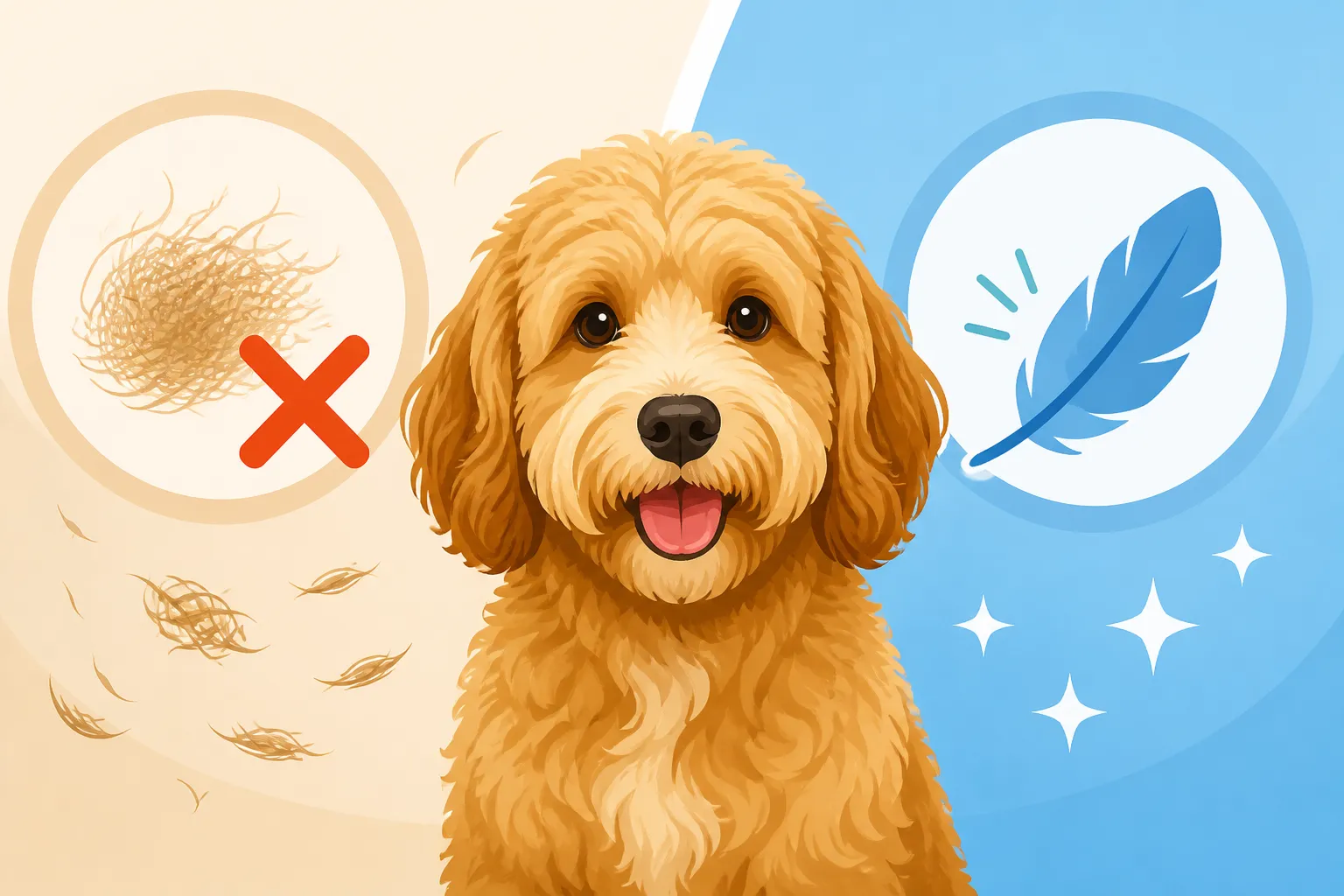
While no dog is truly 100% "non-shedding" – even Poodles will lose a few hairs here and there, just like humans – Australian Labradoodles come incredibly close. They are specifically bred to retain their loose hairs within their growing coat rather than dropping them around the house. This means that if shedding is a significant concern for you, an Australian Labradoodle is statistically a much safer bet than a first-generation Labradoodle.
What "Less Shedding" Really Means for an Owner
So, what does this "less shedding" actually translate to in your daily life? For most Australian Labradoodle owners, it means a noticeable reduction in the amount of dog hair you find around your home. You're less likely to find tumbleweeds of fur rolling across your floor, or to have your clothes perpetually covered in dog hair. For individuals with mild to moderate dog allergies, an Australian Labradoodle's coat is often much more manageable, allowing them to live comfortably with a canine companion where a heavy-shedding breed would simply be impossible.
However, "less shedding" does not mean "no maintenance." In fact, quite the opposite. The fleece and wool coats that shed minimally will still require diligent grooming to prevent matting. Those loose hairs, instead of falling out, become tangled within the growing coat. This means regular, thorough brushing is absolutely essential, often several times a week, to keep their coat healthy and tangle-free. It's a trade-off: less shedding means more brushing. Ignoring this crucial aspect can lead to severe matting, which is uncomfortable for your dog and can only be resolved by shaving down the coat. Many owners find a trusted groomer to be invaluable, supplementing their at-home care with professional trims every 6-8 weeks.
Managing Expectations and Verifying Coat Types
Choosing an Australian Labradoodle can significantly increase your chances of getting a low-shedding dog, but it’s still vital to approach the process with realistic expectations and the right information.
The Importance of Breeder Transparency and DNA Testing
A reputable Australian Labradoodle breeder will be completely transparent about the genetic makeup of their puppies and their parent dogs. They will often conduct specific DNA tests for coat traits, such as the furnishings gene (R-spondin-2, or RSPO2) and the shedding locus (MC5R gene). These tests can predict with a high degree of accuracy whether a puppy is likely to have a low-shedding, furnished coat or a coat that sheds more. Whether a Labradoodle's Coat Type Can Be DNA Tested explores this topic in more detail.
Don't be afraid to ask your breeder for documentation of these genetic tests for both parents. This isn't being overly cautious; it's being a responsible pet owner. A good breeder will welcome your questions and be eager to share the health and genetic clearances of their breeding stock. They should also be able to tell you what coat types they typically produce and what that means for grooming requirements and shedding potential. Avoid breeders who make vague claims or cannot provide clear information about their breeding dogs' coat genetics.
Living with a Low-Shedding Coat
Even with a low-shedding Australian Labradoodle, regular grooming is non-negotiable. Their beautiful fleece or wool coats are prone to matting if not properly maintained. You'll need a good quality slicker brush, a metal comb, and potentially a dematting tool. Learning how to line brush effectively, where you brush in sections all the way down to the skin, is crucial. Simply brushing the surface of the coat will not prevent mats from forming underneath, especially in areas like behind the ears, armpits, and around the tail. Our article Brushing a Labradoodle to the Skin, Not the Surface offers a comprehensive guide to this technique. It’s a commitment, but one that ensures your Labradoodle stays comfortable and their coat remains healthy. You can find all the necessary grooming supplies, from brushes to shampoos and even high-velocity dryers, on sites like Chewy, which can make stocking up much more convenient.
Many owners find a routine of 15-30 minutes of brushing every 2-3 days, along with professional grooming every 6-8 weeks, works best. During the "coat change" phase, typically between 8-12 months of age, your puppy's adult coat starts coming in, and matting can become significantly worse. This period will require even more frequent and diligent brushing. For further guidance on maintaining their beautiful fur, check out The Line Brushing a Labradoodle Coat Needs.
Here's a quick comparison of shedding levels across different Labradoodle types:
| Labradoodle Type | Typical Generation | Shedding Level | Coat Characteristics | Grooming Needs (to prevent mats) |
|---|---|---|---|---|
| F1 Labradoodle | First cross | Highly Variable (low to high) | Hair, Fleece, or Wool; unpredictable | Moderate to high |
| F1b Labradoodle | F1 bred back to Poodle | Low to Moderate | More Poodle-like, often fleece or wool; less variable | High |
| Australian Labradoodle | Multi-generational | Consistently Low | Fleece or Wool; bred for consistency | High |
| Purebred Labrador | N/A | High | Short, dense double coat | Low (but high shedding) |
| Purebred Poodle | N/A | Very Low | Curly, continuously growing coat | High |
While an Australian Labradoodle may not leave a trail of hair in your home like some other breeds, their unique coat demands consistent attention to prevent tangles and mats. Being prepared for this grooming commitment, and stocking up on quality tools from a retailer like Chewy, will make all the difference in living happily with your furry companion.
In conclusion, if you're looking for a Labradoodle specifically with the goal of a truly low-shedding coat, an Australian Labradoodle is your best bet. Their multi-generational breeding program has prioritized consistency in these desired coat traits, making them a more reliable choice than earlier generation Labradoodles. Remember, "low shedding" doesn't mean "no grooming," but with diligent care and the right tools, you can enjoy a beautiful companion with minimal hair around the house.
Disclaimer
This article is for general informational purposes only and does not constitute professional advice. Laws, prices and regulations vary by location and change over time. Consult a qualified professional for guidance on your specific situation.