The Colors a Labradoodle Comes In
A Labradoodle’s coat can be black, cream, chocolate, red, parti-colored, or somewhere between the names a breeder uses and the shade you see in person. That uncertainty can be frustrating when you are choosing a puppy or wondering why an adult dog looks different from its puppy photos. This guide explains common colors, patterns, fading, and what you can realistically predict.
Labradoodle colors and common coat shades
There is no single official color list that every Labradoodle breeder follows. Labradoodles are a cross rather than a breed with one universally applied coat standard, so breeders may use slightly different labels for similar shades. A puppy called apricot by one breeder might be described as red or caramel by another.
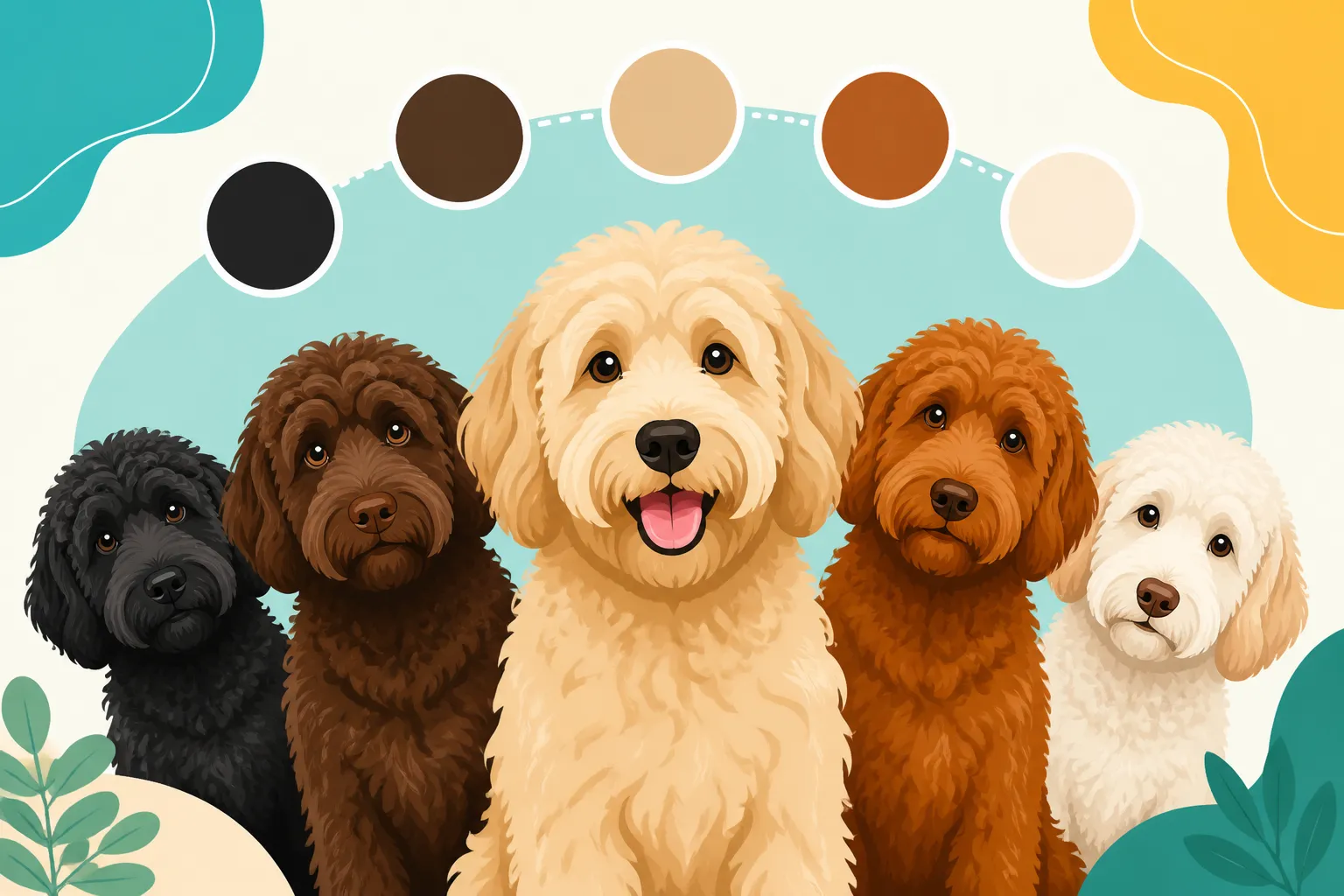
The names are useful for describing appearance, but they do not guarantee that a coat will stay exactly the same. Lighting, grooming length, coat texture, and age can all affect what a color looks like. For another look at the range, see The Colors a Labradoodle Comes In.
Solid colors
Black, cream, white, chocolate, and red are among the colors people commonly look for. Cream coats can range from nearly white to a warm, pale gold. Red Labradoodles may have coats that look coppery or deep auburn, while chocolate coats can vary from milk-chocolate brown to a darker shade.
The same color can look different depending on the coat. A tight, curly coat may appear darker or richer than a wavy coat in bright light, while a long fleece coat can show different tones where the hair separates or catches the sun. A recent haircut can also make a dog seem like a different shade simply because shorter hair reflects light differently.
If you are comparing puppy listings, look for photos taken in natural light and ask to see pictures of the parents and older dogs from the same line. Even then, photos are only a guide. Camera settings, indoor lighting, and editing can shift colors noticeably, so a photo is not a promise of the adult dog’s exact shade.
Apricot, caramel, and other descriptive names
Some coat names describe a color family rather than a precisely defined shade. Apricot usually suggests a light, warm orange tone; caramel often suggests a tan or golden-brown shade. Breeders may also use terms such as café, parchment, or silver beige, but naming practices differ between programs.
When a particular shade matters to you, ask the breeder what they mean by that label. A useful question is, “Could you show me adult dogs from this line with a similar puppy coat?” That often gives you more practical information than relying on a color name alone.
It is also worth separating coat color from features such as nose and eye pigment. A dark coat does not automatically mean a black nose, and a pale coat does not automatically mean a pink one. Ask what pigment the puppy has and whether it is expected to change, especially if you are comparing dogs for appearance.
Patterns and markings
Some Labradoodles have mostly one color, while others have white markings or several colors. Parti-colored commonly describes a dog with a white base and larger patches of another color, although the amount and placement of white can vary. A dog may also have a small white blaze, chest patch, toes, or chin without being described as parti.
Phantom is another pattern term. It generally refers to a darker base coat with lighter markings in particular areas, such as above the eyes, on the muzzle, chest, or legs. The markings may be subtle or distinct, and the term is not used identically by every breeder. For more detail, see Whether a Parti Labradoodle Is Common and Whether a Phantom Labradoodle Is Rare.
Merle describes a mottled or marbled pattern rather than a simple solid shade. Because merle is not a typical Labrador coat pattern, anyone considering a merle Labradoodle should ask how that pattern appears in the dog’s pedigree and what health and breeding decisions are involved. Breeding two merle dogs together can create a risk of serious vision and hearing problems in puppies, so responsible breeding practices matter. You can read more in Whether a Merle Labradoodle Is Legitimate.
Why a Labradoodle’s color may change
A puppy’s coat is not always a preview of its adult coat. Some dogs keep a fairly similar shade, while others lighten, deepen, or develop a more mixed-looking coat as they mature. That change can be surprising if you chose a puppy from a photo and expected the same color years later.
Color change does not necessarily mean anything is wrong. Coat texture and grooming also affect how color appears, and some changes happen gradually enough that owners only notice them when comparing old photos.
Puppy coat versus adult coat
Puppies often have softer coats than adults. As the adult coat develops, its texture, curl, and density can change, and that can alter the way color appears. A shade may look less even once longer hair grows in, or a puppy may seem darker after a trim because the coat is shorter and denser.
Color inheritance is complicated. A puppy receives genes from both parents, and coat color can involve several genes working together. Even when the parents’ colors are known, predicting the exact shade and markings of every puppy is not always possible. A breeder may be able to describe what commonly happens in a line, but that is different from guaranteeing one precise adult color.
For this reason, treat a breeder’s estimate as a best guess rather than a certainty. If color is important to you, ask for photos of the puppy’s parents, adult relatives, and previous puppies as they grew up. The guide Whether a Labradoodle Puppy's Coat Predicts the Adult One covers why early coat appearance can be an imperfect forecast.
Fading and lightening
Some Labradoodles become lighter as they grow. Black coats may shift toward charcoal, gray, or silver tones; chocolate coats may lighten or develop a more muted appearance. Red and apricot coats can also soften in intensity. How much this happens varies between dogs, and not every dog follows the same pattern.
A dog’s changing shade is not necessarily caused by sun exposure or a health problem. In some cases, inherited coat-color traits influence how a dog’s pigment changes over time. If a color change happens alongside hair loss, itching, skin irritation, or a sudden change in coat condition, ask a veterinarian rather than assuming it is ordinary fading. See Whether a Labradoodle's Color Fades With Age, Whether a Black Labradoodle Fades, and Whether a Chocolate Labradoodle Fades to Silver for more specific questions.
To keep the coat comfortable and looking its best, focus on regular grooming rather than trying to preserve a puppy shade. Use products suitable for dogs and follow your groomer’s advice about coat care. If you are shopping for basic grooming supplies, a retailer such as Chewy may be one place to compare available brushes and shampoos; check the product label and ask your veterinarian if your dog has sensitive skin.
Coat texture and grooming can change what you see
A Labradoodle’s color is only part of its appearance. Hair, fleece, and wool-type coats reflect light differently, and a coat that is curly or dense may look darker than a loose, wavy one. A wet coat can also appear darker until it dries fully.
Matting can make color look patchy or uneven, particularly around the ears, under the collar, in the armpits, and where a harness rubs. A haircut may reveal a different-looking shade underneath, especially if the outer coat has weathered or faded. Groomers can help you choose a practical clip, but they cannot make a dog’s inherited color stay fixed.
Routine brushing and bathing are about coat health, not color correction. Avoid dyes, bleaching products, or human hair products unless a veterinarian has specifically advised a safe option. When comparing coat-care items on Chewy or elsewhere, choose products made for dogs and do not assume that a “brightening” or color-enhancing label makes a product suitable for every coat or skin type.
Choosing a Labradoodle by color without being misled
It is natural to have a favorite color. The trouble starts when a rare shade or a striking puppy photo becomes more important than the dog’s health, temperament, and fit with your household. A beautiful coat is lovely, but it does not tell you whether a puppy will be comfortable in your home or whether the breeder has made thoughtful health decisions.
Questions to ask a breeder
Ask the breeder how they use color terms and whether they expect the puppy’s coat to change. A responsible answer should acknowledge uncertainty rather than promise that a puppy will remain exactly the same shade. You can also ask for adult photos from the same line and whether the breeder has observed fading in previous litters.
Ask about health testing and how puppies are raised, too. Color alone does not establish health, temperament, or responsible breeding. A breeder who focuses heavily on a rare shade but is vague about parent health, temperament, or the puppy’s early care deserves careful follow-up.
Before paying a deposit, make sure you understand the breeder’s contract, health information, and return or support policies. If a specific color is being presented as unusually rare or valuable, ask what that claim means and whether it affects the puppy’s price. A marketing label is not a substitute for transparent records and a good match.
What color can and cannot tell you
| What you notice | What it may tell you | What it does not prove |
|---|---|---|
| A solid black or cream coat | The puppy currently has a mostly uniform shade | That the coat will keep the same shade into adulthood |
| White patches or markings | The dog has visible areas of white patterning | That the dog belongs to a particular registry or breeding program |
| A parti pattern | The coat has a white base with patches of another color, as the breeder describes it | That the dog will have a specific temperament or health status |
| A merle pattern | The coat has a mottled or marbled appearance | That the breeding behind the pattern is responsible |
| A puppy with a deep, rich shade | The puppy looks dark or saturated at that age | That its adult coat will remain equally dark |
| A breeder’s color label | The breeder’s chosen description for the coat | That all breeders use the same definition |
Color can help you describe the dog you are looking at, but it is not a reliable shortcut for predicting personality. Labradoodle temperament depends on many factors, including inherited traits, early experiences, socialization, and training. If you are choosing a puppy, consider how the breeder assesses temperament and how the dog’s needs fit your routine.
Making a practical choice
If you are choosing between two puppies, think about your day-to-day life first. Will you be able to keep up with coat maintenance? Are you comfortable with the possibility that a puppy’s shade may change? Does the breeder answer questions openly and provide information about the parents? Those answers are more useful than choosing a puppy because its color has a particularly appealing name.
It can help to make a short list of priorities before visiting a litter. Put health information, temperament, and the breeder’s practices at the top; put preferred color lower down. That does not mean color should not matter to you. It simply keeps a temporary or variable feature from outweighing the qualities that will affect your life with the dog every day.
If you already have a Labradoodle whose coat has changed, compare current and older photos in similar lighting before worrying. A gradual shift can be part of normal coat development. For questions about how the coat itself changes over time, see Whether a Labradoodle's Coat Changes Texture With Age. If the change is sudden or comes with discomfort, skin symptoms, or unusual shedding, arrange a veterinary check rather than treating it as a cosmetic issue.
Disclaimer
This article is for general informational purposes only and does not constitute professional advice. Laws, prices and regulations vary by location and change over time. Consult a qualified professional for guidance on your specific situation.