Whether a Labradoodle Eats Too Fast
Fast eating in Labradoodles stems from wild instincts and Labrador genetics, and it poses potential health risks for dogs.
The daily stuff, done right.
Feeding amounts by life stage, coat and skin routines, dental and nail care, exercise needs, and what changes as they age.

Fast eating in Labradoodles stems from wild instincts and Labrador genetics, and it poses potential health risks for dogs.

Free-feeding a Labradoodle causes overeating and weight gain because Labrador and Poodle genes create strong food motivation.

Miniature Labradoodle dietary needs, faster puppy growth, higher metabolic rates, and the importance of small-breed kibble sizes.

Adult Labradoodle daily food portions depend on activity level, age, size, and metabolism to maintain proper weight.
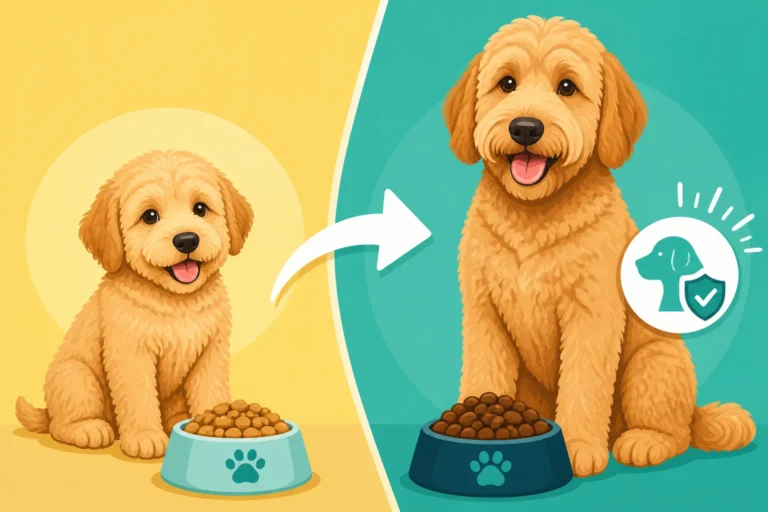
Labradoodle dietary transitions from puppy food to adult diets impact joint development, physical maturity, and long-term health.

Calcium levels in a growing Labradoodle puppy affect bone development, muscle contraction, nerve transmission, and overall health.

Standard Labradoodle skeletal maturity timelines and growth plate closure dictate when to switch from large breed puppy food.

Labradoodle puppy growth stages, high metabolisms, and physical signs determine when to transition dogs to two daily meals.

Labradoodle puppy feeding schedules, explaining why young dogs aged eight to twelve weeks need three to four daily meals for growth.

Labradoodle puppy daily food amounts, including calorie needs and growth formulas for miniature and standard sizes.